
Ubaldo Gandolfi
b. 1728, San Matteo della Decima
d. 1781, Ravenna
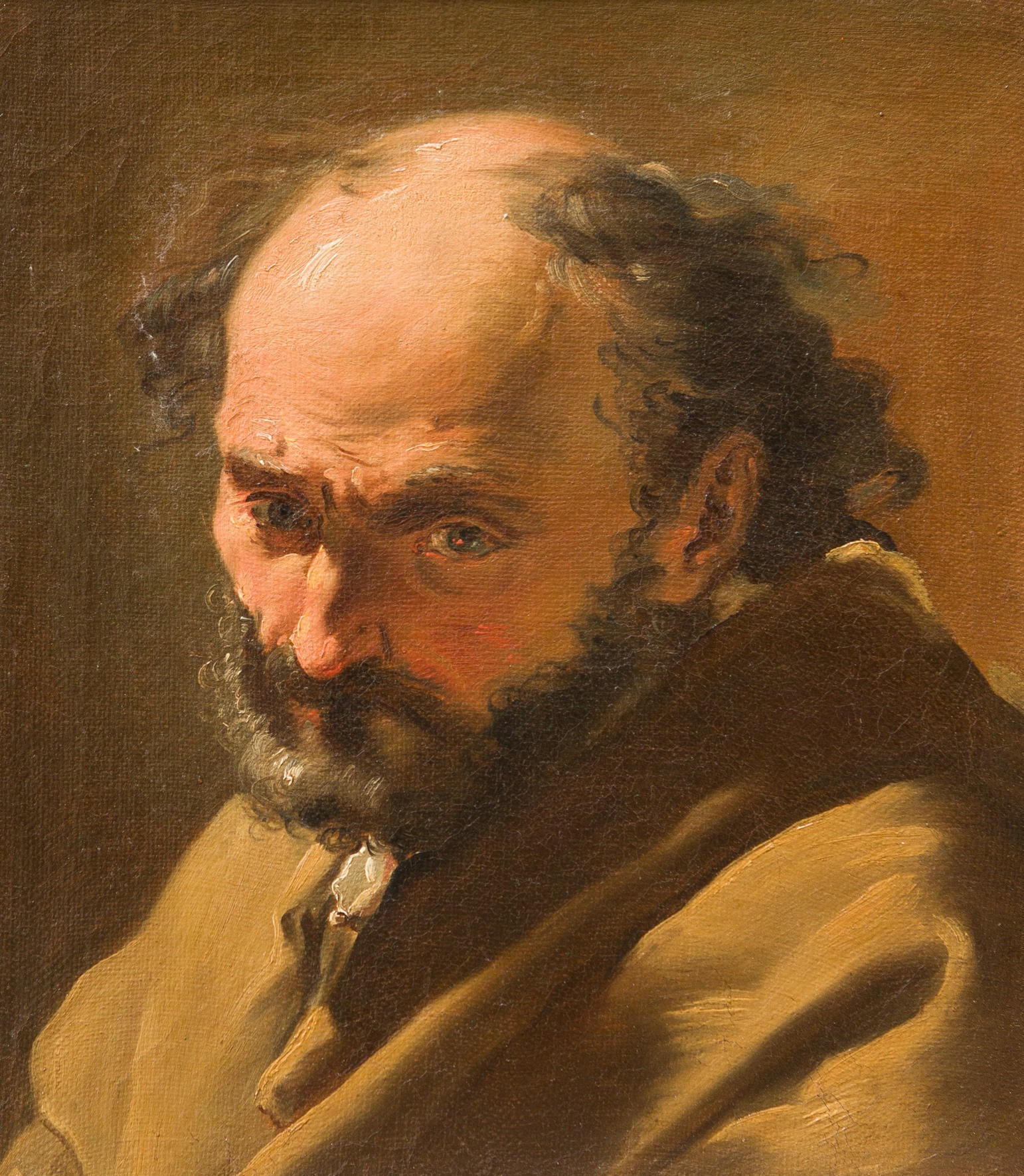
A bearded man, bust length, in a grey cape
18th century
Oil on canvas
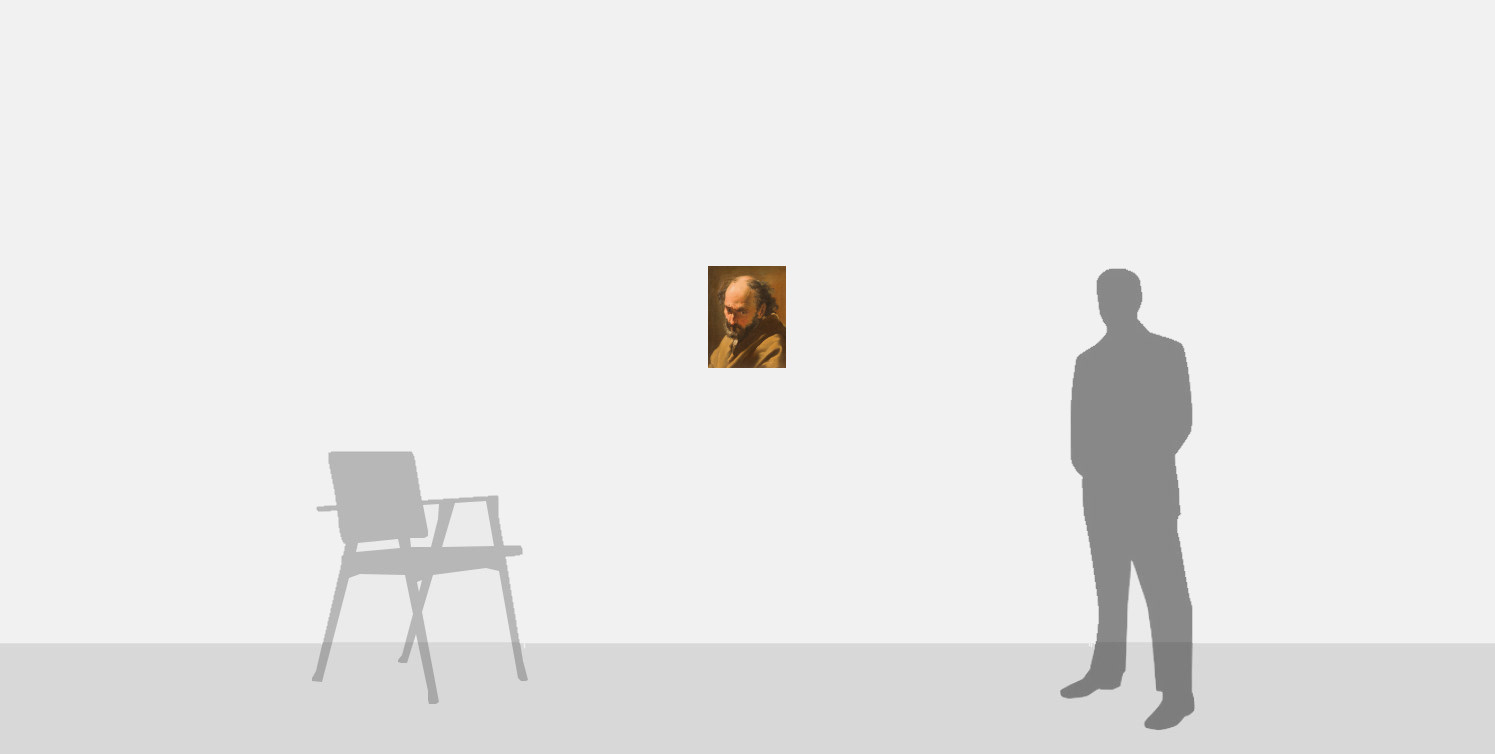
45.3 x 34.8 cm (17 7/8 x 13 3/4 in.)
Provenance
Sotheby's, New York, 2 June 1989, lot 50A (attributed to Gaetano Gandolfi),
Christie's, London, 24 May 1991, lot 62,
Private collection,
Sotheby's, New York, 31 January 2013, lot 50,
Leinou Zhang collection.
Literature
Description
Ubaldo Gandolfi was an Italian painter of the late Baroque period, belonging to a family of artists that included his younger brother Gaetano, his sons Giovanni Battista and Ubaldo Lorenzo, nephews Democrito and Maura, and niece Clementina. Moving to Bologna as a boy to begin his artistic training, he studied under Felice Torelli and Ercole Graziani the Younger, while also attending the Clementine Academy. This artistic education grounded him in the Bolognese tradition that had risen to fame under the Carracci brothers in the sixteenth century; indeed, Ubaldo may be considered one of the last significant painters working in the grand manner of the Bolognese school.
During his prolific career he painted decorations for palaces and churches across the city, also producing sculptures and anatomical studies. As his reputation grew, he created works for patrons across Italy and across Europe including from Vienna and Moscow.
The present painting is a head study of a bearded man in a plain cape, set against an unspecified background. This work does not show a specific individual, but is rather a study for a type. Such figure studies were an important aspect of the Gandolfi’s practice as per the Bolognese tradition, honing the physiognomy and psychology of subjects that he would use in more complex compositions of religious or historical subjects. In the eighteenth century, these works were also sought-after as finished artworks in their own right.
He produced these mainly in
the 1770s; a large group of these studies was acquired by Ubaldo’s primary
patron, Marchese Gregorio Casali (1721–1802) and then passed by inheritance to
the Isolani Lupari family in Bologna, as stated by Prisco Bagni in his 1992
publication, in which the present painting is published.1 Many of those canvases
are signed or inscribed on the reverse, in a manner similar to this picture –
on which ‘Ubal.do Gandolfi’ is written, on the stretcher – and a number are
dated ‘1777’, which seems likely to be the year they entered the
Marchese’s collection rather than the year of execution.2 It is not certain if
this painting was part of the group acquired by the Marchese and subsequently
in the Isolani Lupari family, but given the similarities in the inscription,
this is a strong possibility.
This bearded figure appears in a number of
studies in this group, depicted from different angles and in distinct poses,
suggesting that the work was made from life, using the same model on a number
of occasions.3 The lively brushwork
that defines the subject’s furrowed brow and greying hair, and the sharp
contrasts of light and shade exemplify Gandolfi’s approach to the genre,
offering a profound naturalism and psychological intensity.
2. Ibid.
3. Ibid., pp. 512-513, reproduced figs. 481 and 482.