
Mimmo Rotella
b. 1918, Catanzaro, Italy
d. 2006, Milan, Italy
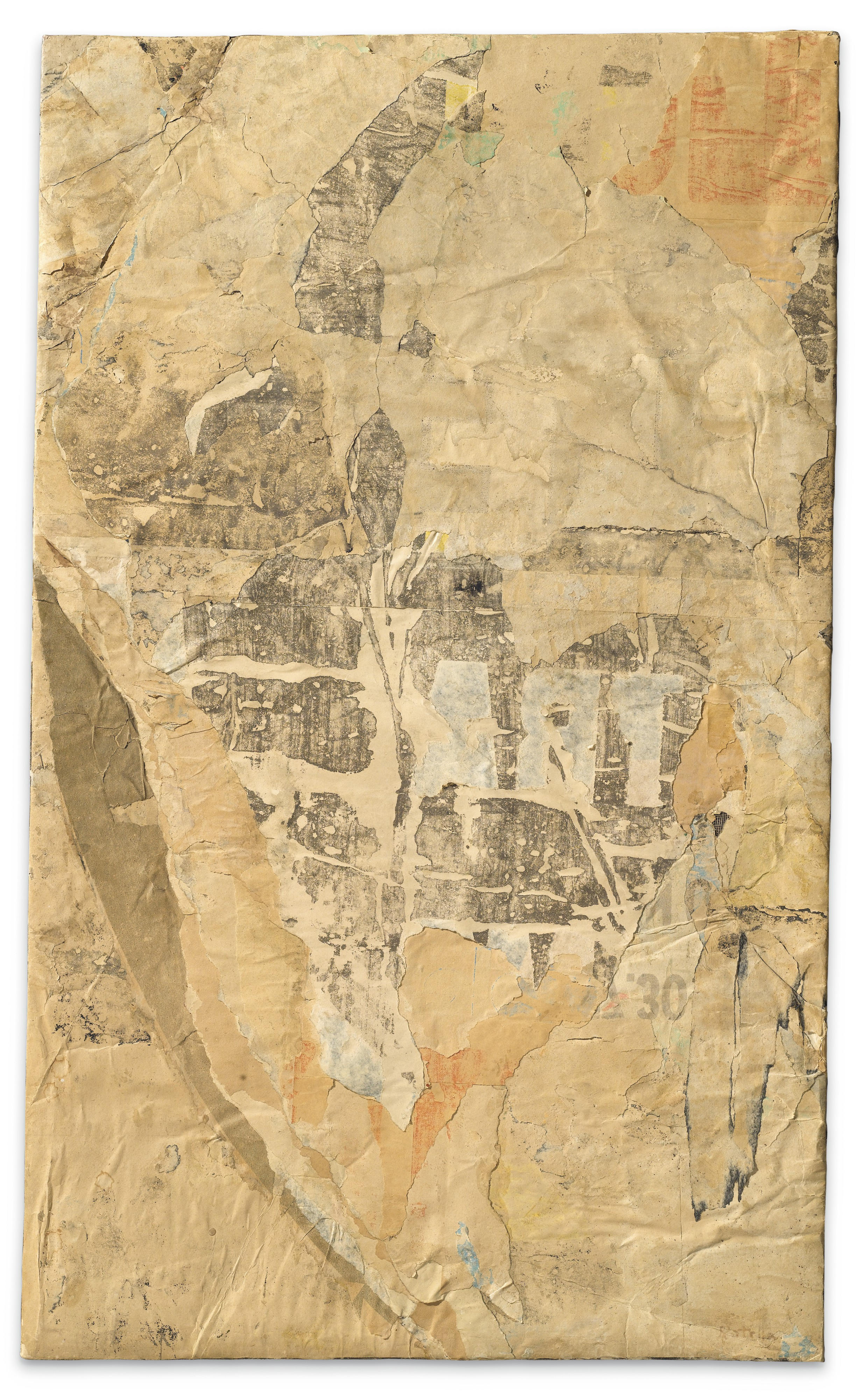
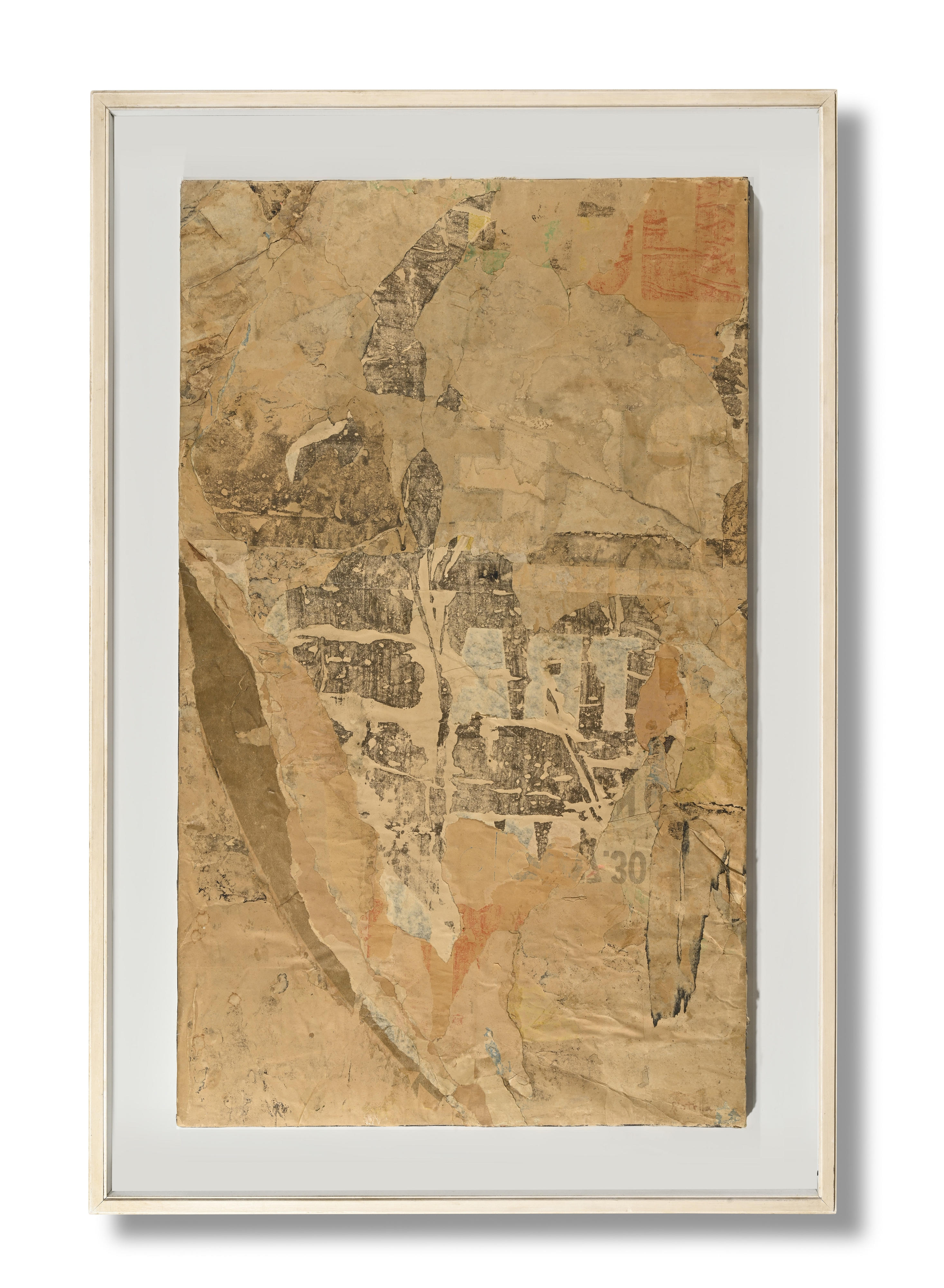
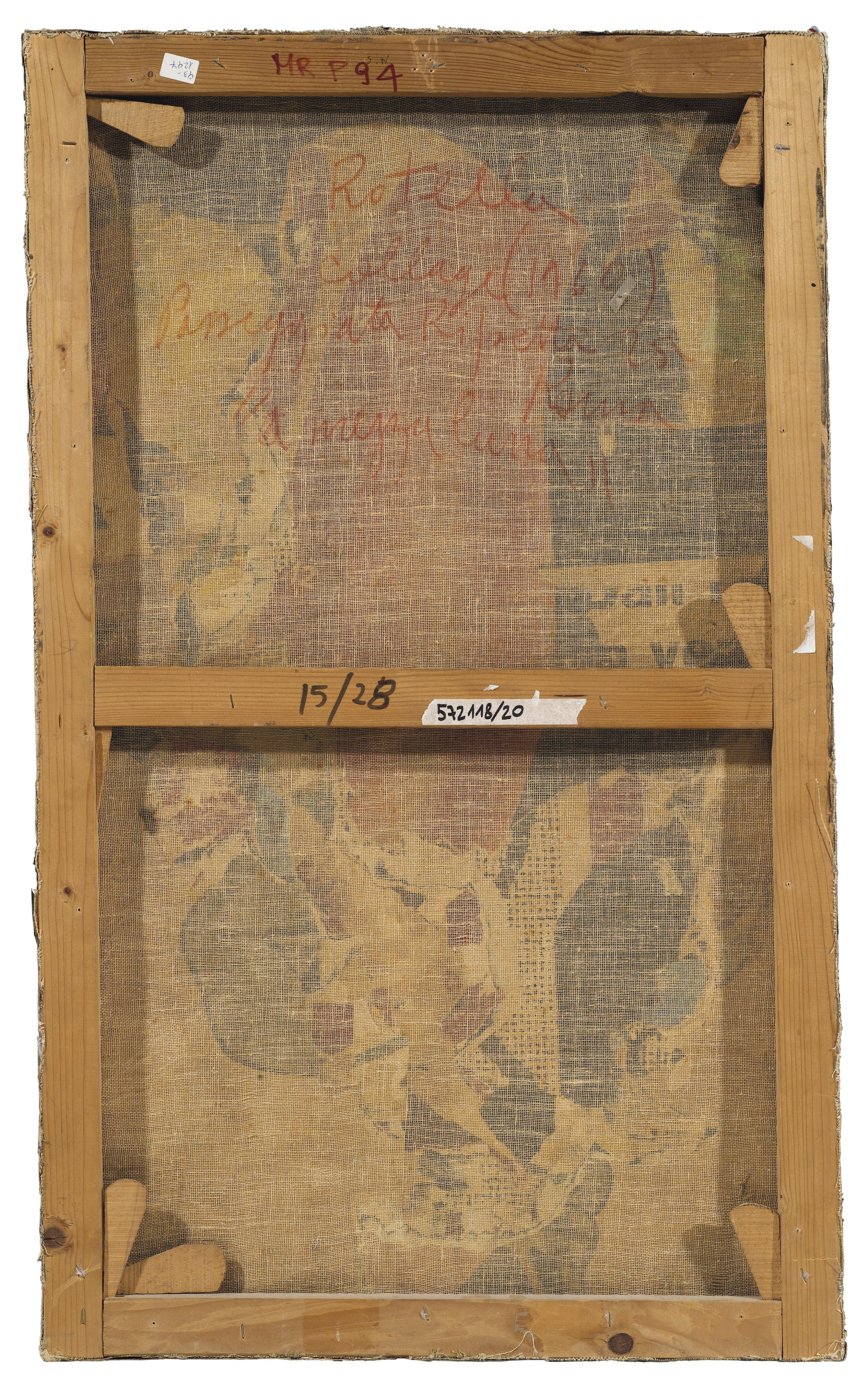
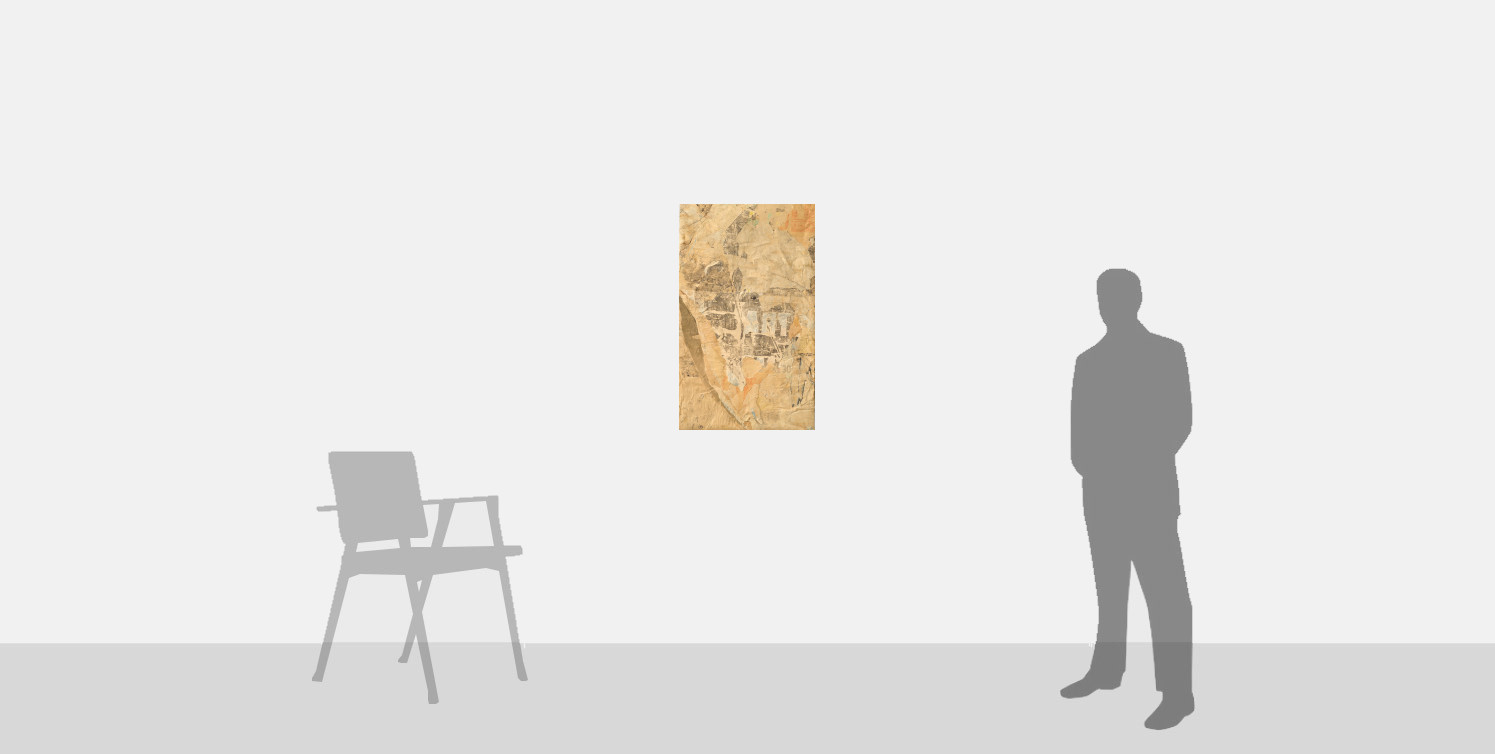
A Mezza Luna (At Half Moon)
1960
Décollage on canvas
100.5 x 60.5 cm (39 5/8 x 23 7/8 in.)
Provenance
Private collection;
(Finarte Rome, 3 June 1993, lot 153);
Cartasi collection.
(Finarte Rome, 3 June 1993, lot 153);
Cartasi collection.
Literature
A. C. Quintavalle, Carte italiane. Opere su carta della Collezione "CartaSi", Milan, 2000, illustrated in colour, p. 161.
G. Celant, Mimmo Rotella Catalogue raisonné, vol. I 1944–1961, Milan, 2016, no. 1960 147, p. 692, illustrated in colour, p. 438.
G. Celant, Mimmo Rotella Catalogue raisonné, vol. I 1944–1961, Milan, 2016, no. 1960 147, p. 692, illustrated in colour, p. 438.
Description
"I invented the décollages in Rome, in 1953, but I only showed them to the public for the first time in February 1954. It was the art critic and philologue Emilio Villa, who was the first to discover the lacerated posters. He came to my house...one night saw my “papers” and was stunned. He told me that I was doing very important things, and that I had invented a new artistic language."–Mimmo Rotella
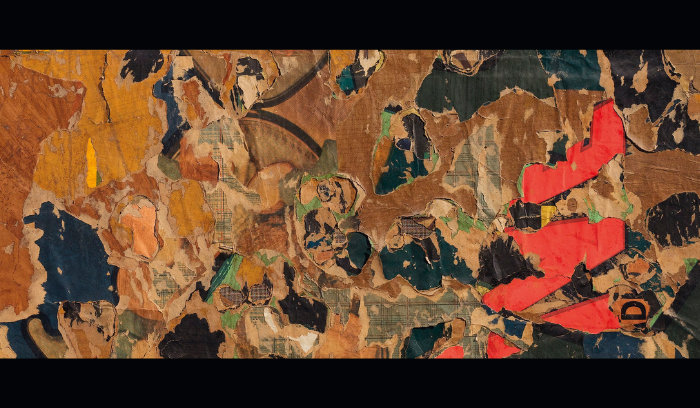
Mimmo Rotella had begun to make his décollage works as early as 1953. In their production, he assaulted the advertising posters of Rome armed with a pen knife, before taking them back to his studio and engaging in a laborious process of layering up and tearing away, eventually resulting in the diaphanous patchwork effect endemic to the present picture. These engaging, vibrant, vigorous works have assumed a position of supreme importance within the art-historical discourse of the twentieth century, and represent Rotella's perhaps most remarkable innovation.
Many view Rotella as the Italian answer to Andy Warhol. The two artists were active during very similar periods and shared many of the same artistic and conceptual preoccupations. Both were obsessed with cinema: Warhol was mesmerized by the stars of the silver screen and Rotella similarly allowed the imagery and style of Hollywood to soak into his praxis. Rotella and Warhol even shared the same celebrity crushes: Elvis, Marilyn Monroe and the Kennedy family. Moreover, both relied on the brazen appropriation of marketing and advertising imagery in the creation of their best-known works: where Warhol reproduced his Brillo boxes and Campbell soup cans in painted facsimile, Rotella transliterated the posters of Rome into his works directly. Both Warhol and Rotella were innovators in adopting printing technologies for their fine art practice, with Warhol pioneering the use of silkscreen and Rotella subverting a billboard printing technology known as Artypo in order to further inject his work with a machine-like aesthetic. Rotella had travelled to America in the early 1950s after winning a Fulbright scholarship at Kansas City University. It is indisputable that this formative experience allowed the American zeitgeist to bleed into his oeuvre in a manner that is entirely redolent of Warhol.
However, to view this artist as a transatlantic understudy working perennially in thrall to Warhol’s far-off Factory would be to misunderstand his close links with the European avant-garde. Rotella had met the widely reputed curator Pierre Restany in 1958 and in 1960 became one of the founding members of the Nouveau Réalisme group. Restany recounted the significance of the moment: “I got to meet Rotella in January 1958… My ideas about modern, urban, industrial, and mass medial nature, upon which I based my theory of Nouveau Réalisme, were coming to a point of full crystallization… Our meeting in 1958 was a determinant factor in Mimmo’s career: it contributed towards snapping this magical circle of silence which isolated him and caused the evolution of his appropriative technique to quickly gather momentum” ("Mimmo Rotella, a casa sua di fronte alla storia", exhibition catalogue, Mimmo Rotella, Complesso Monumentale di San Giovanni, Catanzaro, 1999, p. 32). The other members of the Nouveau Réalisme group–Yves Klein, César, Arman and Jean Tinguely–provided Rotella with an invaluable peer group, united by artistic ideology. They all viewed figurative art as unacceptable–bourgeois and boring–and had become similarly disillusioned by the academic dogma of abstraction. Thus they resorted to reproducing the world directly into their art, creating a new reality. In this context, we can understand that, while their aesthetics are dramatically different, Rotella’s décollage works were created in the same conceptual vein as César’s Compressions, Arman’s smashed violins, and even Yves Klein’s Eponge Reliefs; shreds of reality, transmuted, translated, and immortalised into each artist’s inimitable language.
Mimmo Rotella had begun to make his décollage works as early as 1953. In their production, he assaulted the advertising posters of Rome armed with a pen knife, before taking them back to his studio and engaging in a laborious process of layering up and tearing away, eventually resulting in the diaphanous patchwork effect endemic to the present picture. These engaging, vibrant, vigorous works have assumed a position of supreme importance within the art-historical discourse of the twentieth century, and represent Rotella's perhaps most remarkable innovation.
Many view Rotella as the Italian answer to Andy Warhol. The two artists were active during very similar periods and shared many of the same artistic and conceptual preoccupations. Both were obsessed with cinema: Warhol was mesmerized by the stars of the silver screen and Rotella similarly allowed the imagery and style of Hollywood to soak into his praxis. Rotella and Warhol even shared the same celebrity crushes: Elvis, Marilyn Monroe and the Kennedy family. Moreover, both relied on the brazen appropriation of marketing and advertising imagery in the creation of their best-known works: where Warhol reproduced his Brillo boxes and Campbell soup cans in painted facsimile, Rotella transliterated the posters of Rome into his works directly. Both Warhol and Rotella were innovators in adopting printing technologies for their fine art practice, with Warhol pioneering the use of silkscreen and Rotella subverting a billboard printing technology known as Artypo in order to further inject his work with a machine-like aesthetic. Rotella had travelled to America in the early 1950s after winning a Fulbright scholarship at Kansas City University. It is indisputable that this formative experience allowed the American zeitgeist to bleed into his oeuvre in a manner that is entirely redolent of Warhol.
However, to view this artist as a transatlantic understudy working perennially in thrall to Warhol’s far-off Factory would be to misunderstand his close links with the European avant-garde. Rotella had met the widely reputed curator Pierre Restany in 1958 and in 1960 became one of the founding members of the Nouveau Réalisme group. Restany recounted the significance of the moment: “I got to meet Rotella in January 1958… My ideas about modern, urban, industrial, and mass medial nature, upon which I based my theory of Nouveau Réalisme, were coming to a point of full crystallization… Our meeting in 1958 was a determinant factor in Mimmo’s career: it contributed towards snapping this magical circle of silence which isolated him and caused the evolution of his appropriative technique to quickly gather momentum” ("Mimmo Rotella, a casa sua di fronte alla storia", exhibition catalogue, Mimmo Rotella, Complesso Monumentale di San Giovanni, Catanzaro, 1999, p. 32). The other members of the Nouveau Réalisme group–Yves Klein, César, Arman and Jean Tinguely–provided Rotella with an invaluable peer group, united by artistic ideology. They all viewed figurative art as unacceptable–bourgeois and boring–and had become similarly disillusioned by the academic dogma of abstraction. Thus they resorted to reproducing the world directly into their art, creating a new reality. In this context, we can understand that, while their aesthetics are dramatically different, Rotella’s décollage works were created in the same conceptual vein as César’s Compressions, Arman’s smashed violins, and even Yves Klein’s Eponge Reliefs; shreds of reality, transmuted, translated, and immortalised into each artist’s inimitable language.