
Agostino Bonalumi
b. 1935, Vimercate, Italy
d. 2013, Desio, Italy
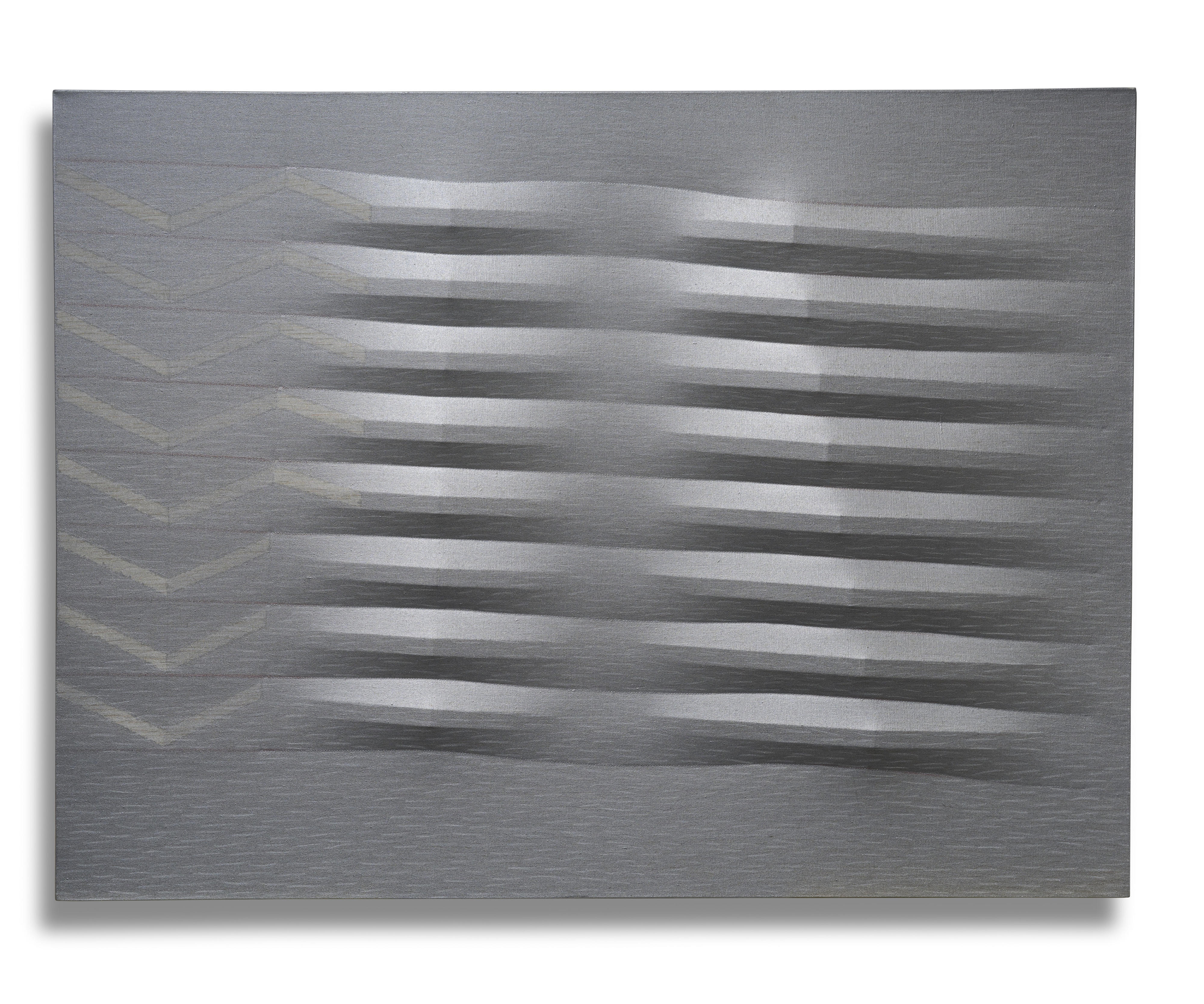
Argento (Silver)
1987
Vinyl tempera on stretched canvas
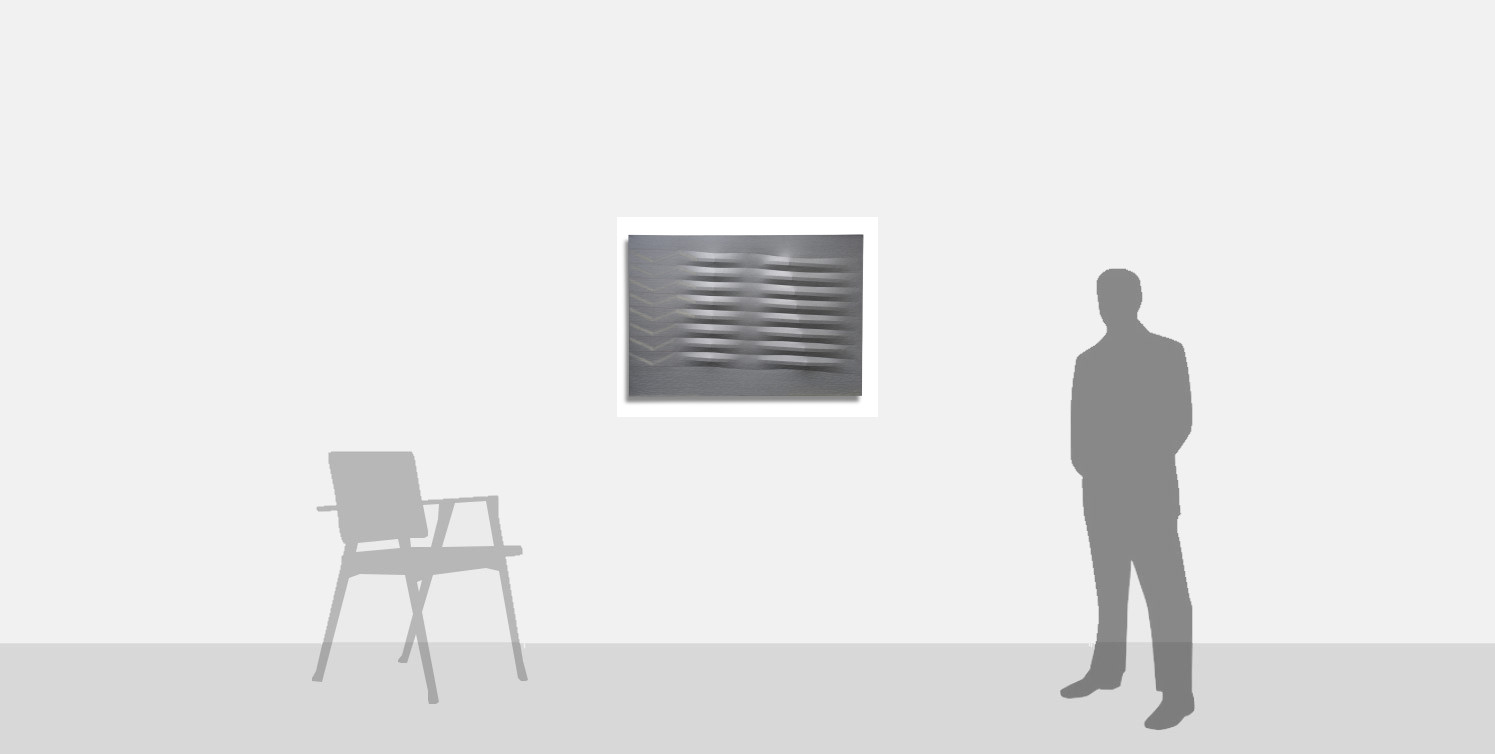
89 x 116 cm (35 1/8 x 45 5/8 in.)
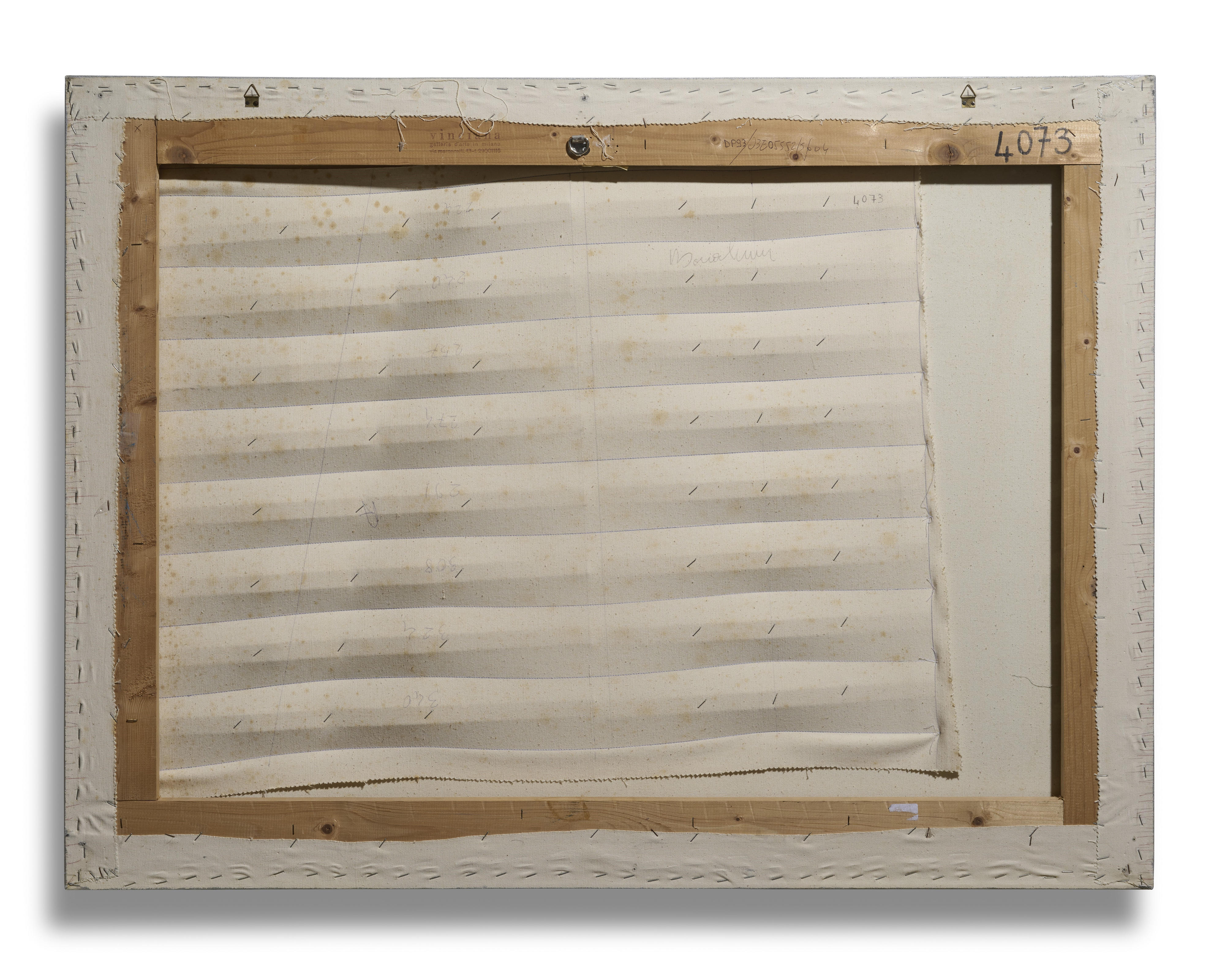
With frame: 96 x 123 x 6 cm (37 3/4 x 48 3/8 x 2 3/8 in.)
Provenance
Galleria Vinciana, Milan;
Private Collection, Italy.
Literature
F. Bonalumi and M. Meneguzzo, Agostino Bonalumi. Catalogue Raisonné, Milan, 2015, II, p. 589, fig. 1160.
Description
Agostino Bonalumi was at the forefront of the exceptional wave of Italian artists who followed in the footsteps of Lucio Fontana in the late 1950s and 1960s. Inspired by Fontana’s spatial experiments with the canvas, Bonalumi had begun working with Enrico Castellani and Piero Manzoni as early as 1958. By the mid-1960s, Bonalumi’s reputation was reaching new heights both internationally and at home, with strong links to Germany’s Zero artists and critics in Italy already beginning to recognise his importance; in 1966, the artist was invited to take part at the Venice Biennale for the first time. Bonalumi’s signature works are called Estroflessioni, in which monochrome canvases were stretched and deformed from behind to create abstract forms. Pushing the picture plane into three dimensions, Bonalumi’s paintings became sculptures, or, what the critic Gillo Dorfles called pitture-oggetti (painting-objects). Alongside Fontana with his knife, Burri with his blowtorch, and Castellani, who hammered nails into the reverse of his pictorial surfaces, Bonalumi was part of a fundamental redefinition of painting: the pictorial plane had become what American art historian Harold Rosenberg called “an arena in which to act.”
Disrupting the surface of the canvas and challenging the viewer's perception of two-dimensional surfaces and expected experience of a work of art, Bonalumi’s Argento of 1987 is a striking example of the artist’s trademark estroflessioni—a vision of space and form both timeless and futuristic. Manipulating the surface of the canvas, Bonalumi created abstract structures that emerge from the surface of the painting to explore the space around them. Here, the result is a dynamic pulsating visual experience, with series of parallel protrusions animating the surface of the canvas. These rhythmic spatial manipulations also interact with the light, directing it in unexpected ways across the surface of the work and revealing a plethora of silver tones.
Disrupting the surface of the canvas and challenging the viewer's perception of two-dimensional surfaces and expected experience of a work of art, Bonalumi’s Argento of 1987 is a striking example of the artist’s trademark estroflessioni—a vision of space and form both timeless and futuristic. Manipulating the surface of the canvas, Bonalumi created abstract structures that emerge from the surface of the painting to explore the space around them. Here, the result is a dynamic pulsating visual experience, with series of parallel protrusions animating the surface of the canvas. These rhythmic spatial manipulations also interact with the light, directing it in unexpected ways across the surface of the work and revealing a plethora of silver tones.