
Master of the Annunciation to the Shepherds
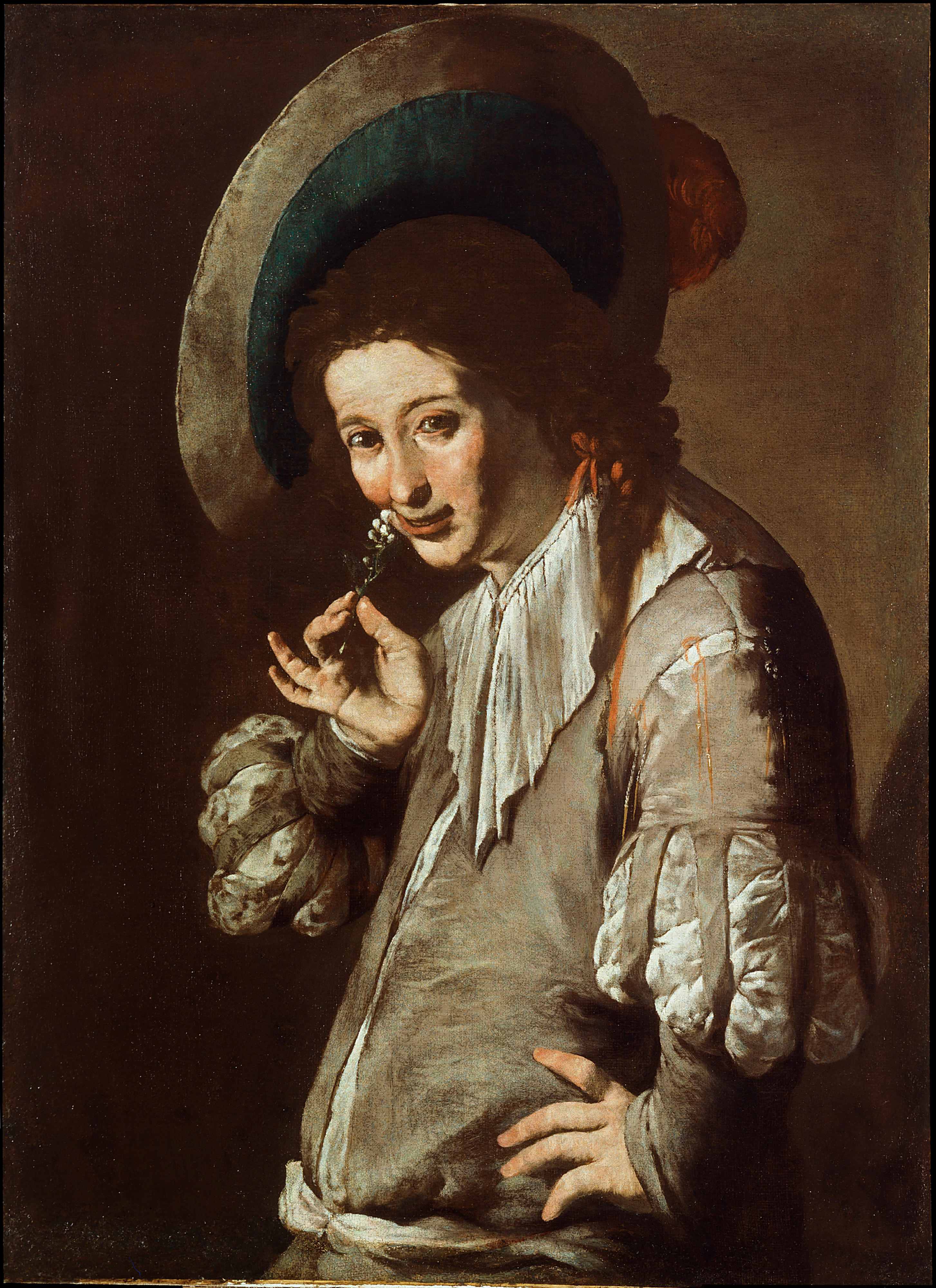
Allegory of Smell
c. 1630–35
Oil on canvas
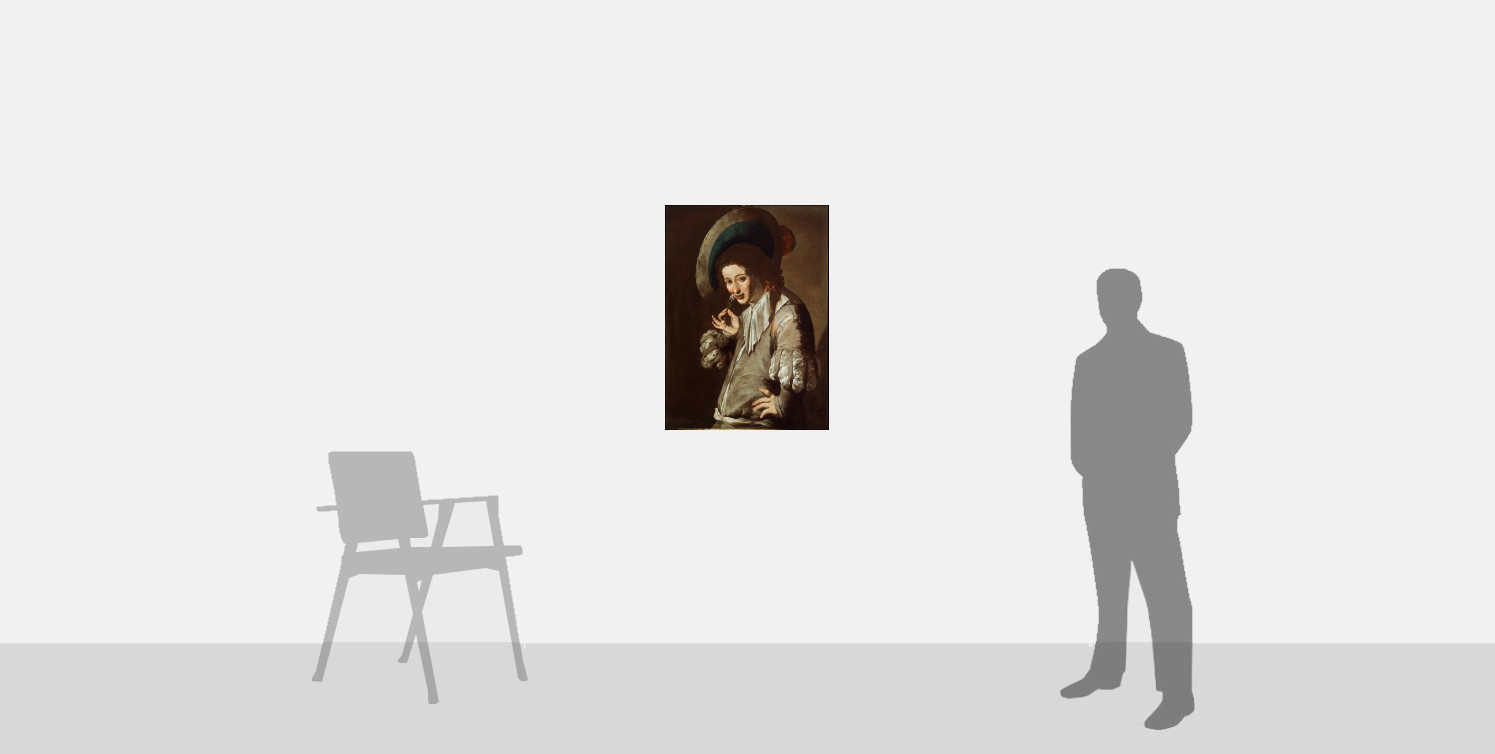
100 x 73 cm (39 3/8 x 28 3/4 in.)
With frame: 126 x 99cm (49 1/2 x 39 in.)
Provenance
Gosta Stenmans, Stockholm
with Galleria San Marco, Venice
Literature
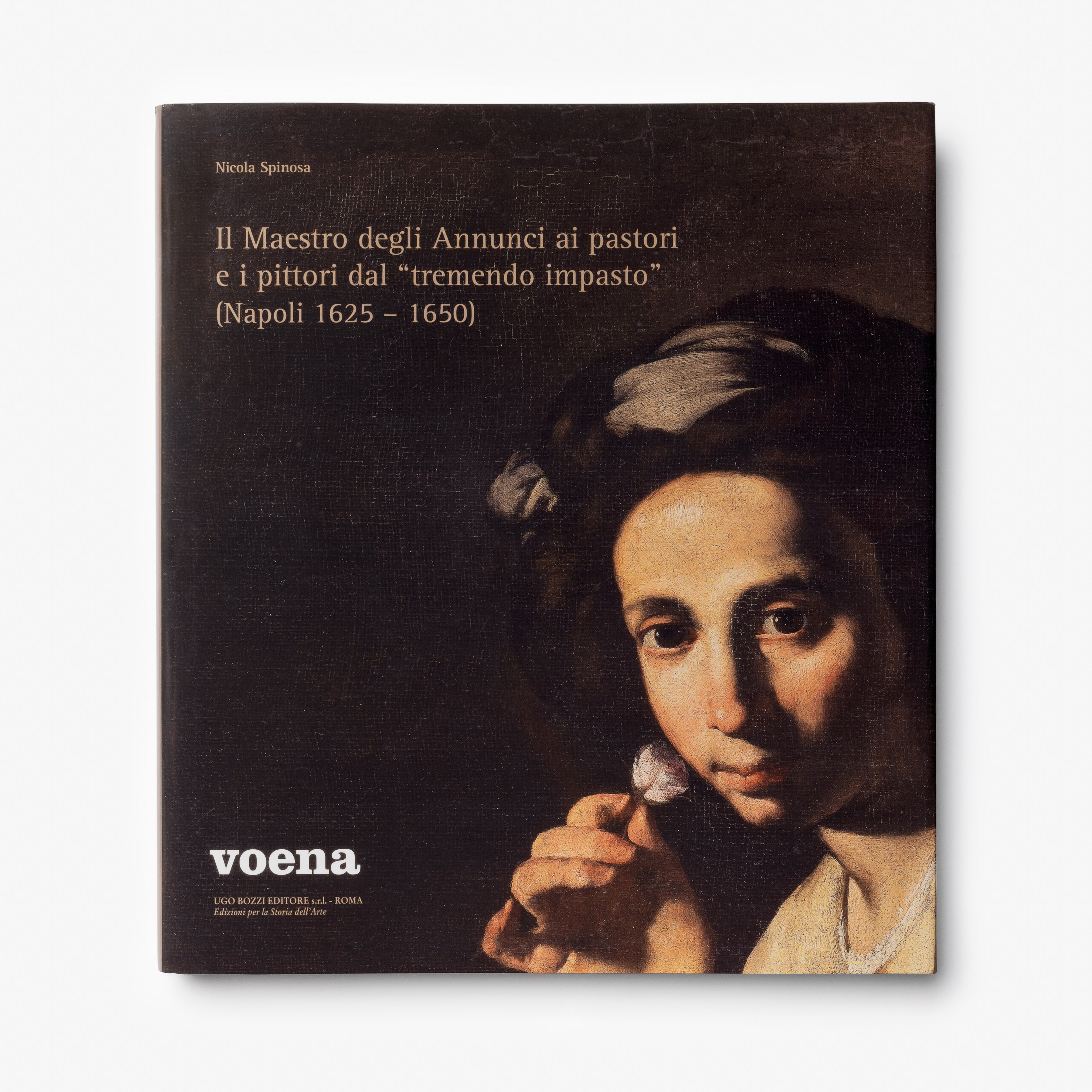
N. Spinosa, Il Maestro degli Annunci ai Pastori e i Pittori dal "Tremendo Impasto" (Napoli 1625–1650), Ugo Bozzi Editore and Voena Publishing, Rome, 2021, p. 161, no. A68.
Description
Though the identity of the so-called Master of the Annunciation to the Shepherds remains an open question, it is clear from the works assigned to this hand that the artist was of the highest calibre. Working in Naples in the second quarter of the seventeenth century, exhibiting strong affinities with both Ribera and Velázquez, the master’s works include several figure studies, some mythological subjects, and a number of versions of the Annunciation to the Shepherds, hence his sobriquet. The artist was first identified in the eponymous picture in the Birmingham Museum and Art Gallery, a work once given to Velázquez whose attribution was questioned by August Mayer in 1923 (see A. Mayer, Jusepe de Ribera, Leipzig, 1923). It was not, however, until 1958 that Ferdinando Bologna suggested naming the anonymous master after the Birmingham picture (see F. Bologna, Francesco Solimena, Naples, 1958).
In the years since, the artist’s
oeuvre has been substantially expanded, and several hypotheses have been put
forward concerning his identity. He has been identified with Bartolomeo
Passante, or Bassante (1618–1648), a documented artist with a signed picture in
the Museo del Prado in Madrid (ibid., and N. Spinosa, ‘Qualche aggiunta e
alcune precisazioni per il Maestro dell'Annuncio ai pastori’, in Scritti di storia dell'arte in onore di
Raffaello Causa, Naples, 1988, pp. 181–88), though this work has since been
eliminated from the oeuvre of the Master. More recently it has been
hypothesised that the Master should be identified with Juan (or Giovanni) Dò,
originally from Valencia, but known to be working in Naples in the 1620s (R.
Causa, ‘La Pittura del Seicento a Napoli dal Naturalismo al Barocco’, Storia di Napoli, V/II, 1972 and G. De
Vito, ‘Variazioni sul nome del Maestro dell’Annuncio ai pastori’ in Ricerche sul 600 napoletano. Saggi e ricerche per la storia dell'arte
1996, Naples, 1997, pp. 7–62). Others, meanwhile, have instead discerned a
Genoese influence in the master’s handling of paint, as well as drawing
comparisons with Giovanni Benedetto Castiglione’s treatment of animals. It
moreover remains uncertain whether, despite his working in Naples, the artist
was of Spanish or Italian origin. (The most recent summary of these debates may
be found in N. Spinosa, Pittura del seicento a Napoli: da Caravaggio a
Massimo Stanzione, Naples, 2010, pp. 326–28.)
The present painting is one of the first versions of a subject repeated by the
painter in his later years. For example, the
Maiden with a Flower (or Allegory of Smell) in a private collection in
Milan offers presents a subject nearly identical to that in our work. (see N. Spinosa, ‘La pittura del Seicento nell'Italia
meridionale’, in La pittura in Italia. Il Seicento, Milan, 1989, vol. II, p. 476).
According to Spinosa, the painting in Milan was executed during the latter
stage of the artist's activity, around 1640, and therefore was created after
the present work, which Spinosa dates between 1630 and 1635. The strongly
naturalistic style of the present painting, still influenced by the dark
tonalities of Ribera's work, is indeed different from the lighter palette and
tighter, more elegant style, Cavallinesque in tenor, found in works by the
Master purportedly executed after 1635.
The attribution of the present painting was proposed by Nicola Spinosa, whom we
thank for his assistance in compiling this report.
The artwork described above is subject to changes in availability and price
without prior notice. Where applicable ARR will be added.