
Saint Francis in the Wilderness
c. 1611–14
Oil on canvas
100 x 76 cm (39 3/8 x 29 7/8 in.)
Provenance
Koelliker collection, Milan.
Literature
Filippo Maria Ferro, “Novità e precisazioni su Tanzio da Varallo” in Mina Gregori and Marco Rosci, eds., Il Seicento lombardo. Giornata di studi (Turin, 1996), p. 14 fig. 15.
Filippo Maria Ferro, “Eremi dell’ultimo Tanzio” Nuovi Studi 3, 6 (1998), pp. 126, 129, no. 14.
Filippo Maria Ferro, “Tanzio da Varallo. Catalogo critico dei dipinti e dei disegni” De Valle Siccida 1 (1999), p. 136, no. 58.
Marco Bona Castellotti, ed., Tanzio da Varallo. Realismo, fervore e contemplazione in un pittore del Seicento, exh. cat. Civico Museo d’Arte Contemporanea, Milan, 2000, entry by Filippo Maria Ferro, p. 164, no. 43.
Francesco Frangi and Alessandro Morandotti, Dipinti lombardi del Seicento: Collezione Koelliker, Milan, 2004, p. 186, no. 25.
Pierluigi Carofano and Enrico Crispolti, Terra, materia e simbolo, exh. cat., Forta di Bard, Valle d’Aosta, 2008, p. 143, no. 43.
Description
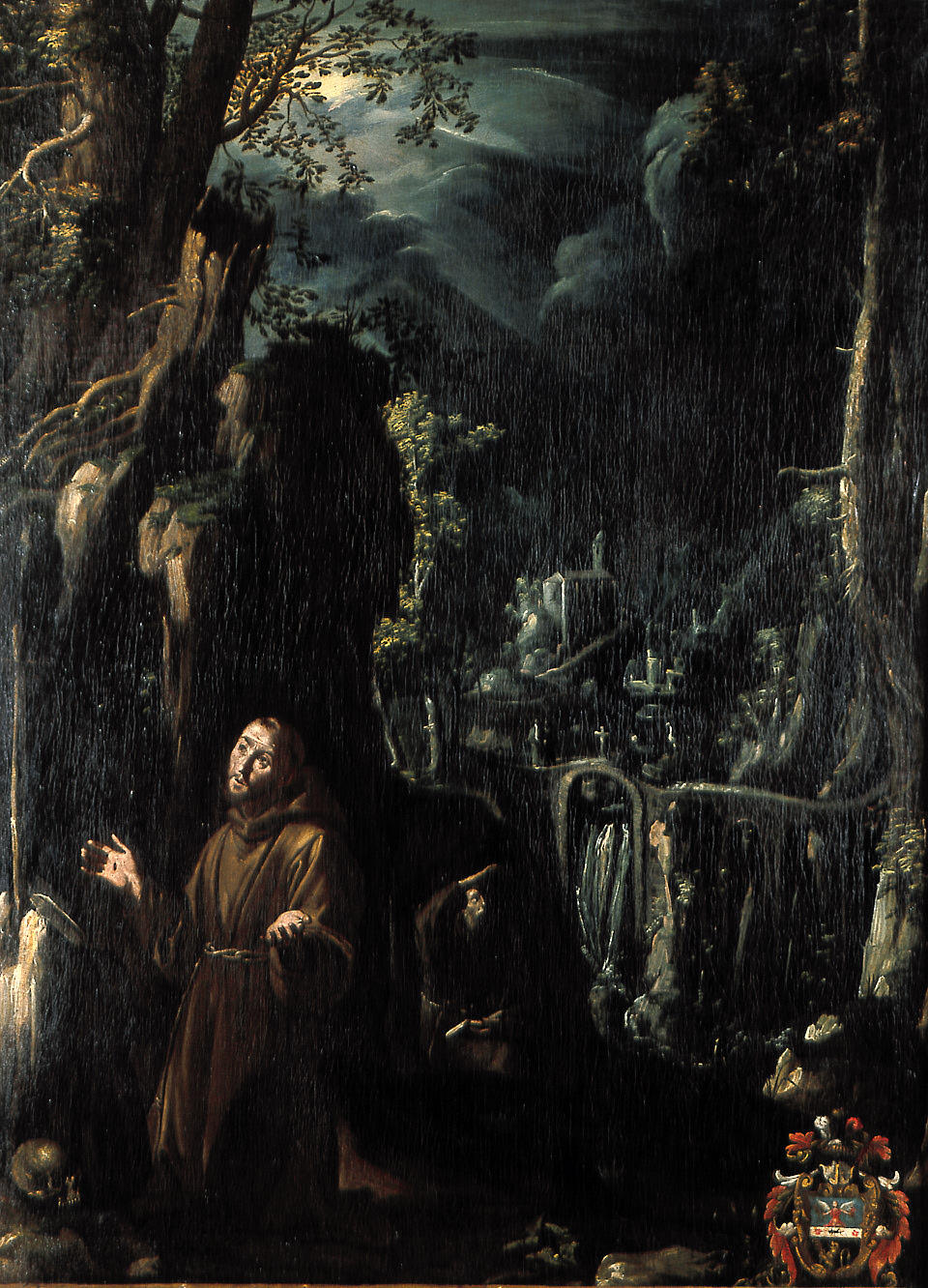
Saint Francis of Assisi (1181/82–1226), the founder of the Franciscan order, is believed to have received the stigmata—the wounds of Christ’s Crucifixion—in 1224 during a retreat on Mount Alverna in the Apennines. It is likely this event that Tanzio evokes here through the naturalistic yet transcendental imagery silvery light glancing off of the figure of the saint and the landscape features of this nocturnal scene. Dated to around 1611–14, the painting of Saint Francis demonstrates Tanzio’s accomplishment as a painter of private devotional images and cabinet pictures. It also reveals his interest in the Northern landscape tradition.
Tanzio was, it seems, acquainted with the hermit landscape paintings created for Cardinal Federico Borromeo and displayed in his Pinacoteca Ambrosiana, which, in addition to featuring Lombard art was especially rich in still life and northern landscape painting, which the Cardinal had begun collecting in Rome in the 1590s; Tanzio may likewise have seen similar northern landscapes in Roman collections when he visited the city in the first decade of the seventeenth century. The cardinal’s writings reveal that appreciated landscape paintings as he believed that they encouraged his contemplation of the magnificence of God’s creation, and the present painting might have been a commission from a patron who admired such northern works and desired something similar for their own collection or for use in private devotional practices. At the same time, Tanzio seems to have looked to prints by the norther engravers Jan and Raphael Sadeler and Cornelis Cort in devising his composition.
The artwork described above is subject to changes in availability and price without prior notice.