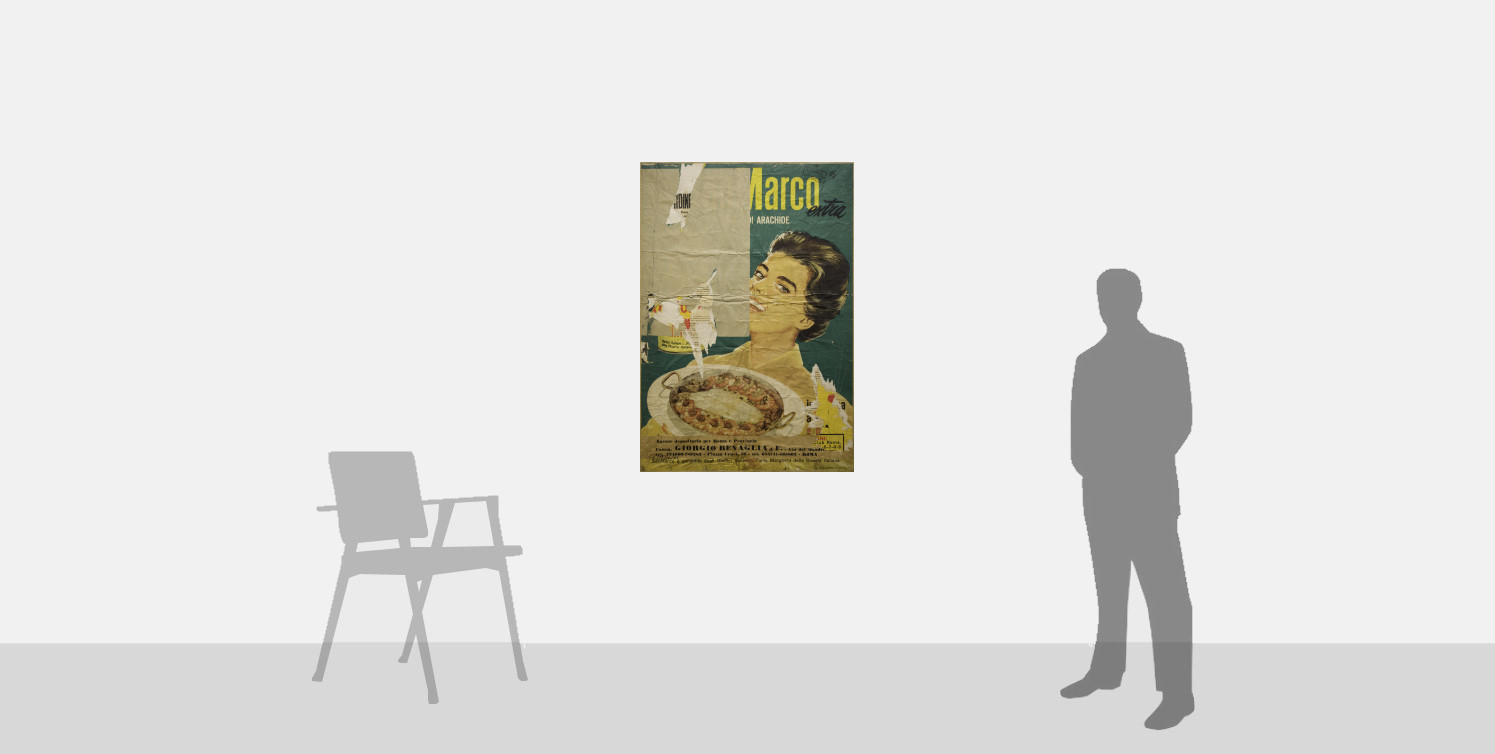

Mimmo Rotella
b. 1918, Catanzaro, Italy
d. 2006, Milan, Italy
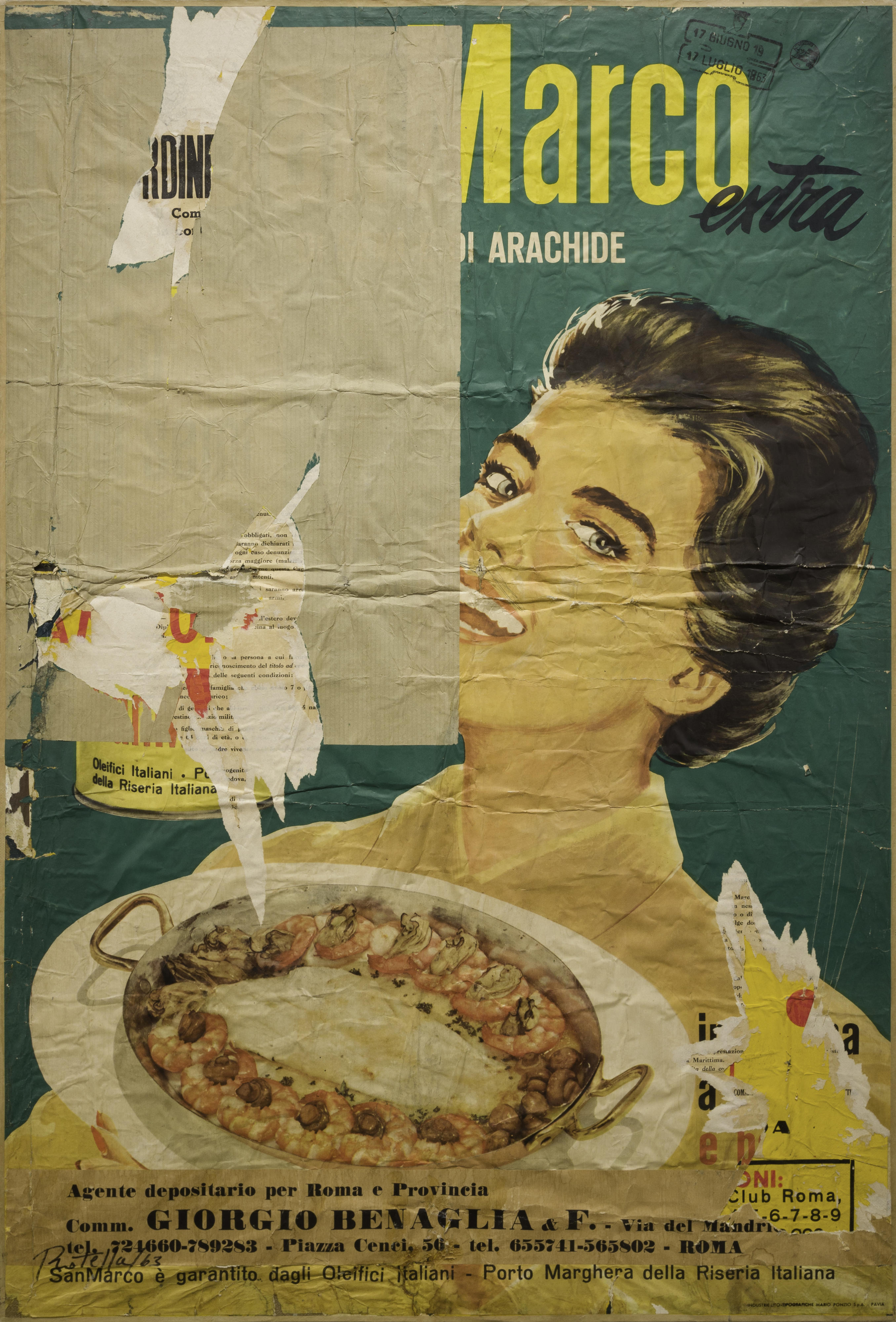
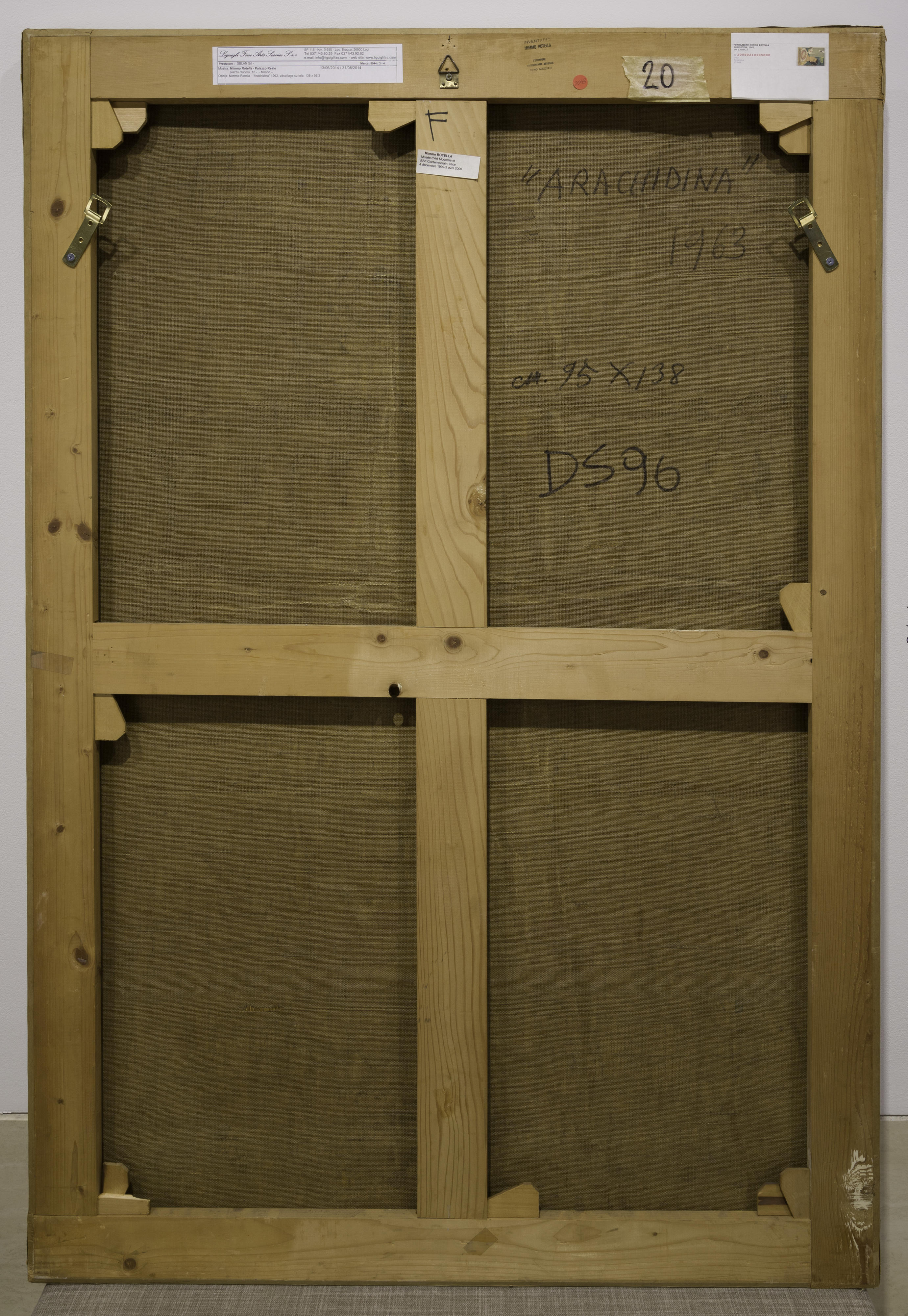
Arachidina
1963
Décollage on canvas
138 x 95.3 cm (54 3/8 x 37 1/2 in.)
Provenance
Private Collection, Milan.
Literature
G. Celant, Rotella, Milan 2004, pp. 259, 548.
G. Celant, Mimmo Rotella. Décollages e retro d’affiches, exh. cat. Milan, 2014, p. 280, no. 423.
A. Soldaini, Mimmo Rotella, exh. cat., London, 2015, illustrated p. 104, and p. 206, no. 57.
G. Celant, Mimmo Rotella: Catalogue raisonné, vol. I: 1944–61, Milan, 2016, p. 85; vol. II: 1962-1973, Milan, 2020, pp. 806, 1112, no. 1963 072.
A. Piazzoli and P. S. Ubiali (eds.), Oltre la Pop-Art. La Mec-Art Italiana, exh. cat., Bergamo, 2020, p. 8, illustrated.Description
Arachidina is among Mimmo Rotella’s most iconic works. During the period between 1961 and 1963 Rotella felt a frustration with what he saw as a stagnant art world which was not moving forward, and after having seen new tendencies and explorations in painting whilst frequenting the Tartaruga and Salita galleries in Rome, he sought to extend his creative vocabulary by using advertising and film posters. In particular Rotella focused on branding, marketing and the enticing display of products for sale which had became the modern-day protagonists of commercial and cultural communication and promotion.
Choosing images from both film posters and contemporary advertising such as Birra, Il Punto e Mezzo or The Hot Marilyn (all 1962) and by stripping them from the walls and working on them with a burin, he subverted and changed the meaning of the images. The art critic Guido Le Noci perhaps more accurately described them as 'doppio décollage' (double décollage) after encountering Rotella’s solo exhibition in Apollinaire Gallery, Milan in 1962. In fact the artist was very careful when stripping posters from walls and carefully manipulated the obtained fragments which were crucial in illustrating his desired impression.
Choosing images from both film posters and contemporary advertising such as Birra, Il Punto e Mezzo or The Hot Marilyn (all 1962) and by stripping them from the walls and working on them with a burin, he subverted and changed the meaning of the images. The art critic Guido Le Noci perhaps more accurately described them as 'doppio décollage' (double décollage) after encountering Rotella’s solo exhibition in Apollinaire Gallery, Milan in 1962. In fact the artist was very careful when stripping posters from walls and carefully manipulated the obtained fragments which were crucial in illustrating his desired impression.