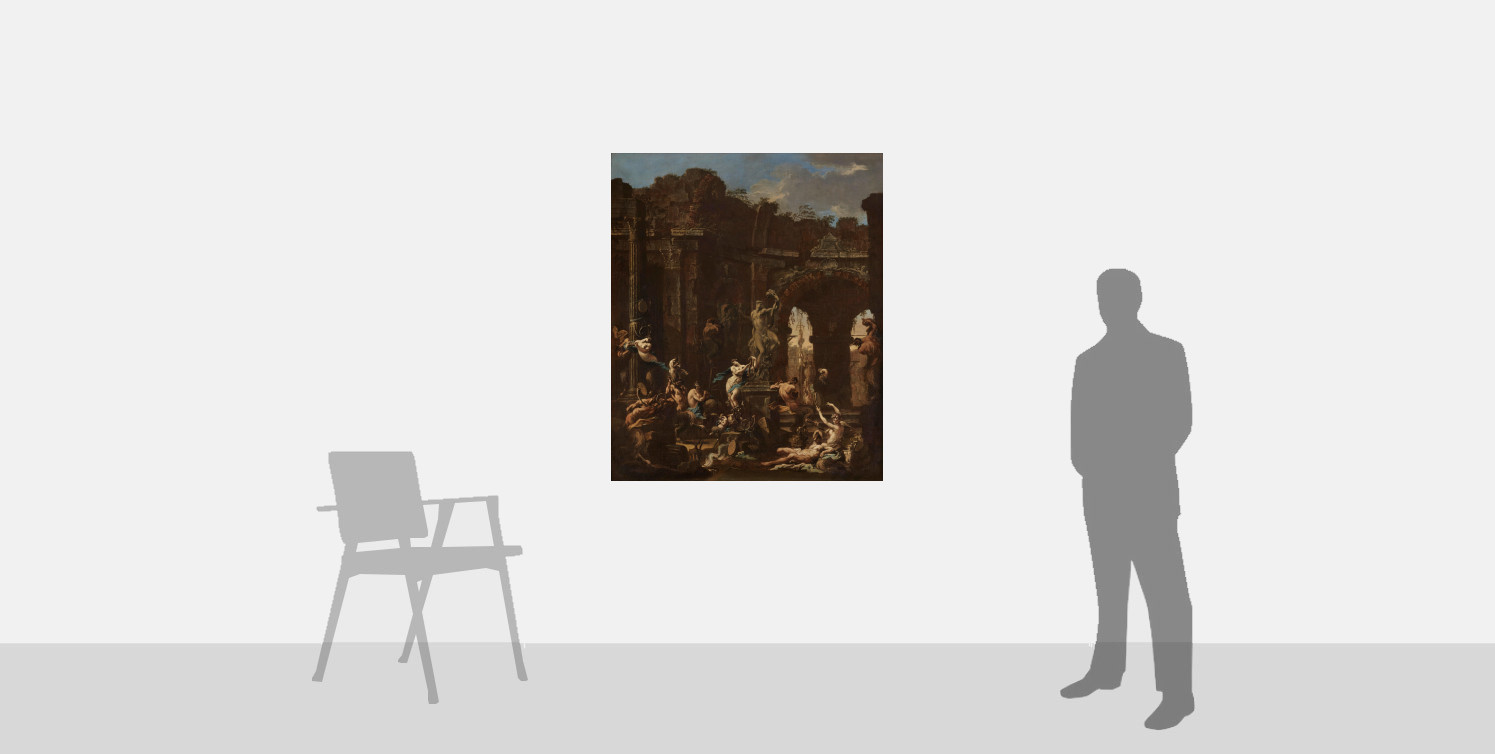

Alessandro Magnasco
b. 1667, Genoa
d. 1749, Genoa
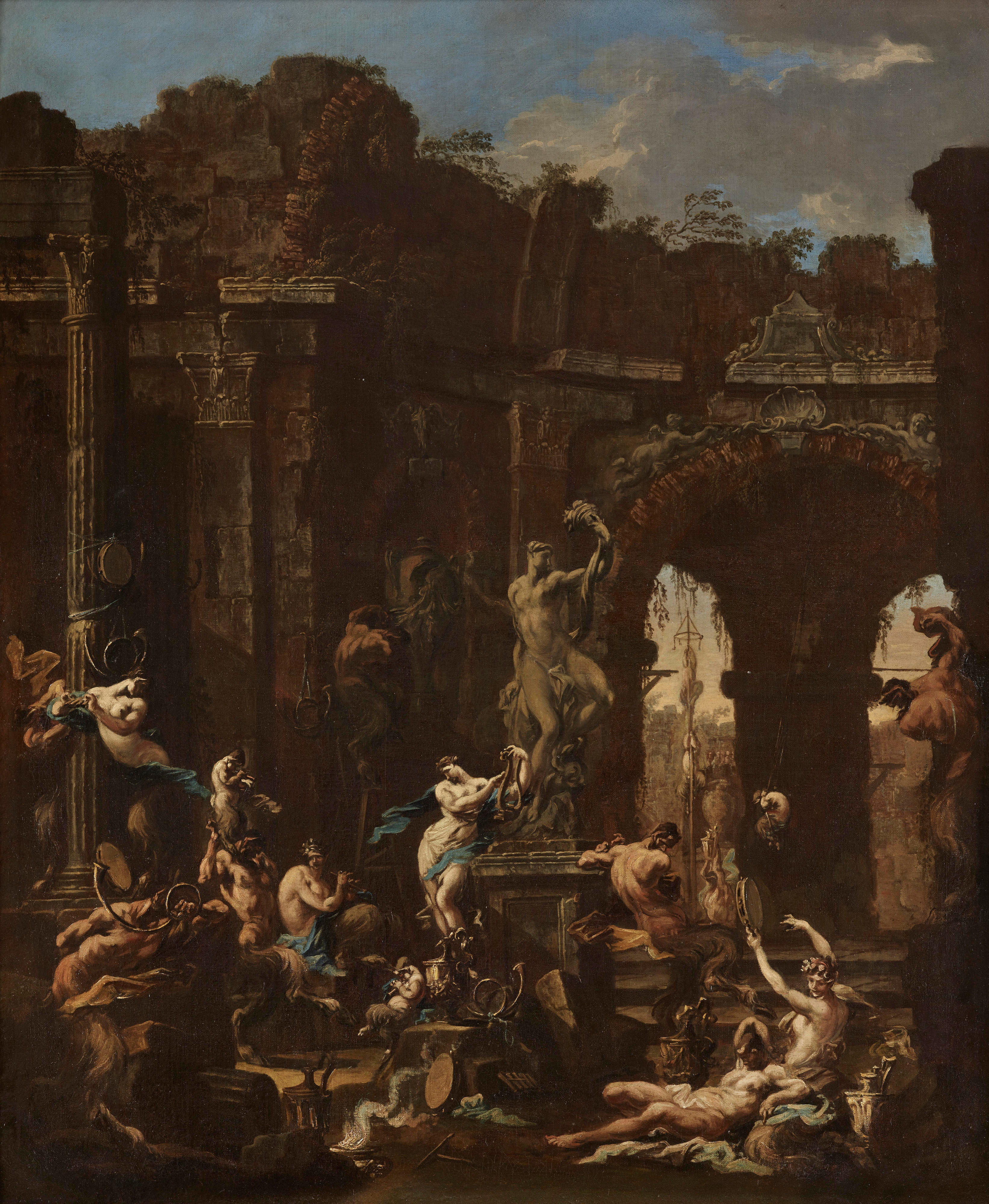
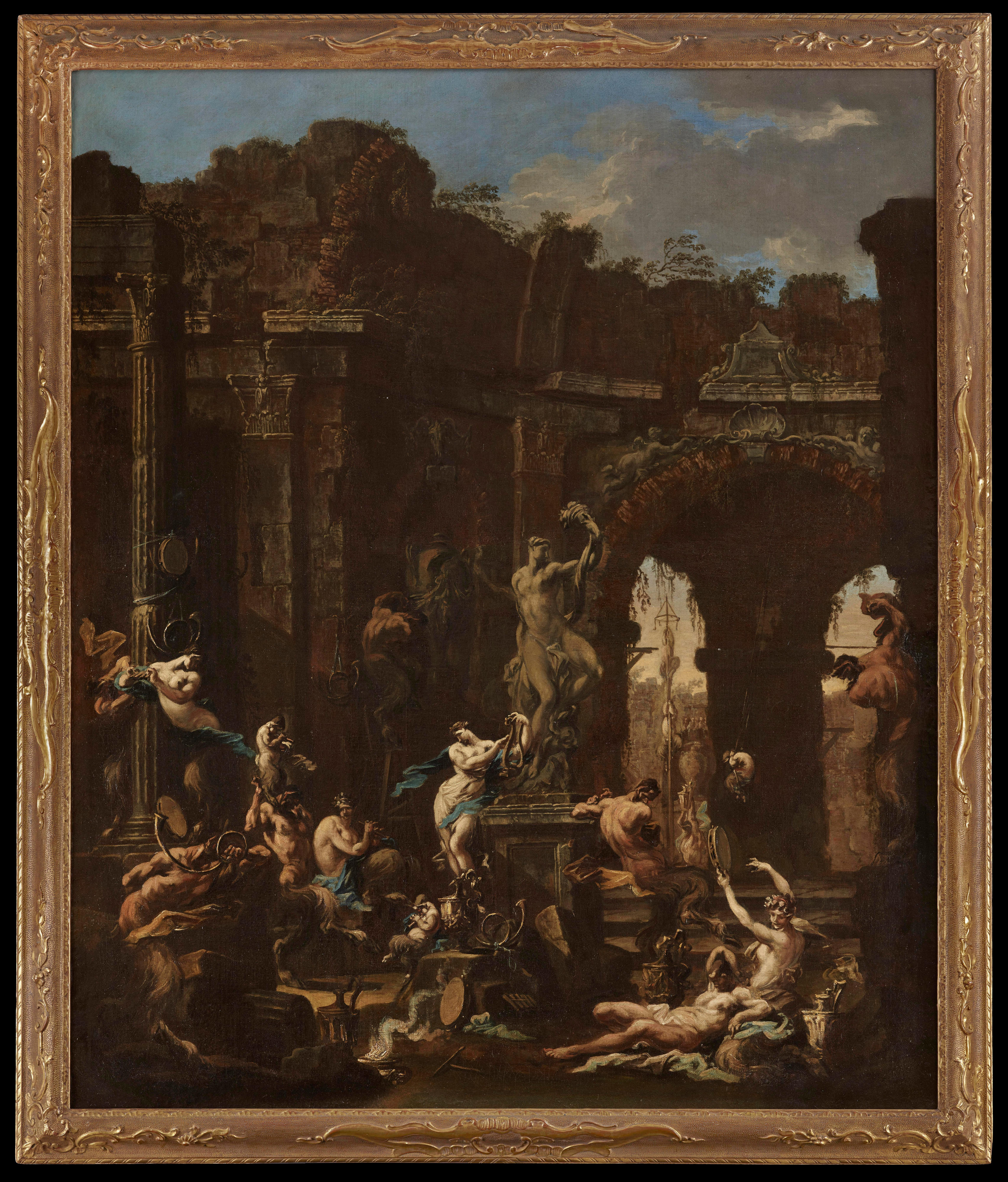
Bacchanal with satyrs and nymphs
c. 1723–25
Oil on canvas
146 x 121 cm (57 1/2 x 47 5/8 in.)
Framed: 159.5 x 135.5 cm (62 3/4 x 53 3/8 in.)
Provenance
Giovanni Rasini, Milan,
Private collection.
Literature
M. Pospisil, Magnasco, Florence, 1944, p. LXXX, tav. 84.
B. Geiger, Saggio d'un catalogo delle pitture di Alessandro Magnasco 1667-1749. Regesti e bibliografia, Venice, 1945, p. 45.
Kunstschätze der Lombardei, exhibition catalogue, Zurich, 1948–49, no. 773.
A. Morassi, Mostra del Magnasco, exhibition catalogue, Bergamo, 1949, p. 43, cat. 64, f. 72.
B. Geiger, Magnasco, Bergamo, 1949, p. 108, tav. 316.
L. Muti and D. de Sarno Prignano, Magnasco, Ravenna, 1994, p. 237, cat. 216; p. 472, fig. 265.
Description
Born in Genoa, Magnasco initially trained under his father, Stefano, who died prematurely, upon which the young Magnasco moved to Milan where he worked in the studio of the esteemed Venetian painter Filippo Abbiati. By the 1690s, Magnasco had established an independent practice as a portraitist. However, his first signed painting Meeting of Quakers, indicates that by 1695 he was depicting subjects from contemporary life. He increasingly produced pictures that defied categorisation – and for which he is best known today – often featuring energetic and lively figures among varying settings, including lush landscapes and atmospheric ruins. In his style and choice of subjects he clearly took inspiration from the prints of Jacques Callot (1592–1635) and Stefano Della Bella (1610–1664). In the early part of his career he often painted figures for works in collaboration with specialist background painters including Marco Ricci (1676–1729) and Clemente Spera (late 17th century–c. 1730); the latter was likely involved in the execution of the architectural ruins in the present picture, as noted by Muti and de Sarno Prignano in the 1994 catalogue raisonné. Later in his career, beginning with his Florentine sojourn in the first decade of the 18th century, Magnasco worked independently, developing a highly original and lyrical style that earned him favour with many of the most prominent collectors of his time, including the Milanese Giovanni Francesco Arese, Grand Prince Ferdinando and the Medici in Florence, and the Austrian governor Geralomo di Colloredo.
By c. 1711 Magnasco had returned from Florence to Milan, where he remained
until 1735, when he moved back to Genoa, the city of his birth. Many of his
great masterpieces date from these years, including the large paintings for the
abbey of Seitenstetten (1719–1735) and the Entertainment
in an Albaro Garden in the Palazzo Bianco, Genoa.
The present painting exhibits the key characteristics of Magnasco’s style from
his second Milanese period (1711–35), when the artist was at the height of his
career. Dating from the 1720s, the picture represents a bacchanalia set among decadent and imaginary classical ruins,
replete with rococo flourishes that show Magnasco’s early adoption – before its
widespread dissemination – of this style that was to become so dominant. The
bacchanal was a subject that Magnasco portrayed on multiple occasions, with
comparable examples now in the J. Paul Getty Museum, Los Angeles and the State Hermitage
Museum, St. Petersburg (fig. 1). Nymphs and satyrs participate in an ancient
pagan feast celebrating Bacchus, the god of wine. Revelling creatures animate
the scene, depicted in various exaggerated poses that evoke the decadence of
the occasion. The architectural setting and the characters appear to co-exist
in harmonious profligacy, with lively use of highlights and
decorative details of the ruins elevating the prominence of the background,
until it is hard to discern a distinction between the mythological creatures
and their surroundings. Musical instruments lay scattered across the scene,
some discarded, some being played by the impassioned figures, contributing to
the sense of hedonism and vigour. A small satyr in the background of the
painting sits hunched over on a swing erected on the ruins, while to the left
of this figure two further satyrs climb a pole; such small unusual details
contributed to the liveliness of Magnasco’s paintings, a key factor in his
popularity among his Milanese clientele.
Several of the
figures appear elsewhere in Magnasco’s most impressive paintings from this
period, further testifying to the importance of this work and reinforcing its
dating between 1720–30. The satyr at the far right, clinging to the ruins, also
appears in The Triumph of Venus
(Getty Museum, Los Angeles, fig. 2), visible at the right of the painting,
holding onto an urn in front of a column. The horn player in the left
foreground of our painting is also similar to that in the Getty’s painting, and
also in its pendant Bacchanale (fig. 3).
The pole with two climbing satyrs, mentioned above, is also included in the
latter Getty painting (fig. 4). As in the Getty Bacchanale and to some
extent in the Hermitage Bacchanalia,
here Magnasco employs a relatively limited palette in this work, aside from
a few details of blue to denote the swirling drapery. The brushwork is
instinctive and lively, reflecting the energy of the scene.
Fig. 1: Alessandro Magnasco, Bacchanalia, c. 1710–1720, oil on canvas, 110 x 167 cm, The State Hermitage Museum, St. Petersburg, ГЭ-4035.
Fig. 2: Alessandro Magnasco, The Triumph of Venus, c. 1720–30, oil on canvas, 118.1 × 148.6 cm (46 1/2 × 58 1/2 in.), The J. Paul Getty Museum, Los Angeles, 78.PA.2.
Fig 3: Alessandro Magnasco, Bacchanale, c. 1720–30, oil on canvas, 118.1 × 148.6 cm (46 1/2 × 58 1/2 in.), The J. Paul Getty Museum, Los Angeles, 78.PA.1.
Fig. 4: Detail of Magnasco, Bacchanale (fig. 3), showing climbing satyrs in the background.