
Lucio Fontana
b. 1899, Rosario de Santa Fé, Argentina
d. 1968, Comabbio, Italy
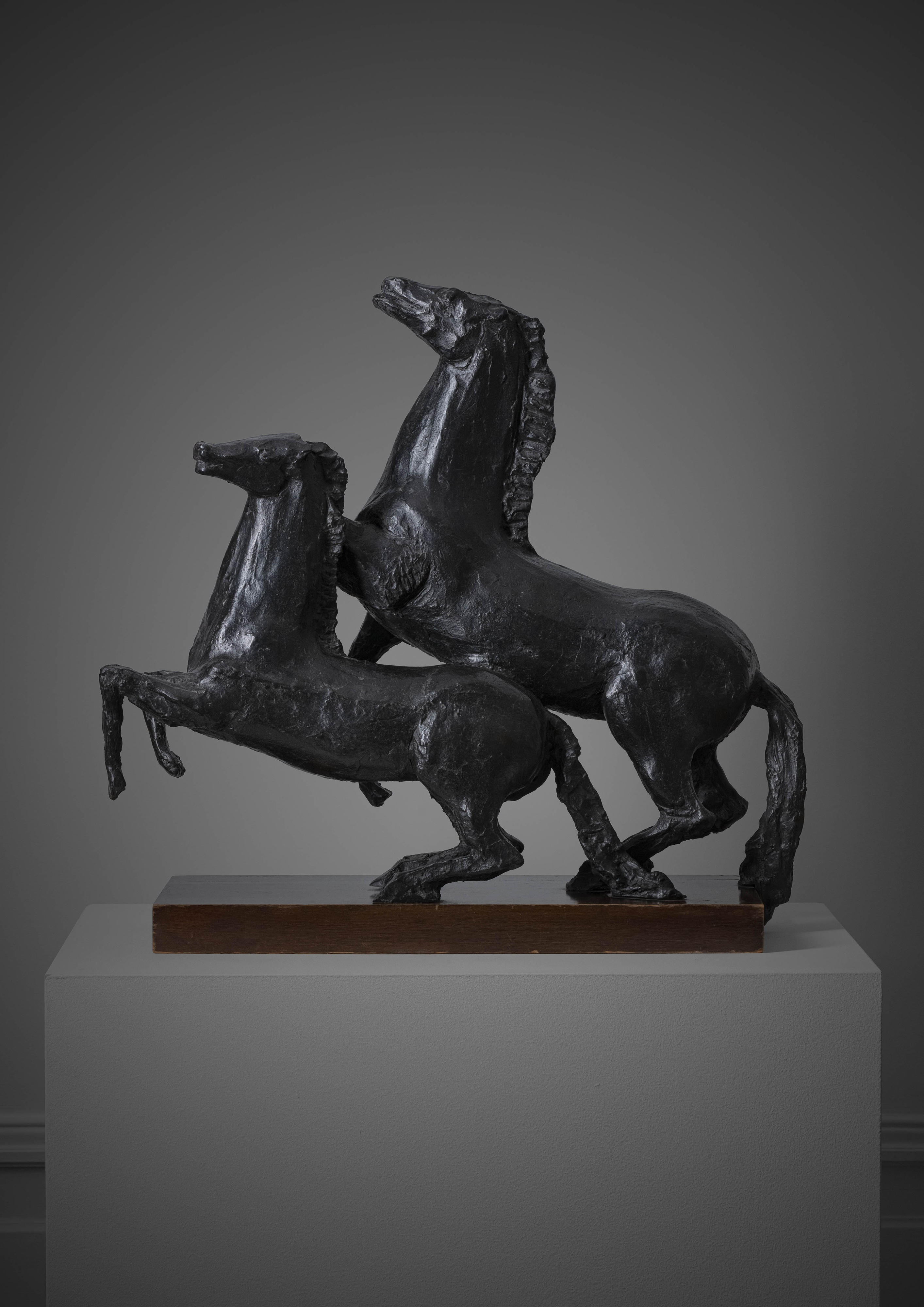
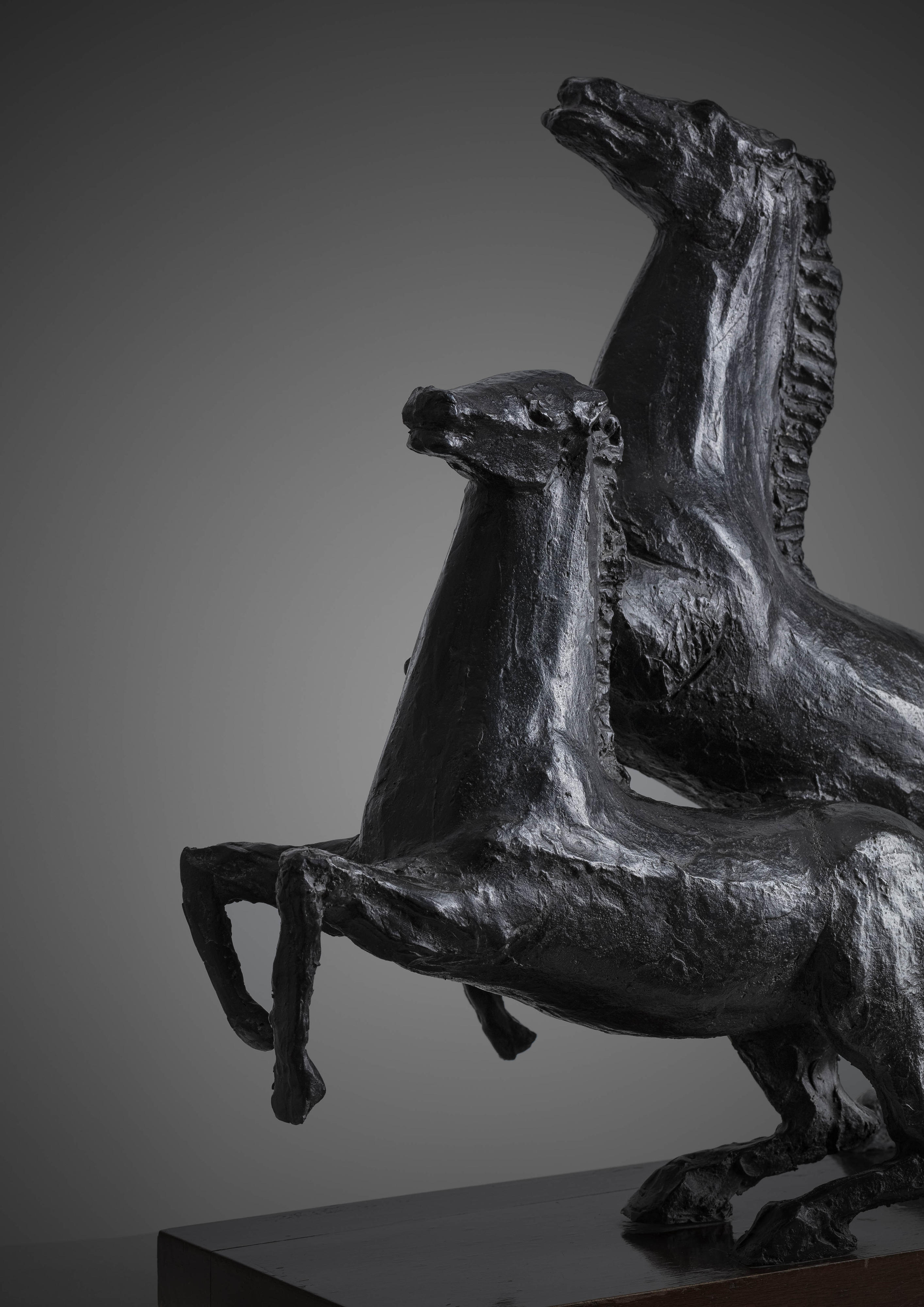
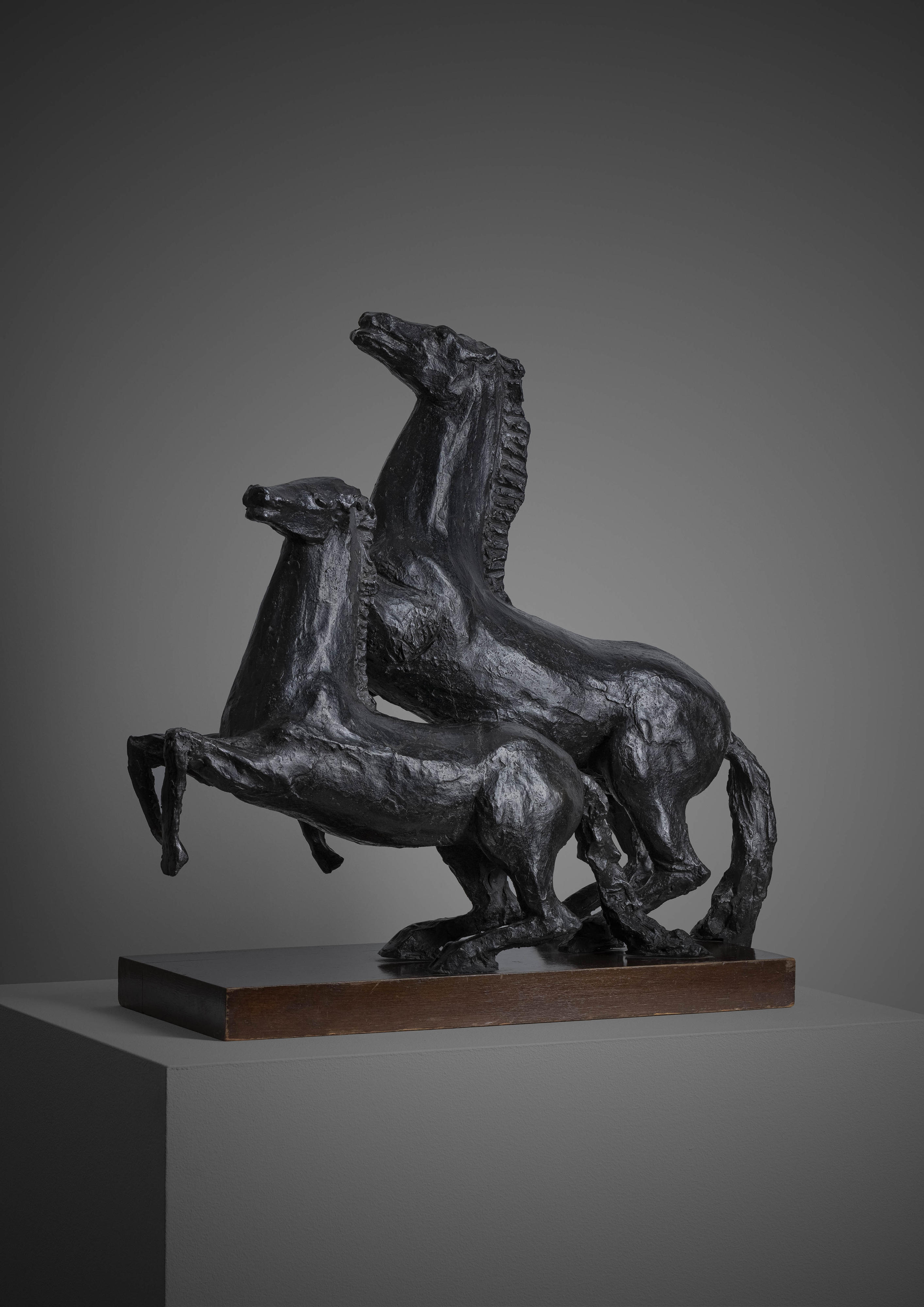
Cavalli che Seguono la Vittoria (Horses in the Wake of Victory)
1936
Patinated bronze
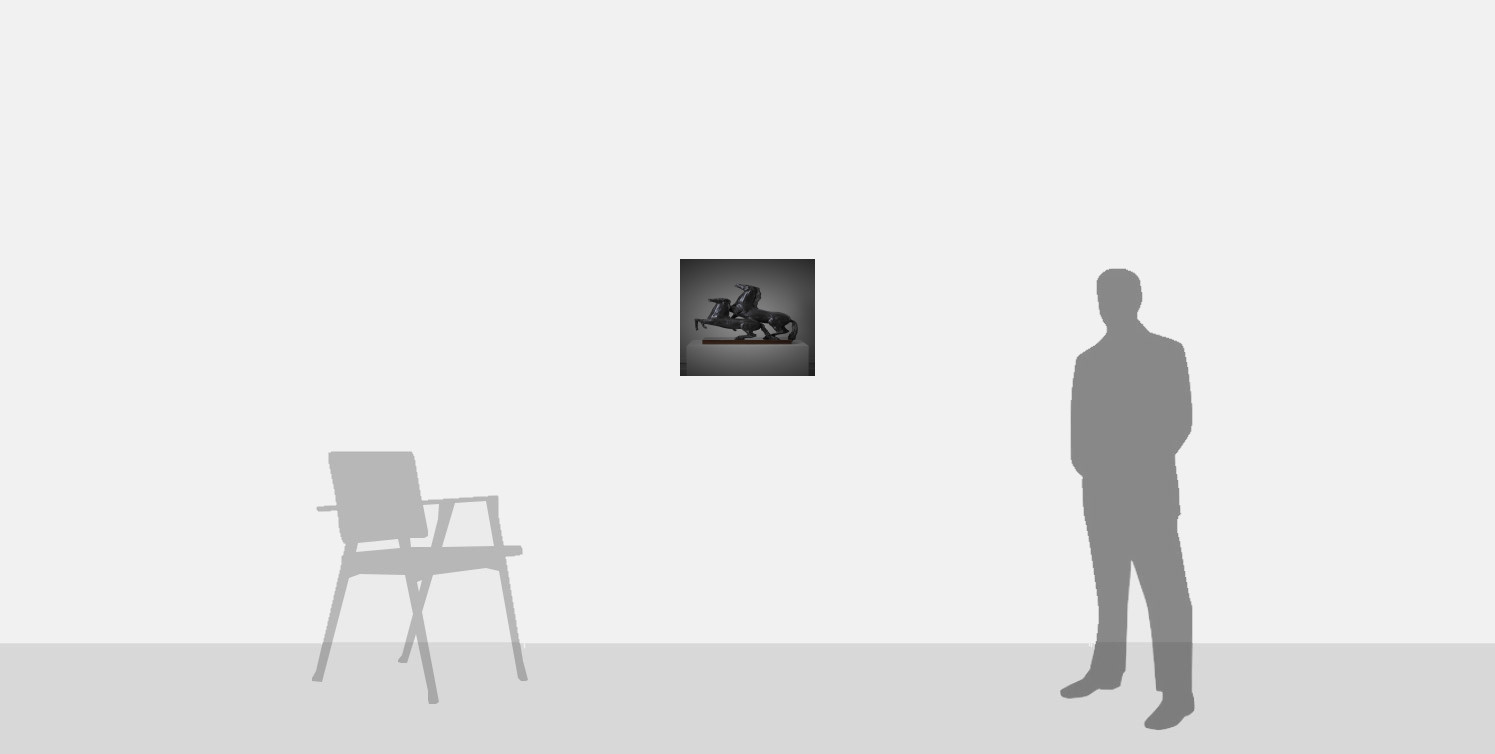
52 x 60 x 25 cm (20 1/2 x 23 5/8 x 9 7/8 in.)
Provenance
Private collection.
Literature
Paolo Campiglio, Lucio Fontana: la scultura architettonica negli anni trenta, Nuoro, 1995, pp. 83–84, no. 46.
Flaminio Gualdoni and Paolo Campiglio, eds., Lucio Fontana e Milano, exh. cat. Museo della Permanente, Milan, 1996, pp. 55, 152, no. 8.
Enrico Crispolti, Centenario di Lucio Fontana, exh. cat. Triennale di Milano, Milan, 1999, p. 170.
Penelope Curtis and Paolo Campiglio, Scultura lingua morta : Scultura nell’Italia Fascista/Dead Language Cculpture : Cculpture from Fascist Italy, exh. cat. Henry Moore Institute, Leeds, and Rovereto, Museo di arte moderna e contemporanea di Trento e Rovereto, 2003, p. 98.
Enrico Crispolti, Lucio Fontana: catalogo ragionato di sculture, dipinti, ambientazioni, Milan, 2006, vol. 2, pp. 935, no. 36 A 5.
Paolo Campiglio, Lucio Fontana: Works from 1936 to 1965, exh. cat. Amedeo Porro Fine Arts and Ben Brown Fine Arts, London, 2015, pp. 32–33.
Lucio Fontana: Sculptor–From the Earth to the Cosmos, exh. cat. M&L Fine Art, London, 2017, p. 21.
Bruno Corà, ed., Il rosso e il nero, exh. cat. Galleria Tega, Milan, 2017, p. 106.
Description
Fontana’s imposing bronze Cavalli of 1936 are animated with power and motion. Sculpture was fundamental to the artist’s career, and although he trained in the academic tradition of sculpture, his passionate and creative nature soon prevailed, leading him to explore a highly experimental practice obsessed with energy and movement. Although strongly influenced in the 1930s by the abstractions of the Futurist ceramicist Tullio Mazzotti, for a period in the late 1930s and 1940s Fontana returned to figuration, until new modernist trends of the postwar period emerged, his own practice evolving concurrently.
Cavalli, executed in 1936, can be reIated to the commission Fontana undertook in the Sala della Vittoria, during the VI Triennale di Milano, together with the architect Giancarlo Palanti and the painter Marcello Nizzoli. For the Sala, Fontana created a modern version of an ancient Roman triumph, featuring a woman leading a pair of rampant horses. Despite the inherent classicism of his subject matter, Fontana abstracted the forms, imbuing his monumental plaster sculpture with resolute and surprising modernity. Fontana made a number of clay models for the sculpture, and, prompted by the great success of the finished plaster, he turned a number of these bozzetti and modelli into bronzes like this one, destined for discerning collectors. Fontana’s ceramic models and subsequent bronzes reveal the expressive, gestural quality of his artmaking largely absent in the finished plaster.
The artwork described above is subject to changes in availability and price without prior notice.
Where applicable ARR will be added.