

Daniele Crespi
b. 1597/98, Busto Arsizio, Lombardy
d. 1630, Milan
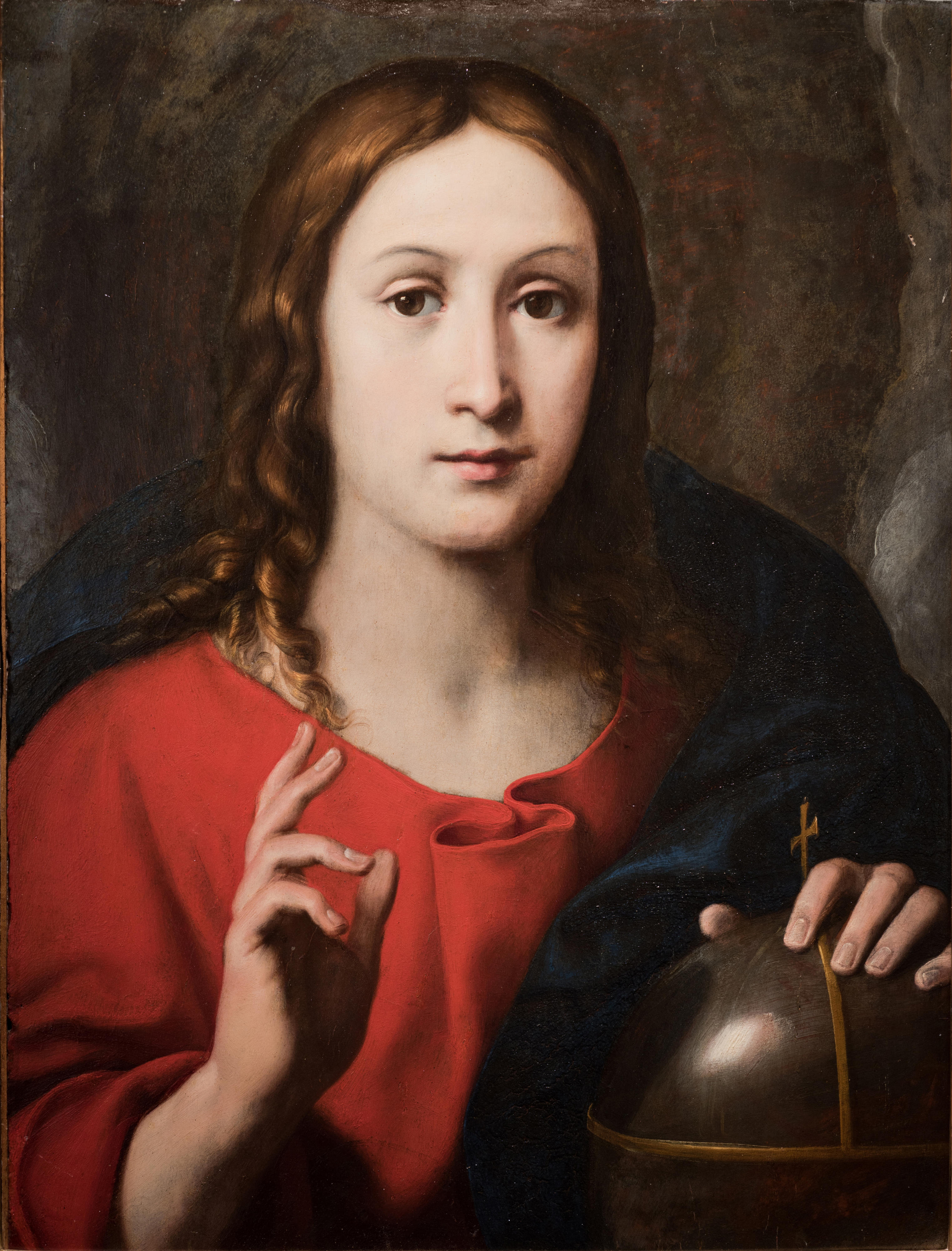
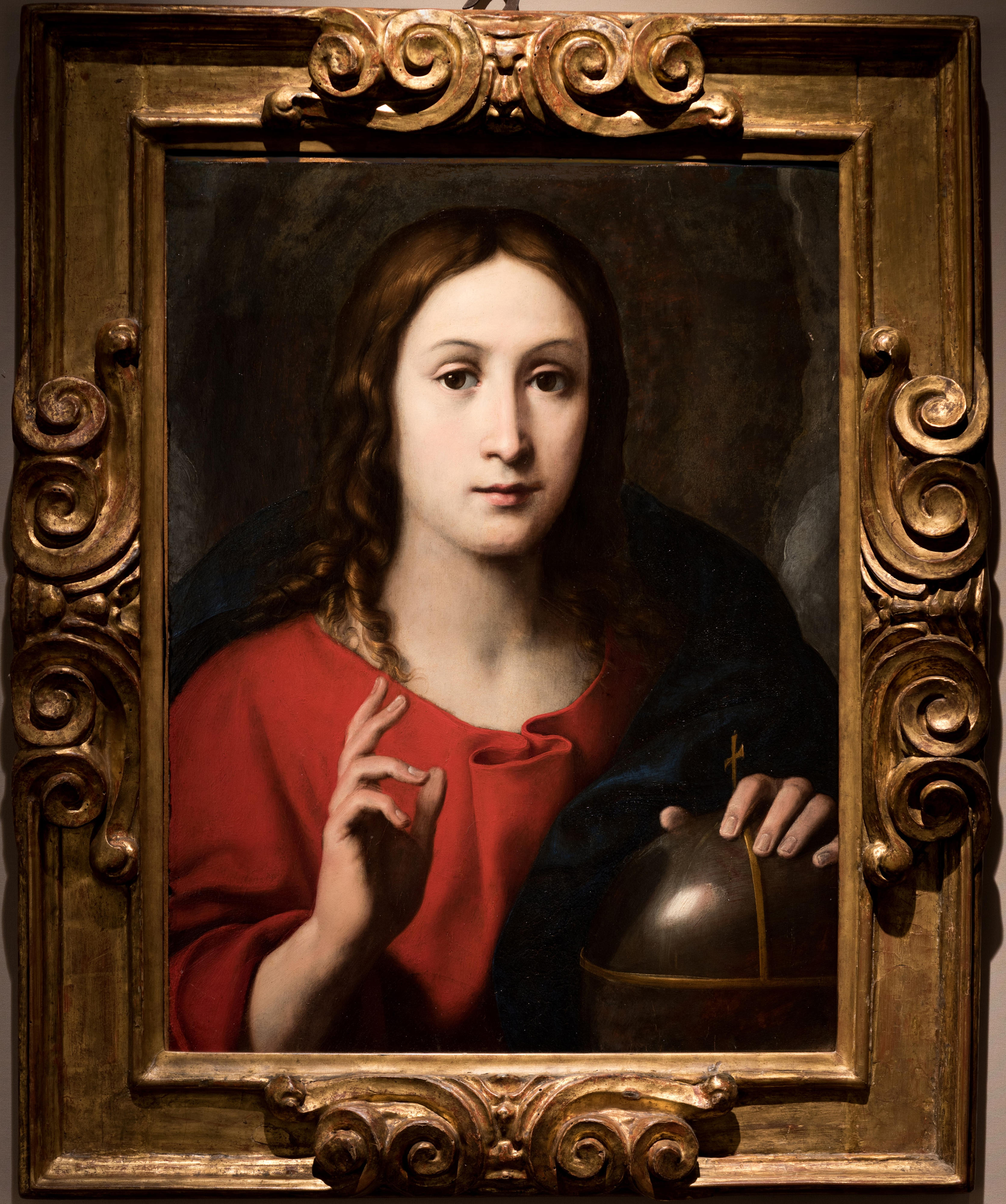
Christ as Salvator Mundi
c. 1628–30
Oil on wood panel
64.5 x 48 cm (25 3/8 x 18 7/8 in.)
Framed: 118 x 96 x 5 cm (46 1/2 x 37 3/4 x 2 in.)
Provenance
Giuseppe Giacomo Filippo Botteri, Milan, listed in an inventory of 1697 as “Nr.o Sig.re mezza figura con il Mondo in Mano Originale di Daniele Crespi.” (Nancy Ward Neilson, Daniele Crespi, Soncino, 1996, p. 74).
Sotheby’s, London, 8 July 2004, lot 304;
Koelliker collection, Milan.
Literature
Francesco Frangi in Francesco Frangi and Alessandro Morandotti (eds.), Maestri del ‘600 e del ‘700 lombardo nella Collezione Koelliker, exh. cat., Milan, 2006, pp. 88–89.
Description
In this painting, Daniele Crespi presents Christ as he is characterized in the Gospel of John 4:14: “And we have seen and testify that the Father has sent his Son as the “Savior of the World.” It is a hieratic presentation, with Christ posed frontally and looking directly at the spectator, beardless, and thus young, with auburn ringlets, holding a sphere surmounted by a cross in his left hand and offering benediction with his right. This is a conventional format and canonically required for the depiction of the subject, with Jesus shown as the unwavering comforter of the burdened and offering the only true path towards salvation. The orb is both an emblem of kingship as well as a symbol of the world itself; Christ here literally holds the well-being of the world and its inhabitants in the palm of his hand. The format follows the precedent of the “Christ Pantocrator” (“Ruler of All” or “Sustainer of the World”) from Eastern Orthodox traditions, commonplace in religious imagery dating to Byzantine mosaics, although Crespi’s Christ is portrayed as resolutely human—portrayed as a rather naturalistically rendered youth, and lacking as he does a crown, the shape of a halo merely suggested by the parting of the clouds against which he is set.
The image of Christ as Salvator Mundi has a long and venerable history in the art of Lombardy, beginning with Leonardo da Vinci. Around twenty copies of the Renaissance master’s famous and recently rediscovered image made by his various Lombard followers survive today, and, given Cardinal Federico Borromeo’s enthusiasm for Leonardesque painters, including Marco d’Oggiono, Bernardino Luini, and Giampietrino, is it likely that Crespi looked to at least one of these examples in conceiving this image.
Francesco Frangi dates the painting to ca. 1628–30, and thus in the very last years of Crespi’s short life; another version is preserved in the Banca Popolare di Sondrio (oil on canvas, 63 x 48.2 cm, for which see Mare Cristina Terzaghi, Tesori d’arte delle banche lombarde, Milano 1995, p. 446).
Please note that the price and availability of the above work are subject to change without prior notice.
The image of Christ as Salvator Mundi has a long and venerable history in the art of Lombardy, beginning with Leonardo da Vinci. Around twenty copies of the Renaissance master’s famous and recently rediscovered image made by his various Lombard followers survive today, and, given Cardinal Federico Borromeo’s enthusiasm for Leonardesque painters, including Marco d’Oggiono, Bernardino Luini, and Giampietrino, is it likely that Crespi looked to at least one of these examples in conceiving this image.
Francesco Frangi dates the painting to ca. 1628–30, and thus in the very last years of Crespi’s short life; another version is preserved in the Banca Popolare di Sondrio (oil on canvas, 63 x 48.2 cm, for which see Mare Cristina Terzaghi, Tesori d’arte delle banche lombarde, Milano 1995, p. 446).
Please note that the price and availability of the above work are subject to change without prior notice.