
Michelangelo Pistoletto
b. 1933, Biella, Italy
Color and Light
2024
Jute and silver mirror with a gilded wood frame
Five elements, each:
180 x 120 x 5 cm (70 7/8 x 47 1/4 x 2 in.)
Provenance
Description
The
series Color and Light was initiated by the artist in 2014, developed
out of an earlier precursor series, Black and Light (begun in 2007).
Each work in the series explores the relationship between the two titular
elements, colour and light, as well as themes that underpin the artist’s oeuvre
more widely: the active dimension of time; the integral inclusion of the
observer and the surroundings; the encounter of oppositional concepts such as
static/dynamic and absolute/relative; and the complete obliteration of the
sense of the picture surface being an illusory window onto the world – the
mirror encapsulates objectively the infinity.
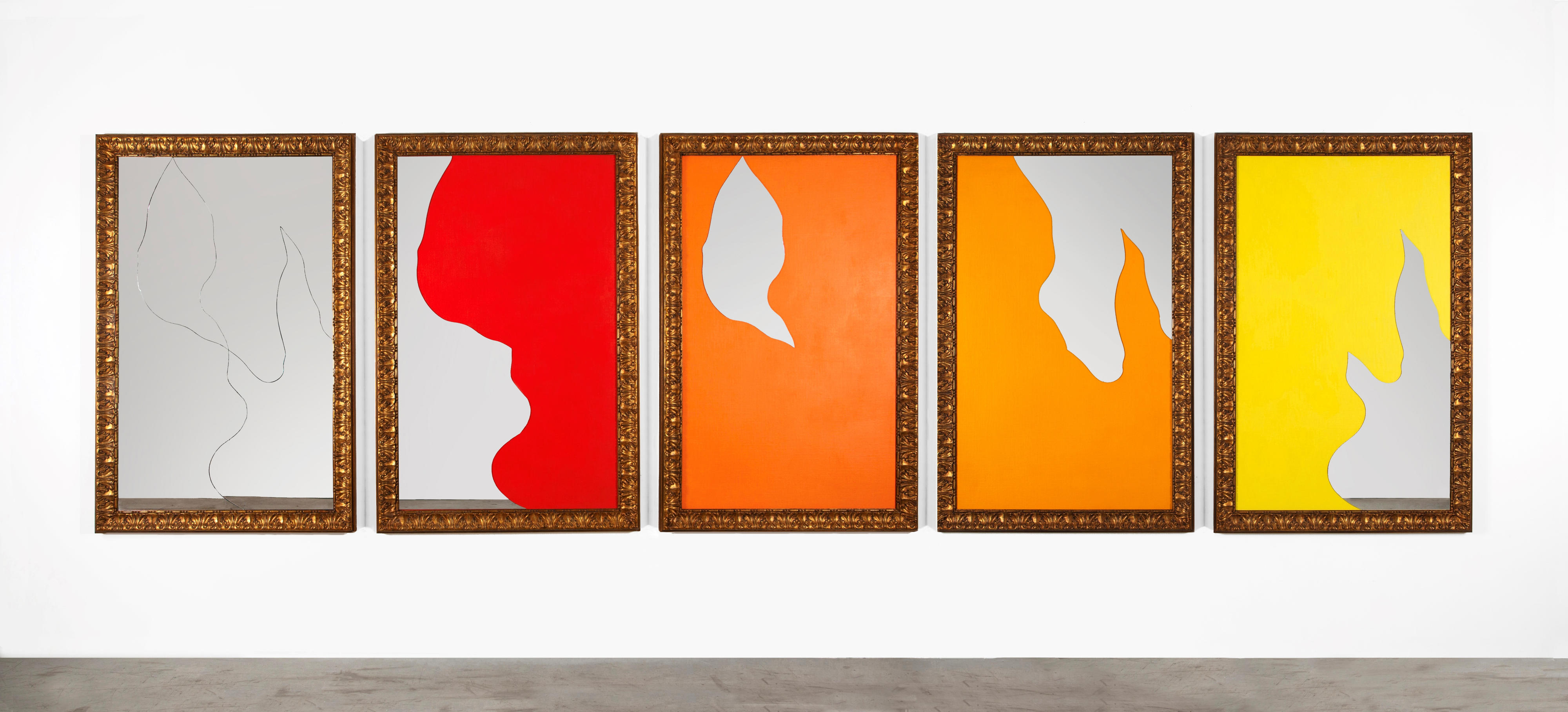
This artwork Color and Light comprises five separate elements, each
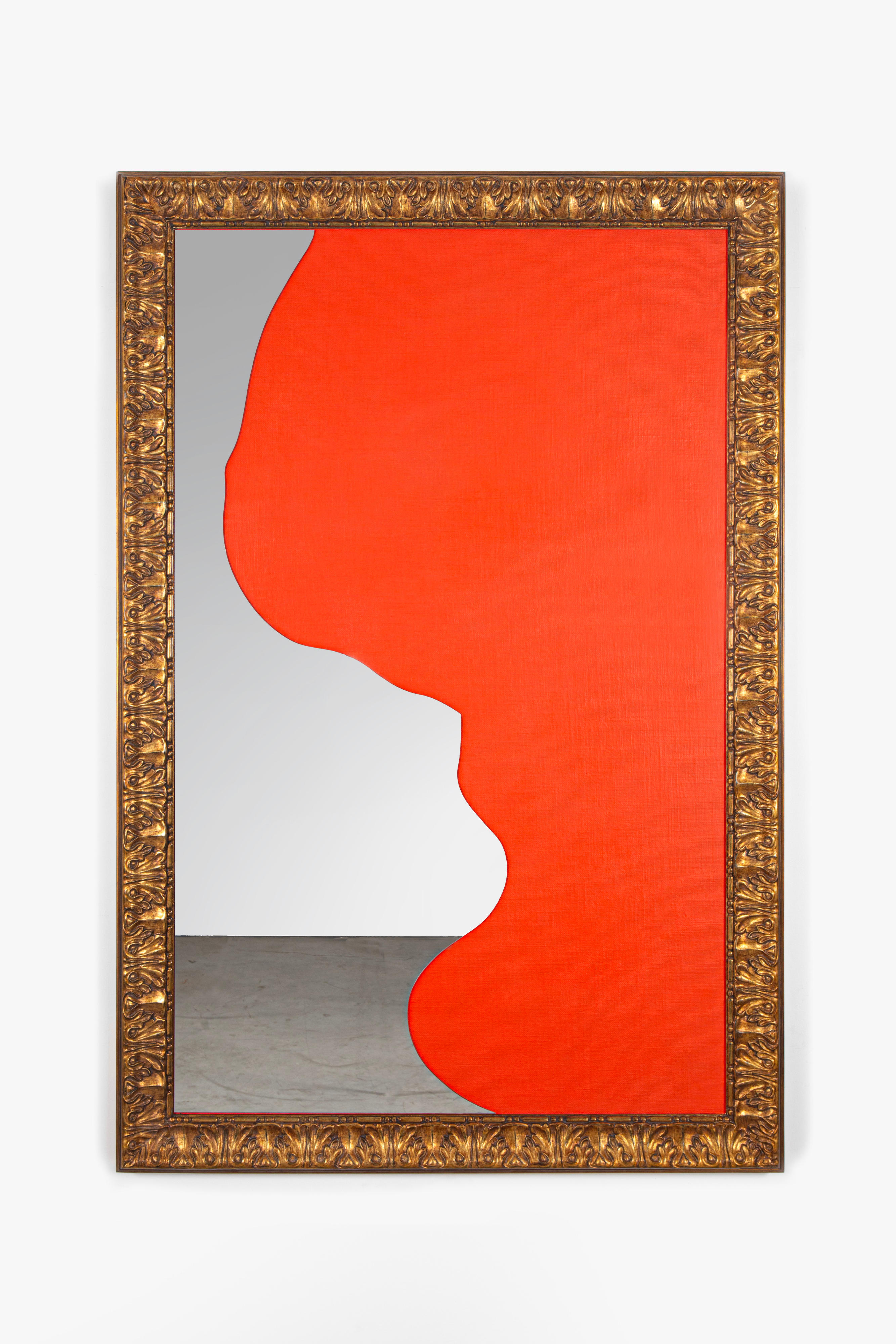
formed of hand-cut fragments of mirror, juxtaposed with jute painted in bright
colours, and gilded wood frames. The use of the humble material jute, alludes to the artist's
early works and typical elements found in the history of art.
The playful, joyous nature of the work – rendered in bold tones of red, orange
and yellow, with organic, free shapes – adds an element of naivety that evokes
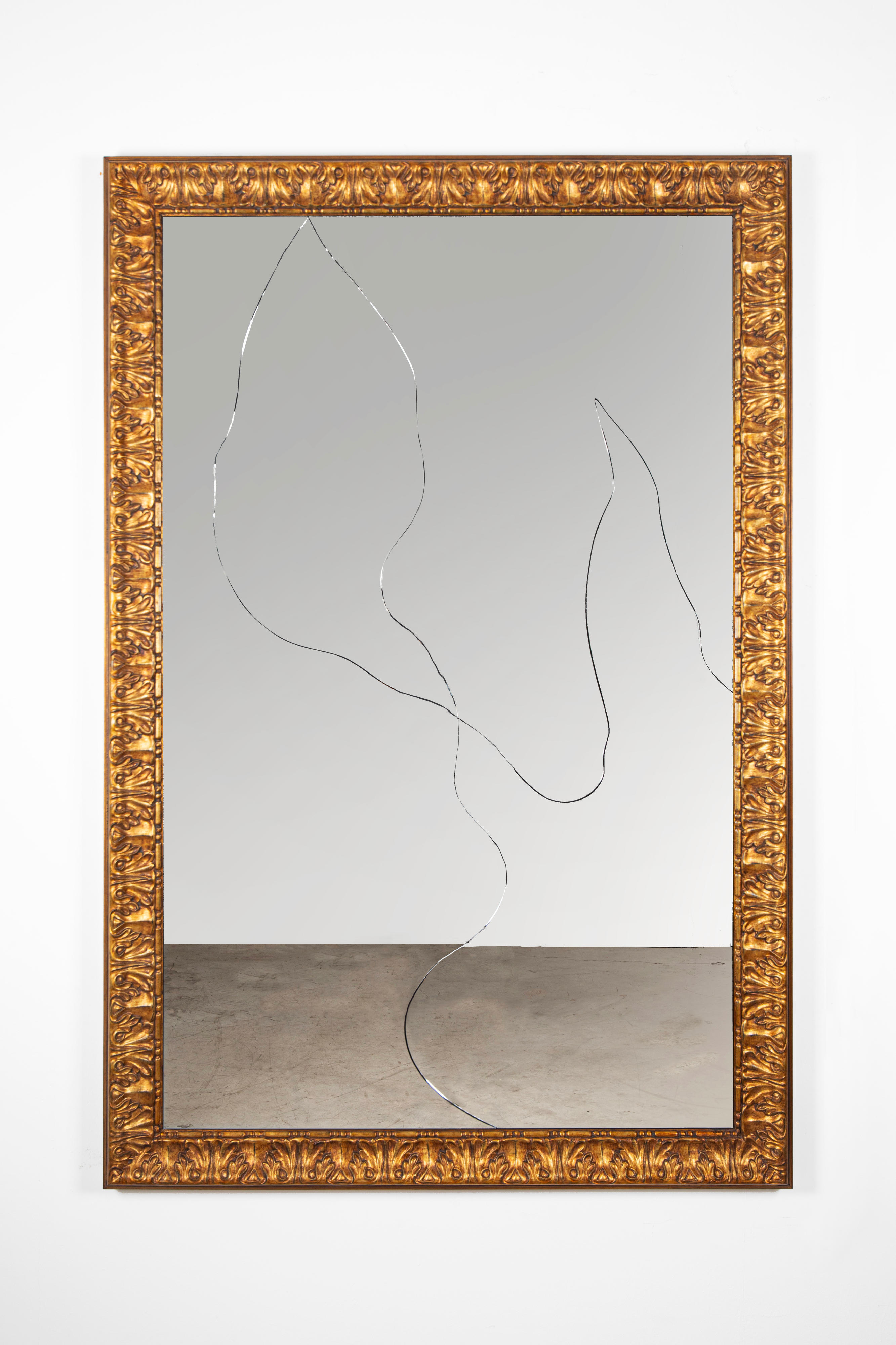
the wonder and simplicity of childhood. The puzzle-like forms of the mirrors
are in the first element shown whole, and then in successive elements as
distinct pieces that each take on a new identity as the relationship between
reflective surface and colour field changes.
Pistoletto has said of Color and Light: ‘It is a work of broken mirrors but executed in an orderly manner. The outlines produced by breaking the mirror itself are included in the mirror, and these outlines form a puzzle. The large mirror is broken and each piece takes on its own individuality. The universal figure of the mirror divides and multiplies with the breaking and cutting, becoming an innumerable quantity of single figures. Each fragment of the mirror can be considered as a person who is part of a larger mirror, that is, society. Society is like a big mirror.’