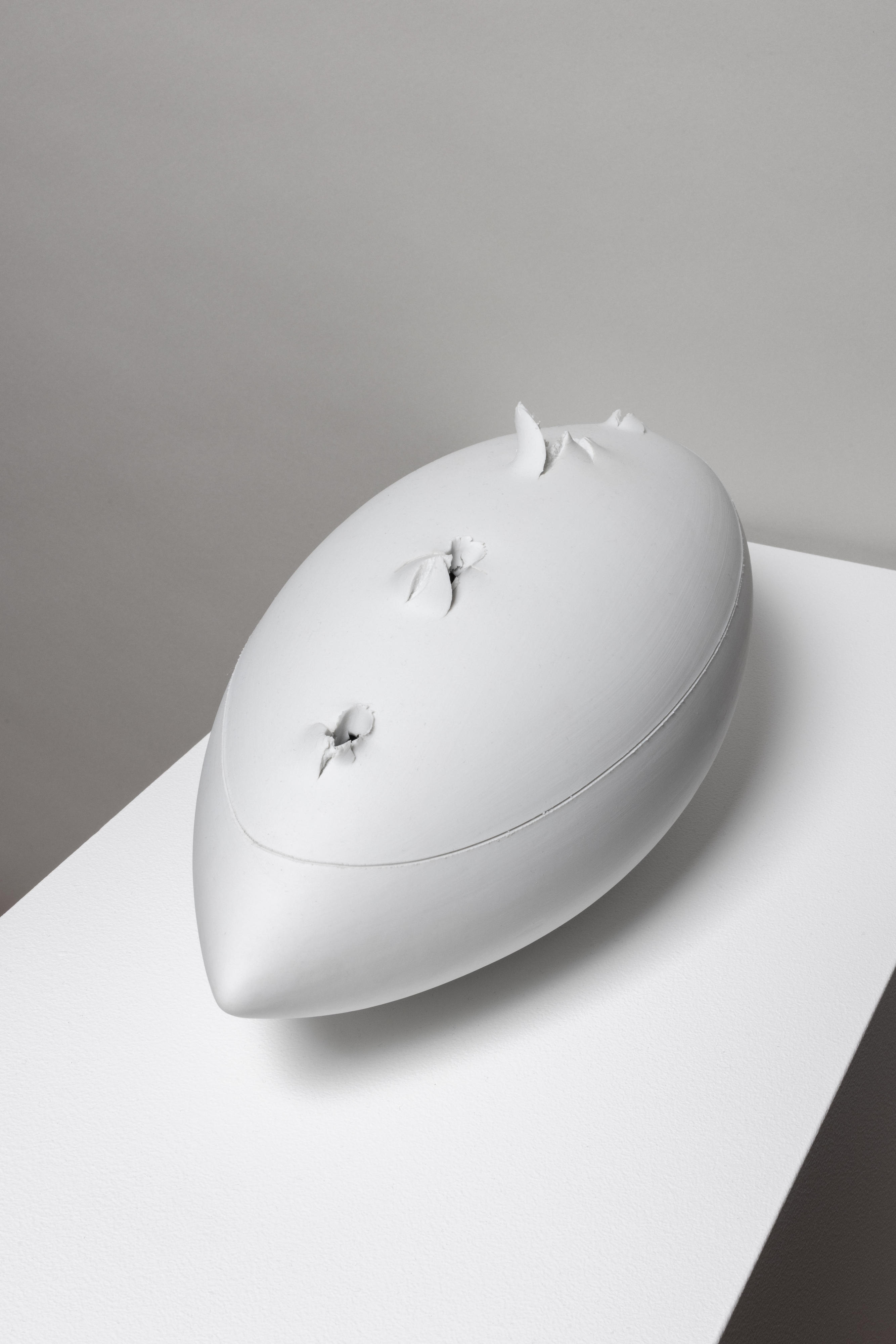


Lucio Fontana
b. 1899, Rosario de Santa Fé, Argentina
d. 1968, Comabbio, Italy
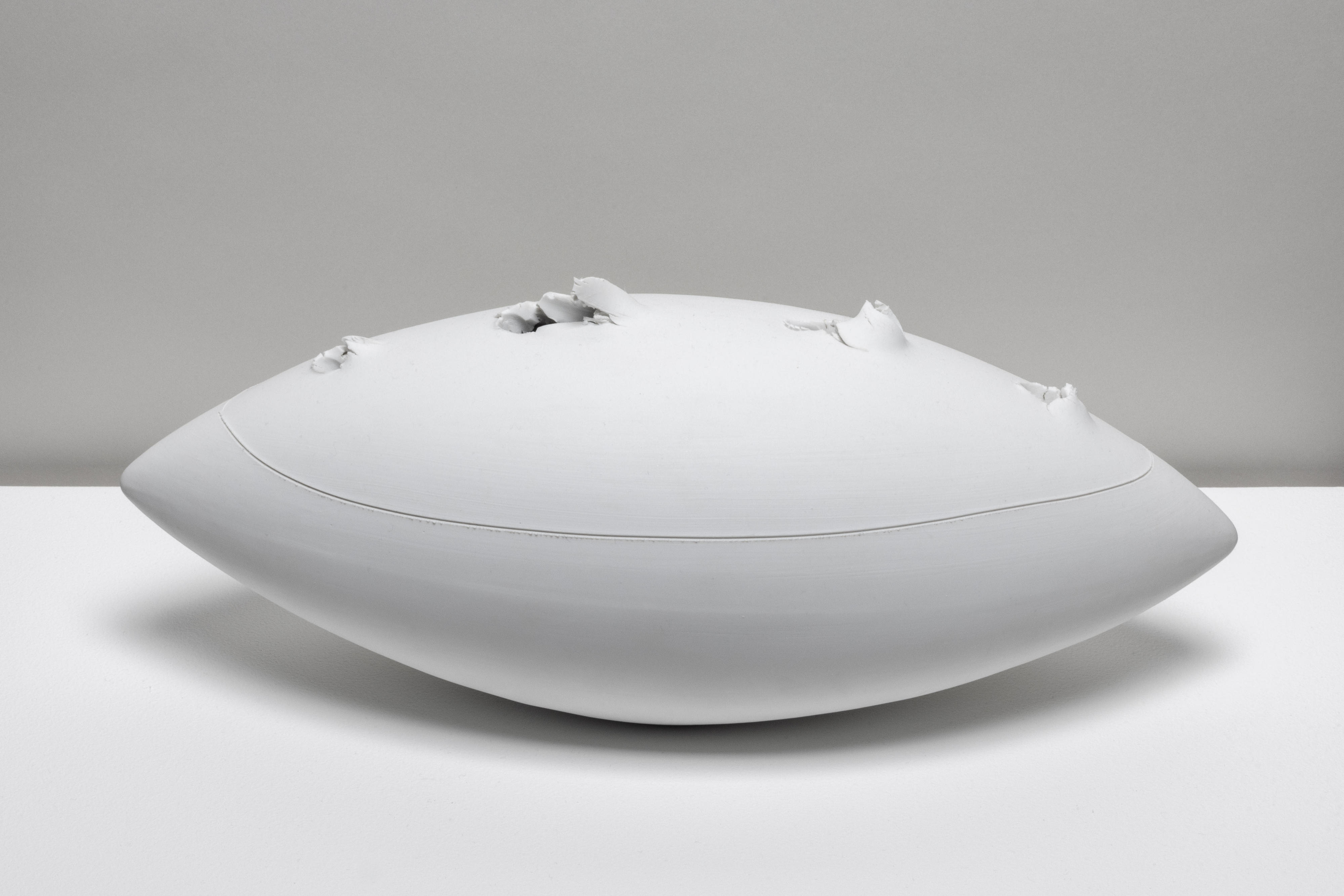
Concetto Spaziale, Ovale (Spatial Concept, Oval)
1968
White porcelain, unglazed
18 x 44 x 18 cm (7 1/8 x 17 3/8 x 7 1/8 in.)
Edition 65/75
Provenance
Literature
Lucio Fontana spatial conception, exh. cat., Tokyo, Tama Art University Museum, 1990, no. 8 (another from the edition illustrated, p. 12).
H. Ruhé, C. Rigo, Lucio Fontana - graphics, multiples and more..., Amsterdam, 2006, no. C-1 (another from the edition illustrated)
Description
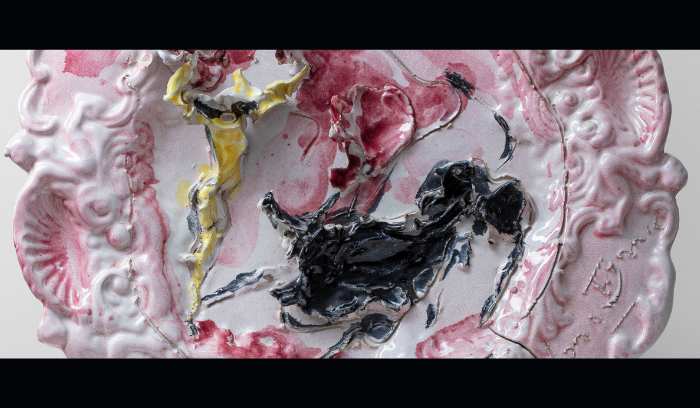
Though perhaps most famous for his signature slashed paintings, Lucio Fontana considered himself to be, above all, a sculptor. The son of a sculptor, Fontana was influenced by his father’s craft from his earliest years in Argentina. As a young man, he moved to Milan to train in the discipline at the Accademia di Brera under the guidance of the distinguished sculptor Adolfo Wildt. Like any other young artist, Fontana immediately created work which followed the prevailing aesthetic movement of the time, in his case the Novecento Italiano. Novecento was a representational movement characterised by a dismissal of European Avant-Garde aesthetics in favour of embracing Italy’s classical representational tradition. This however did not curb Fontana’s curiosity and he quickly began to explore new means of expression. In 1935 Fontana moved to the small coastal town of Albisola in the northwest of Italy. At the time, Albisola was the centre of experimental Italian ceramic production, and it was there that Fontana’s ceramic investigations truly began. During this productive period, Fontana tackled a large array of traditional subject matter including rampant horses, lions, saints, sibyls, warriors, and crucifixes. Whilst ostensibly figurative, these works were executed in a loose and intense manner, the plasticity of clay acting as the perfect foil for Fontana's firm and expressive manipulation. The highly finished technique of his earlier work became looser and looser, eventually paving the way to the pure abstraction of his later career, when he applied his trademark buchi (holes) and tagli (slashes) to ceramic forms.
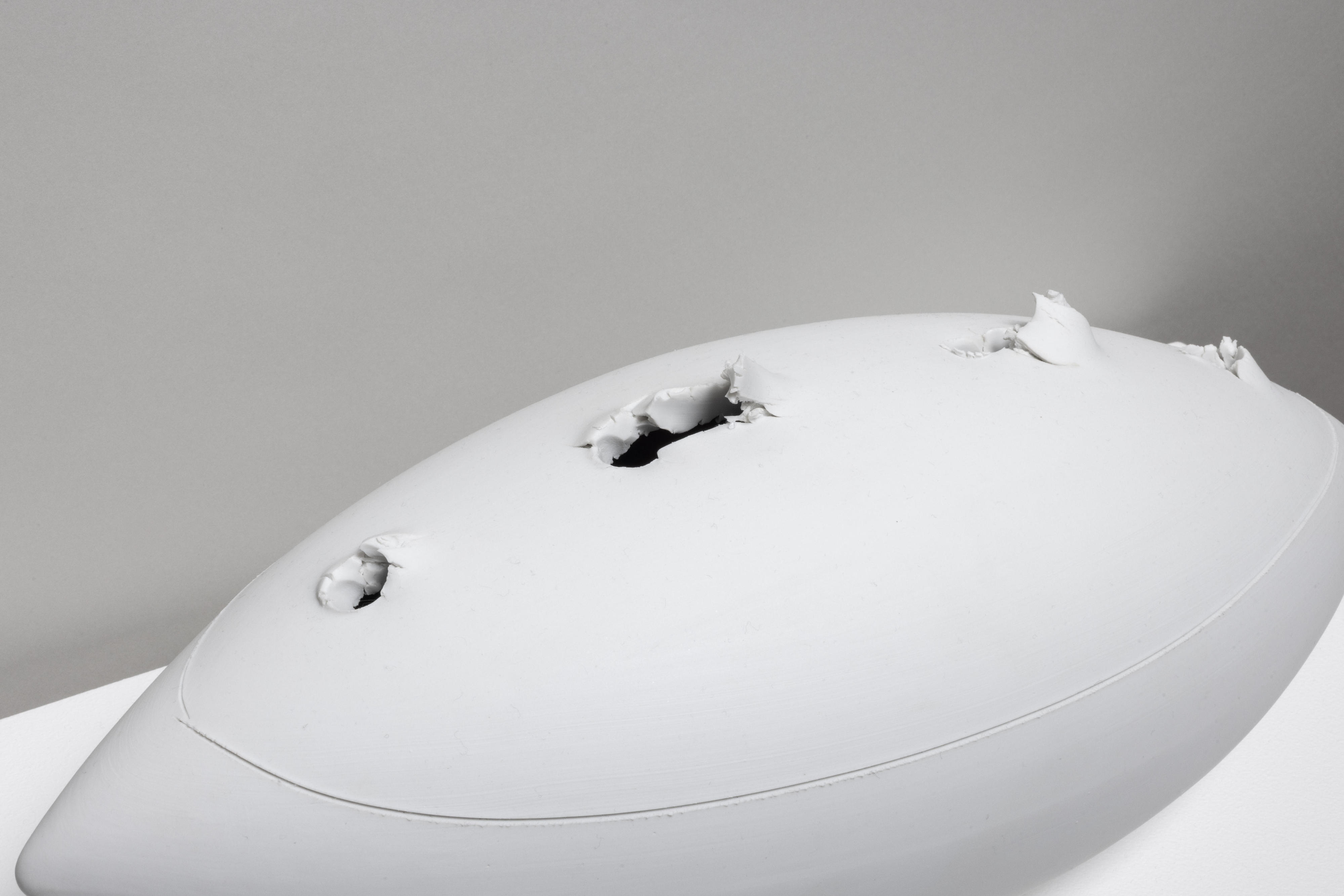
The present piece is from a limited edition of 75, which Fontana produced in collaboration with German porcelain manufacturer Rosenthal, in the final year of his life. The piece, entitled Concetto Spaziale Ovale, relates to Fontana’s cycle of Ogive sculptures, comprised of oval forms with tapered ends. Between the years of 1964 and 1966, he made around 40 of these ceramics, each bearing the artist’s signature buchi or tagli. The ogive shape relates to two constant sources of inspiration for Fontana: the cycle of life (including birth and regeneration), and space travel. This piece from the Ovale edition similarly features the artist’s characteristic motifs, namely four buchi (holes) and an incised line tracing an ovoid shape on the surface of the ceramic. Each hole seems to burst outwards from the form, defying the limits of the material, and capturing a decisive moment of creation.
It should be noted that the Fondazione Lucio Fontana does not issue certificates for works in editions or multiples, nor are editions included in the catalogue raisonné for the artist. However, the volume by Ruhé and Rigo noted in the bibliography is the authority on such multiples and editions, approved by the Fondazione. This ceramic edition is included in the volume as number C-1.