
Lucio Fontana
b. 1899, Rosario de Santa Fé, Argentina
d. 1968, Comabbio, Italy
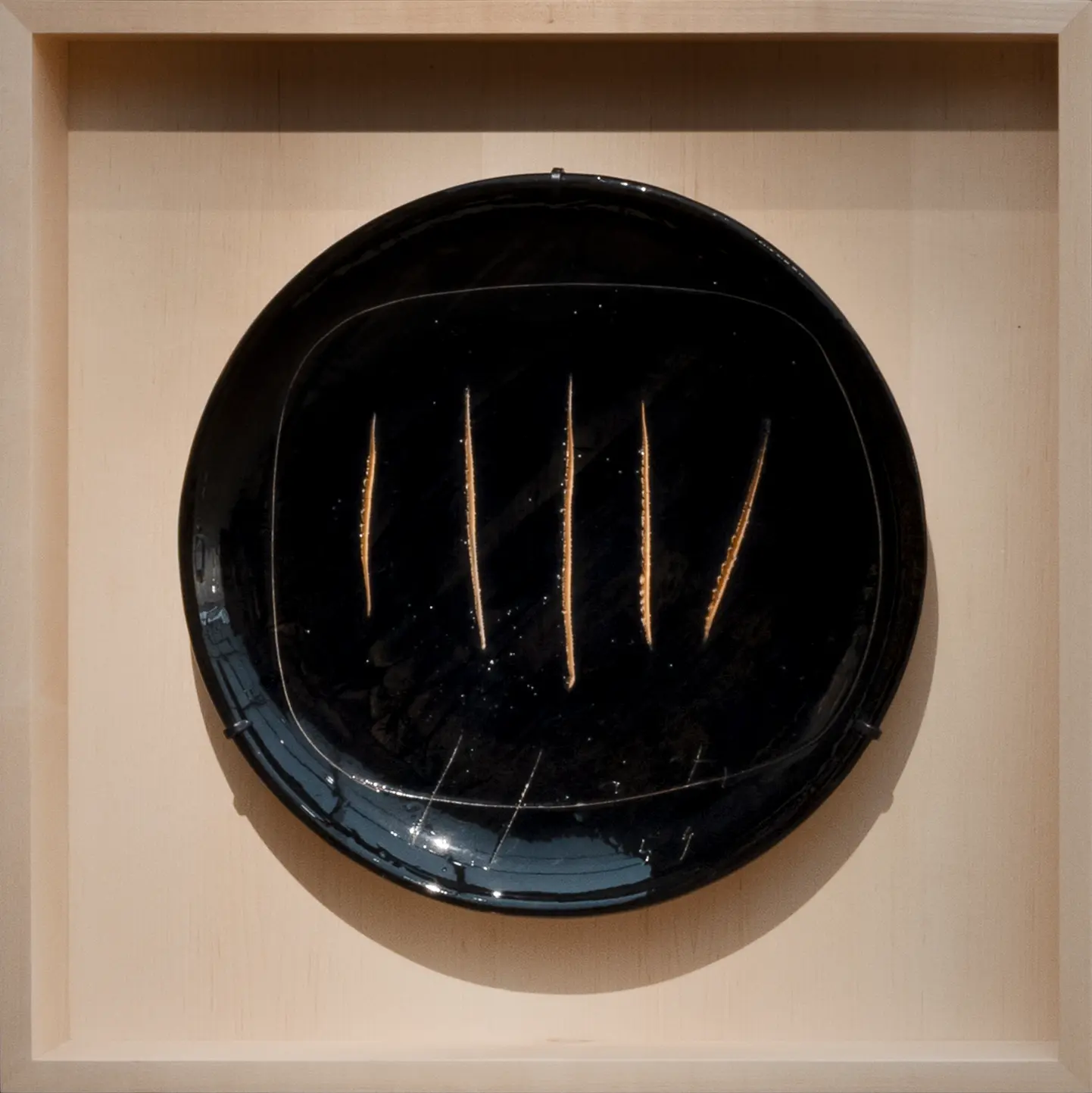
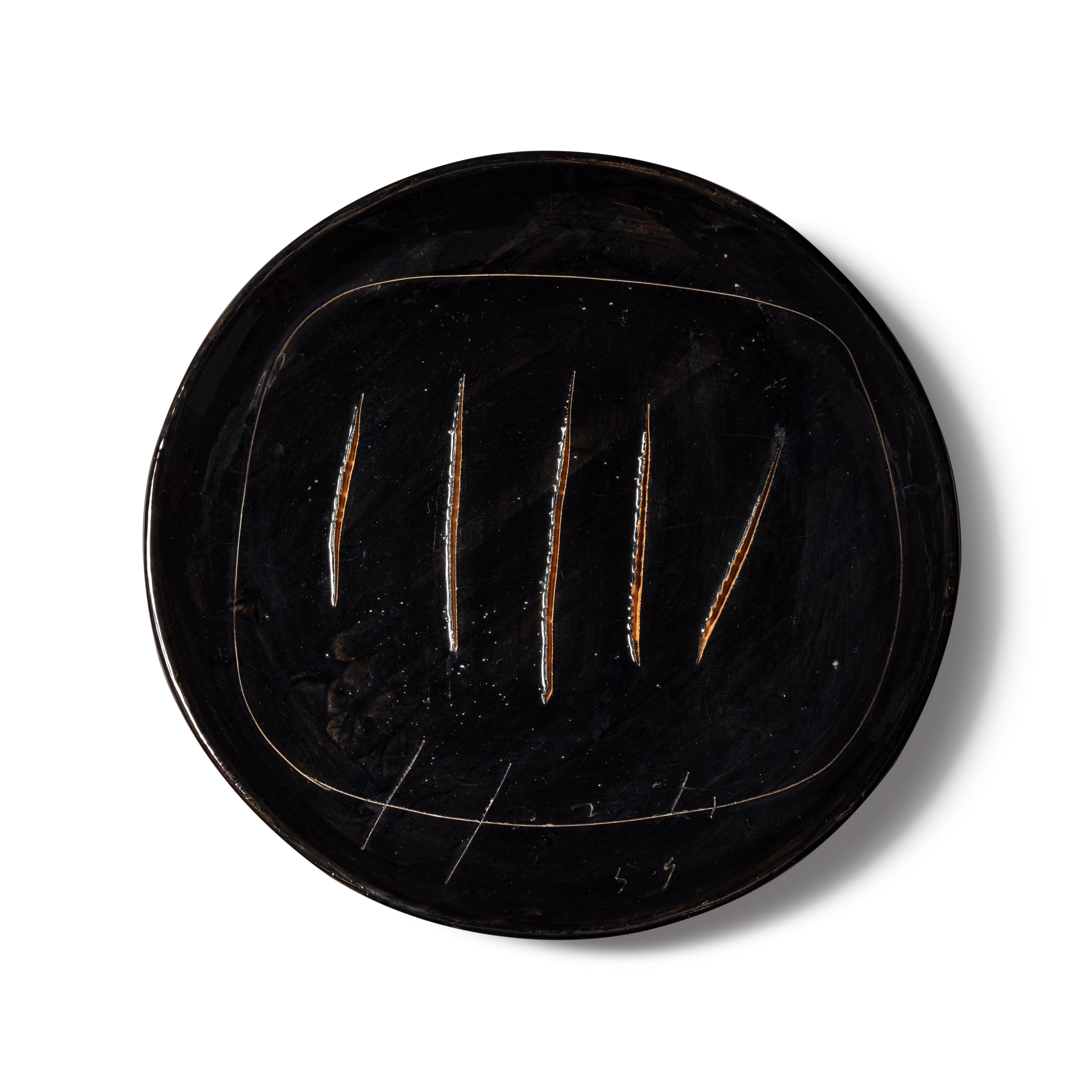
Concetto Spaziale (Spatial Concept)
1959
Glazed and painted terracotta
Diameter: 48.5 cm (19 1/8 in.)
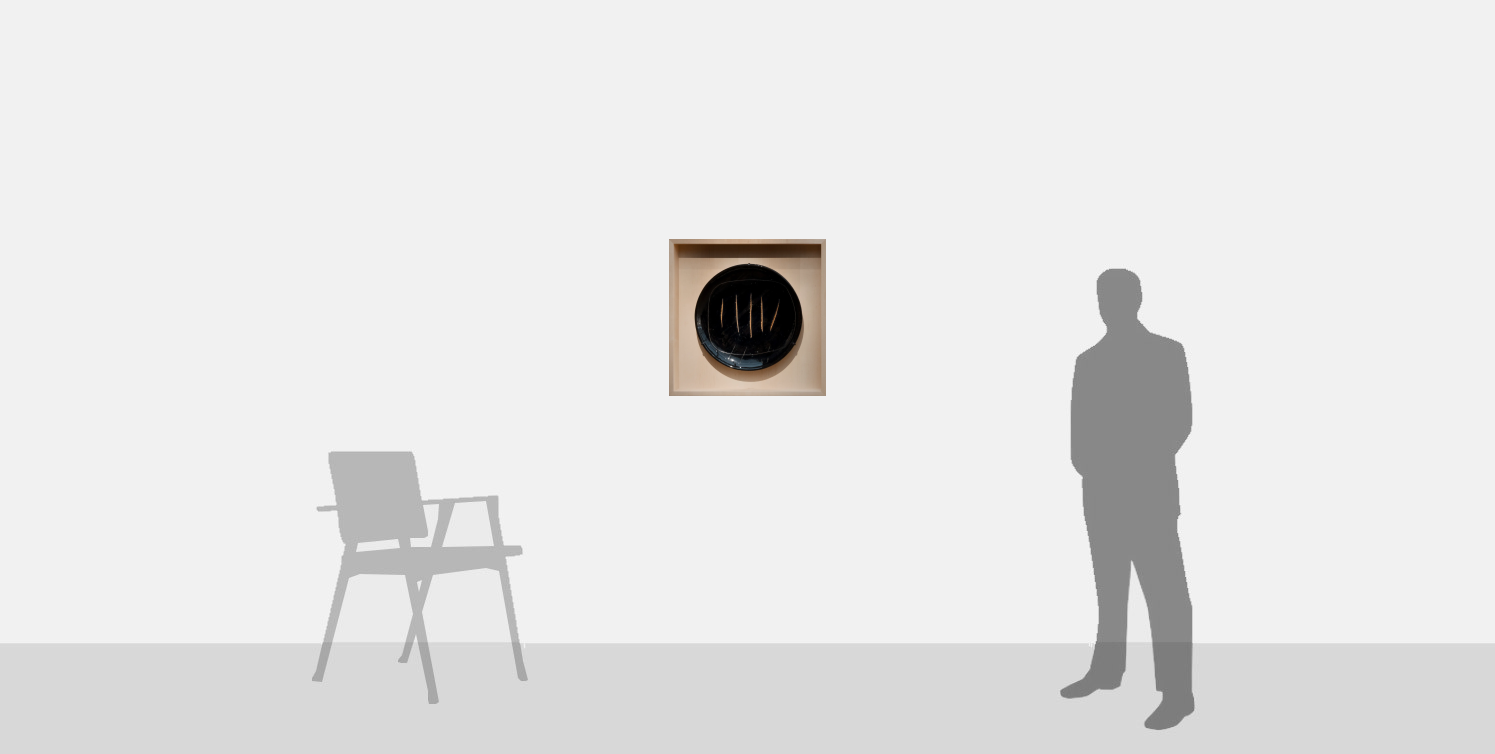
Framed: 70 x 70 x 8 cm (27 1/2 x 27 1/2 x 3 1/8 in.)
Provenance
Galleria Christian Stein, Turin,
Private Collection, Turin.
Literature
Description
“With the taglio I have invented a formula that I think I cannot perfect…I succeeded in giving those looking at my work a sense of spatial calm, of cosmic rigour, or serenity with regard to the infinite. Further than this I could not go.”—Lucio Fontana quoted in P. Gottschaller, Lucio Fontana: The Artist’s Materials, Los Angeles, 2012, p. 58
Lucio Fontana made his first tagli in the late summer and early autumn of 1958. Incising the surface of his artworks with one or more cuts, he initiated what would be his most extensive and varied group of works, becoming emblematic of his gestural aesthetic.
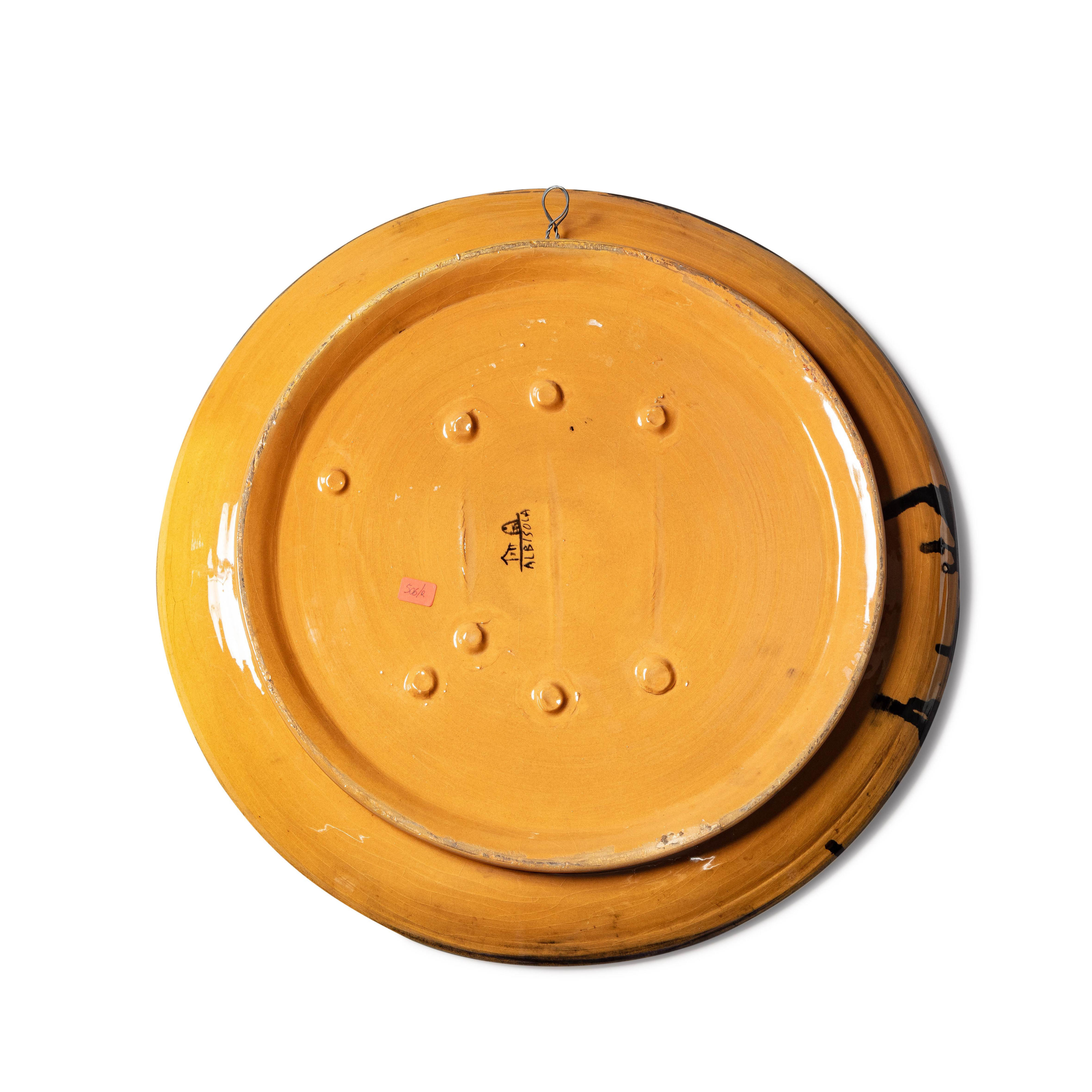
Although most widely known for his punctured or cut canvases, in recent years Fontana’s importance as a sculptor has been increasingly recognised, especially through his pioneering ceramic works. Indeed, these works are fundamental to understanding his artistic contribution, especially given that Fontana began his career as a sculptor. As a young man, he worked for his father's firm creating funerary busts from materials like plaster and marble, and in 1928 he began studying sculpture at the Accademia di Belle Arti di Brera. Throughout his career, Fontana created both figurative and abstract ceramic works; in his figurative practice his consistently returned to traditional subjects from art history, including Madonnas, Crucifixions and ballerinas, interpreted through his unique Spatialist vision. The present work is an example of his abstract sculptural practice, albeit incorporated into the recognisable form of a plate. Indeed, the back of this work is stamped with the word ‘Albisola’, referring to the small Ligurian town of Albisola, where Fontana had trained under Futurist ceramicist Tullio Mazzotti in 1935, and where he created some of his most innovative ceramics in the 1940s and 1950s, often using existing moulds from the small pottery workshops in the area.
In the present work, executed in 1959, five tagli penetrate the surface of a round terracotta plate painted black. The slashes vary subtly in length, with four almost parallel and the furthest right taglio purposefully slanted. The tagli perforate the surface, almost puncturing to the space behind, and opening up the material of the terracotta itself. This wound-like gashes exemplifies the culmination of Fontana’s practice, seeking to establish a new artistic language for the modern world, and to open up infinity.
Surrounding the tagli is a delicately incised ovoid shape, which also intersects the artist’s signature. The shape alludes to birth, and especially the rebirth of art as Fontana deemed necessary for the modern age; the fine line could also indicate the artist’s interest in astronomy and space travel, suggesting the orbit of the planets or of artificial satellites recently launched by mankind. Indeed, many of Fontana’s tagli spoke to the anxiety and wonder that the possibilities of scientific and technological advancements. The artist once described his works thus: “The subtle tracing… is the walk of Man in space, his dismay and fear of getting lost; the slash, finally, is a sudden cry of pain, the final gesture of anxiety that has already become unbearable’ (quoted in P. Gottschaller, Lucio Fontana: The Artist’s Materials, Los Angeles, 2012, p, 90).