

Lucio Fontana
b. 1899, Rosario de Santa Fé, Argentina
d. 1968, Comabbio, Italy
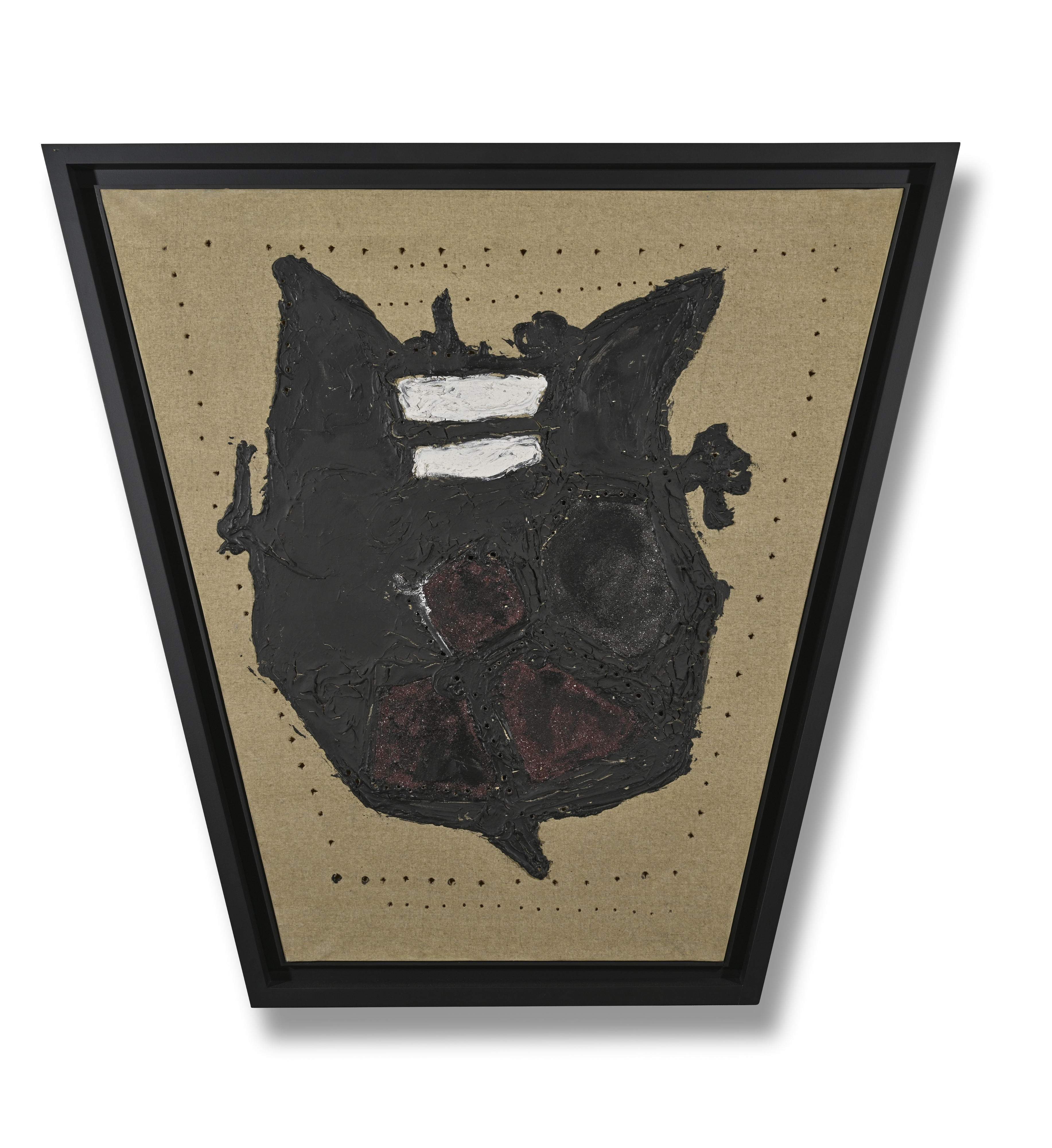
Concetto Spaziale (Spatial Concept)
1956
Oil and glitter on canvas
100 x 95 cm (39 3/8 x 37 3/8 in.)
Provenance
Grosso collection, Turin,
Sotheby's London, 29 June 1994, lot 27,
Private collection,
Christie's, London, 25 June 2019, lot 29,
Private collection.
Sotheby's London, 29 June 1994, lot 27,
Private collection,
Christie's, London, 25 June 2019, lot 29,
Private collection.
Literature
E. Crispolti, Lucio Fontana. Catalogue raisonné des peintures, sculptures et environnements spatiaux, Brussels, 1974, vol. II, no. 56 BA 33, illustrated with incorrect orientation, p. 51.
E. Crispolti, Lucio Fontana. Catalogo generale, Milan, 1986, vol. I, no. 56 BA 33, illustrated with incorrect orientation, p. 175.
E. Crispolti, Lucio Fontana. Catalogo ragionato di sculture, dipinti, ambientazioni, vol. I, Milan, 2006, vol. I, no. 56 BA 33, illustrated, p. 328.
E. Crispolti, Lucio Fontana. Catalogo generale, Milan, 1986, vol. I, no. 56 BA 33, illustrated with incorrect orientation, p. 175.
E. Crispolti, Lucio Fontana. Catalogo ragionato di sculture, dipinti, ambientazioni, vol. I, Milan, 2006, vol. I, no. 56 BA 33, illustrated, p. 328.
Description
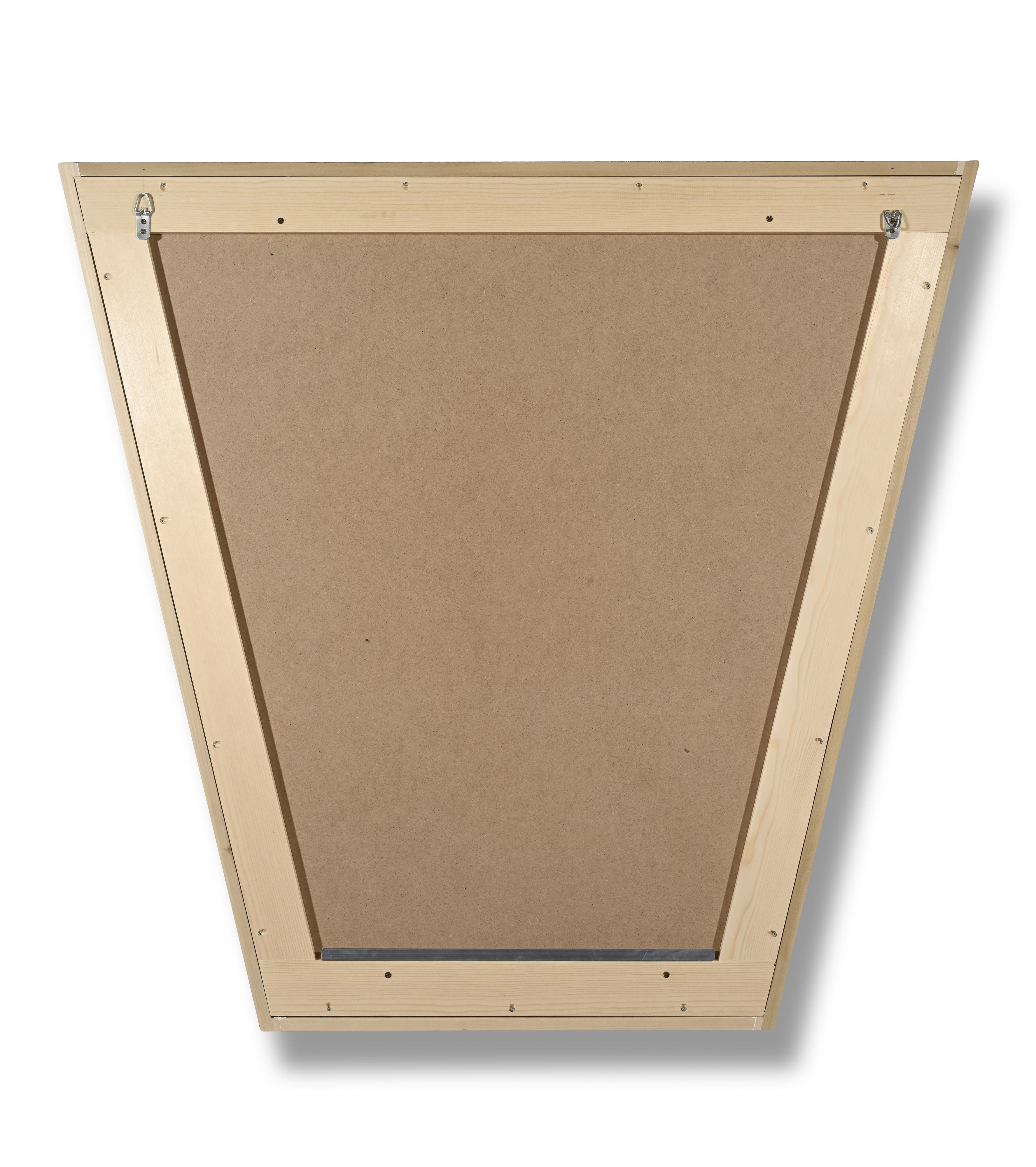
Concetto spaziale is a rare trapezoidal canvas from Lucio Fontana’s celebrated Barocchi series, created during the mid-1950s. Of these works, it is one of only five created on a shaped rather than rectangular canvas, another of which is in the Museo Nacional de Bellas Artes in Buenos Aires. Crowned with two white bars, the irregular, primal form, with its black impasto core dotted with his glittering lustrini, becomes a rich vortex of impenetrable physicality. Further, rows of delicate holes surround the cambered body, each punched directly into the canvas forming thin ribbons of perforated light. Although Concetto spaziale was created in 1956, Fontana retrospectively dated this work to 1952, inscribing the year on both the front and back of the canvas.
Concetto spaziale reveals Fontana’s involvement with the then-ascendant Art Informel movement. At the same time, the work offers a pictorial representation of Fontana's own artistic development. Its painterly aspects seem to ground it in past traditions and material reality, while the series of punctures reference the artist's enduring preoccupation with penetrating the void, discovering infinity. Consumed with his search for a new visual language befitting the burgeoning Space Age, Fontana saw these holes as a continuing evolution of the buchi that he had pioneered less than a decade earlier, and which would come to define much of his legacy in subsequent years. Fontana sought to develop a distinctive visual language that embraced the wonders of the universe and all its possibilities, yet he understood that art-making necessarily remained tethered to the conventions of the past. Accordingly, he connected his revolutionary Spatialism to Baroque art’s own revolutionary upheavals, explaining that ‘it is necessary to overturn and transform painting, sculpture and poetry. A form of art is now demanded which is based on the necessity of this new vision. The Baroque has guided us in this direction, in all its as yet unsurpassed grandeur, where the plastic form is inseparable from the notion of time, the images appear to abandon the plane and continue into space the movements they suggest. This conception arose from man’s new idea of the existence of things; the physics of that period reveal for the first time the nature of dynamics. It is established that movement is an essential condition of matter as a beginning of the conception of the universe. At this point of evolution the requirements of movement were so powerful that the plastic arts were unable to respond’ (L. Fontana, Manifesto tecnico dello Spazialismo, trans. C. Damiano, 1951, reproduced in L. Massimo Barbero, ed., Lucio Fontana: Venice/New York, exh. cat., Solomon R. Guggenheim, New York, 2006, p. 229).
Just as seventeenth-century artists revolutionised the way that images were represented on the picture plane, so too did Fontana push against the supposed limits of pictorial representation. The invention of the buchi drastically altered preconceptions of art's permanency, opening up the infinite space beyond the canvas with gestural dynamism. In the present work, however, these visionary apertures find counterpoints in the thick, visceral layers of pigment, rooting the viewer to the static earthbound realm. Uniting painterly tradition with his radical idea of 'spatial concepts' (concetti spaziali), the work gestures simultaneously to art's past and future, anticipating its long-awaited flight from the material world to the immaterial void.
Concetto spaziale reveals Fontana’s involvement with the then-ascendant Art Informel movement. At the same time, the work offers a pictorial representation of Fontana's own artistic development. Its painterly aspects seem to ground it in past traditions and material reality, while the series of punctures reference the artist's enduring preoccupation with penetrating the void, discovering infinity. Consumed with his search for a new visual language befitting the burgeoning Space Age, Fontana saw these holes as a continuing evolution of the buchi that he had pioneered less than a decade earlier, and which would come to define much of his legacy in subsequent years. Fontana sought to develop a distinctive visual language that embraced the wonders of the universe and all its possibilities, yet he understood that art-making necessarily remained tethered to the conventions of the past. Accordingly, he connected his revolutionary Spatialism to Baroque art’s own revolutionary upheavals, explaining that ‘it is necessary to overturn and transform painting, sculpture and poetry. A form of art is now demanded which is based on the necessity of this new vision. The Baroque has guided us in this direction, in all its as yet unsurpassed grandeur, where the plastic form is inseparable from the notion of time, the images appear to abandon the plane and continue into space the movements they suggest. This conception arose from man’s new idea of the existence of things; the physics of that period reveal for the first time the nature of dynamics. It is established that movement is an essential condition of matter as a beginning of the conception of the universe. At this point of evolution the requirements of movement were so powerful that the plastic arts were unable to respond’ (L. Fontana, Manifesto tecnico dello Spazialismo, trans. C. Damiano, 1951, reproduced in L. Massimo Barbero, ed., Lucio Fontana: Venice/New York, exh. cat., Solomon R. Guggenheim, New York, 2006, p. 229).
Just as seventeenth-century artists revolutionised the way that images were represented on the picture plane, so too did Fontana push against the supposed limits of pictorial representation. The invention of the buchi drastically altered preconceptions of art's permanency, opening up the infinite space beyond the canvas with gestural dynamism. In the present work, however, these visionary apertures find counterpoints in the thick, visceral layers of pigment, rooting the viewer to the static earthbound realm. Uniting painterly tradition with his radical idea of 'spatial concepts' (concetti spaziali), the work gestures simultaneously to art's past and future, anticipating its long-awaited flight from the material world to the immaterial void.