
Lucio Fontana
b. 1899, Rosario de Santa Fé, Argentina
d. 1968, Comabbio, Italy
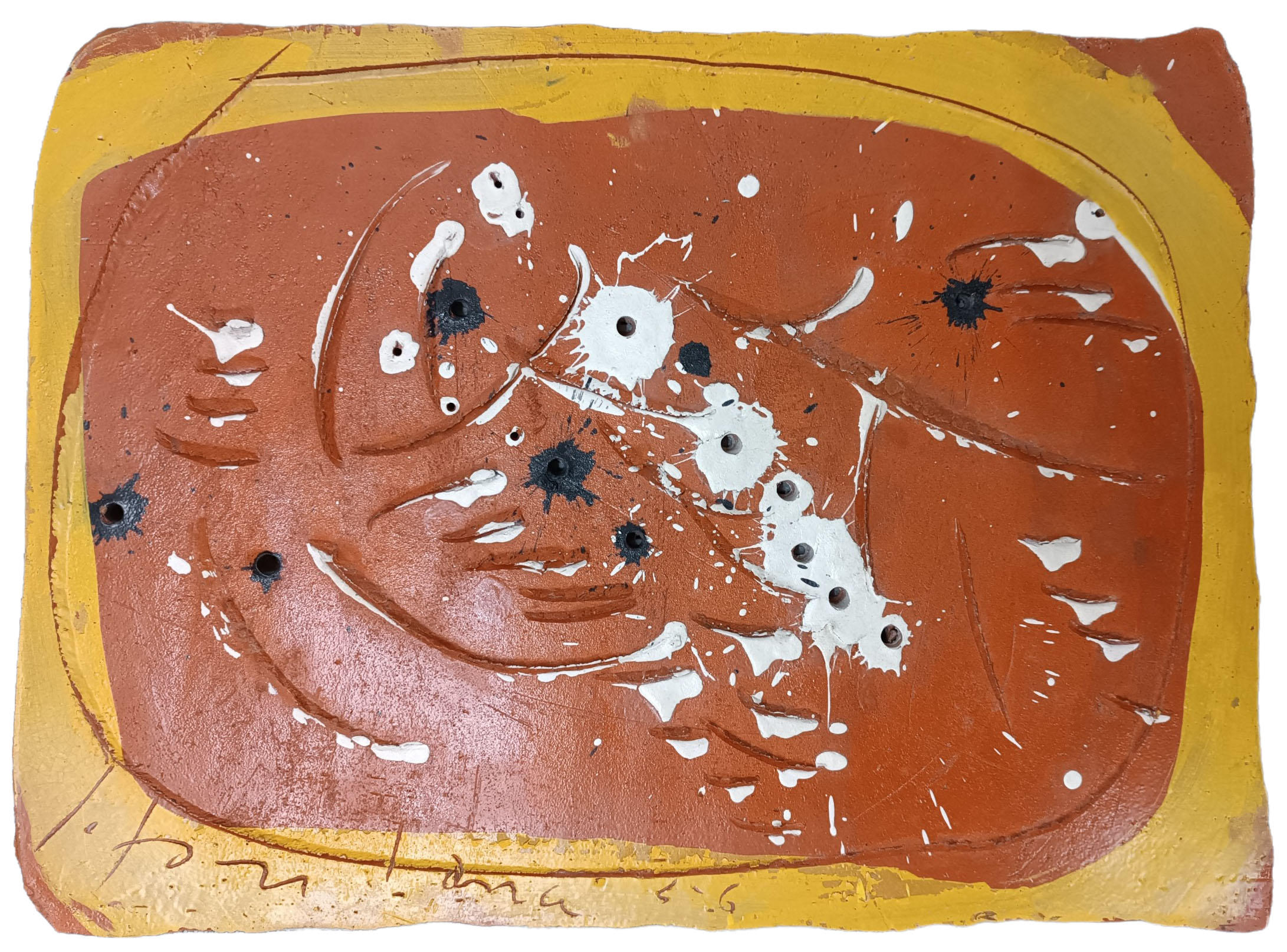
Concetto Spaziale (Spatial Concept)
1956
Painted terracotta
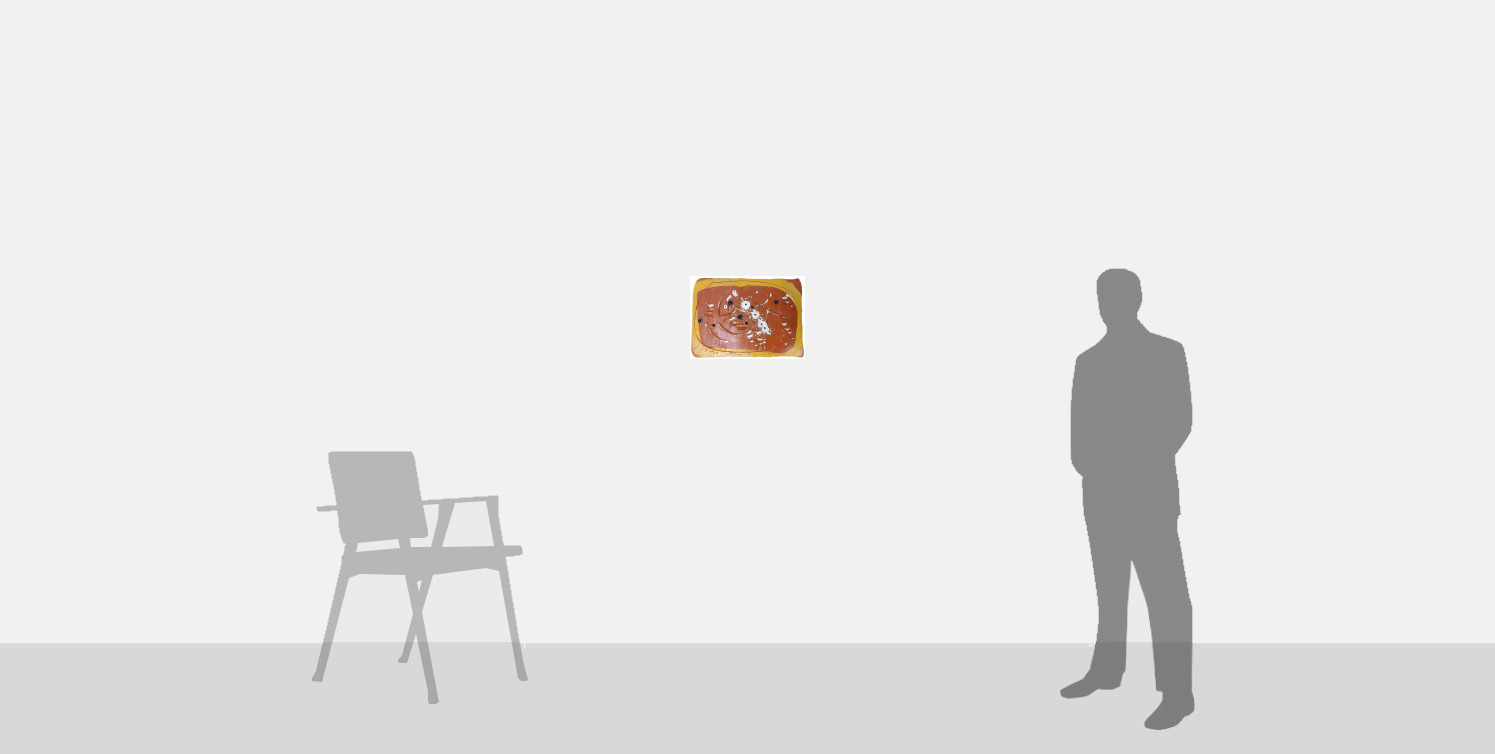
37 x 51 cm (14 1/2 x 20 in.)
Provenance
Private collection, Milan,
Private collection, Milan.
Literature
E. Crispolti, Lucio Fontana, Catalogo ragionato di sculture, dipinti, ambientazioni, vol. I, Milan, 2006, no. 56 SC 12, p. 313.
L. Massimo Barbero, Lucio Fontana. Catalogo ragionato delle sculture ceramiche, II, Milan, 2022, no. 56 SC 12, p. 596.
Description
Although best known for his buchi and tagli in his canvas works, Lucio Fontana’s sculptural practice is arguably of equal significance in his artistic contributions to modern art. He created sculptures – especially ceramics – throughout his career, extending his Spatialist experiments across various mediums. Fontana began his training as a sculptor at his father’s firm where he made funerary busts out of plaster or marble. In 1928, he enrolled in the Accademia di Belle Arti di Brera where he started training as a Neo-Classical sculptor. However, soon after leaving the Accademia, the artist moved away from existing conventions surrounding sculpture. In 1935, Fontana spent time in the small town of Albisola where he furthered his ideas while working in the workshop of the Futurist ceramist, Tullio Mazzotti.
Realized in 1956, the present Concetto Spaziale belongs to the series Sculture Spaziali (Spatial sculptures) that Fontana realised between 1949 and 1957. These works are characterised by their form as abstract reliefs on terracotta surfaces, sometimes with painted areas of colour, and marked by definitive buchi and energetic sgrafitto.
In the present work, one of 18 from this body of work created in 1956, the terracotta slab is decorated with a ring of mustard-coloured paint, that almost traces the edge of the panel. Each buco is demarcated by splashes of white or black paint, which also animate many of the incisions across the surface. The constellation of holes, incised lines and paint might seem to resemble a cluster of stars and their celestial movements, testifying to Fontana’s fascination with Space.
This Concetto Spaziale from the Sculture Spaziali series is an embodiment of Fontana’s ambitions to explore the possibilities of material and its relationship with space, thus creating ‘neither painting nor sculpture, nor lines delimited in space, but continuity of space in matter’. (Fontana quoted in E. Crispolti and R. Siligato (eds.), Lucio Fontana, exh. cat., Rome, 1998, p. 118).