
Daniele Crespi
b. 1597/98, Busto Arsizio, Lombardy
d. 1630, Milan
Portrait of a Gentleman
c. 1625
Oil on wood panel
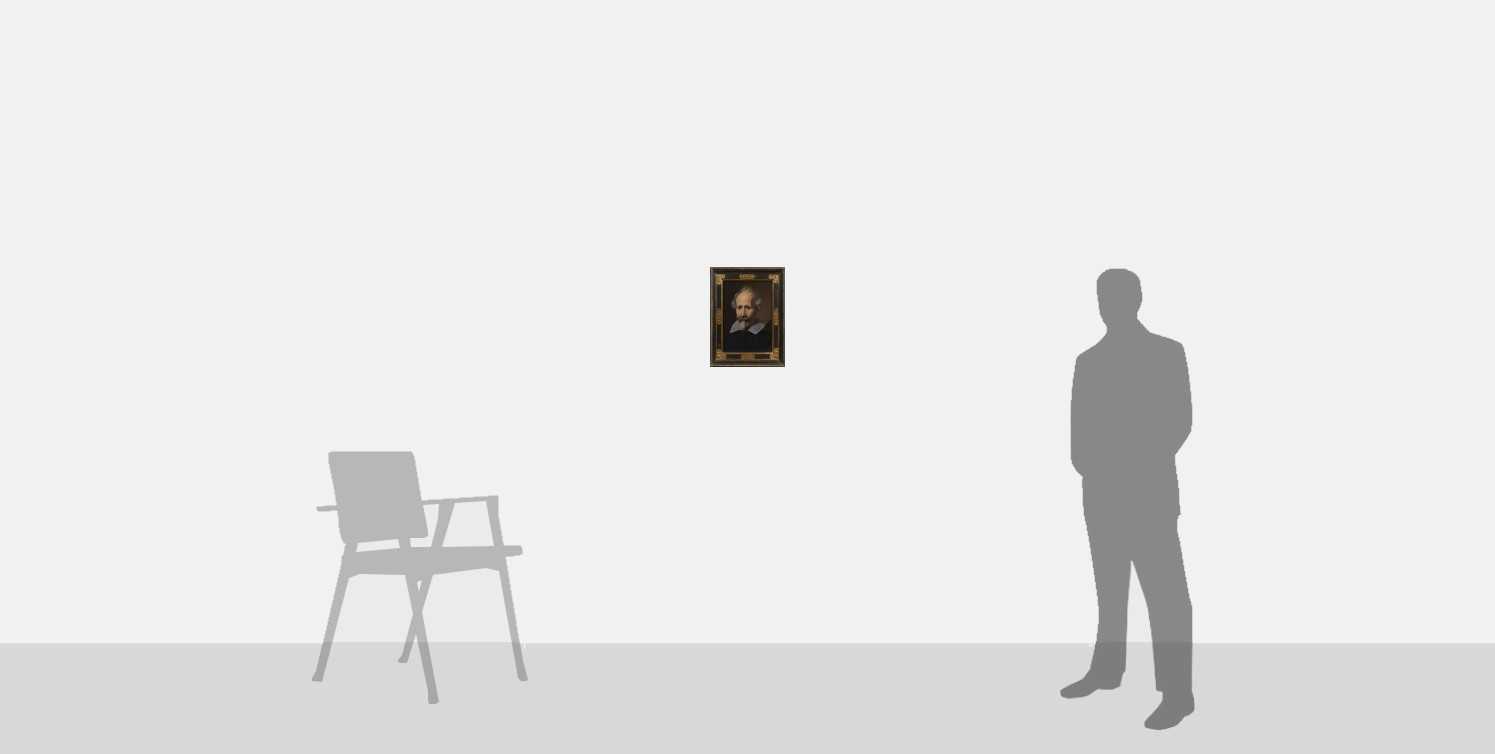
44.5 x 33.5 cm (17 1/2 x 13 1/4 in.)
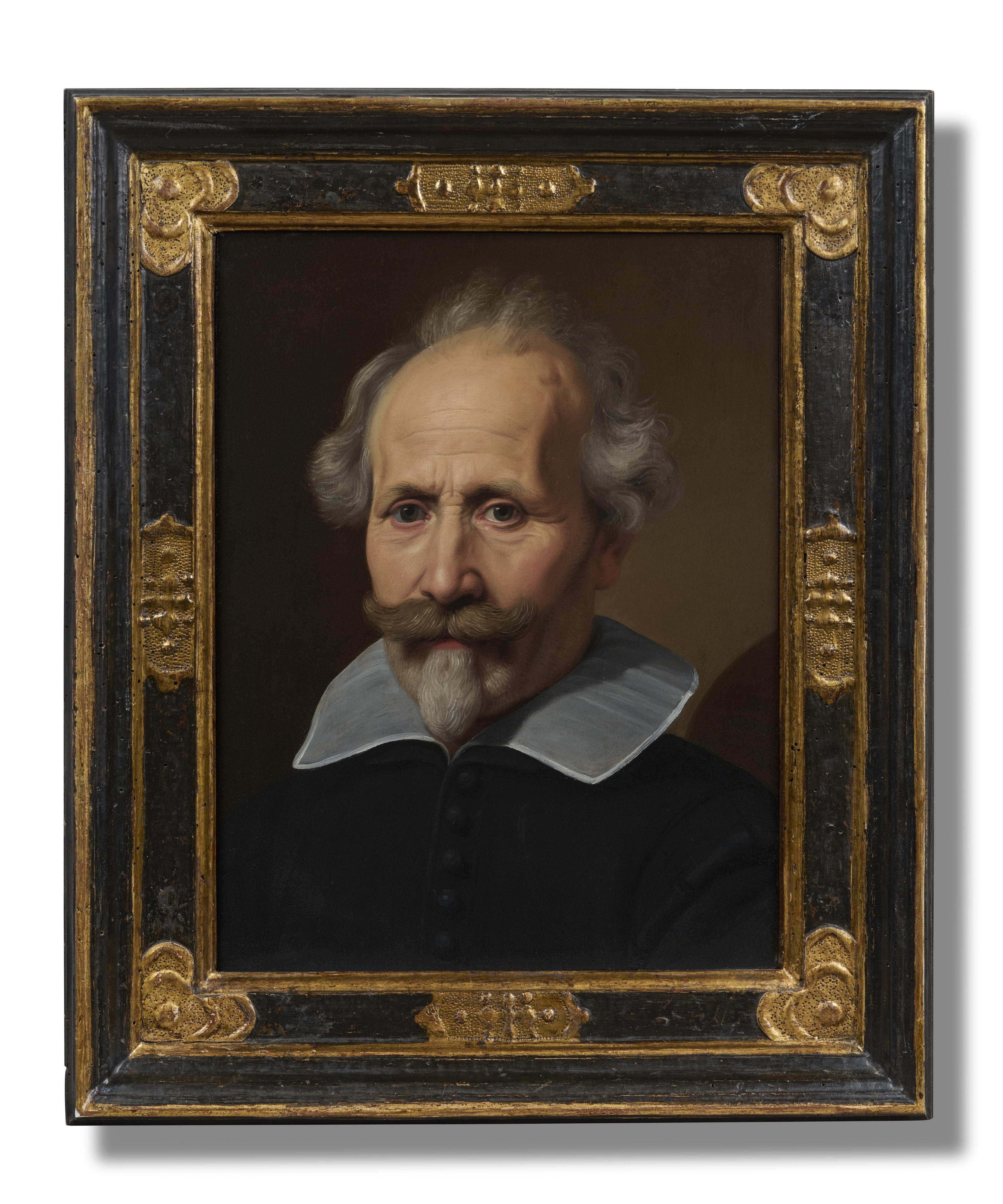
With frame: 61 x 51 cm (24 x 20 in.)
Provenance
Sotheby’s, London, 9 December 2004, lot 173;
Koelliker collection, Milan.
Literature
Francesco Frangi and Alessandro Morandotti, Maestri del ‘600 e del ‘700 lombardo nella Collezione Koelliker, exh. cat., Palazzo Reale, Milan, 2006, entry by Francesco Frangi, pp.72–73, no. 20.
Camillo Manzitti and Alessandro Morandotti, eds., Milano-Genova andatA/Ritorno: percorsi della pittura tra manierismo e barocco, exh. cat., Robilant+Voena, Milan and London, 2012–13, entry by Francesco Frangi, pp. 40–41.
Description
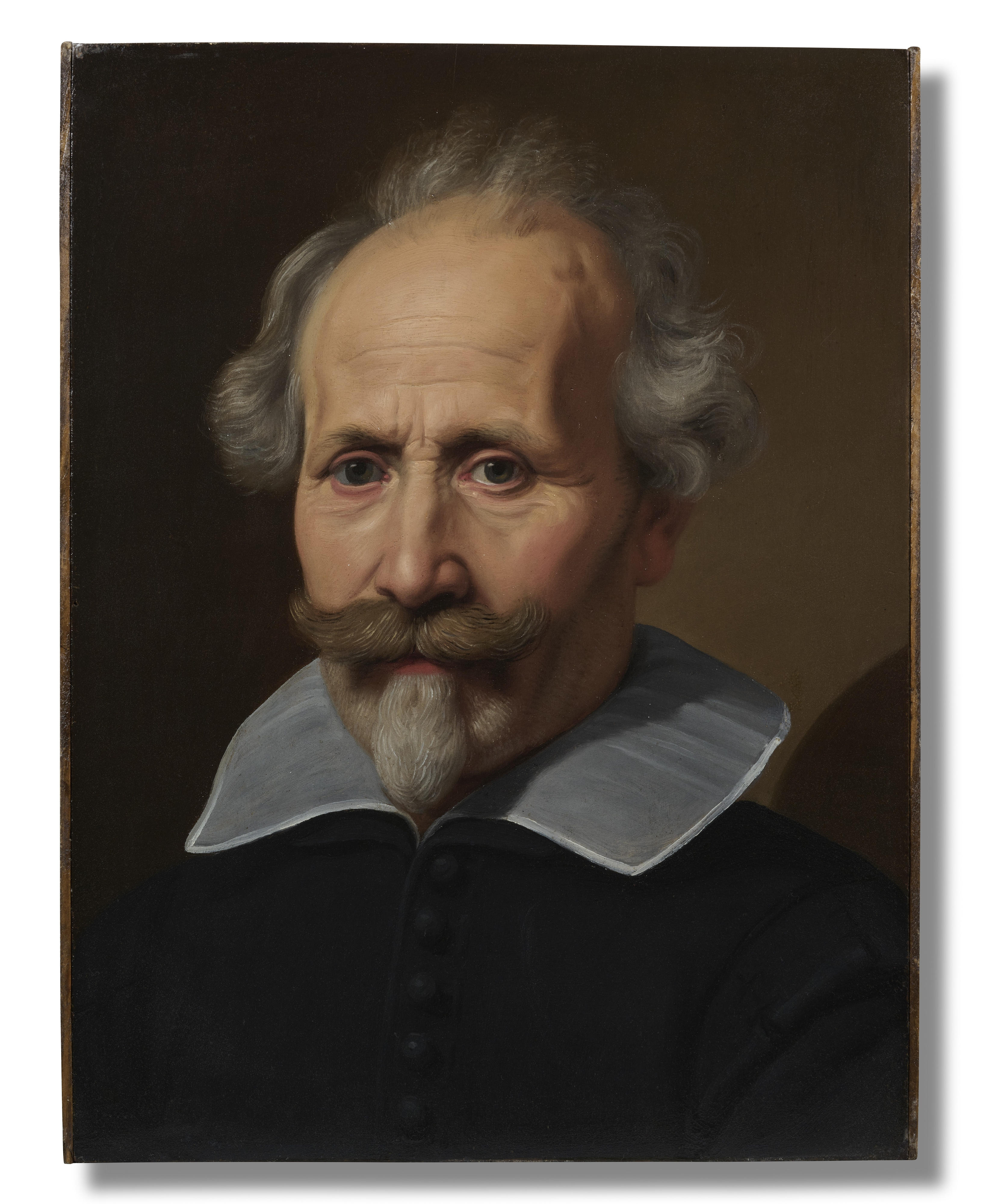
The attribution of this handsome portrait to Daniele Crespi has been endorsed by Francesco Frangi who, following its sale in 2004, gave the work in full to this great Lombard artist. Frangi dates the picture to the mid 1620s based on stylistic comparison with other male bust-length portraits by Crespi, such as his anonymous portraits in the Accademia Ligustica di Belle Arti, Genoa, and his Portrait of Antonio Oligati (private collection). Similar to those works, this striking portrait is rendered with a plasticity of form, accentuated by the sharp lighting of the head from the left, and a delicate precision in the painting of facial features and hair.
It was probably with the paintings from this period in the artist’s life in mind that the Bolognese scholar Pellegrini Orlando formulated his penetrating opinion of Daniele Crespi’s style at the beginning of the eighteenth century; in particular, he admired the impastos “di buon colore, carnoso, di gran gusto, che tendeva in tutto e per tutto al vero” (“of good, soft colour in fine style that were entirely lifelike.”1 These words could be an ideal caption for this painting in which the wooden support allowed the artist to show off his technical skill in creating an almost hyper-realistic rendering of the sitter’s glowing, taut skin barely touched by wrinkles.
The format of this picture situates is firmly within a series of small portraits by the artist, painted mostly on similarly sized panels (approximately 45 x 35 cm), using a consistent compositional model. Just as in our painting here, in the other portraits the sitter is always depicted almost frontally against a neutral background, and in bust-length view so that all our attention is focused on the facial features which, in turn, are immortalized in supremely composed expressions.
1. Pellegrini Orlandi, Abecedario pittorico, Bologna, 1704, p.121.
The artwork described above is subject to changes in availability and price without prior notice.
It was probably with the paintings from this period in the artist’s life in mind that the Bolognese scholar Pellegrini Orlando formulated his penetrating opinion of Daniele Crespi’s style at the beginning of the eighteenth century; in particular, he admired the impastos “di buon colore, carnoso, di gran gusto, che tendeva in tutto e per tutto al vero” (“of good, soft colour in fine style that were entirely lifelike.”1 These words could be an ideal caption for this painting in which the wooden support allowed the artist to show off his technical skill in creating an almost hyper-realistic rendering of the sitter’s glowing, taut skin barely touched by wrinkles.
The format of this picture situates is firmly within a series of small portraits by the artist, painted mostly on similarly sized panels (approximately 45 x 35 cm), using a consistent compositional model. Just as in our painting here, in the other portraits the sitter is always depicted almost frontally against a neutral background, and in bust-length view so that all our attention is focused on the facial features which, in turn, are immortalized in supremely composed expressions.
1. Pellegrini Orlandi, Abecedario pittorico, Bologna, 1704, p.121.
The artwork described above is subject to changes in availability and price without prior notice.