
Daphne
2025
Bronze, silver gilded
49 x 30 x 18 cm (19 1/4 x 11 3/4 x 7 1/8 in.)
Description
Tancredi di Carcaci’s practice utilises stone, bronze and ceramic to explore representational symbols, combining figurative and abstracted elements to evoke mysticism and otherworldliness. In his artworks, competing forms of materiality amalgamate to blur the line between effigy and icon. Carcaci employs the lost wax technique to create figurative entities that invoke the notion of the sanctified body, inviting the viewer to explore the work through both a contemporary and ancient lens.
Carcaci’s use of iconography speaks of his abiding love of Renaissance art and his knowledge of the myths of Greece and Rome. In his practice, the artist strives toward a timelessness, following his resolve that – despite the loss genuine belief in these stories and symbols – images of these ancient gods can still bring us closer to the elemental existing within us all.
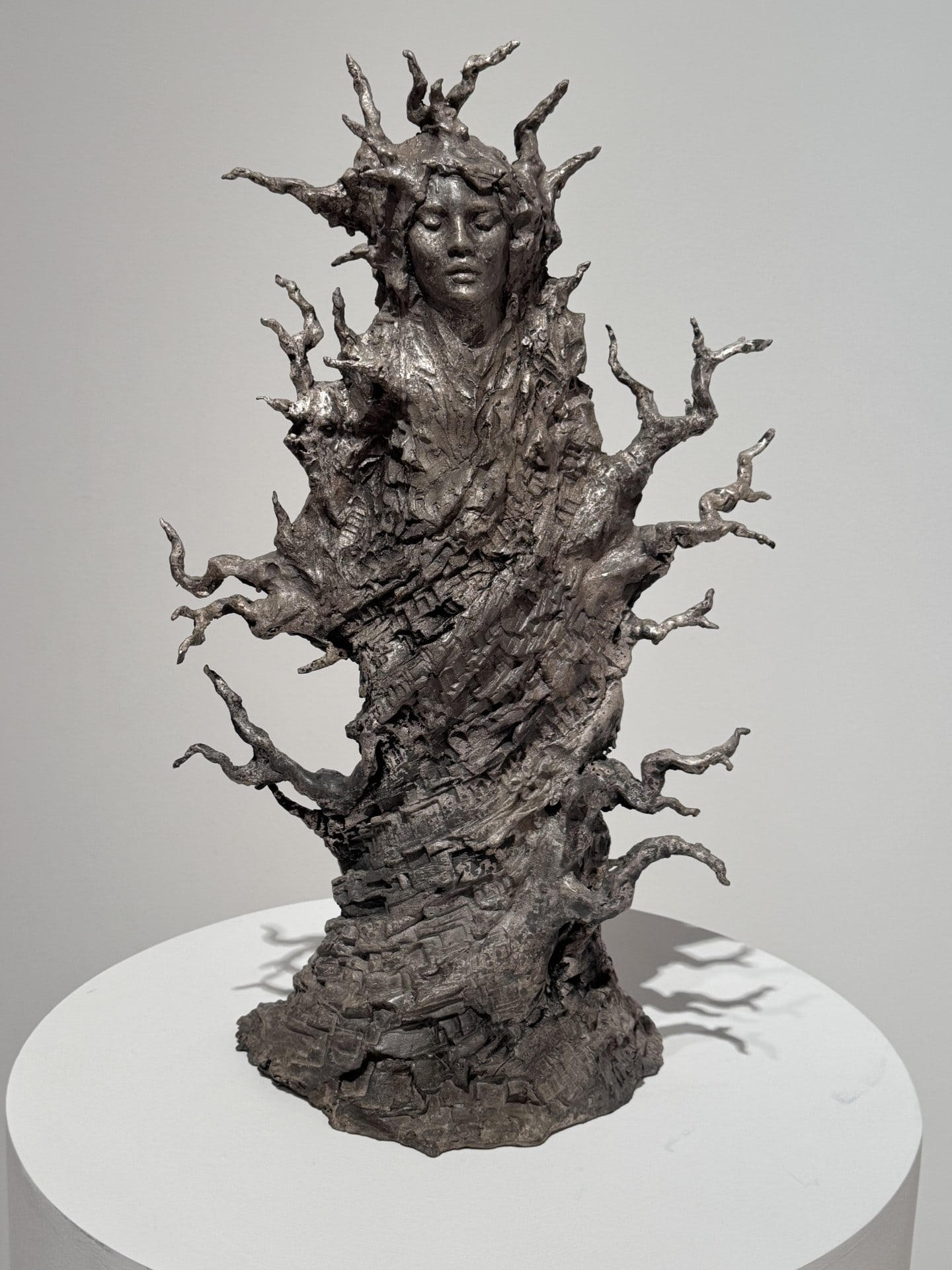
The present sculpture is a representation of Daphne, a mythical subject that has attracted painters and sculptors across the ages. As described in Ovid’s Metamorphoses, Daphne is pursued by the god Apollo. To escape him, she begs her father, the river god Peneus, to transform her into a laurel tree before Apollo can reach her.
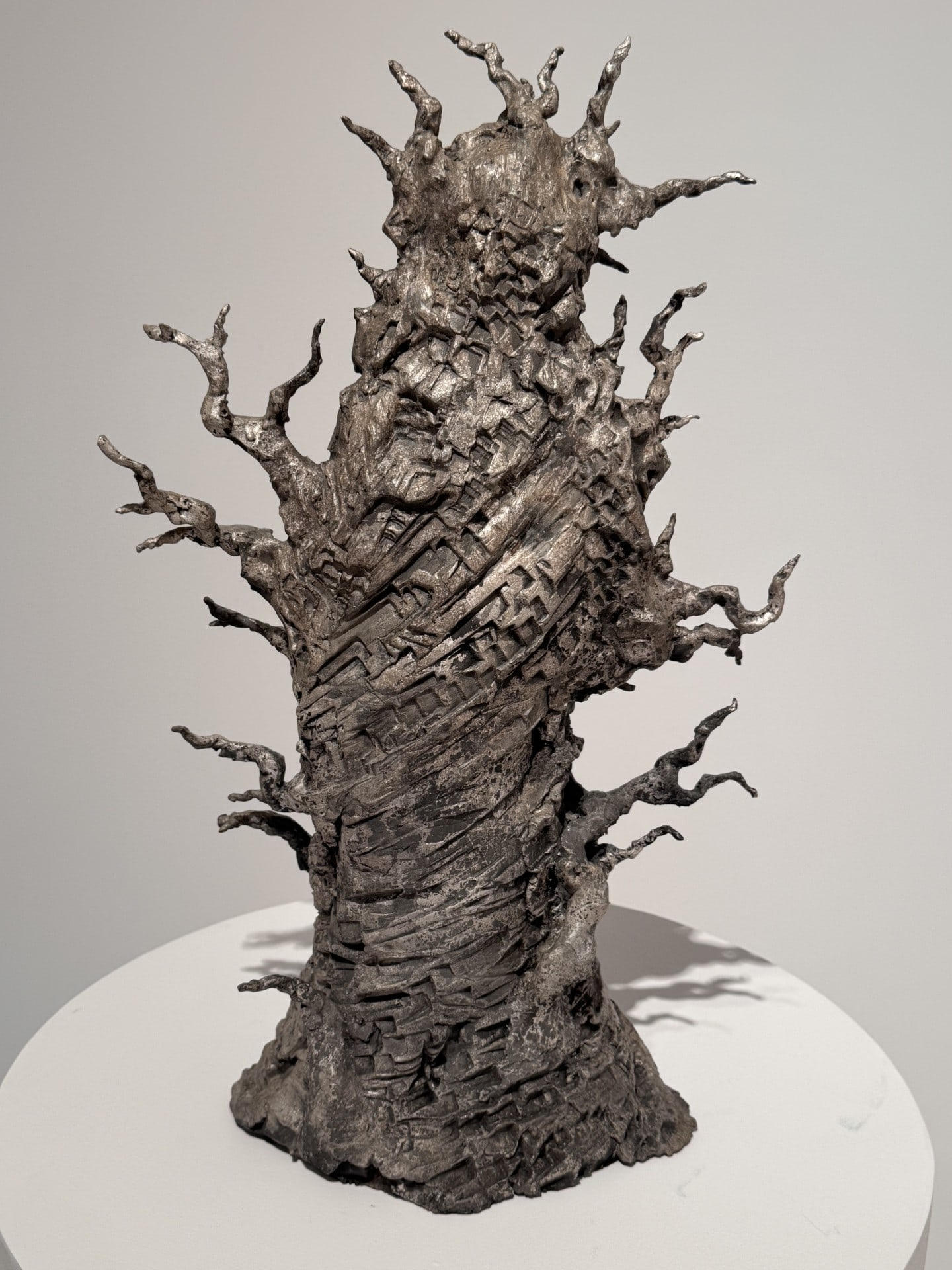
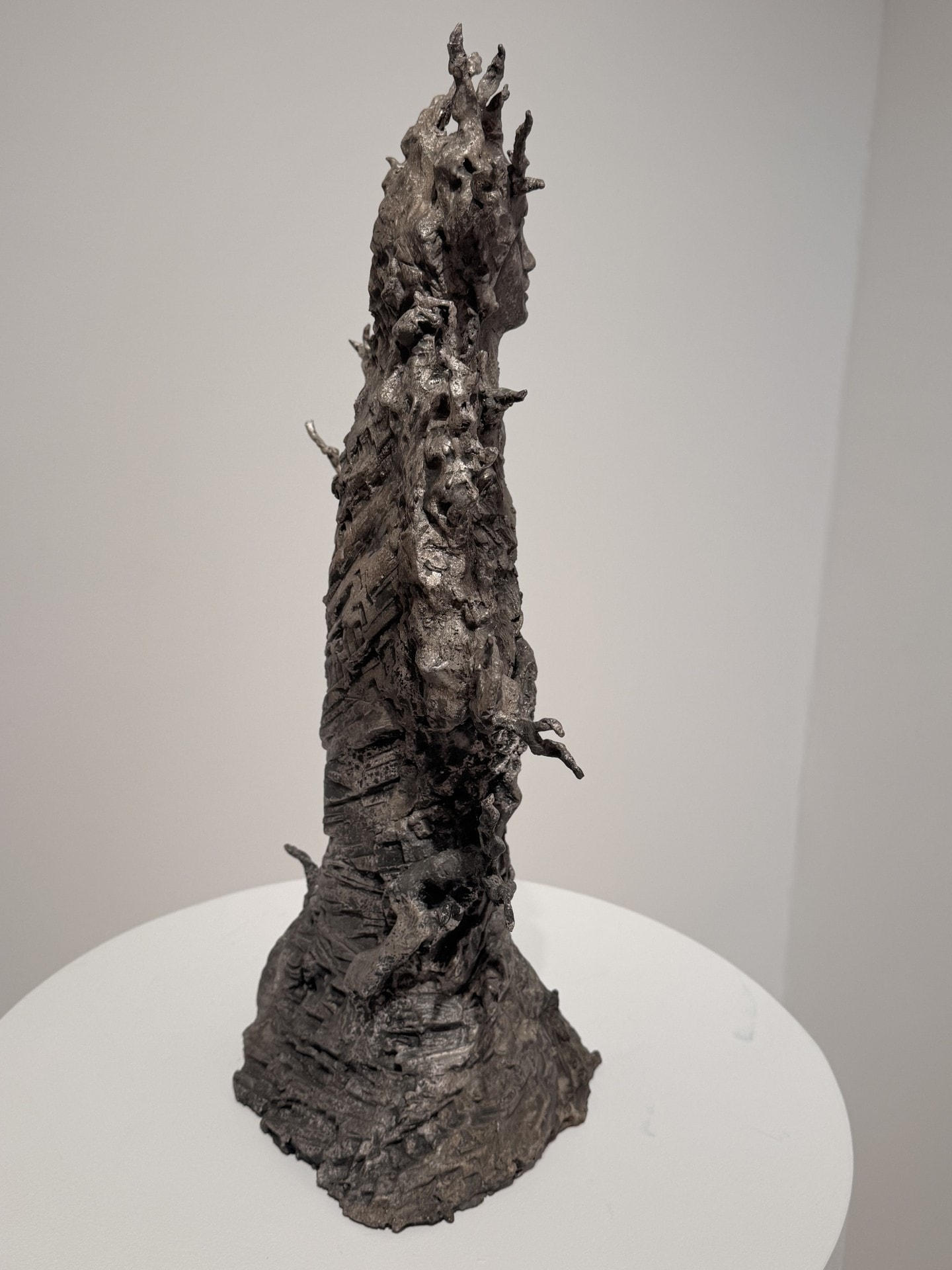
This work visualises the climactic instant when Daphne becomes one with nature. Frozen in the tension between escape and surrender, the sculpture evokes both the beauty and the tragedy of the metamorphosis.
The figure’s upward spiral and twisting posture convey a sense of motion frozen in time. The careful contrasts between smooth and rough surfaces illustrate the gradual merging of skin and bark, highlighting the tactile and visual complexity of metamorphosis. This interplay of textures gives the sculpture a living quality, as if the form is caught midway between one state and another.
By focusing on the material and emotional aspects of change, the sculpture transforms an ancient myth into a contemporary meditation on transformation and identity. It speaks to the enduring artistic fascination with the human body as a site of transition.