

Lucio Fontana
b. 1899, Rosario de Santa Fé, Argentina
d. 1968, Comabbio, Italy
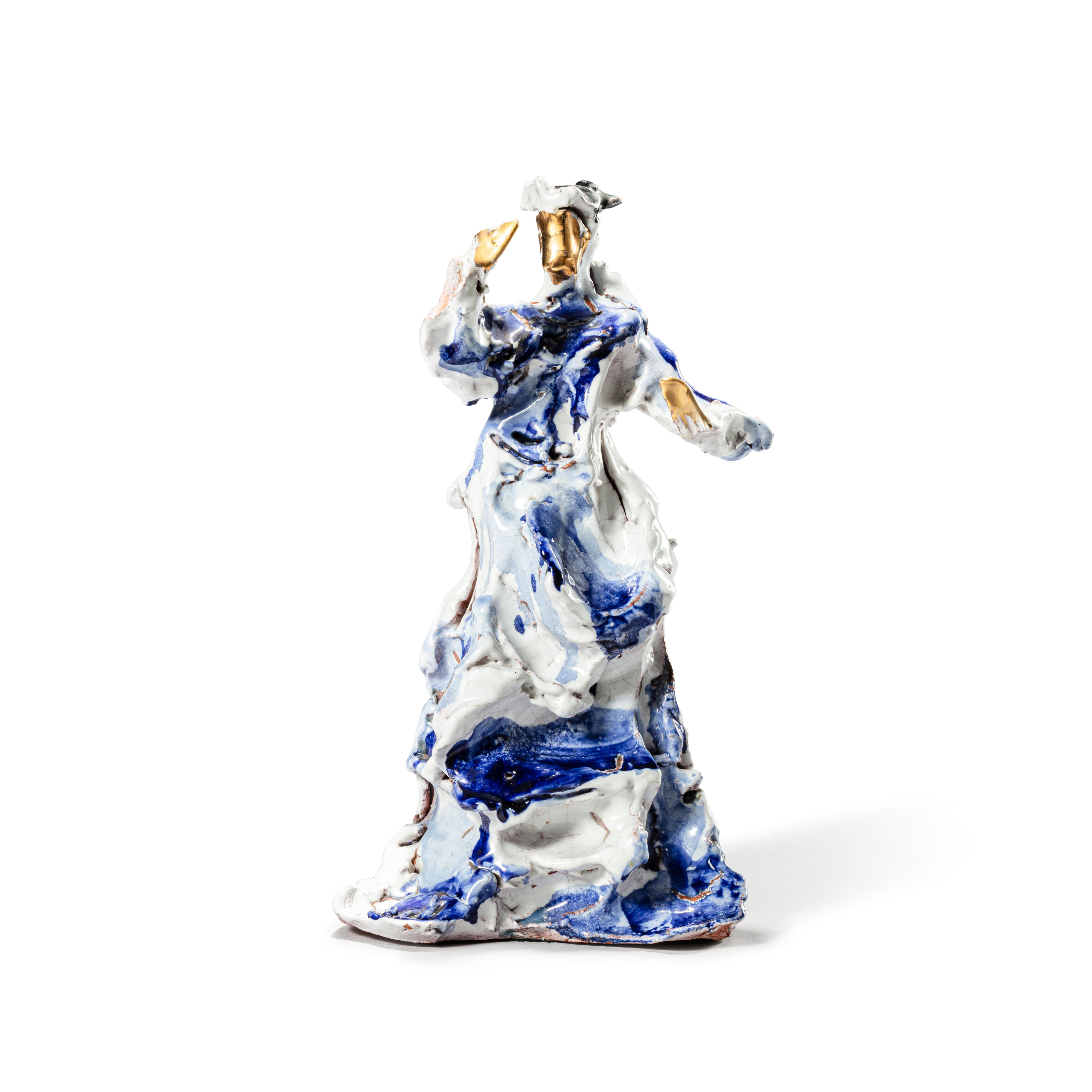
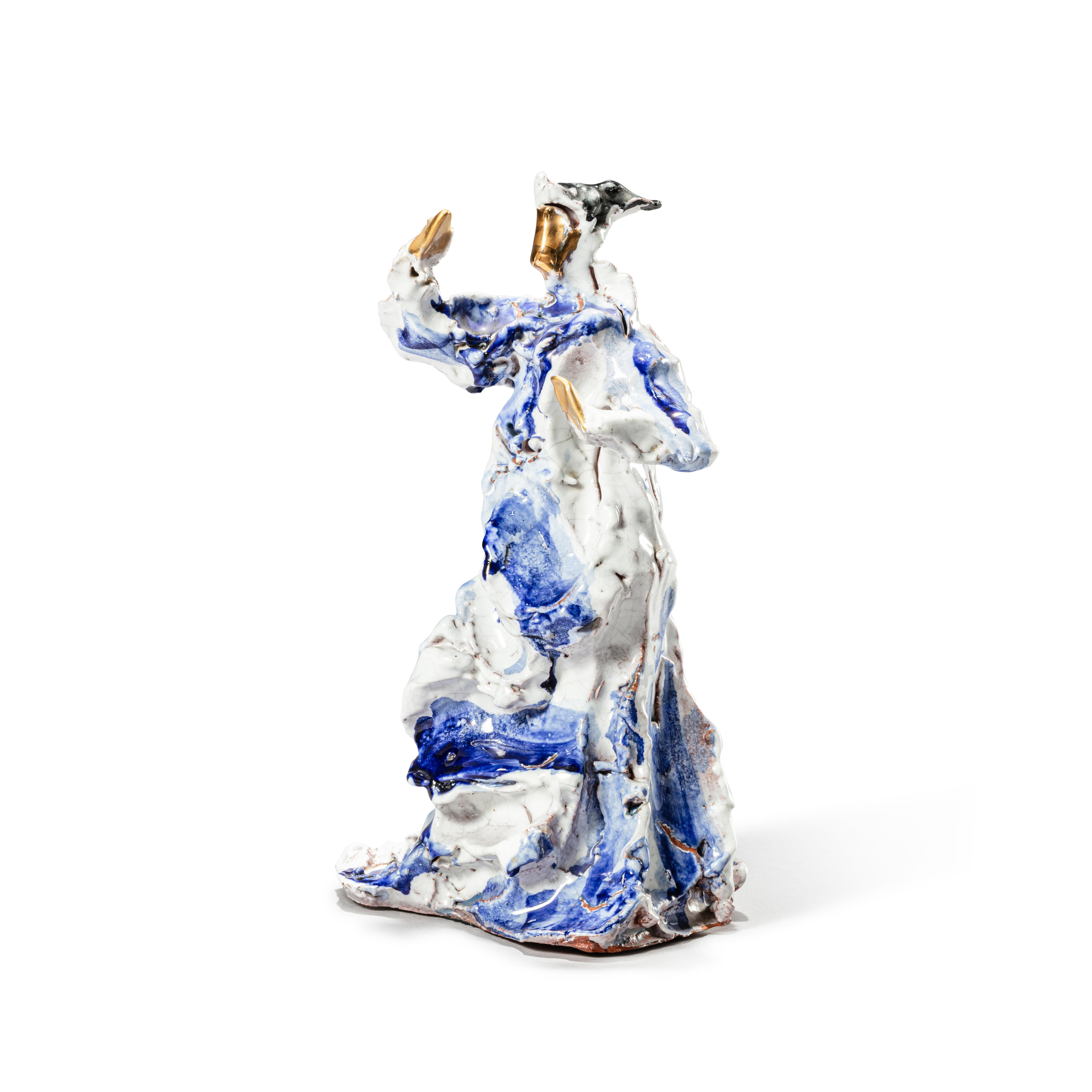
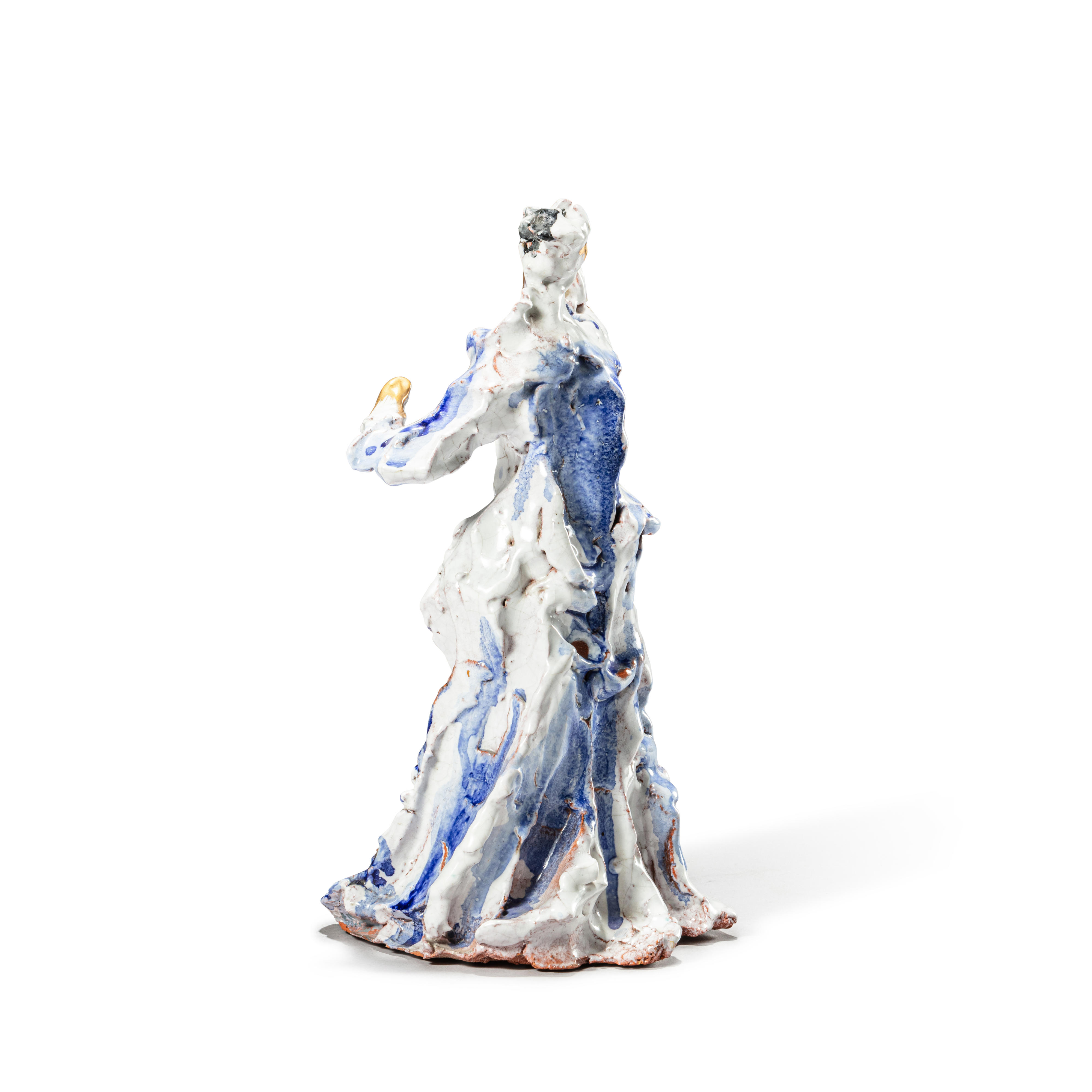
Donna allo specchio (Woman at the mirror)
1950–51
Glazed and painted terracotta
26 x 15 x 12 cm (10 1/4 x 5 7/8 x 4 3/4 in.)
Provenance
with Karsten Greve, St. Moritz,
Private Collection.
Literature
Description
“We do not intend to abolish art or stop life: we want paintings to come out of their frames, and sculptures from under their glass cases. An aerial, artistic portrayal of a minute will last for thousands of years in eternity.”— Second Spatialist Manifesto, 1948
Lucio Fontana’s graceful sculpture Donna allo specchio (Woman at the mirror) was created in 1950–51, shortly after the artist returned to Italy from Argentina. This ceramic figure bridges his traditional training as a sculptor and his Spatialist investigations, figuration giving way to an undulating entity that tests the conventional boundaries of the medium. The artist’s tactile manipulation of the clay is on full display here, exposing his interrogation of form and the limits of space. Such questions were clearly on his mind at the time; at the time he was creating this work, he also signed the third (1950) and fourth (1951) Spatialist Manifesto.
Donna allo specchio, delicately painted in white and shades of blue with gold, is a rare example of this subject, from a period during which Fontana was experimenting with other sculpted figures alongside his paintings and environmental works. Besides his now-famous religious subjects including his series of Madonnas and Crocifissi, Fontana also treated secular subjects such as harlequins, clowns and ballerinas. Two other examples of the subject Donna allo specchio are noted in L.M. Barbero’s catalogue raisonné of the ceramics, made in 1948.[1] Our example is the only one produced in 1950–51, important years in which he achieved significant recognition for his sculptural practice; in 1950, he held a solo exhibition of ceramics at Galleria il Milione, Milan, and participated in the XXV Venice Biennale, and in 1951 he progressed to the second round of the competition for the design of the fifth door of the Milan Duomo.
In the Manifiesto Blanco, published by Fontana and a group of his students in Buenos Aires in 1946, the nascent Spatialists declared that “We live in the mechanical age. Painted canvas and upright plaster no longer have a reason to exist.” Yet in Fontana’s Donna allo specchio and other figurative works of the 1940s and '50s, Fontana insisted that “upright plaster” did indeed merit existence, pushing his sculptural materials to their limits in order to capture an inexorable and wholly modern sense of form and interaction with space.
[1] L. M. Barbero, Lucio Fontana, Catalogo ragionato delle sculture ceramiche, I, Milan 2022, p. 176, nos. 48 FSV 3 and 48 FSV 4.