
Elger Esser
b. 1967, Stuttgart, Germany
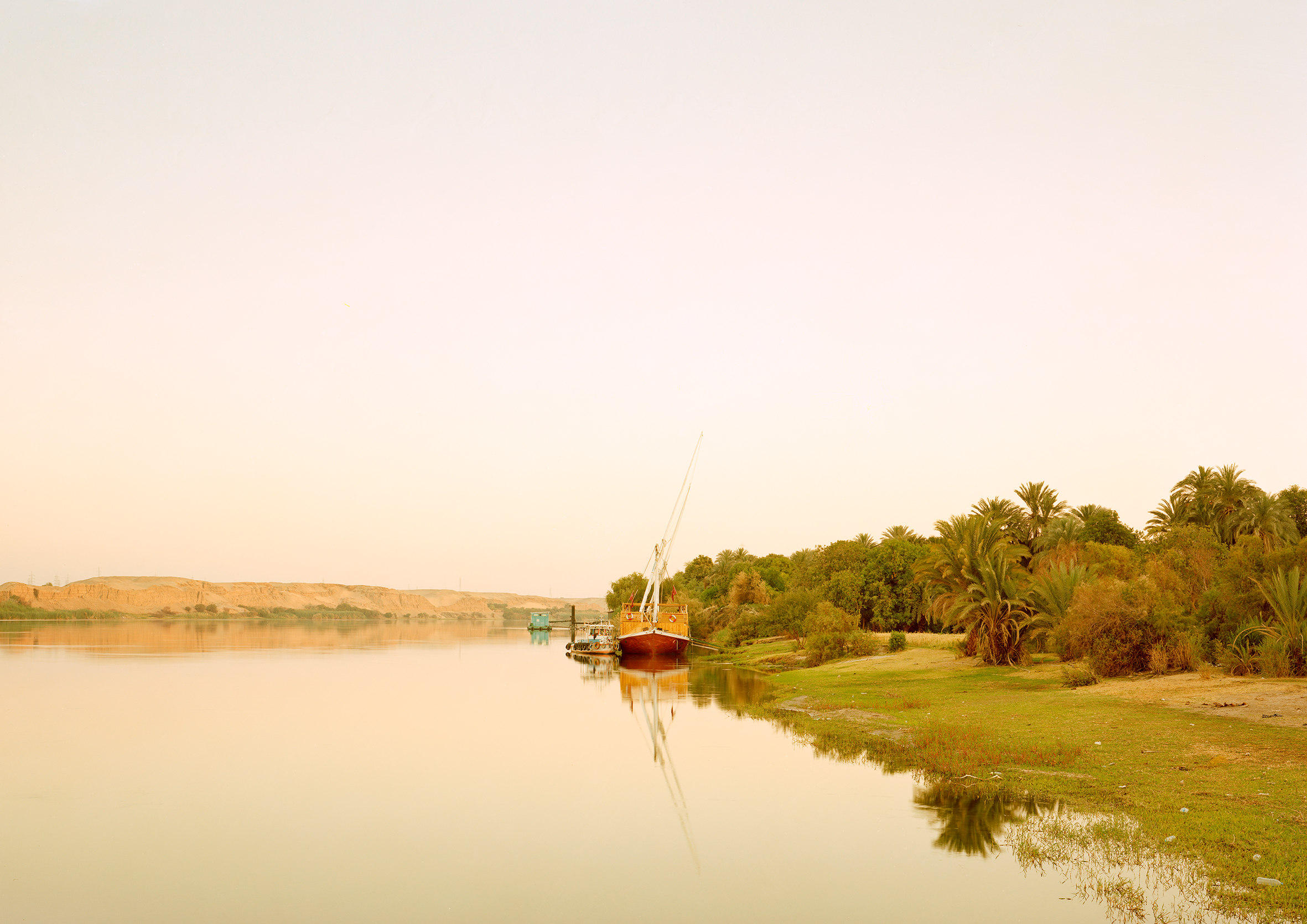
el-Kab II
2011
C-Print, Diasec Face
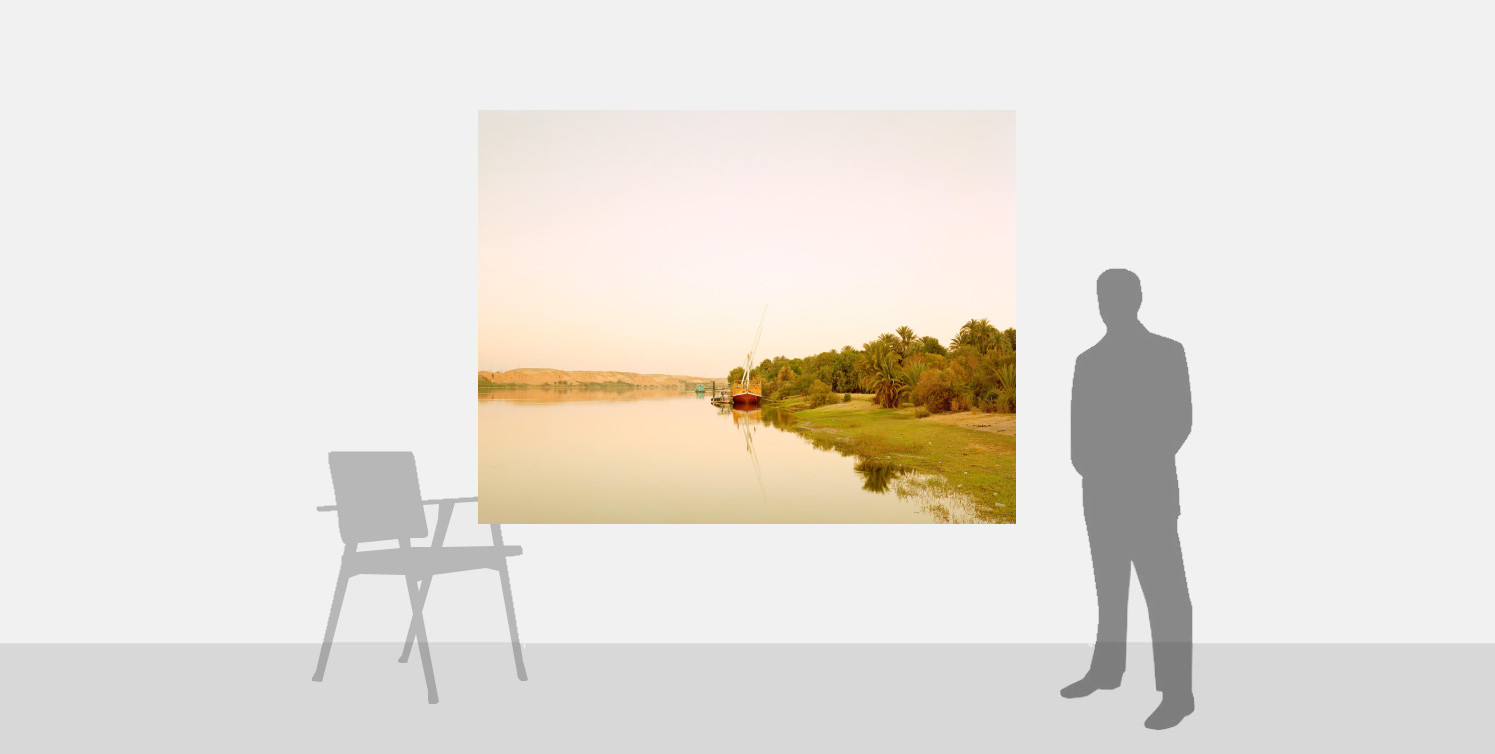
184 x 239.5 x 5 cm (72 1/2 x 94 1/4 x 2 in.)
5/7 + 1 AP
Provenance
Description
Elger Esser’s large format photographs, frequently cast in a soft, almost ghostly light, often represent ruins or fragments of things past, of deserted landscapes and rural spaces. Concentrating mainly on landscapes, seascapes and lakes, villages and old buildings, his works evoke a desire to explore time and memory.
In April 2011, Esser made a trip to Egypt, travelling along the Nile from Luxor to Aswan. The journey took him through places that have captured the European imagination for centuries, viewed often through the lens of ‘Orientalism’, and thus dissociated from its true essence. In Esser’s Egypten series of photographs however, the landscapes are allowed to speak for themselves, the calming layers of river, land and sky offering a glimpse at the edges of this world that we are both separated from and fully immersed inside. These works were presented alongside Esser’s photographs from Israel and Lebanon in 2017 in an exhibition at the Parasol Unit Foundation in London and in an accompanying catalogue, entitled Morgenland (Morning Land), reflecting the historical poetic associations of the regions, and Esser’s own perspective on these places, imbued with a sense of eternal beginnings.
Within a tonal range of colour that seems tinted by sand and sun, Esser imbues his photographs with a presiding sense of stillness and serenity, allowing for a quiet and profound connection with the places depicted. This tranquillity is ever more stark considering the political moment at which the photographer made this journey, in the months following the January 2011 revolution. The placid waters and subdued skies suggest the constancy of nature amidst the turmoil and disquiet of mankind.
The photographs also suggest a historical continuum, with traditional feluccas (sailing boats) seen alongside larger passenger dahabiyas, stretches of unpeopled riverbanks alongside fringes of modern urban centres. In some of the works, the presence of humans is obvious; in others, it is merely hinted at in the wake of a boat or in the silhouette of a distant building. Esser’s eye for composition is a thread weaving across each images, horizontal bands treating the land as the gateway between river and sky, echoing the layers of life and history that have shaped each place.
Each photograph reflects Esser’s interest in 19th-century landscape painting, historic postcards and the literary works of Gustave Flaubert, Marcel Proust and Guy de Maupassant. El-Kab II embodies these influences as well as the reality of the present. Two boats are moored at the centre of the composition, a further jetty visible behind. The river bank connects the viewer with the distant landscape, the dramatic perspective of the work giving a sense of infinity. The expansive areas of river and sky appear like endless voids; the reflections of the hills, vegetation and mast of the boat are the only disturbances on the otherwise still water.
Born in Stuttgart, Germany in 1967, Esser was raised in Rome before moving to Dusseldorf in 1986, where he studied at the Dusseldorf Kunstakademie with Bernd and Hilla Becher. Esser’s photographs are included in numerous public and private collections such as the Metropolitan Museum of Art, the Guggenheim Foundation, Kunsthaus Zurich and FNAC Paris.
The artist lives and works in Dusseldorf.