
Minjung Kim
b. 1962, Gwangju, Korea
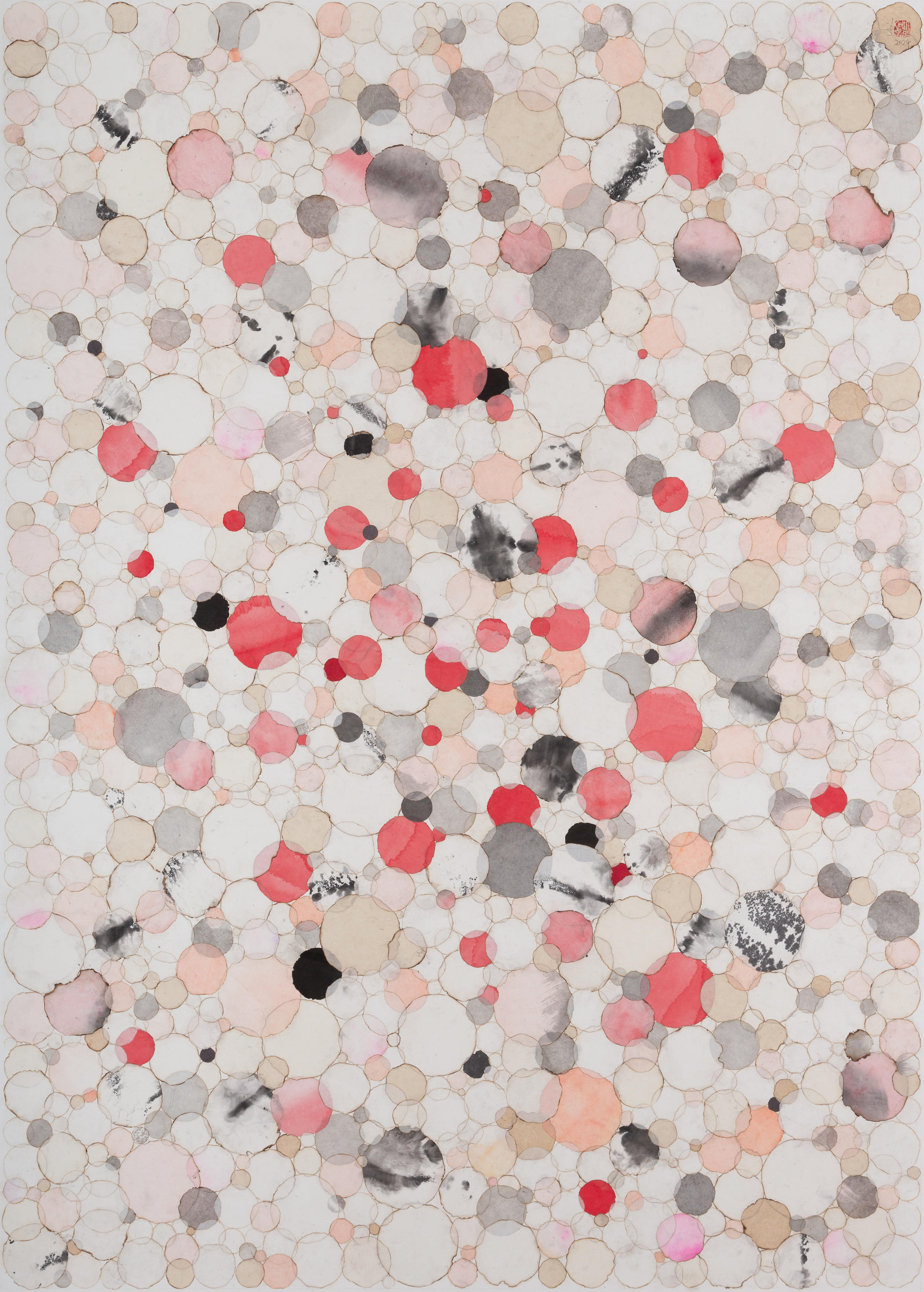
Encounter
2024
Mixed media on mulberry Hanji paper
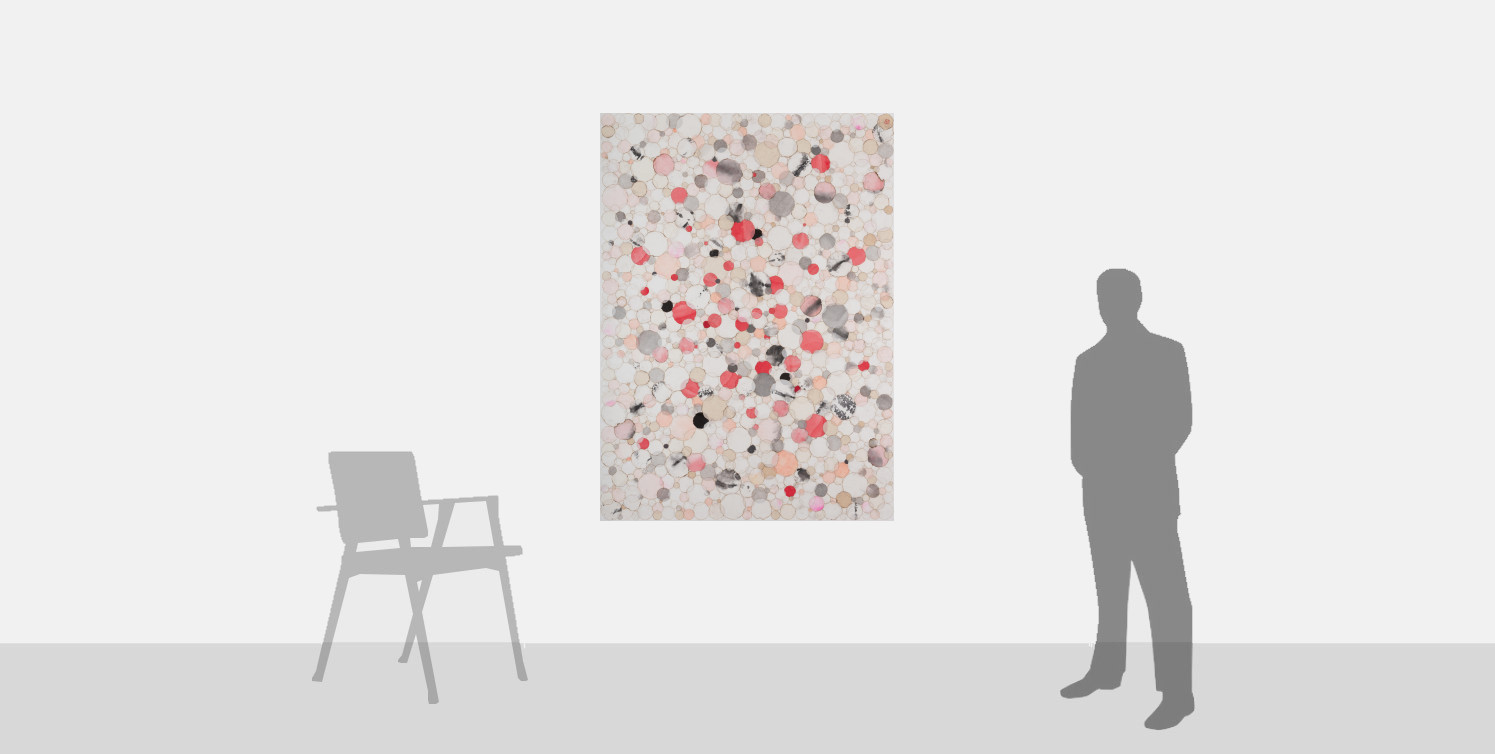
181.5 x 131 cm (71 1/2 x 51 5/8 in.)
Provenance
The artist's studio.
Description
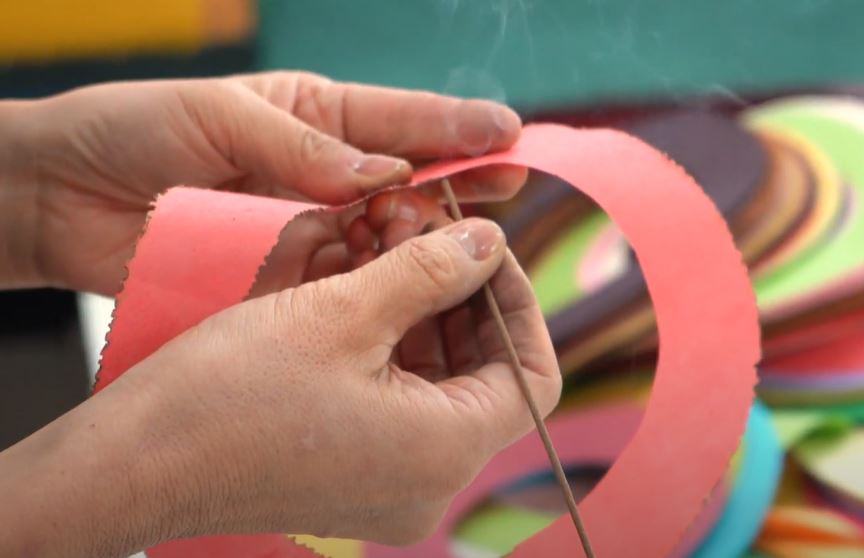
Renowned for her ethereal ink paintings and intricate compositions on layered paper, Minjung Kim (b. 1962) is a Korean artist celebrated for her mastery of transparency and subtle formal expressions. Committed to reinterpreting traditional Korean aesthetics, Kim imbues each artwork with a process-based organization of her thoughts, problems, and whims. Through the repetitive technique of burning and layering mulberry Hanji paper, she conveys a profound narrative of emotional healing and meditation, punctuated by vibrant colors and dynamic strokes.
Encounter appears like a reverberating field of circles, individual bubble-like discs overlapping and jostling with each other for space. Pieces of paper with varying shades of white, cream, grey, pink, red and black cover the surface of the work, each placed purposefully and precisely by the artist. The work encapsulates many of the themes of Kim's practice, achieving a balance between order and chaos, individuality and cohesion, transparency and opacity, growth and decay.
Kim's global presence is marked by exhibitions at prestigious museums and galleries worldwide, including the Fondation Maeght, Saint-Paul-de-Vence, France (2024); Princeton University Art Museum in New Jersey, USA (2020); Langen Foundation in Neuss, Germany (2019); and the Gwangju Museum of Art in Gwangju, Korea (2018), Musée des Arts Asiatiques, Nice, France (2017); Hermès Foundation, Singapore (2017); OCI Museum of Art, Seoul, Korea (2015); Palazzo Caboto, Venice, Italy (2015); Oko, New York, USA (2014); Studio d'Arte Raffaelli, Trento, Italy (2014); MACRO (Museo d’Arte Contemporanea Roma), Rome, Italy (2012); the Henry Moore Institute, Leeds, UK (2008); Guanshanyue Art Museum, Shenzhen, China (2007); Fondazione Palazzo Bricherasio, Turin, Italy (2006); and Museo Comunale d’Arte Moderna Ascona, Ascona, Switzerland (2003). She participated in the Gwangju Biennale (2004, 2018, 2023).
Encounter appears like a reverberating field of circles, individual bubble-like discs overlapping and jostling with each other for space. Pieces of paper with varying shades of white, cream, grey, pink, red and black cover the surface of the work, each placed purposefully and precisely by the artist. The work encapsulates many of the themes of Kim's practice, achieving a balance between order and chaos, individuality and cohesion, transparency and opacity, growth and decay.
Kim's global presence is marked by exhibitions at prestigious museums and galleries worldwide, including the Fondation Maeght, Saint-Paul-de-Vence, France (2024); Princeton University Art Museum in New Jersey, USA (2020); Langen Foundation in Neuss, Germany (2019); and the Gwangju Museum of Art in Gwangju, Korea (2018), Musée des Arts Asiatiques, Nice, France (2017); Hermès Foundation, Singapore (2017); OCI Museum of Art, Seoul, Korea (2015); Palazzo Caboto, Venice, Italy (2015); Oko, New York, USA (2014); Studio d'Arte Raffaelli, Trento, Italy (2014); MACRO (Museo d’Arte Contemporanea Roma), Rome, Italy (2012); the Henry Moore Institute, Leeds, UK (2008); Guanshanyue Art Museum, Shenzhen, China (2007); Fondazione Palazzo Bricherasio, Turin, Italy (2006); and Museo Comunale d’Arte Moderna Ascona, Ascona, Switzerland (2003). She participated in the Gwangju Biennale (2004, 2018, 2023).
Her work is represented in numerous international public collections including the British Museum, London, UK; Leeum, Samsung Museum of Art, Seoul, Korea; Musée des Arts Asiatiques, Nice, France; Fundación Helga de Alvear, Cáceres, Sapin; Swiss Re Art Collection, Zürich, Switzerland; Herbert F. Johnson Museum of Art, Cornell University, New York, USA; Asia Society Museum, New York, USA; Fondazione Palazzo Bricherasio, Turin, Italy; the Museum Sbygningen, Copenhagen, Denmark; OCI Museum of Art, Seoul, Korea; Tate Modern, London, UK; and UniCredit Art Collection, Milan, Italy.