

Yves Klein
b. 1928, Nice
d. 1962, Paris
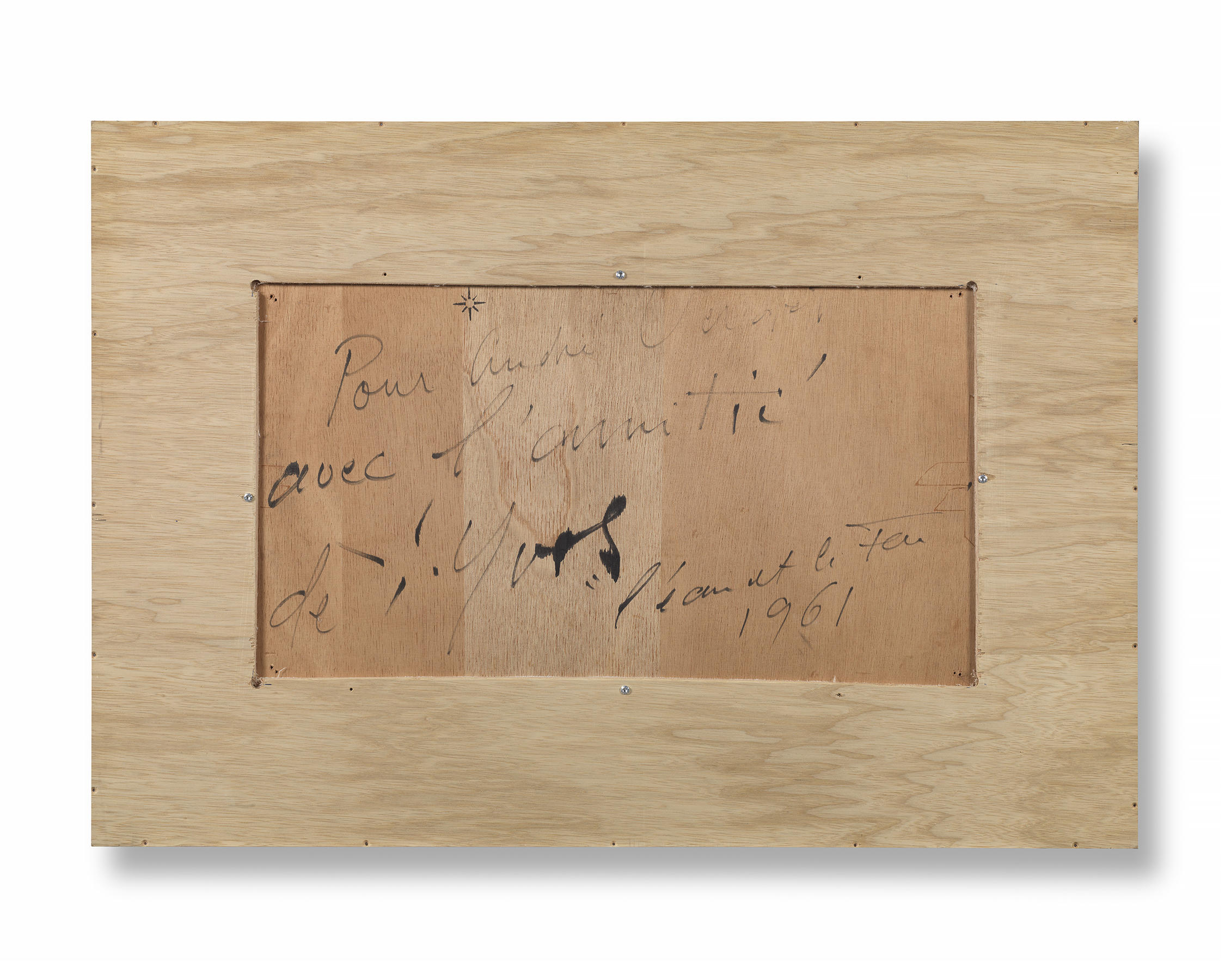
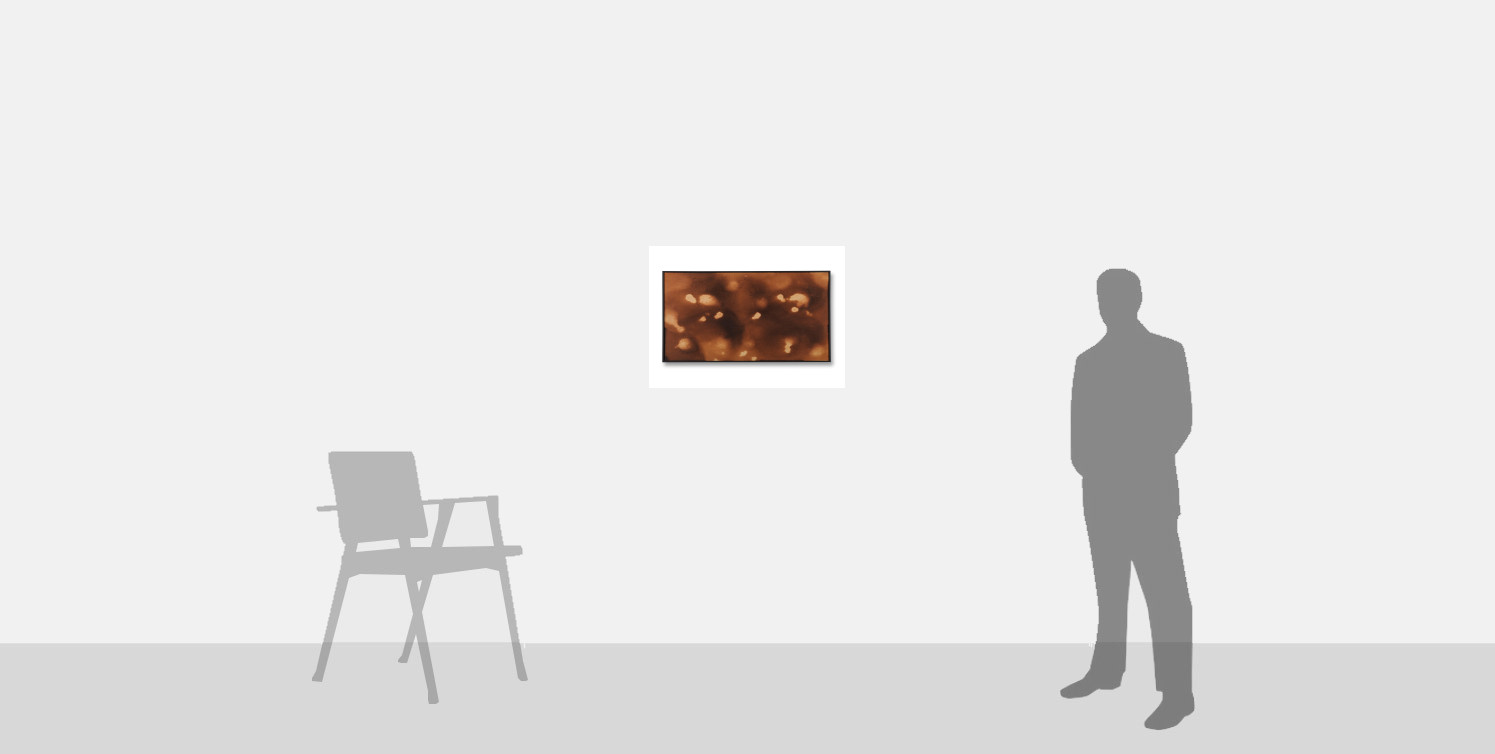
F134 (L'Eau Et Le Feu) (F134 (Water and Fire))
1961
Burnt cardboard on panel
63 x 87 x 7 cm (24 3/4 x 34 1/4 x 2 3/4 in.)
Provenance
Galerie Gmurzynska, Zurich,
Private collection, Italy.
Description
‘Fire, for me, is the future without forgetting the past. It is the memory of nature. […] It is a protective and terrible god, good and bad. It can contradict itself; it is therefore one of the principles of universal explanation. We may have not noticed enough that fire is a social being rather than a natural being, and, in order to see the merits of this observation, there is no need to develop considerations on the role of fire in primitive societies nor to insist on the technical difficulties of maintaining the fire.’
‘Sculptures of fire on water… Why not?’
Yves Klein, L’évolution de l’art vers l’immatériel, conference at the Sorbonne, 3 & 5 June 1959
In 1961, just a year before his premature death, Yves Klein made an astonishing series of fire paintings, using a powerful open flame on chemically-treated paper. The works were produced with the assistance of Centre d'Essais du Gaz de France, the central research laboratory of the National Gasworks of France, shortly after Klein had founded the New Realist Movement.
Two years earlier in 1959, Klein had outlined the role of fire in his creative practice at a lecture at a conference at the Sorbonne University in Paris. He was fascinated by the contradictions that it embodied: at once, both creation and destruction, both comfort and pain, both substance and void. Moreover, Klein admired the inherent attraction of fire, stating ‘Fire is beautiful in itself, regardless.’
The resultant appearance of F134 (L’Eau et Le Feu) is one that seems to mimic the flickering nature of fire, pulsating shades of pink-orange, brown and charcoal black almost seeming interlacing across the panel. The artwork captures not only the visual semblance of fire, but the moment of its existence, materialising time that is by its very nature, transient.
The importance for Klein of using both fire and water to create this artwork, was the oppositional forces which each element presented; one ignites and burns, the other soothes and vaporises. However, here the artist unites these two poles into a creative union. In an elemental act of destruction, he makes something new, something lasting beyond the radical and momentary artistic gesture.
The fire paintings might also be seen as part of a larger, ambitious project which was never realised due to the artist’s death at the age of just 34 in 1962. Klein had envisaged creating a Fontaine de Feu (Fire Fountain), the culmination of this life’s work. Inspired by seeing the fountains in the gardens of the Royal Palace of La Granja de San Ildefonso, near Madrid, he proposed creating a fountain in which he replaced the jets of water with plumes of fire, thus reuniting creating a dynamic fire and water sculpture. However, as this never came to fruition, it is only through works such as the present that we can experience the great artist’s revolutionary investigations into the artistic possibilities of the union of fire and water.