
Giovanni Martinelli
b. 1600, Arezzo
d. 1659, Florence
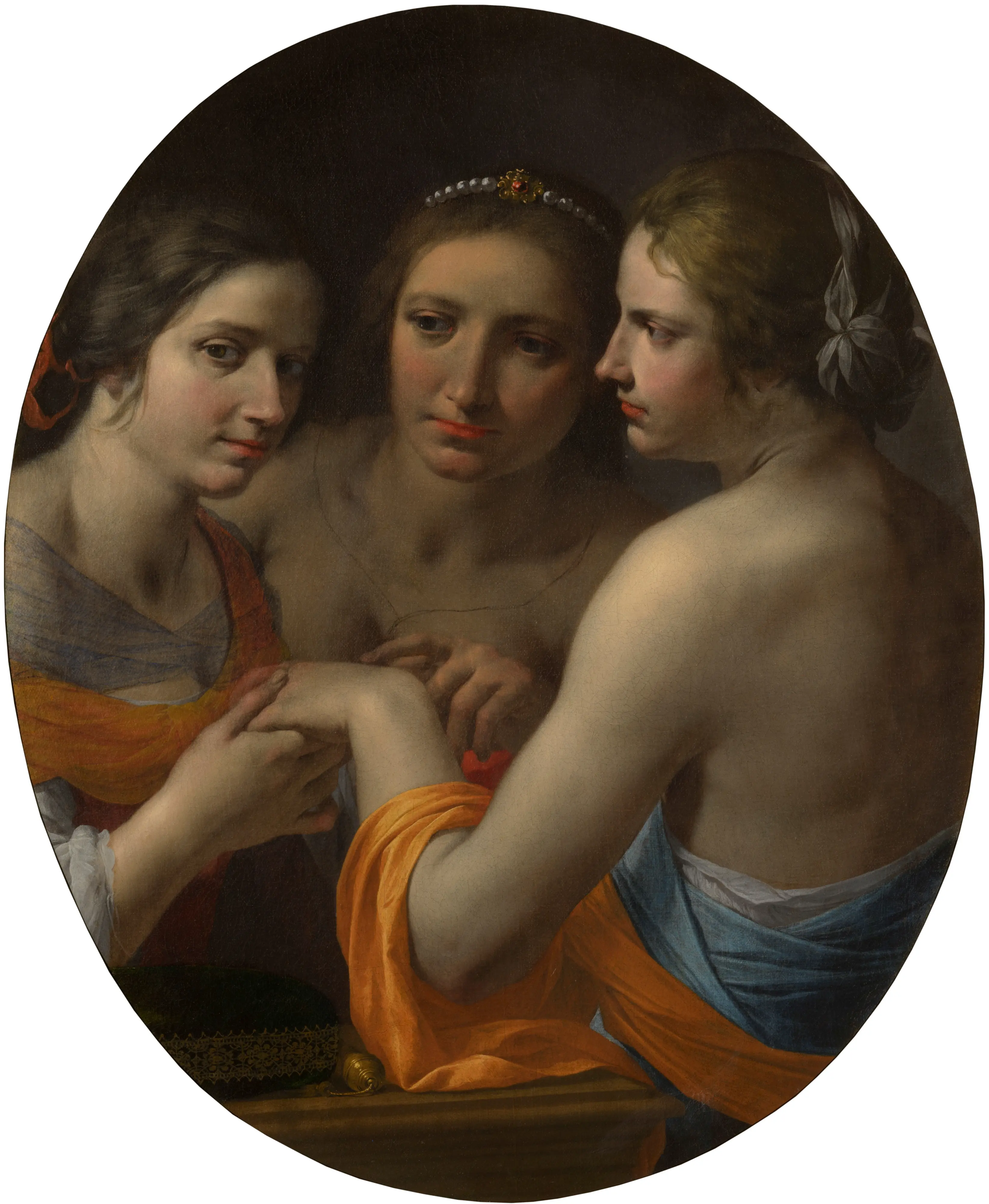
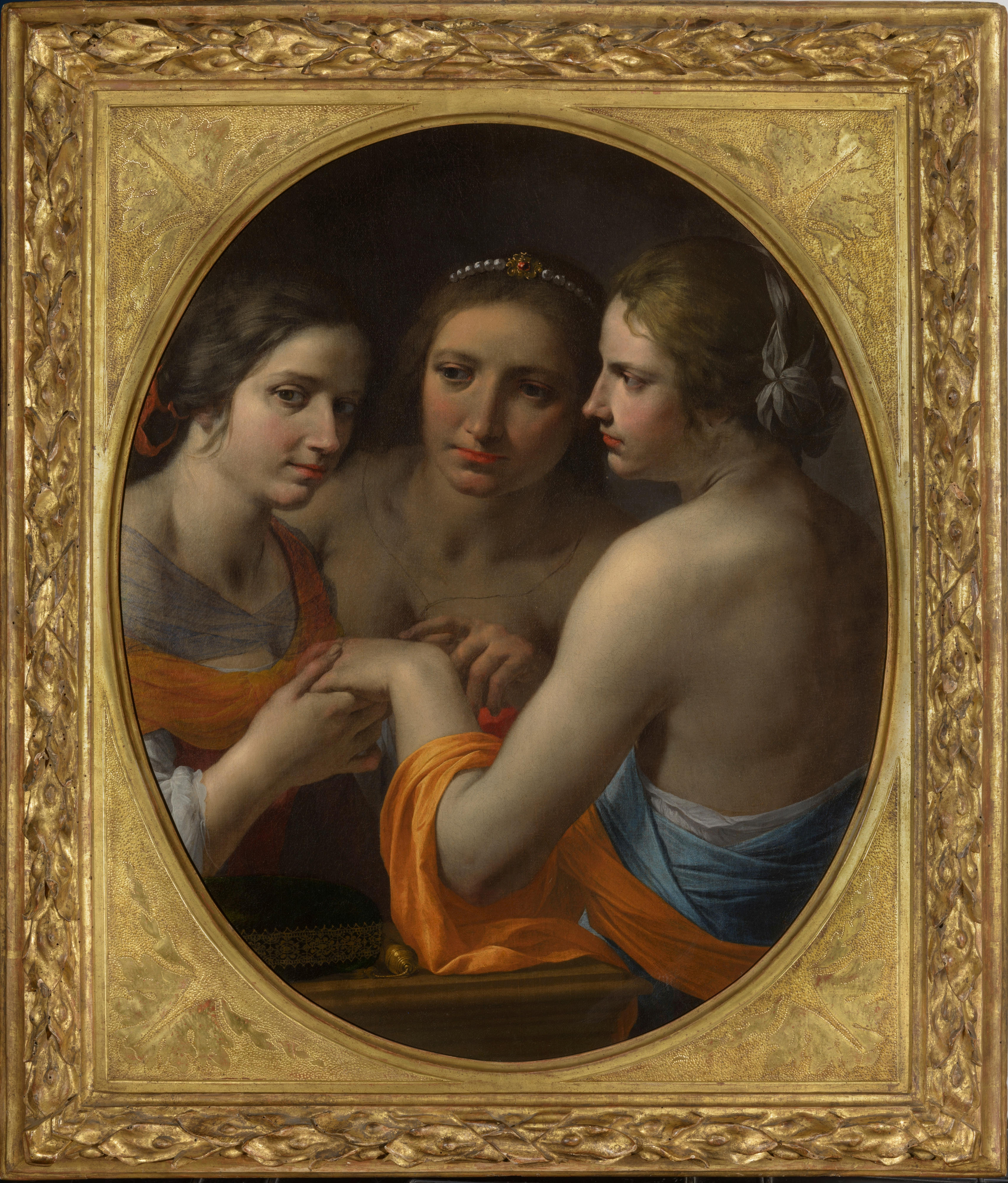
The Three Graces
early 1650s
Oil on canvas
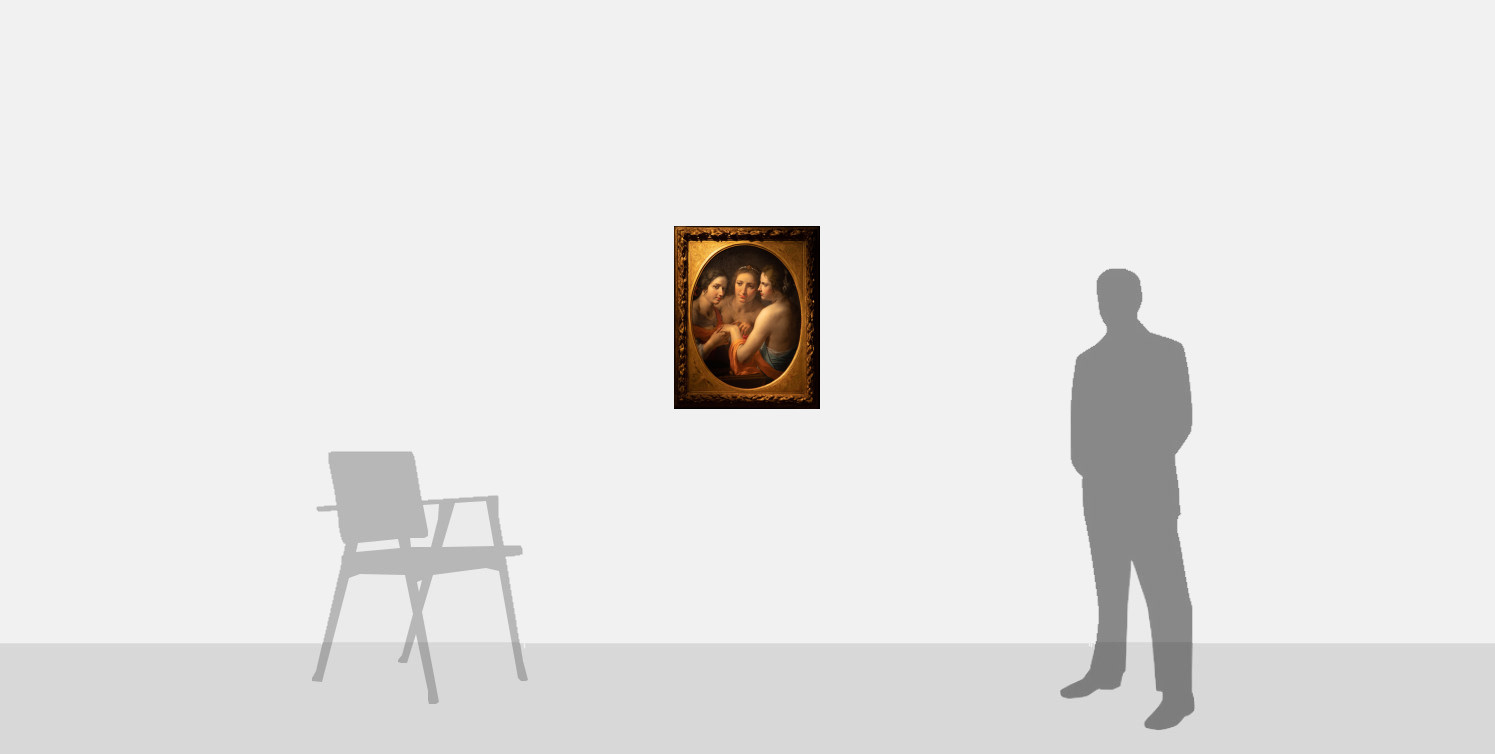
81.5 x 65 cm (32 1/8 x 25 5/8 in.)
With frame: 102 x 85 cm (40 1/8 x 33 1/2 in.)
Provenance
Literature
F. Baldassari, La collezione Piero ed Elena Bigongiari. Il Seicento fiorentino tra favola e dramma, Milan, 2004, pp. 44, 46, no. 34, illustrated.
C. D’Afflitto in M. Voena (ed.), Florence 1600–1780. From the Medici to the Habsburg Lorraines. Paintings, Drawings and Works of Art, exhibition catalogue, Turin, 2006, pp. 32-33.
C. D’Afflitto s.v. ‘Martinelli Giovanni’ in Dizionario Biografico degli Italiani, LXXI, Rome, 2008, pp. 121-124.
F. Baldassari, La Pittura del Seicento a Firenze, Indice degli artisti e delle loro opere, Turin, 2009, p. 526.
S. Bellesi, Catalogo dei Pittori Fiorenti del ‘600 e ‘700, Florence, 2009, p. 193.
G. Cantelli, Repertorio della pittura fiorentina del Seicento. Aggiornamento, Pontedera, 2009, p. 141.
N. Bastogi in A. Baldinotti et al., Giovanni Martinelli pittore di Montevarchi, exhibition catalogue, Florence, 2011, pp. 108–111.
S. Bellesi in L. Canonici (ed.) Giovanni Martinelli da Montevarchi pittore di Firenze, Florence, 2011, p. 54.
F. Baldassari in F. Baldassari et al., Artemisia Gentileschi e il suo tempo, exhibition catalogue, Milan, 2016, pp. 176 -177.
Description
Three young women, shown half-length and draped in diaphanous veils, one seen from behind, the other frontally and the third from a three-quarter angle, are harmoniously presented within an oval-format canvas. The image of the Three Graces derives from classical mythology and was widely diffused in the visual arts of the cinquecento and the seicento. The Graces were the beautiful daughters of Venus and Bacchus, the gods who responsible for providing human beings with pleasure.
The present painting seems to be unique within Martinelli’s oeuvre, and the only time he painted the subject, though it is consistent with the poetic tastes of the artist and his patrons. The artist has eliminated any attributes associated with these figures—for example, the rose, the dice, the myrtle and garlands of flowers and fruits—instead focusing on their exchange of gestures and gazes, and thus upon idealising notions of beauty and unity. The composition is moreover evocative of the refined and precious structure of an ancient cameo, the elegant figures with their ivory complexions emerging from the dark background.
The style of the work is clearly consistent with the extensive oeuvre of Martinelli, and a date in the early 1650s has been suggested. The work may be usefully compared to the altarpiece with the Madonna and Saints in Biforco (Arezzo) from 1647 (see L. Fornasari, in Il Seicento in Casentino. Dalla Controriforma al Tardo Barocco, Firenze 2001, pp. 292-293) and the Belshazzar's Feast in the Uffizi from 1653. The stylistic proximity to Cesare Dandini, as can been seen in the sculptural volume of the Graces, moreover places the work within the artist’s mature production.