
Damien Hirst
b. 1965, Bristol
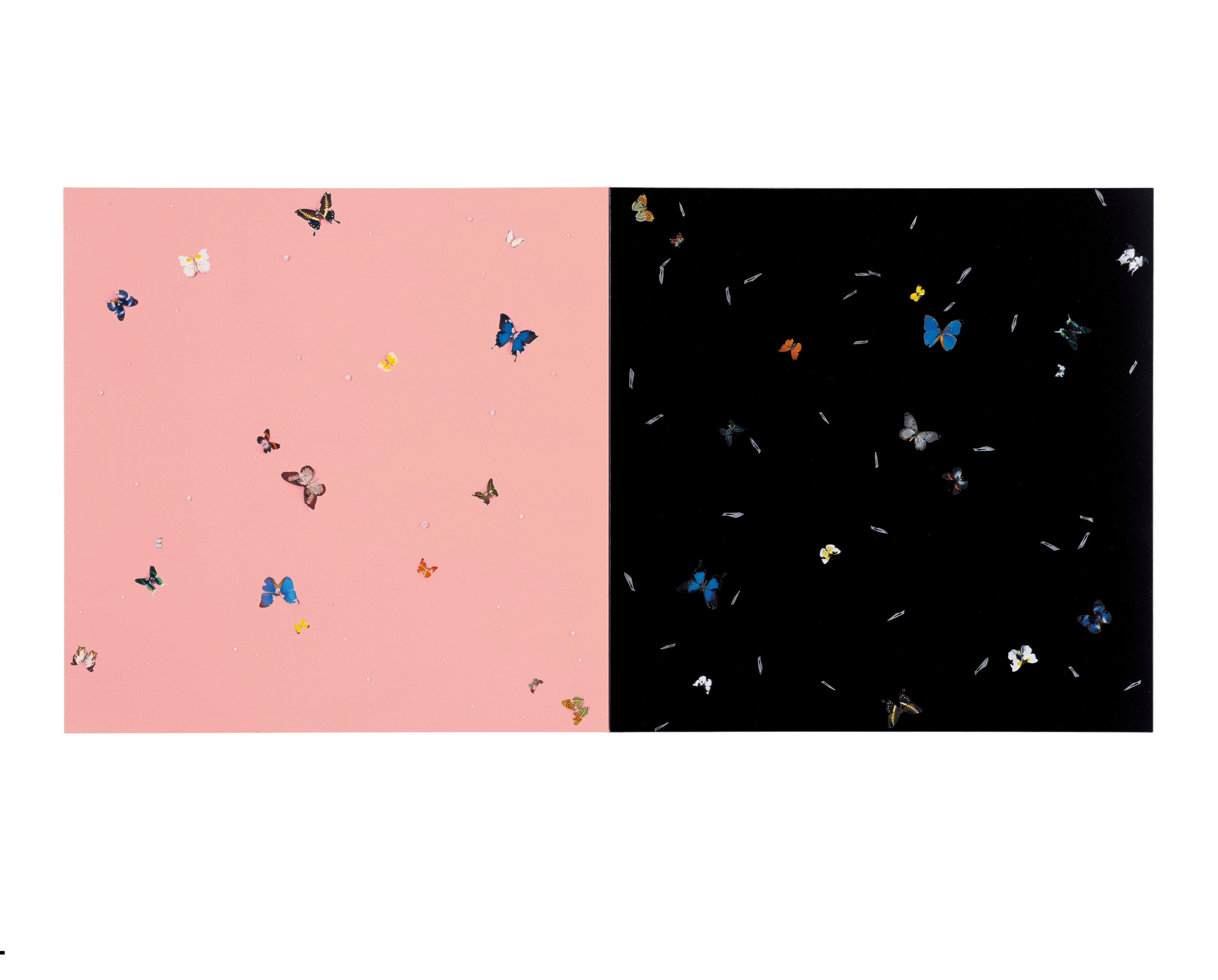
Kiss me, Kill me
2008
Diptych: butterflies, manufactured diamonds, scalpel blades and household gloss on canvas
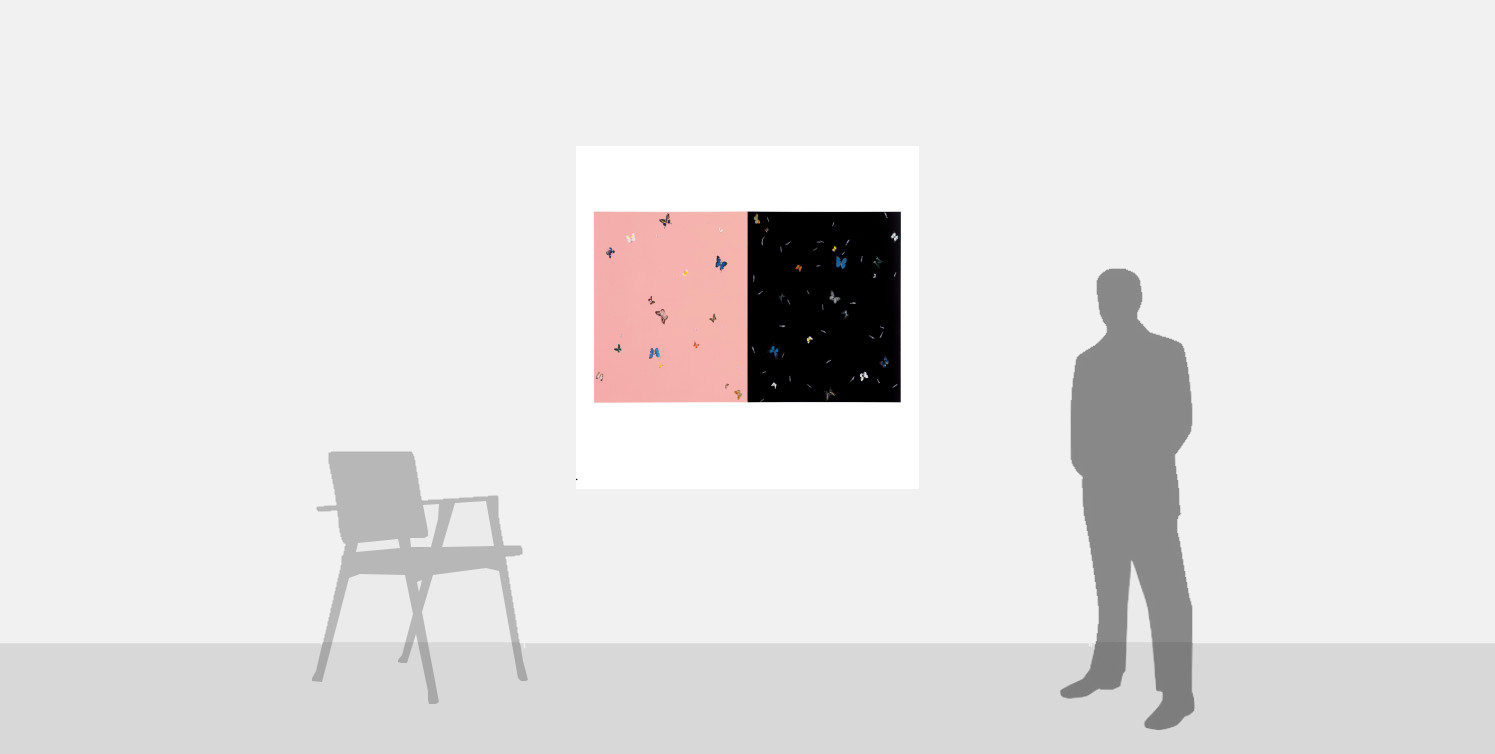
Each: 152.4 x 152.4 cm (60 x 60 in.)
Overall: 152.4 x 304.8 cm (60 x 120 in.)
Provenance
Description
Shortly
after graduating from Goldsmiths College, London, in 1989, Hirst began work on
a series of paintings inspired by seeing flies getting stuck on primed canvases
in his studio in south London. Inspired by this idea but seeking to combine it with something of great beauty, Hirst started fixing the bodies of butterflies to
monochrome gloss-painted canvases. The choice of household gloss – a domestic
product, not usually associated with the fine arts – is integral to the works,
intended by Hirst to 'look like an accident of paint with butterflies stuck on
it.'
For the artist, the appeal of butterflies is
linked primarily with the false image of life that they encapsulate, even in
death. On the repeated appearance of butterflies in his work, the artist
explains: 'I think rather than be personal you have to find universal triggers:
everyone’s frightened of glass, everyone’s frightened of sharks, everyone loves
butterflies.'
The monochrome paintings, with apparently random placement of the insects, are the earliest example of his use of these creatures, which were to become one of his most recognisable motifs. He subsequently expanded the use of this insects in multicoloured pieces, or in works where the butterflies are arranged in specific patterns. This work is particularly striking as the butterflies are not the only object encrusted into the paint; on the pink canvas, there are laboratory-grown diamonds, and on the black canvas, there are scalpel blades. These objects allude to love and desire, on the one hand, and violence and death, on the other. Such contrasting themes are common in Hirst’s works, using commonly recognised items to evoke conflicting sensations – here, the conflict, but also the similarities, between passions of love and hate are explored in a subversive, audacious manner.