
Lucio Fontana
b. 1899, Rosario de Santa Fé, Argentina
d. 1968, Comabbio, Italy
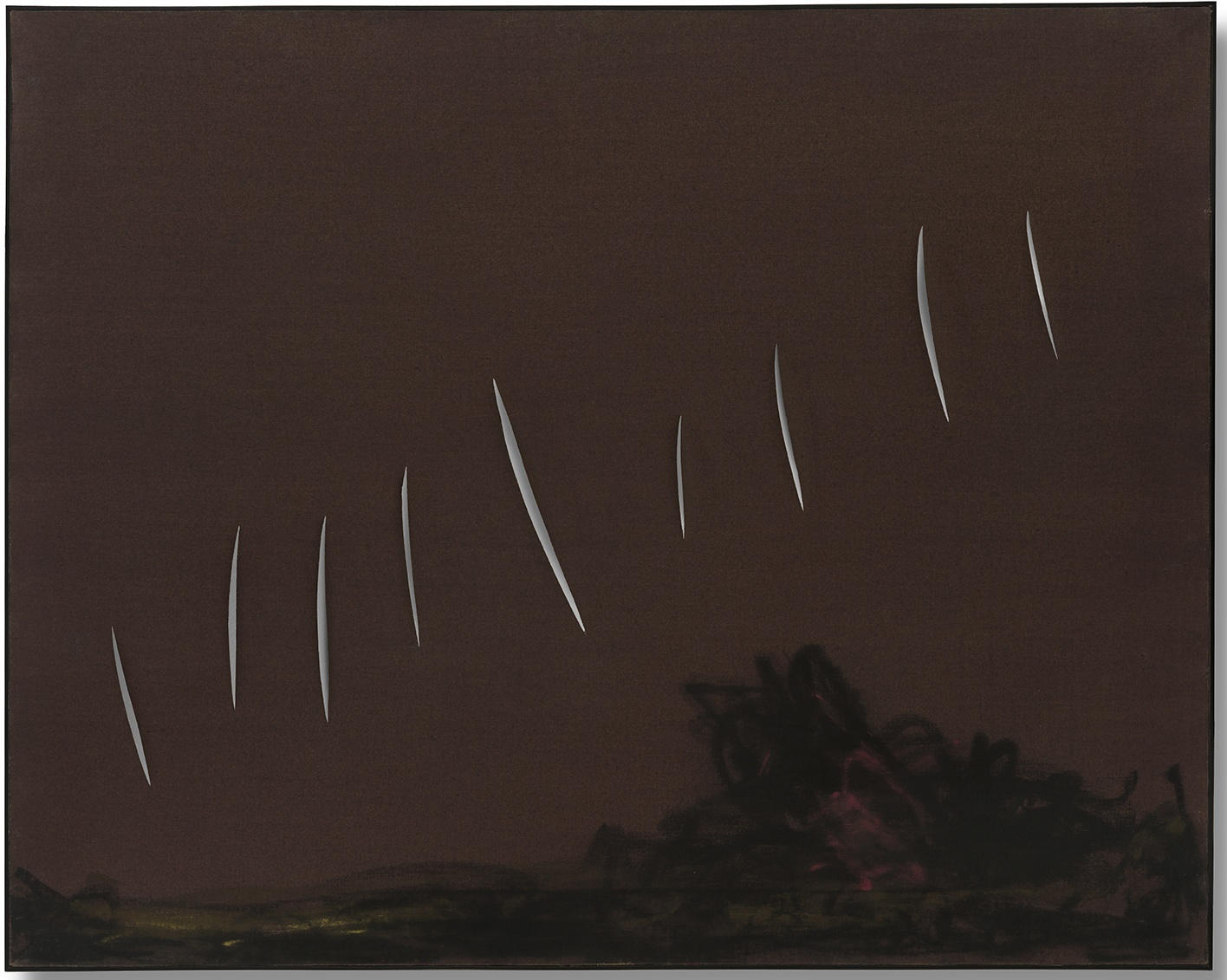
Concetto Spaziale, Attese
1959
Aniline and crayon on canvas
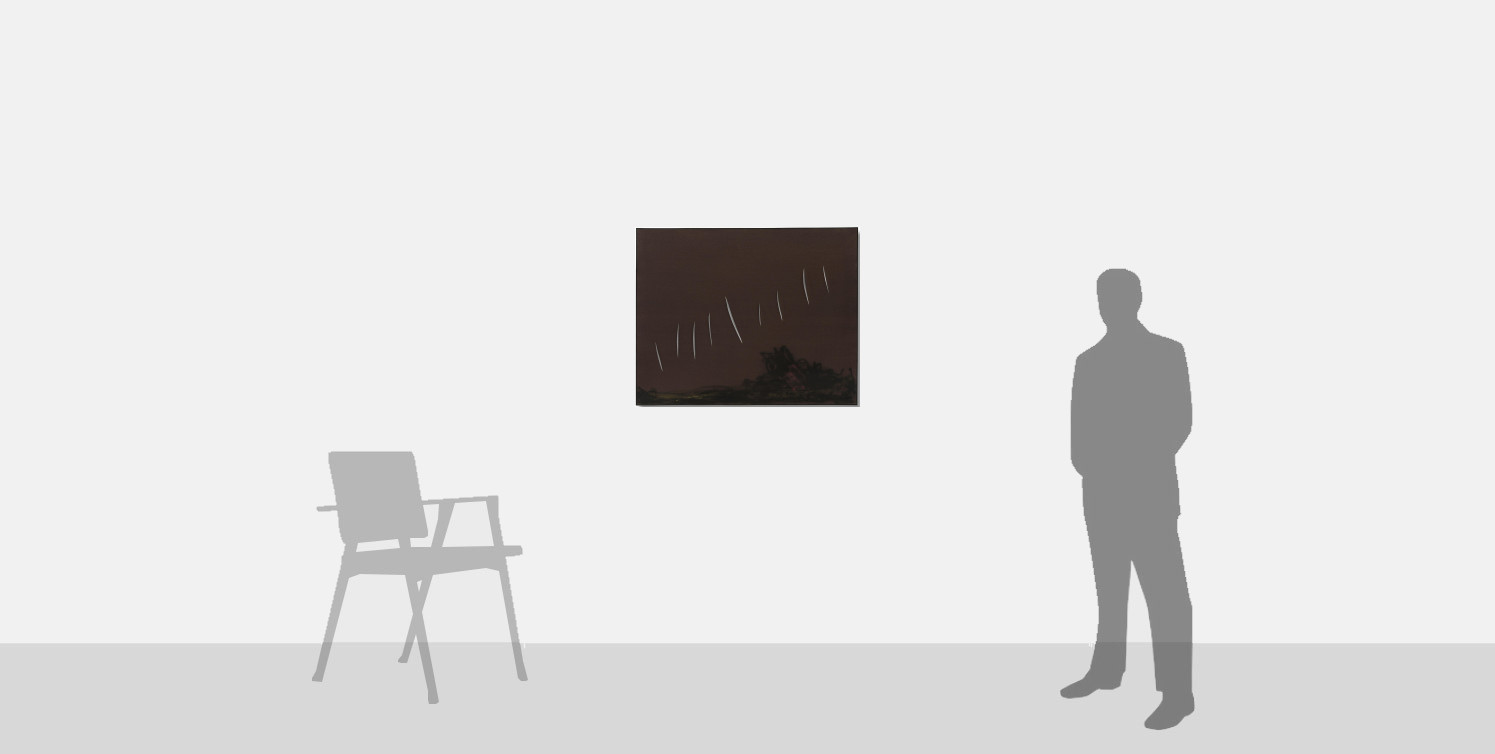
80 x 100 cm / 31.5 x 39.3 in
Provenance
Cattaneo Collection, Brescia;
Private Collection, Milan;
Private Collection, Milan;
Private Collection, Milan;
Marisa del Re Gallery, Milan;
Private Collection, Milan.
Cattaneo Collection, Brescia;
Private Collection, Milan;
Private Collection, Milan;
Private Collection, Milan;
Marisa del Re Gallery, Milan;
Private Collection, Milan.
Literature
E. Crispolti, Lucio Fontana. Catalogue Raisonné des peintures, sculptures et environments spatiaux, Bruxelles 1974, vol. II, pagg. 80 - 81;
E. Crispolti, Lucio Fontana. Catalogo generale, Milan 1986, vol. I, pag. 282;
E. Crispolti, Lucio Fontana. Catalogo ragionato di sculture, dipinti, ambientazioni, Milan 2006, vol. I pag. 447, n. 59 T 22;
A. Vettese, Lucio Fontana. I tagli, Cinisello Balsamo 2003, pp. 6 – 7.
Description
The first tagli dated from the autumn of 1958, a year that for Fontana marked his rise to international acclaim, following the success of his aniline infused works at the XXIX Venice Biennale. There Fontana had a sizeable room in the central pavilion and exhibited a wide range of early works as well as a selection of his most recent canvases. Buoyed by the success of this exhibition he was determined to push forward with his Spatialist investigations. At around this time Fontana had been working on a series entitled Inchiostri: works in which he applied ink and aniline dyes onto unprimed canvases before piercing the surface with holes and, in some cases, attaching collaged pieces of canvas to the coloured picture surface. These lyrical, evocative paintings have subtle tonal variations and nebulous forms that swell across the expansive surface of the canvas. Towards the end of the year, while he was working on these inks, Fontana made a dramatic alteration and slashed through the canvas itself with a knife.
The multiple cuts in Concetto spaziale, Attese appear as a logical extension of Fontana’s prior experimentations; their rhythmic arrangement is reminiscent of the buchi or holes that he had executed up until this point. Representing the fusion of two important cycles in the artist’s oeuvre – that of tagli and of the aniline ink stain – the work evokes the cosmic silence as well as the infinite expanse of outer space. Further cut with a fine blade used to ease open the nine fissures in the canvas, Concetto Spaziale. Attese brings the three – dimensionality of the forefront of the picture.
The artwork described above is subject to changes in availability and price without prior notice.
Where applicable ARR will be added.