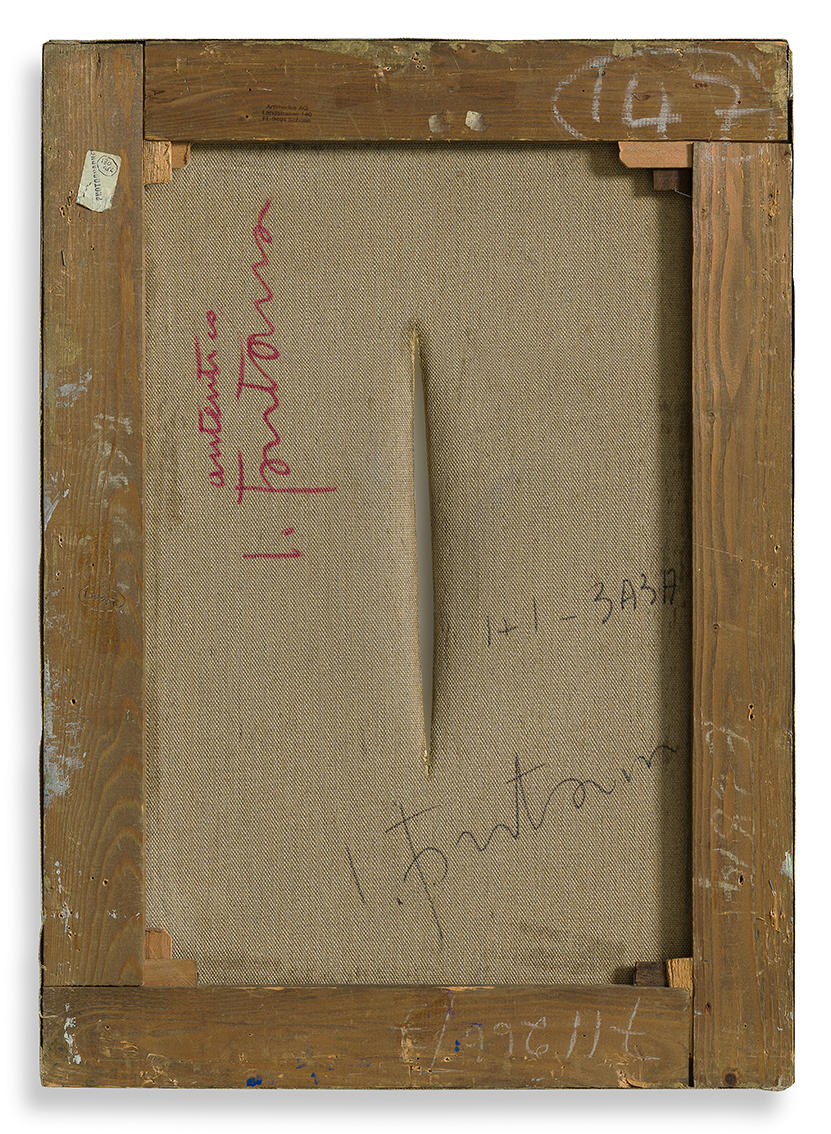


Lucio Fontana
b. 1899, Rosario de Santa Fé, Argentina
d. 1968, Comabbio, Italy
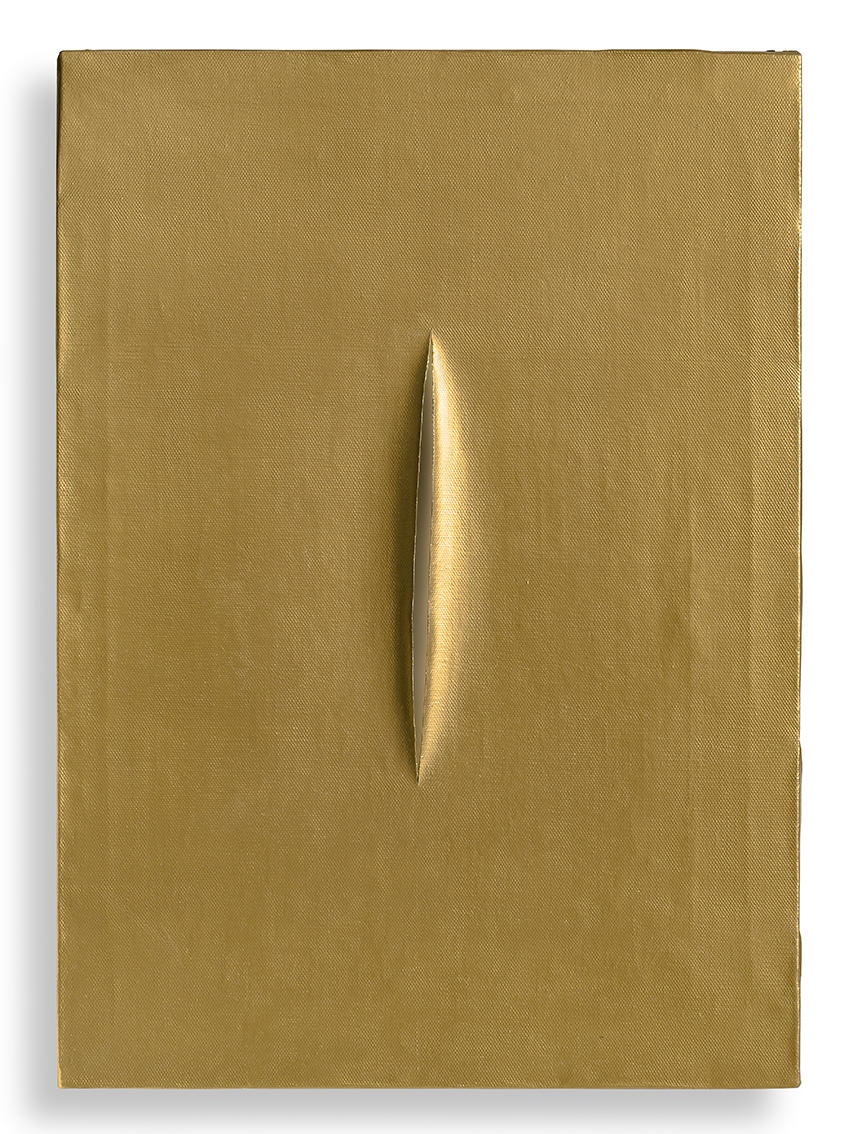
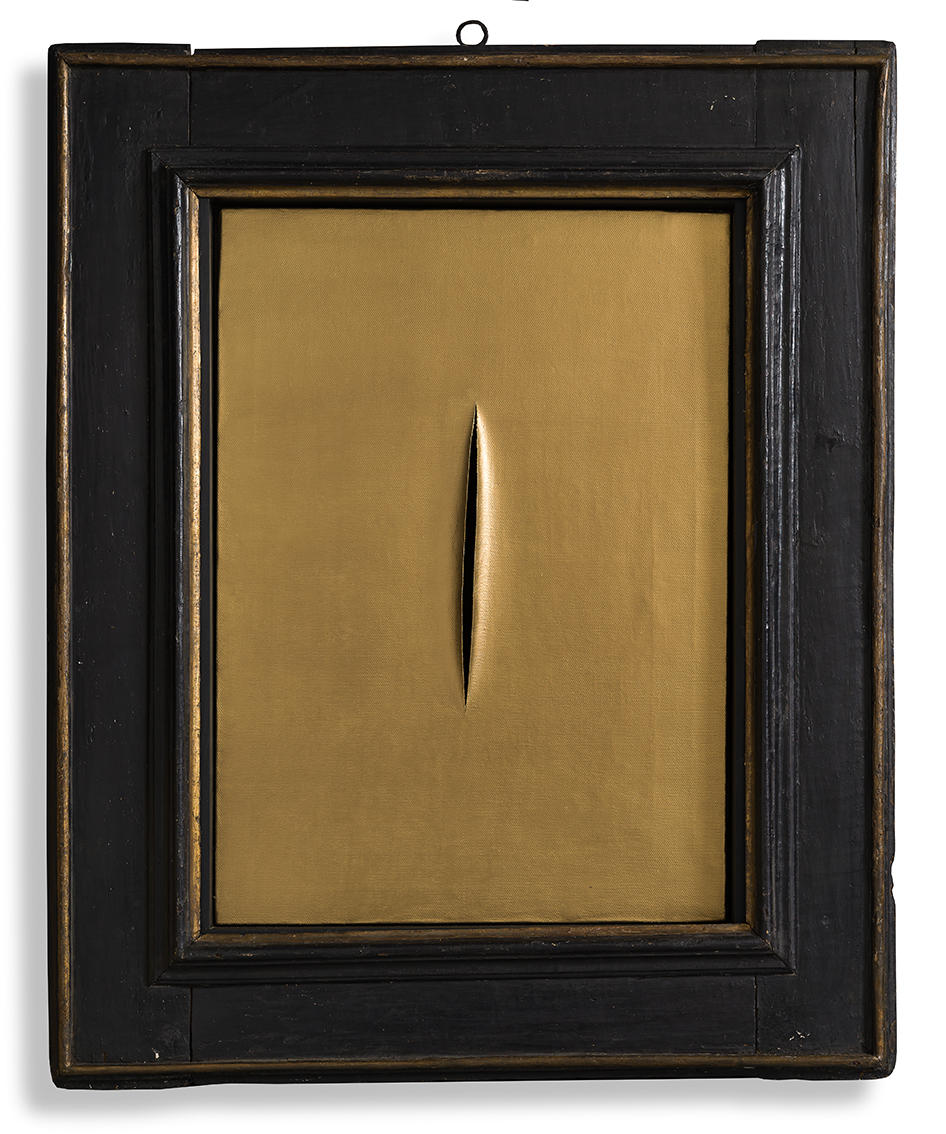
Concetto Spaziale, Attese (Spacial Concept, Waiting)
1960
Oil on canvas, gold
70 x 50 cm (27 1/2 x 19 3/4 in.)
Provenance
(Sotheby’s London, 3-4 April 1974, lot 147).
(Finarte, Rome, 9 December 1976, lot 61)
Angelo Franco Poggi collection, Milan,
Galerie Knoel, Basel.
Literature
E. Crispolti, Lucio Fontana Catalogo Ragionato di Sculture, Dipinti, Ambientazioni, Milan, 2006, I, p. 505, no. 60 T 146 ill. b/n.
Description
“Gold is as beautiful as the sun”—Lucio Fontana (quoted in L. Massimo Barbero, ed., Lucio Fontana: Venice/New York, exh. cat., Peggy Guggenheim Collection, Venice, and Solomon R. Guggenheim Museum, New York, 2006–7, p. 24).
With a single and precise slash penetrating a radiantly golden canvas, Concetto Spaziale, Attese, 1960, is an early work from Lucio Fontana’s series of tagli (cuts), the group of works that perhaps best embody the essence of his Spatialist theories. Executed in the final decade of his life, between 1958 and 1968. Fontana’s tagli were philosophical gestures, creative rather than destructive: in slicing the canvas open, Fontana transcended centuries of art history bound by the two-dimensionality of the picture plane to reveal the infinity of space beyond, an enigmatic fourth dimension in which he saw the limitless future of humankind in the “spatial era.” Having first pierced his canvased with buchi (holes) in 1954, Fontana spent some years experimenting with surface ornamentation, painting with thick impastos and often embedding glass fragments and glitter into his canvases, before arriving at the serene austerity of the monochrome tagli, truly the apex and purest crystallisation of his audacious, ever evolving formal vocabulary.
The artwork described above is subject to changes in availability and price without prior notice.