
Lucio Fontana
b. 1899, Rosario de Santa Fé, Argentina
d. 1968, Comabbio, Italy
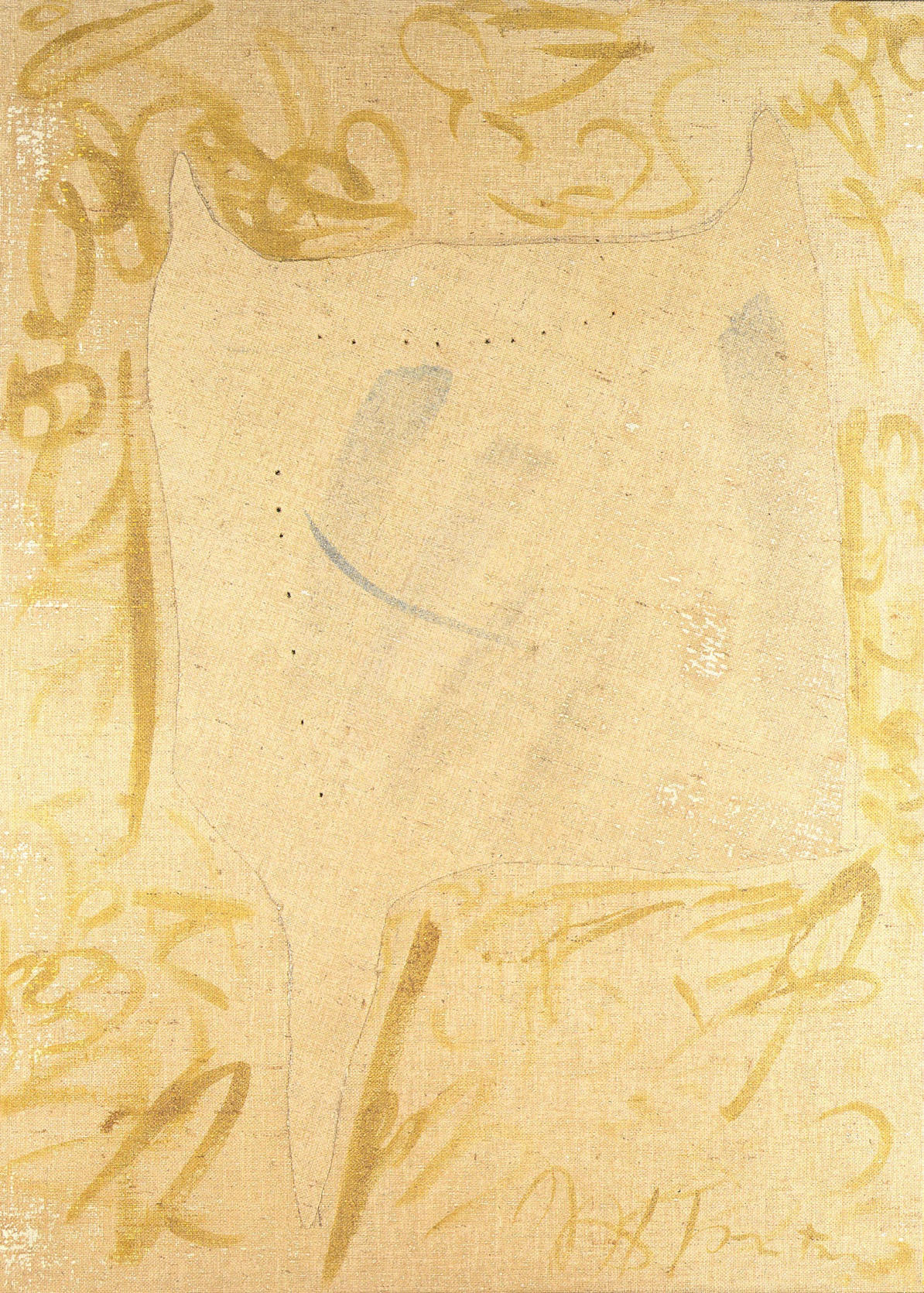
Concetto spaziale, Forma
1958
Mixed media on burlap
165 x 120 cm / 64.9 x 47.2 in
Provenance
Private collection, Perugia
USA secondary market
USA secondary market
Literature
Toni Toniato, "Evento" in L'invenzione poetica di Fontana, Venice, 1958, pp. 35-38
Ark, n. 1, London, January 1959, p. 3 (illustrated in colour)
La Biennale di Venezia, no. 60, December 1966, p. 17, fig. 15
Enrico Crispolti, Lucio Fontana Catalogue Raisonné, vol. II, Brussels, 1974, p. 60, no. 58 I 2 (illustrated)
Enrico Crispolti, Lucio Fontana Catalogo Generale, vol.I, Milan, 1986, p. 210, no. 58 I 2 (illustrated)
Enrico Crispolti, Lucio Fontana, Catalogo ragionato di sculture, dipinti, ambientazioni, Tomo I, Milan 2006, no. 58 I 2, p. 367 (illustrated)
Description
The Inchiostri (inks) represent a particular and experimental period in Fontana’s artistic development. Spanning over a period of four years – 1956 to 1959 - they are characterised by the use of vegetal inks – the so called “aniline”. They are made by perforating the canvas with a conspicuous number of small dots and by the application, in some of the works, of different layers of canvas and a palette of soft tones.
The Inchiostri mark the passage from the works of the mid 50s – the Baroque paintings, characterised by the intense use of oil and other great impact materials such as coloured pebbles and glitter – to the first slashes of 1959. Here Fontana still works with inks and creates compositions with several small slashes that are very close to the general effect of the Inchiostri.
A series of Inchiostri, amongst which the one in question here, were exhibited by Fontana in the stunning room he curated for the Venice Biennale of 1958. Their radical and experimental impact was soon perceived by a young Gillo Dorfles, who in the same year wrote:
“Even our artist banished the rich colours’ mixture that so often weigh down the canvases of so many contemporary artists, and on purpose he has used the most lean means […]. Thus he has prepared wide canvases just moiré with delicate tones, and on these wide pale surfaces he traced with an almost magical confidence his signs: thin lines, handwriting strokes, or holes”. (Gillo Dorfles, Elementi Plastici Negativi)
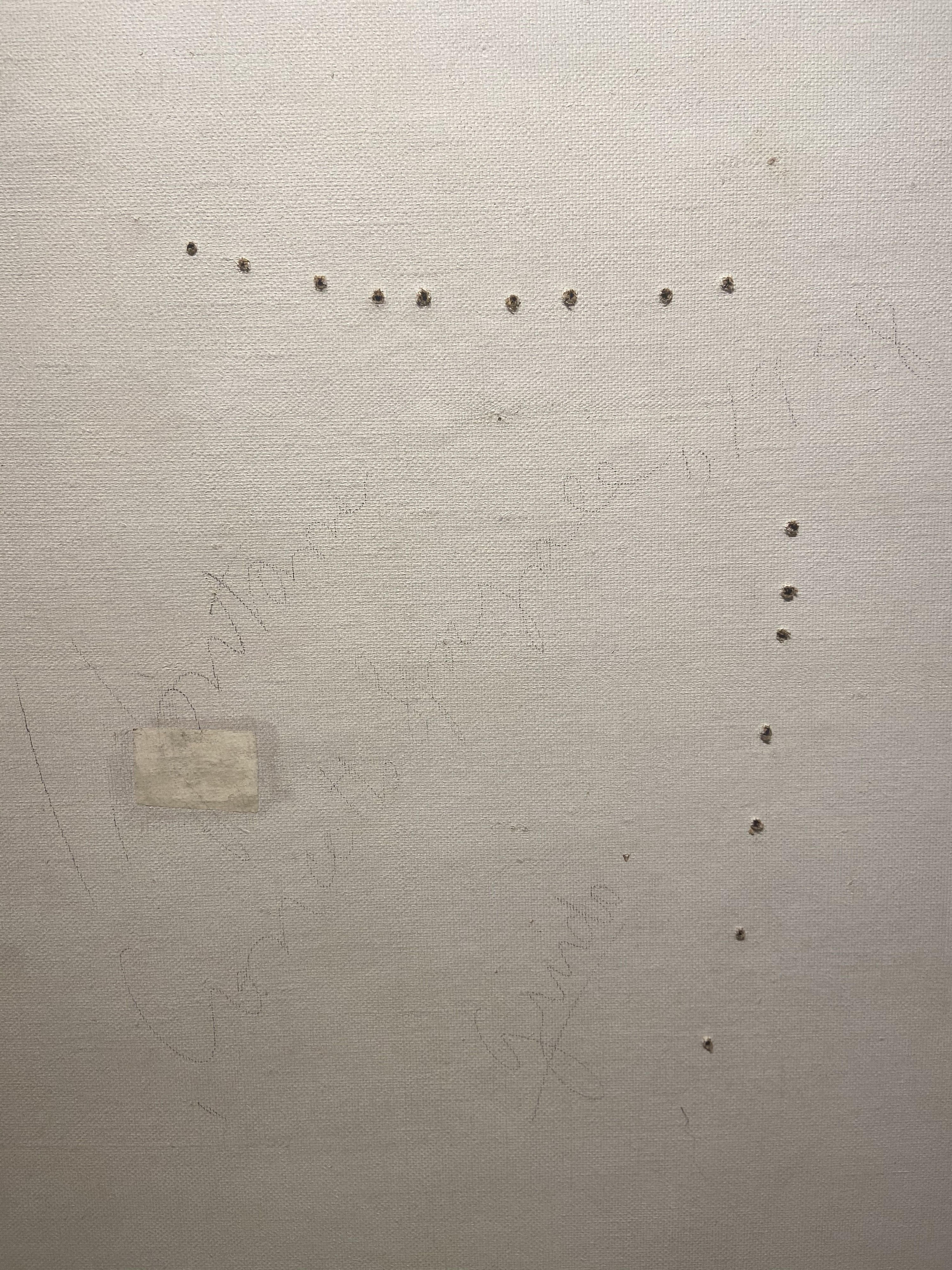
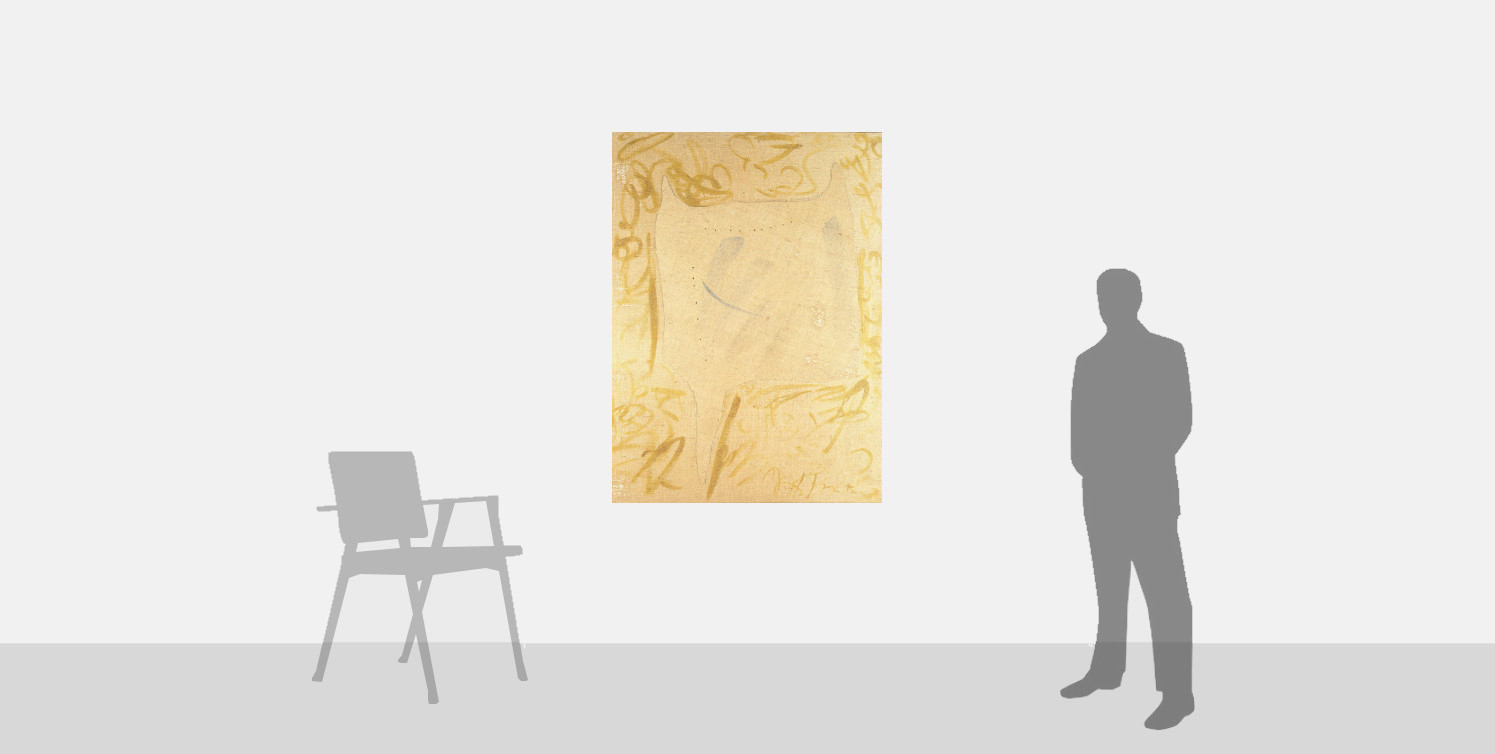
Executed in 1958, Concetto Spaziale, Forma is a significant example of Fontana’s Inchiostri as it presents all of the main characteristics of the series. Besides the use of soft tones, the work also features the presence of an irregular shape that not only is traced on the burlap base, but that is also crossed by holes and surrounded by nervous cursive-like strokes.
The artwork described above is subject to changes in availability and price without prior notice.
Where applicable ARR will be added.
The Inchiostri mark the passage from the works of the mid 50s – the Baroque paintings, characterised by the intense use of oil and other great impact materials such as coloured pebbles and glitter – to the first slashes of 1959. Here Fontana still works with inks and creates compositions with several small slashes that are very close to the general effect of the Inchiostri.
A series of Inchiostri, amongst which the one in question here, were exhibited by Fontana in the stunning room he curated for the Venice Biennale of 1958. Their radical and experimental impact was soon perceived by a young Gillo Dorfles, who in the same year wrote:
“Even our artist banished the rich colours’ mixture that so often weigh down the canvases of so many contemporary artists, and on purpose he has used the most lean means […]. Thus he has prepared wide canvases just moiré with delicate tones, and on these wide pale surfaces he traced with an almost magical confidence his signs: thin lines, handwriting strokes, or holes”. (Gillo Dorfles, Elementi Plastici Negativi)
Executed in 1958, Concetto Spaziale, Forma is a significant example of Fontana’s Inchiostri as it presents all of the main characteristics of the series. Besides the use of soft tones, the work also features the presence of an irregular shape that not only is traced on the burlap base, but that is also crossed by holes and surrounded by nervous cursive-like strokes.
The artwork described above is subject to changes in availability and price without prior notice.
Where applicable ARR will be added.