

Bonino da Campione
b. 1350, Italy
d. 1390, Italy
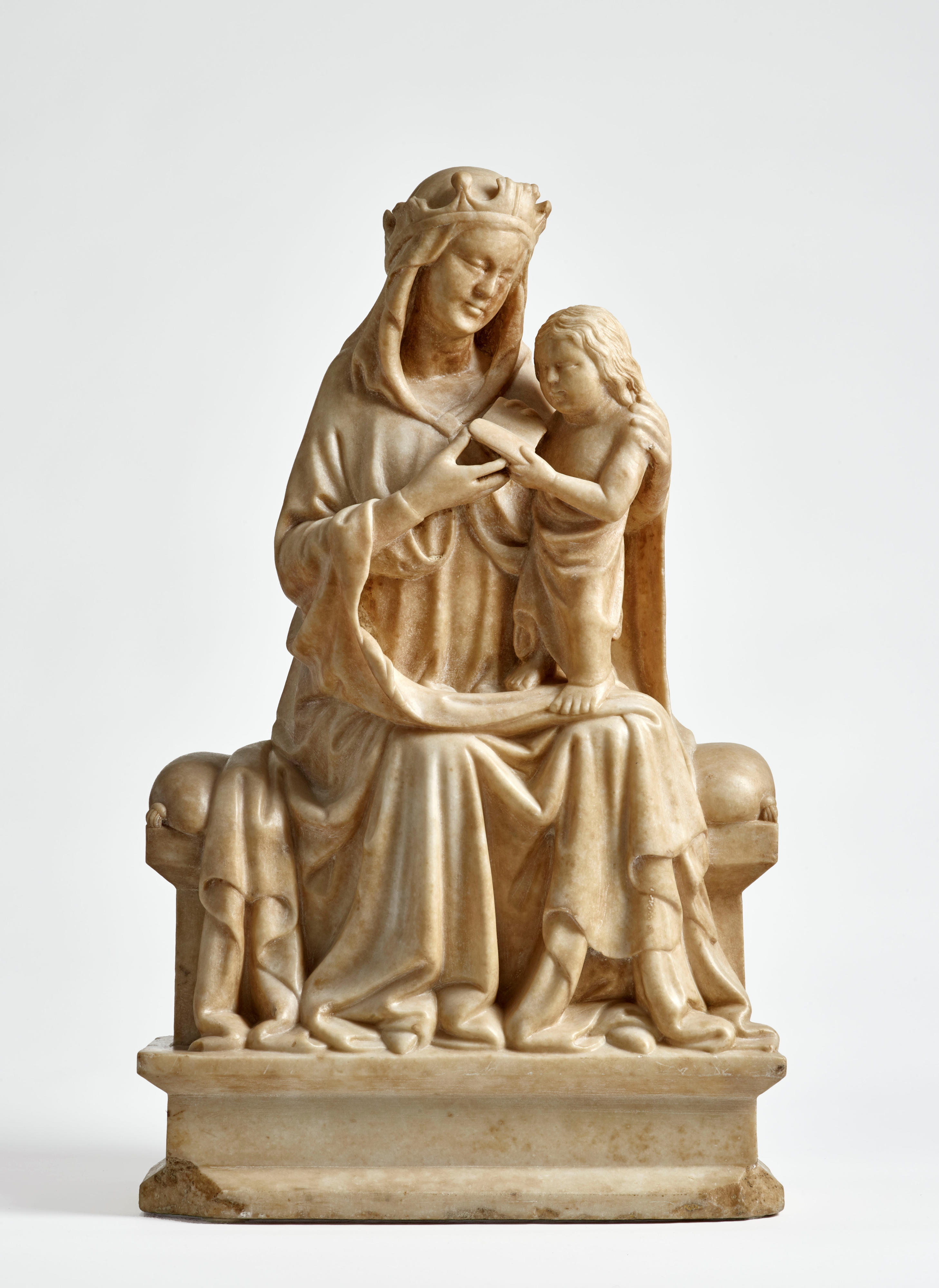
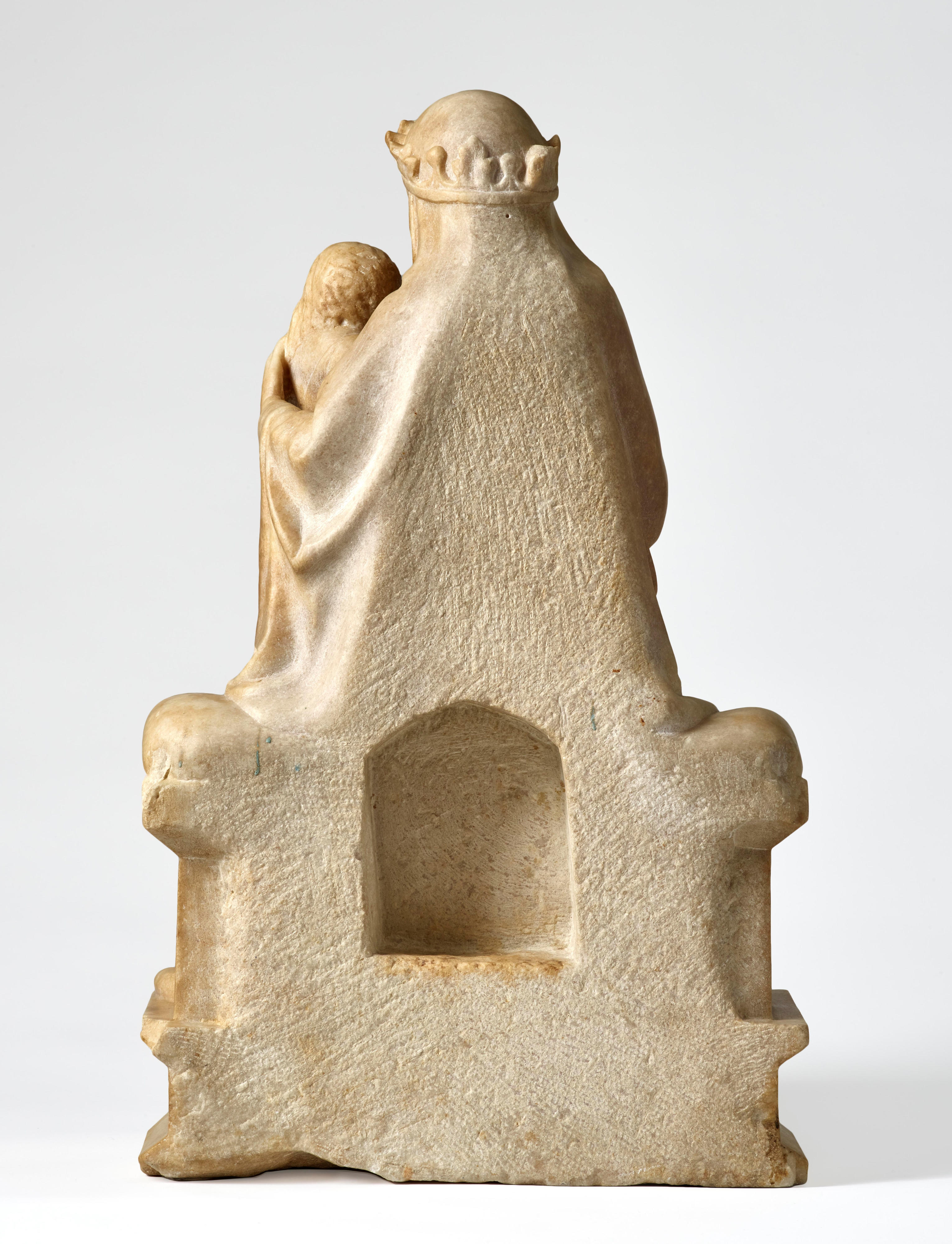
Madonna and Child Enthroned
c. 1380
Marble
73 x 44.5 x 16 cm (28 3/4 x 17 1/2 x 6 1/3 in.)
Provenance
Private collection.
Literature
M. T. Fiorio, “Uno scultore campionese a Porta Nuova” in La Porta Nuova delle mura medioevali di Milano, edited by E. Arslan and R. La Guardia, Milan, 1991, p. 127.
L. Bellingeri, “Cremona e il gotico perduto: Il caso di Sant’Agostino” Prospettiva, 83/84, 1996, pp. 143–58.
A. Darr, P. Barnett and A. Böstrom, Catalogue of Italian Sculptures in the Detroit Institute of Arts, Detroit, 2002, pp. 68–69.
E. Eccher in Arte Lombarda dai Visconti agli Sforza, exhibition catalogue, Palazzo Reale, Milan, 2015, pp. 104–5.
Description
Born in Campione around 1325, Bonino was one of the most important sculptors active in Northern Italy in the second half of the fourteenth century. Bonino was the main exponent of the Gothic tradition in Lombardy and his works represent the best record of the local tradition, in the same years when artists native of Tuscany, such as Giovanni di Balduccio, were introducing a new style in sculpture with a softer way of carving the marble.
The first documented work is the burial monument of Folchino de’ Schizzi (1357, Cremona, Cathedral). Six years later, in 1363, Bonino signed the great equestrian portrait of Bernabò Visconti (Musei Civici del Castello Sforzesco, Milan), his most famous work (fig. 1). The impressive portrait of the ruler of Milan was intended for the church of San Giovanni in Conca but his positioning near the main altar was regarded as highly problematic by his contemporaries. Twenty years later Bonino and his workshop reused the equestrian portrait in order to create the burial monument of Bernabò adding a sarcophagus with reliefs on all the sides.
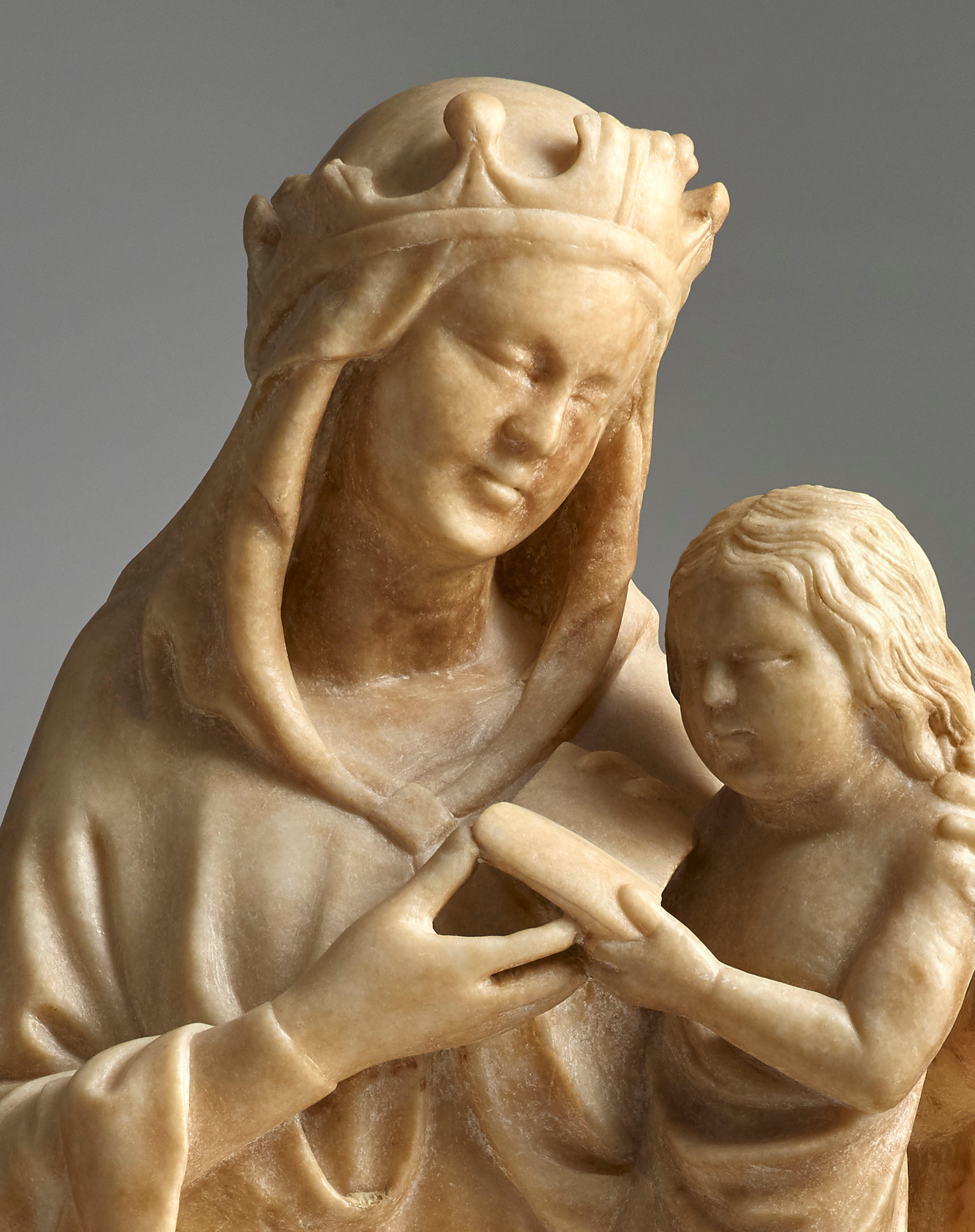
In the same years Bonino da Campione also worked on sculptures of smaller dimensions, probably for private commissions for members of the Visconti court, or also for the court of the Scaligeri in Verona where in 1374 Bonino executed his third major work, the monument of Cansignorio della Scala. In an essay published in Prospettiva in 1996 Lia Bellingeri studied a group of sculptures representing the Madonna and Child that include the present work, the Litta Madonna and Child (Fondazione Cà Granda, Milan, on loan to the Musei Civici del Castello Sforzesco, fig. 2), one in the Detroit Institute of Arts and one in the Musèe de Cluny, Paris.
The present Madonna and Child belongs to the final years of Bonino’s activity, it already displays a tender dialogue between mother and child as well as a softer carving of the marble that gives to the composition a well-studied balance of shadows and light.
Fig. 1. Equestrian Statue of Bernabò Visconti, 1363, Musei Civici del Castello Sforzesco, Milan.
Fig. 2. Bonino da Campione, Litta Madonna, Fondazione Cà Granda, Milan, on loan to the Musei Civici del Castello Sforzesco.
The artwork described above is subject to changes in availability and price without prior notice.