
Mimmo Rotella
b. 1918, Catanzaro, Italy
d. 2006, Milan, Italy
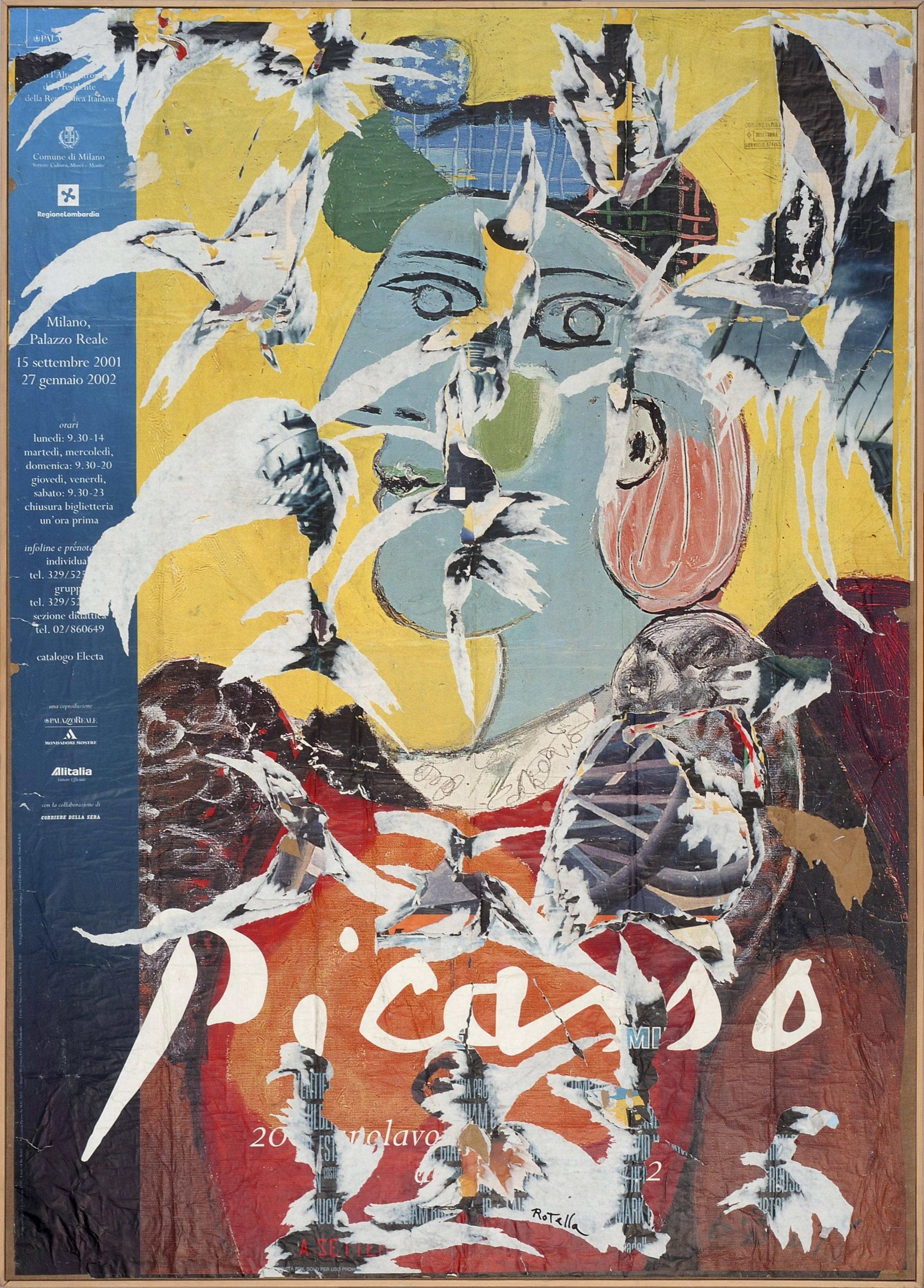
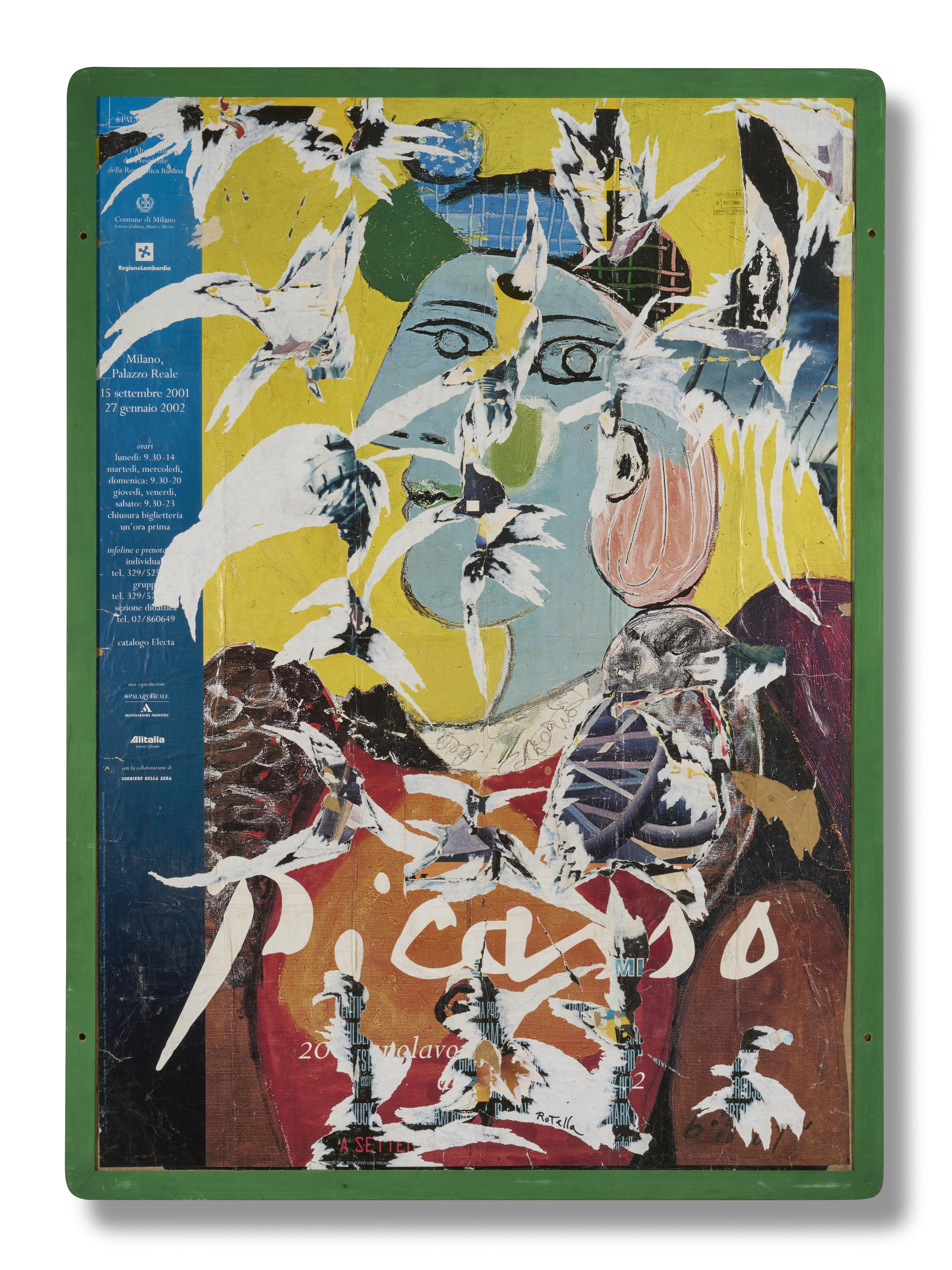
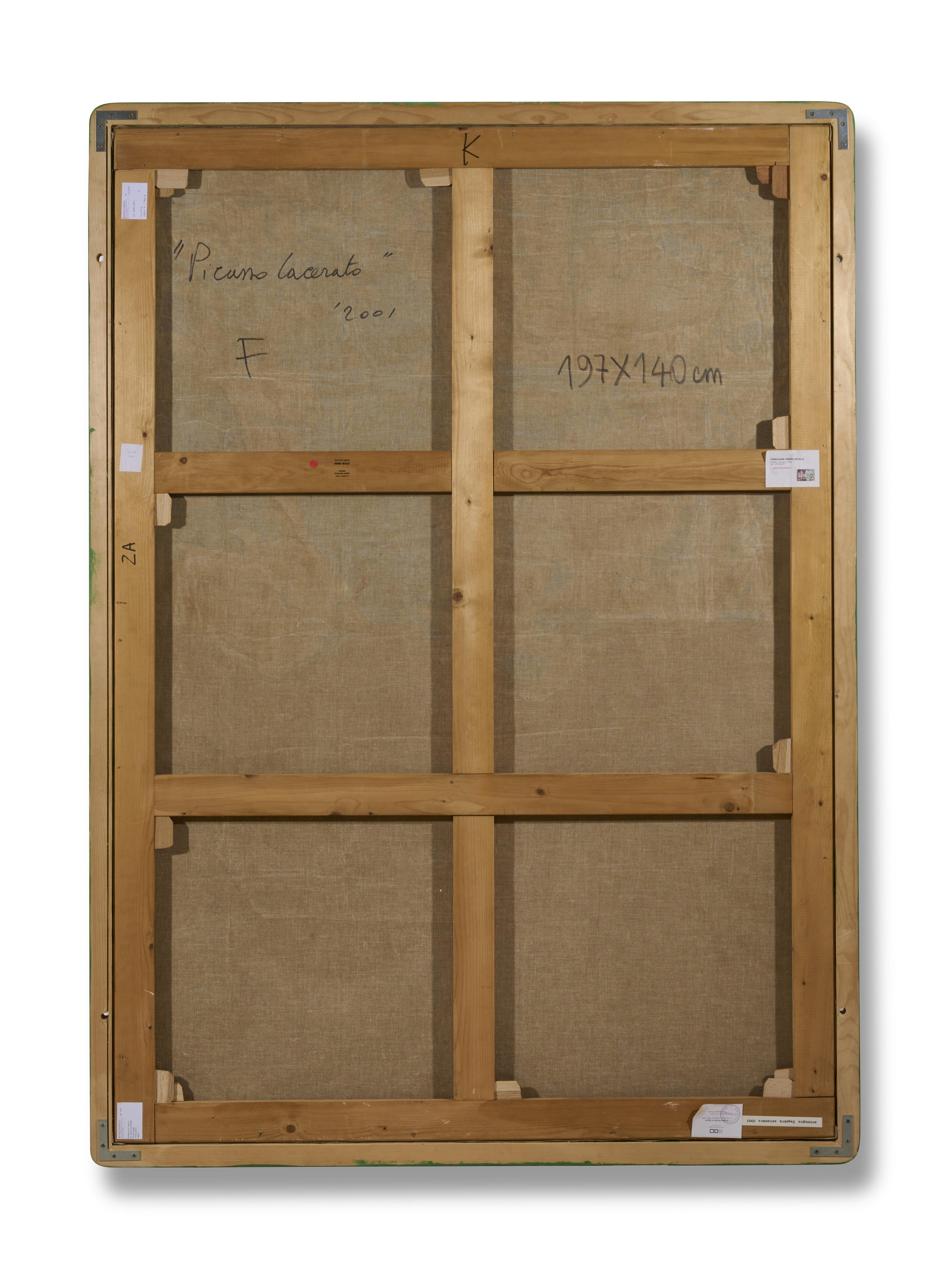
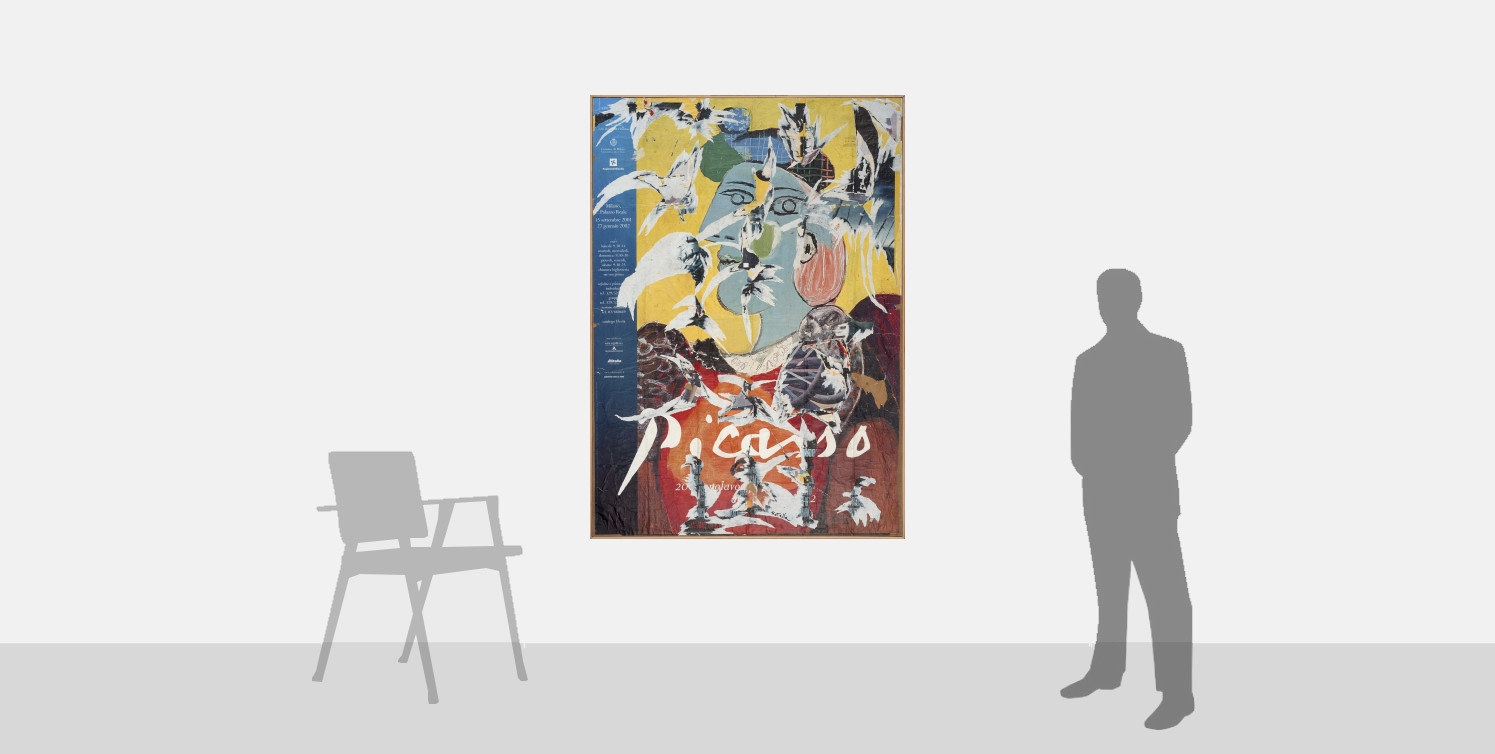
Picasso Lacerato (Torn Picasso)
2001
Décollage on canvas
197.5 x 140 cm (77 3/4 x 55 1/8 in.)
Provenance
Private collection.
Literature
A. Soldaini, Mimmo Rotella, exhibition catatalogue, Robilant+Voena, London, 2015, pp. 193, 211, no. 114, illustrated.
Description
A restless innovator, Mimmo Rotella embraced a highly experimental artistic practice which placed him at the forefront of Italian postwar art. Born in Catanzaro, Rotella studied at the Accademia di Belle Arti in Naples before moving to Rome in 1945. Following a residency at Kansas City University in 1951–52, Rotella returned to Rome, where he became part of a circle of artists known as the Piazza del Popolo. The group enthusiastically explored the aesthetics and ideas of American Pop art, whose emphasis on mass-produced objects and the newly iconic imagery of popular culture aligned perfectly with the economic boom of the Italian postwar moment, and the glamorous dolce vita of modern Rome.
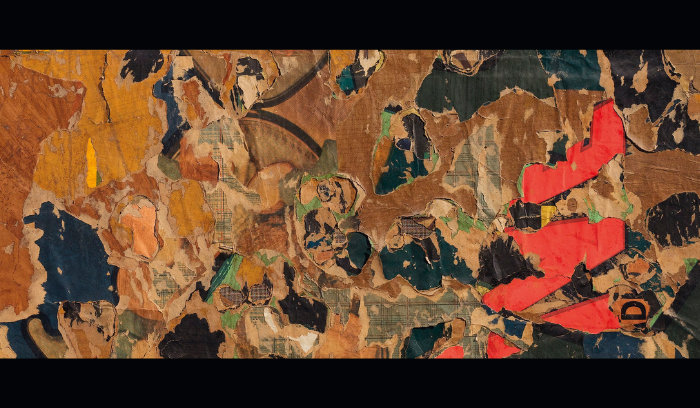
Rotella quickly abandoned painting for a new experimental practice, producing his first décollages by gluing to canvas strips and fragments of advertising posters ripped from the city walls. Upon the invitation of the art critic Pierre Restany, Rotella joined the Nouveau Réalisme movement in 1961, moving to Paris three years later. While in the French capital he developed a new process called “Mec-Art” whereby negative images were projected onto an emulsion-covered canvas. In his subsequent Artypo and Plastiforme series, the artist glued typographic proofs onto canvas and then ripped posters to a polyurethane support. In Milan in the 1980s, Rotella created his blanks, covering the ripped posters with sheets of paper, and later his Sovrapitture, painting on top of the advertisements.
Picasso Lacerato (2001) is an outstanding late example of Rotella’s pioneering décollage technique. Between 2001 and 2005, the aging and ailing Rotella returned to his early practice of working with posters, which, given advances in technology and especially digitisation, had become cultural artifacts or totems of a bygone era. Posters advertising the most-coveted mass-produced products of the past were no longer Pop icons, but instead became self-referential images that crystallised memories of a now-distant time. Revisiting the technique and imagery that had made him famous some forty years before, Rotella concluded his practice with a tribute to his own place in the history of Italian art.