
Pietro Consagra
b. 1920, Mazara del Vallo, Sicily
d. 2005, Milan
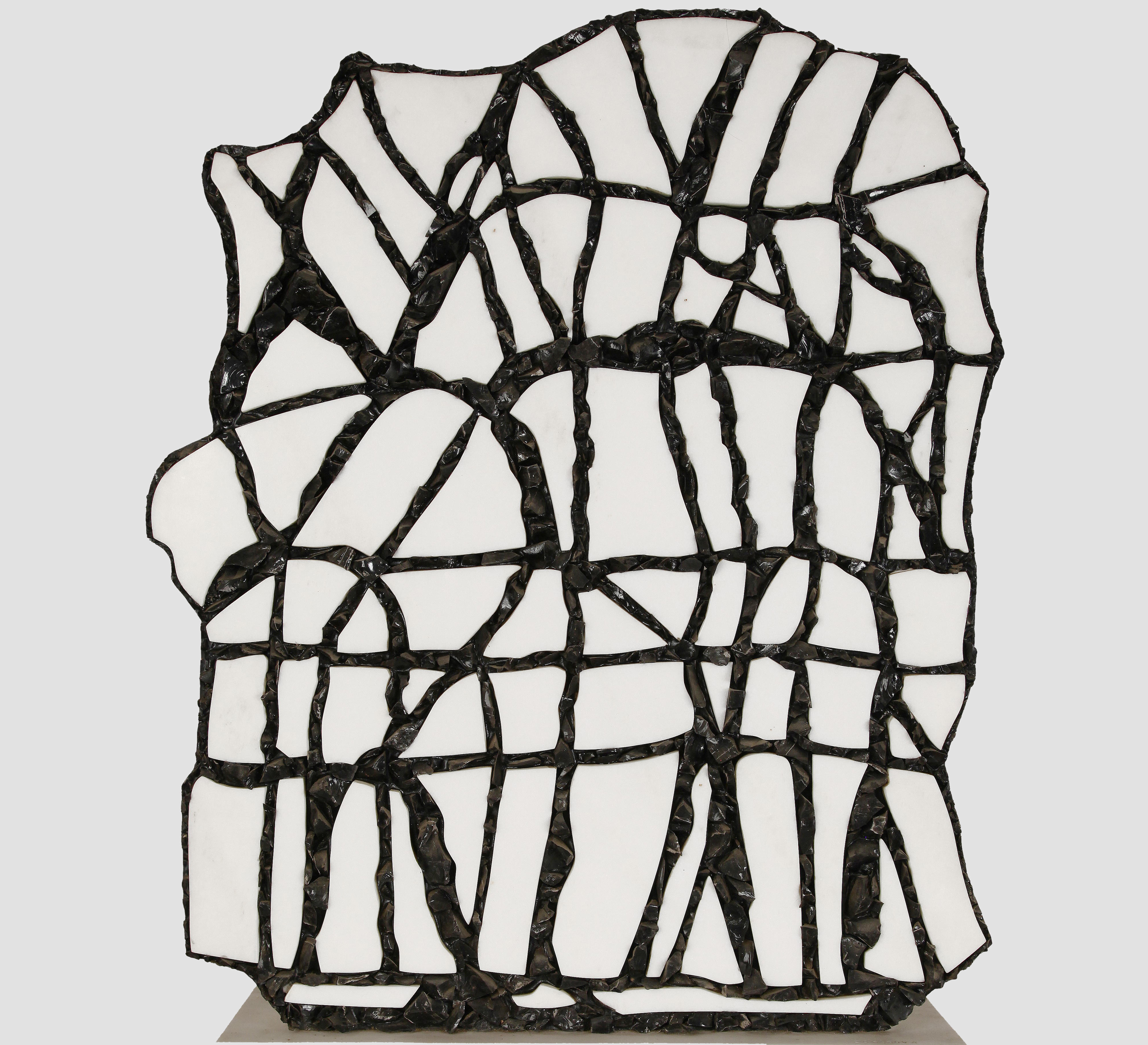
Macedonian white and obsidian chips (Bianco Macedonia e scaglie di Ossidiana)
1989
White Macedonia marble & Obsidian
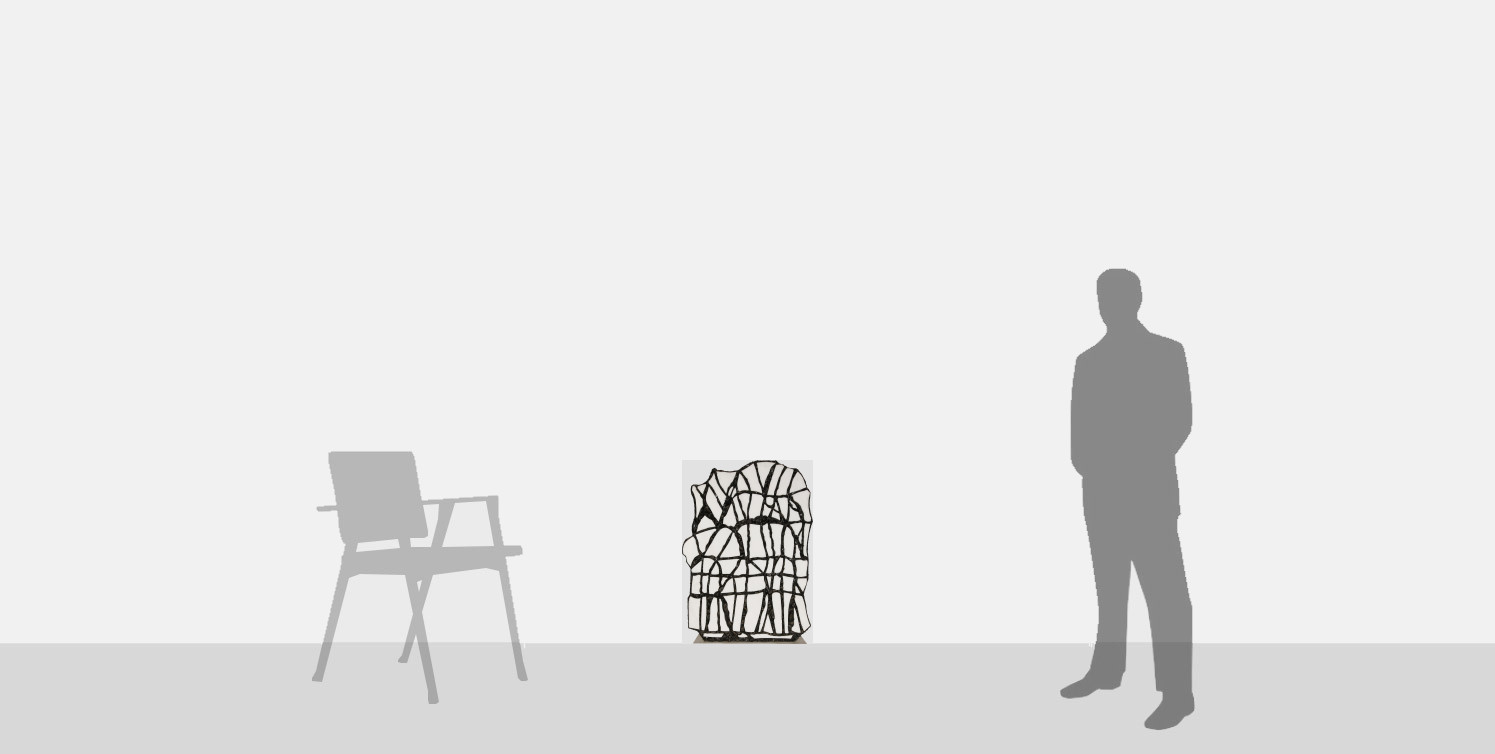
82 x 58.5 x 15.5 cm (32 1/4 x 23 x 6 1/8 in.)
Provenance
Pietro Consagra Archive;
Private Collection.
Private Collection.
Description
Unique piece.
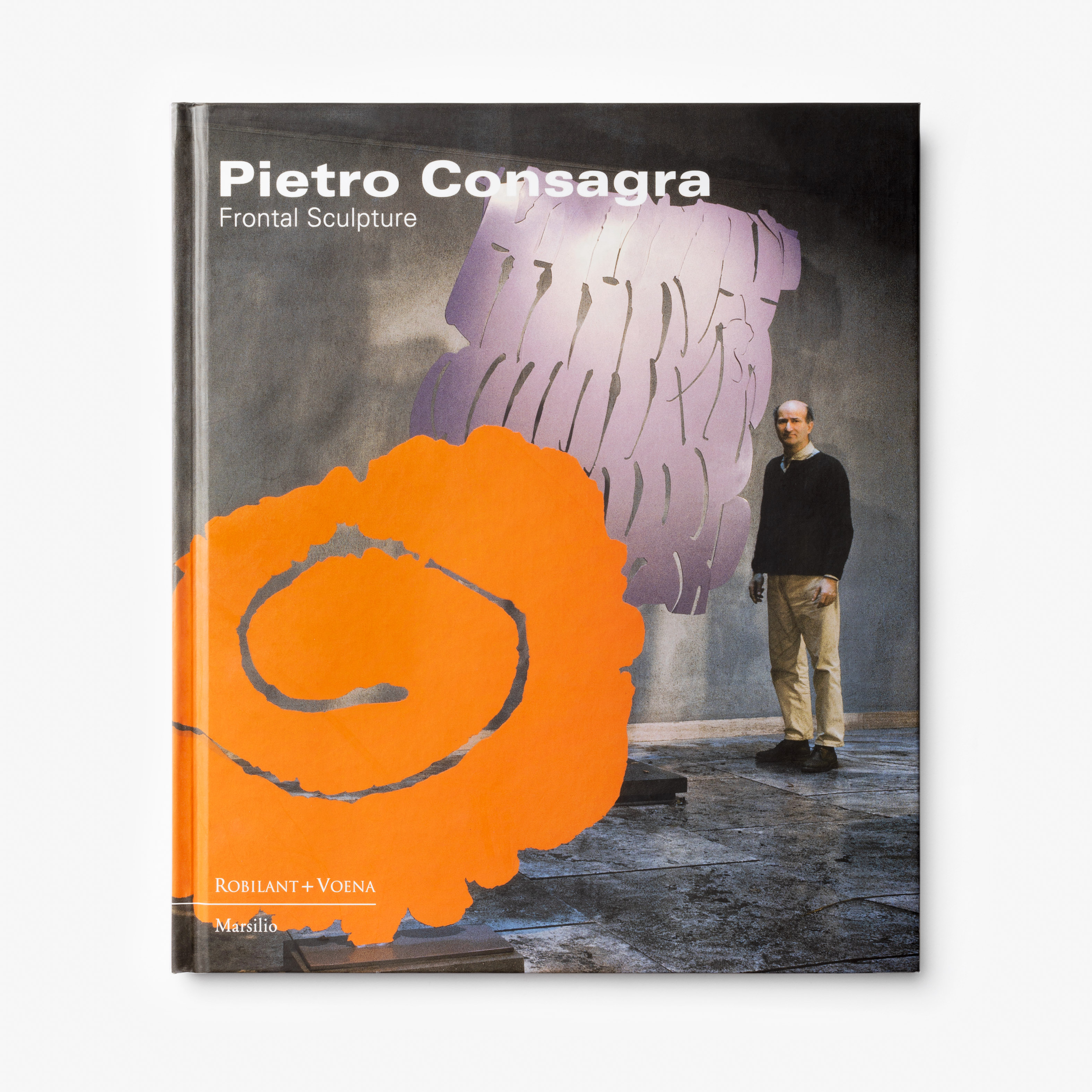
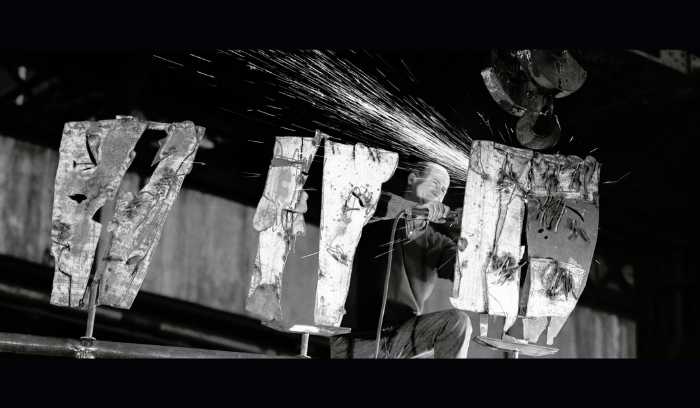
Pietro Consagra was one of Europe’s leading post-war sculptors and one of the first Italian contemporary artists to be collected by the Art Institute of Chicago and the Hirshhorn. Born in Mazzara del Vallo, Sicily, he studied at the Accademia di Belle Arti in Palermo from 1941 to 1944. In that year he moved to Rome, where he met and collaborated with the leading artists of the period, such as Renato Guttuso and Piero Dorazio. He soon assumed a prominent position in the Figuration-Abstraction debate, which dominated Italy’s cultural output in the years immediately after the end of the conflict.
As many other European nations, after WWII Italy was undertaking its reconstruction, not merely from a physical point of view, rebuilding the cities which had been destroyed by bombings, but also and mainly from a cultural point of view. How was Italy to stand in the international political scenery that was to emerge? How was Italy to reimagine itself after the devastating and isolating experience of Fascism? And, last but not the least, what role was art going to play in such a reconstruction?
Some artists advocated that art could play a social role only by remaining concerned with reality, i.e. by representing reality. In this way art could still be legible to people, and affect their lives. Of course, such artists also encouraged a valorisation of Italy’s rich cultural heritage, which consisted mainly of “figurative” works of art. On the other hand, other artists contended that if Italy was to become a modern nation, it had to adopt a modern language in art, i.e. abstraction.
Pietro Consagra assumed a very original position in this context. Together with fellow artists such as Carla Attardi, Giulio Turcato, Achille Perilli, Ugo Attardi and others, he founded the Gruppo Forma 1. They published a manifesto in 1947, where they proclaimed themselves Formalists and Marxists at the same time. That is, Consagra, as well as the other members of the group, did not see abstraction as opposed to the cause of art’s social engagement. He recognised abstraction as the necessary language of an international modernity, and was certain that abstract art could still be legible to his compatriots.
The present sculpture perfectly exemplifies Consagra’s work as being both formalist and abstract. Stylistically, the sculpture seems to expand upon a Futurist aesthetic (with clear reference to the work of Giacomo Balla and Fortunato Depero), an extremely powerful statement, for Futurism aimed precisely at engaging the viewer through abstract forms.
Consagra met immediate success in his own time. His sculptures were collected by Peggy Guggenheim (and are now in the Peggy Guggenheim Collection in Venice), and the Tate (which acquired one of his sculptures as early as 1953).
The artwork described above is subject to changes in availability and price without prior notice.
Where applicable ARR will be added.
Pietro Consagra was one of Europe’s leading post-war sculptors and one of the first Italian contemporary artists to be collected by the Art Institute of Chicago and the Hirshhorn. Born in Mazzara del Vallo, Sicily, he studied at the Accademia di Belle Arti in Palermo from 1941 to 1944. In that year he moved to Rome, where he met and collaborated with the leading artists of the period, such as Renato Guttuso and Piero Dorazio. He soon assumed a prominent position in the Figuration-Abstraction debate, which dominated Italy’s cultural output in the years immediately after the end of the conflict.
As many other European nations, after WWII Italy was undertaking its reconstruction, not merely from a physical point of view, rebuilding the cities which had been destroyed by bombings, but also and mainly from a cultural point of view. How was Italy to stand in the international political scenery that was to emerge? How was Italy to reimagine itself after the devastating and isolating experience of Fascism? And, last but not the least, what role was art going to play in such a reconstruction?
Some artists advocated that art could play a social role only by remaining concerned with reality, i.e. by representing reality. In this way art could still be legible to people, and affect their lives. Of course, such artists also encouraged a valorisation of Italy’s rich cultural heritage, which consisted mainly of “figurative” works of art. On the other hand, other artists contended that if Italy was to become a modern nation, it had to adopt a modern language in art, i.e. abstraction.
Pietro Consagra assumed a very original position in this context. Together with fellow artists such as Carla Attardi, Giulio Turcato, Achille Perilli, Ugo Attardi and others, he founded the Gruppo Forma 1. They published a manifesto in 1947, where they proclaimed themselves Formalists and Marxists at the same time. That is, Consagra, as well as the other members of the group, did not see abstraction as opposed to the cause of art’s social engagement. He recognised abstraction as the necessary language of an international modernity, and was certain that abstract art could still be legible to his compatriots.
The present sculpture perfectly exemplifies Consagra’s work as being both formalist and abstract. Stylistically, the sculpture seems to expand upon a Futurist aesthetic (with clear reference to the work of Giacomo Balla and Fortunato Depero), an extremely powerful statement, for Futurism aimed precisely at engaging the viewer through abstract forms.
Consagra met immediate success in his own time. His sculptures were collected by Peggy Guggenheim (and are now in the Peggy Guggenheim Collection in Venice), and the Tate (which acquired one of his sculptures as early as 1953).
The artwork described above is subject to changes in availability and price without prior notice.
Where applicable ARR will be added.