
Pietro Fabris
b. 1735, London
d. 1795, Naples
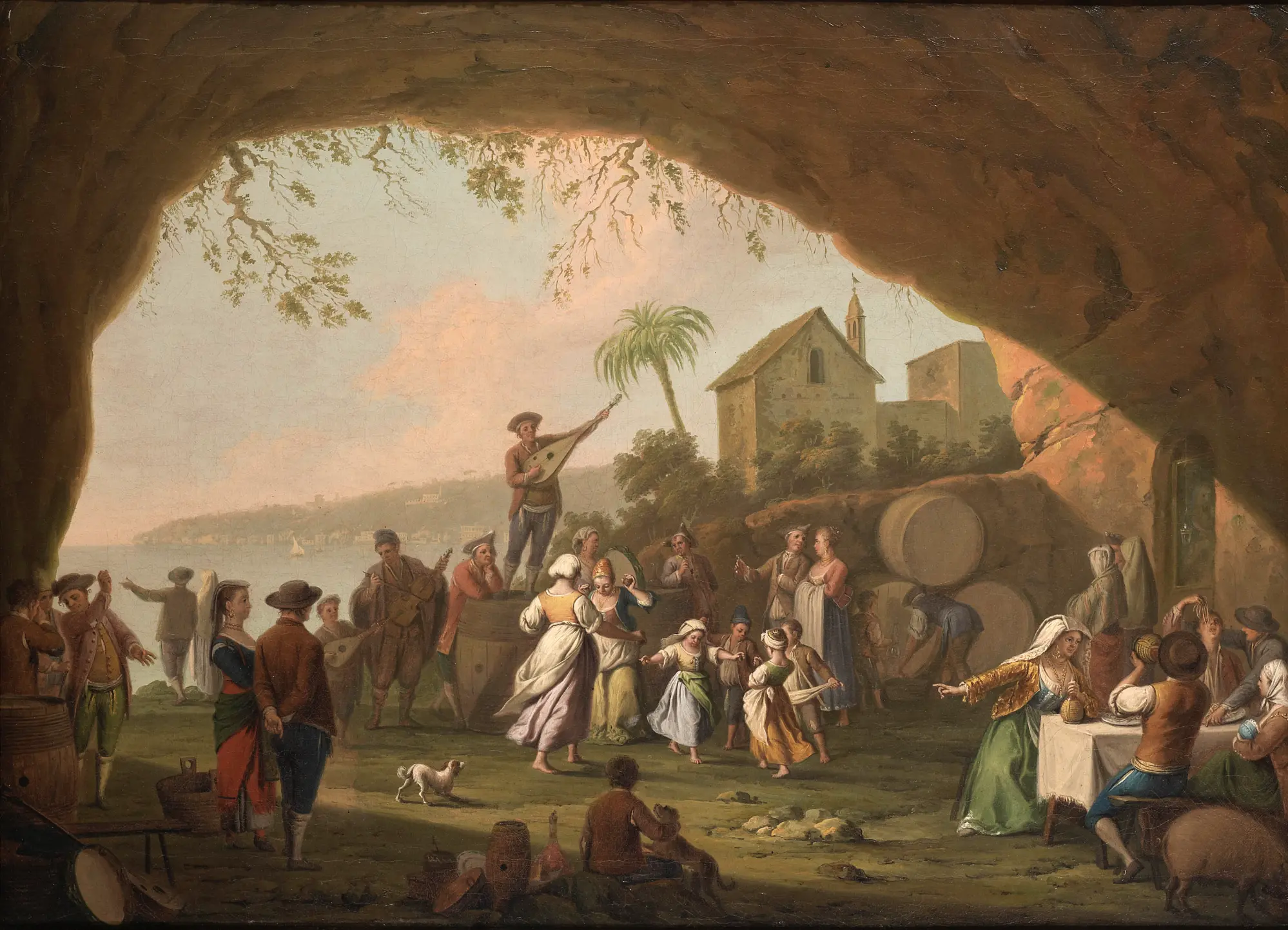
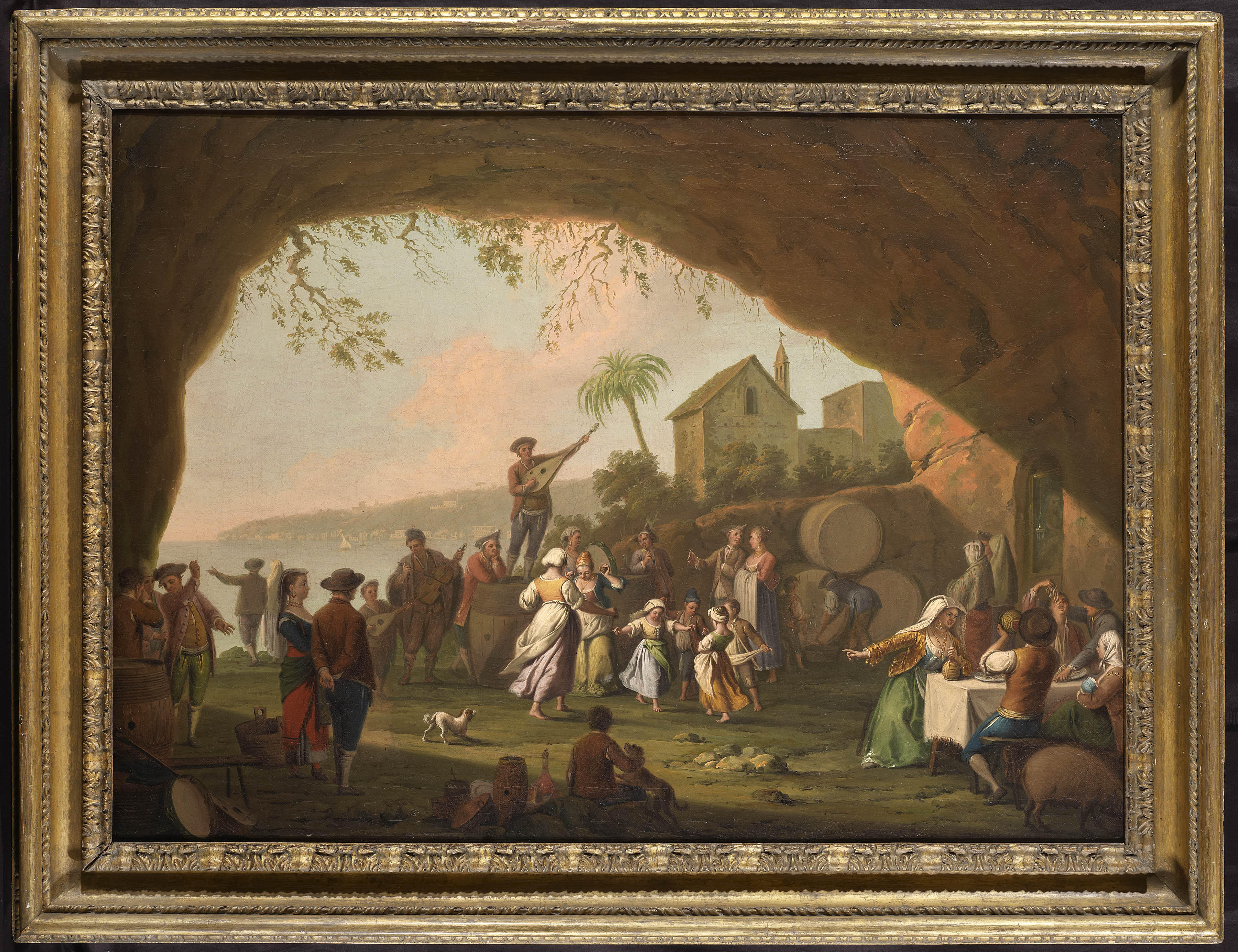
View of Naples: A Scene of Daily Life with a Tarantella in a Grotto in Mergellina, with Posillipo Beyond
1756
Oil on canvas
70.8 x 98.9 cm (27 7/8 x 39 in.)
With frame: 89 x 115 x 6.5 cm (35 1/8 x 45 1/4 x 2 1/2 in.)
Provenance
Mrs. Frances Henderson, London, 1918;
Trafalgar Galleries, London, 1985;
Private collection, Naples.
Literature
Trafalgar Galleries at the Royal Academy – IV, exh. cat. Royal Academy, London 1985, pp. 66–71.
Nicola Spinosa, Pittura Napoletana dal Rococò al Neoclassicismo, Naples, 1987, pp. 134–35, 138–39, 161–62.
Nicola Spinosa and Leonardo di Mauro, Vedute napoletane del Settecento, Naples, 1989, pp.106–7, 200, 288.
Carlo Knight, Hamilton a Napoli. Cultura, svaghi, civiltà di una grande capitale europea, Naples, 1990, p. 84.
Rosanna Muzii in All’ombra del Vesuvio. Napoli nella veduta europea dal Quattrocento all’Ottocento, exh. cat. Castel Sant’Elmo, Naples, 1990, pp. 231, 383.
Vedute napoletane dal Quattrocento all’Ottocento, collana ‘Guide Artistiche Electa Napoli’, Naples, 1996, pp. 96–99.
Description
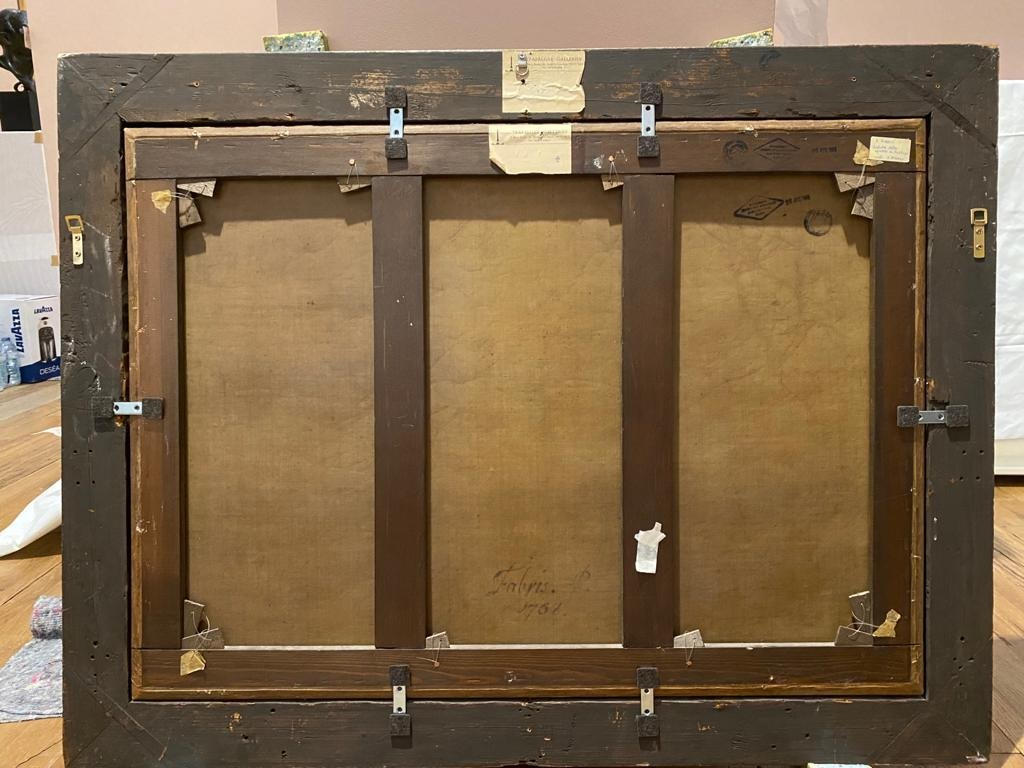
Rather remarkably, the present pair of paintings are the earliest known signed and dated works by the artist. Painted in 1756, the two views are one half of a set of four works, together with two further views painted in the following year. Despite the time elapsed in between the two pairs, altogether the four canvases constitute the most complete depiction of the coastline of Naples from that time, suggesting that they were conceived as a set. For the present pair, Fabris chose a vantage point at the end of the Riva di Chiaja, at Mergellina, and in the second pair of 1757, a site on the beach at Marinella, near the Mandracchio. In the background of one of the works in the present pair, Vesuvius and the Castel dell’Ovo are readily visible, while against this backdrop, a fisherman attempts to sell his catch, and other figures eat, drink, play cards, and flirt, all to the tune of the musicians at the right of the canvas. In its pendant, the merrymaking continues, and a group of children dances the tarantella.
The two paintings beautifully demonstrate Pietro Fabris’s mature style. As has been pointed out by several scholars, while earlier vedute painters, like Van Wittel, Joli, and Bonavia in Naples or Marieschi and Canaletto in Venice, focused on famous monuments, Fabris instead captured informal views of daily life, relegating landmarks to the background. With their colorful palette and lively compositions, Fabris’s pictures joyously celebrate the daily life of the city and its inhabitants.
The great success of Fabris’s scenes of this kind is evidenced by the production of many related gouaches and engravings. Most notable is the set of thirty-five engravings published in 1773 with the title Raccolta di vari vestimenti ed arti del Regno di Napoli, a catalogue of popular types and trades from which generations of local and foreign painters drew liberally to produce an array of works aimed at illustrating the narrative of popular life. Its fortune was further enhanced by the use of Fabris’s models for the for the porcelains of the Reale Fabbrica di Capodimonte, particularly from 1782 onwards, when the director of the Reale Fabbrica, Domenico Venuti, commissioned a set of tableware decorated with scenes from the daily life of Naples and its environs.
Please note that the price and availability of the above work may change without prior notice.