
Giacomo Ceruti
b. 1698, Milan, Italy
d. 1767, Milan, Italy
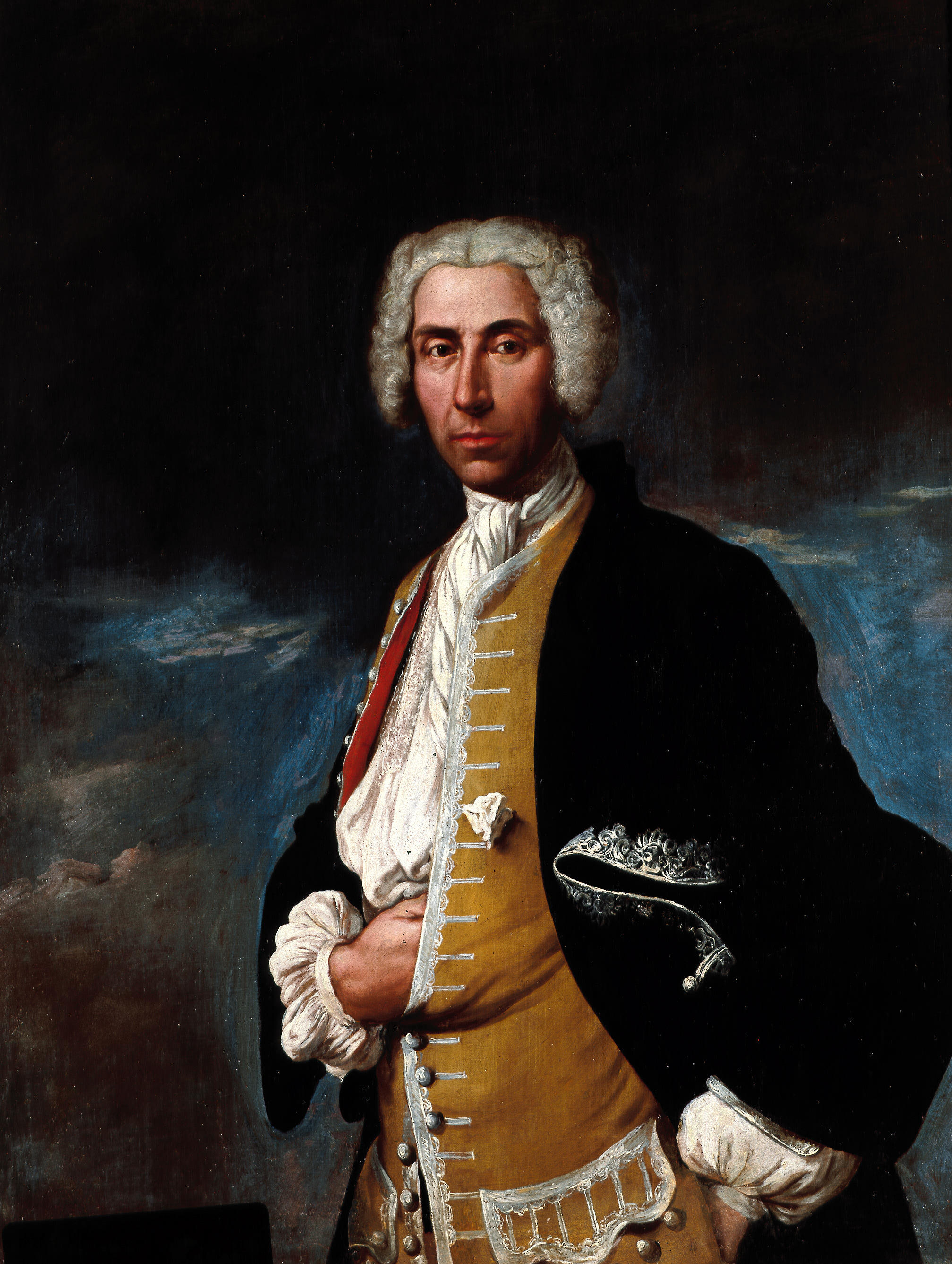
Portrait of a Gentleman
c. 1750
Oil on canvas
114 x 88.5 cm (44 7/8 x 34 7/8 in.)
Provenance
Koelliker collection, Milan.
Literature
Mina Gregori in Flavio Caroli, ed., L’anima e il volto. Ritratto e fisiognomica da Leonardo a Bacon, exh. cat. Palazzo Reale, Milan, 1998–99, p. 320, no. 57.
Paolo Vanoli in Francesco Frangi and Alessandro Morandotti, eds., Maestri del ‘600 e del ‘700 lombardo nella Collezione Koelliker, exh. cat. Palazzo Reale, Milan, 2006, p. 178.
Paolo Vanoli in Francesco Frangi and Alessandro Morandotti, eds., Giacomo Ceruti 1698–1767. Popolo e nobiltà alla vigilia dell’età dei Lumi, exh. cat. Robilant+Voena, Milan 2013, pp. 74–75, no. 21.
Description
Although more famous for his paintings of beggars and peasants, Giacomo Ceruti produced some of the most insightful and naturalistic portraiture of his era, clearly applying the same sharp and observant eye to his sitters as he did when depicting the common folk in his genre pictures. The present work is typical of his portrait style. Ceruti was documented as working in Padua in 1738–39 and then travelled to Venice, where he would have absorbed the influence of the local school of painting and, in the genre of portraiture, inspected portraits by Rosalba Carriera. While in Venice, Ceruti undertook a number of commissions for Marshal Matthias von der Schulenburg, and the painter would have had the chance to study many examples of international portraiture in his patron’s collection, including works by Hyacinthe Rigaud and Antoine Pesne.
The present painting was first published in 1998 by Mina Gregori, who dates the work after this sojourn in the Veneto, comparing it to other portraits he painted in the 1740s and 1750s. Typical of this period are the careful attention to detail in the costume, possibly inspired by the French portraits he had seen in Venice, the vibrant colours, the dramatic setting with its tempestuous sky, and the three-quarter length format of the portrait. Gregori also noted that according to an oral tradition, the work depicts a member of the Secco Suardo family of Bergamo.
The sitter wears a plain black coat over a brilliant ochre waistcoat with silvery-white buttons and braiding. Ceruti beautifully articulates the folds of his white shirt, and the braiding of the waistcoat is repeated on the tricorn hat tucked under the sitter’s left arm. Rendered with great introspective power, the sitter confronts the viewer with an especially penetrating gaze. Indeed, it is Ceruti’s great achievement that despite the powdered wig and embellished garments, the sitter’s visage nevertheless is the most compelling aspect of the portrait, his psychological intensity reinforced by his costume rather than diminished by its ornamentation.
The artwork described above is subject to changes in availability and price without prior notice.
The present painting was first published in 1998 by Mina Gregori, who dates the work after this sojourn in the Veneto, comparing it to other portraits he painted in the 1740s and 1750s. Typical of this period are the careful attention to detail in the costume, possibly inspired by the French portraits he had seen in Venice, the vibrant colours, the dramatic setting with its tempestuous sky, and the three-quarter length format of the portrait. Gregori also noted that according to an oral tradition, the work depicts a member of the Secco Suardo family of Bergamo.
The sitter wears a plain black coat over a brilliant ochre waistcoat with silvery-white buttons and braiding. Ceruti beautifully articulates the folds of his white shirt, and the braiding of the waistcoat is repeated on the tricorn hat tucked under the sitter’s left arm. Rendered with great introspective power, the sitter confronts the viewer with an especially penetrating gaze. Indeed, it is Ceruti’s great achievement that despite the powdered wig and embellished garments, the sitter’s visage nevertheless is the most compelling aspect of the portrait, his psychological intensity reinforced by his costume rather than diminished by its ornamentation.
The artwork described above is subject to changes in availability and price without prior notice.