

Daniele Crespi
b. 1597/98, Busto Arsizio, Lombardy
d. 1630, Milan
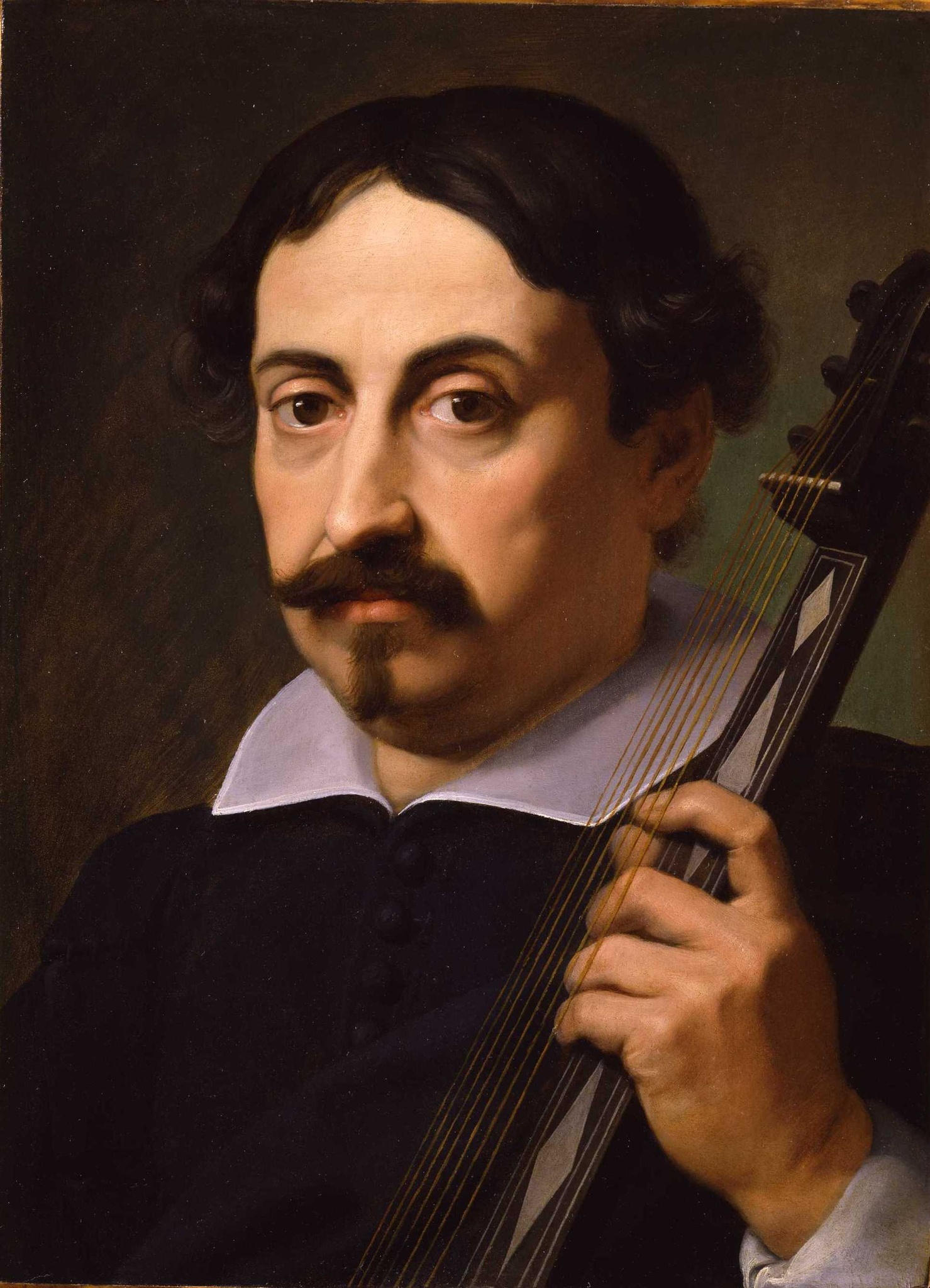
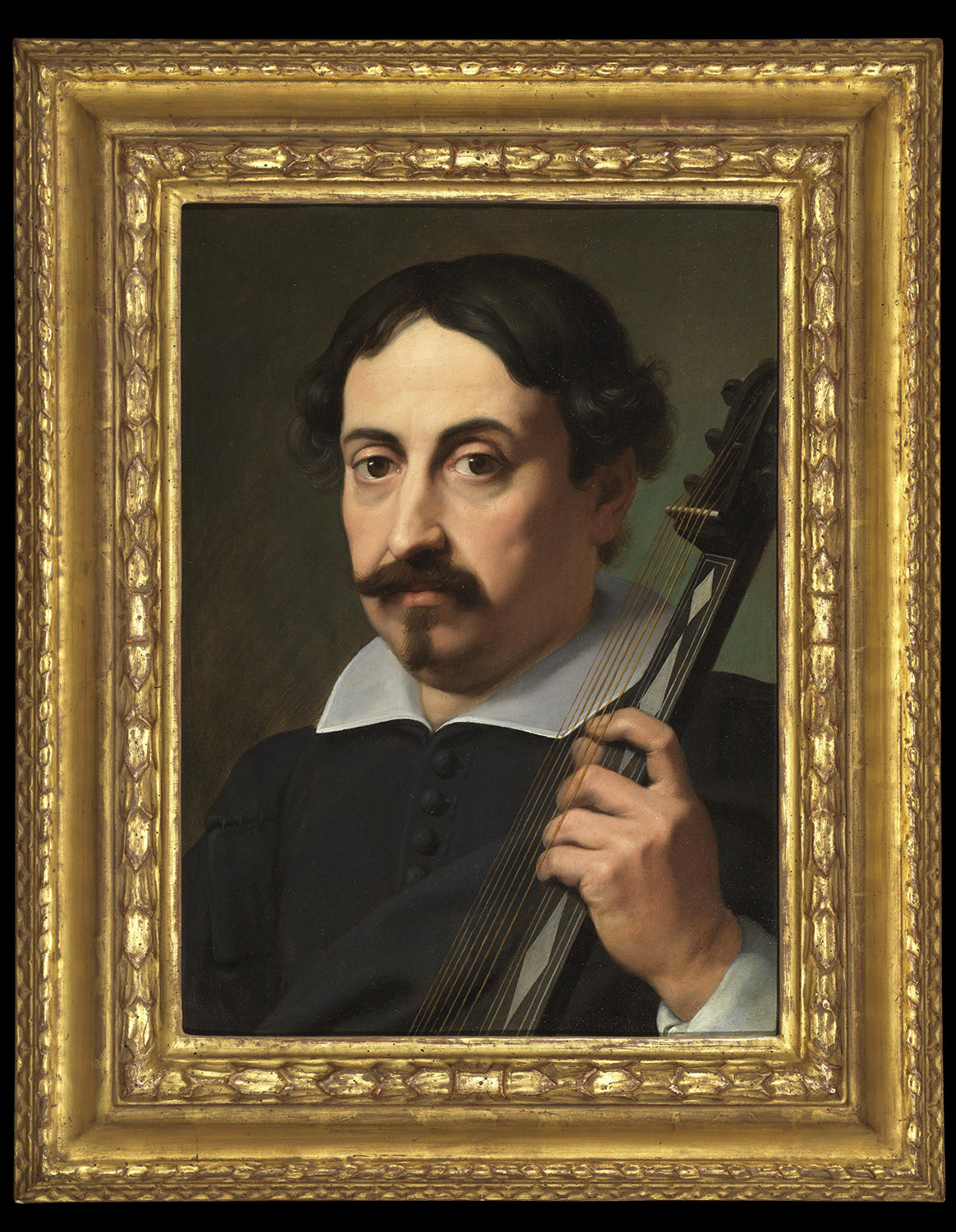
Portrait of a Musician
c. 1628–30
Oil on wood panel
48 x 35 cm (18 7/8 x 13 3/4 in.)
Provenance
Private Collection, Vienna.
Literature
Konrad Bernheimer, ed., Colnaghi: Old Master Paintings, London, 2010, no. 13, pp. 56 –57.
Francesco Frangi in Camillo Manzitti and Alessandro Morandotti, eds., Milano-Genova andatA/Ritorno: percorsi della pittura tra manierismo e barocco, Milan, 2012, exh. cat., pp. 42–43, 96, illustrated.Virginia Brilliant in Faithful to Nature: Eleven Lombard Paintings 1530–1760, New York, 2019, exh. cat., pp. 558–59, 84–85, illustrated.
Description
Daniele Crespi was one of the most important artists working in Milan in the early seventeenth century before he succumbed to the plague in 1630 at the age of only thirty-three. Although he is perhaps better known as a painter of religious narratives, Crespi’s reputation as a portraitist was well established in his own time, and his services were sought after by intellectual patrons throughout northern Italy.
The present work, whose attribution has been confirmed by Nancy Ward Neilson and Francesco Frangi, joins a small group of bust-length portraits by the artist, including the Portrait of Antonio Olgiati (Koelliker Collection, Milan), Portrait of a Gentleman (Accademia Linguistica, Genoa), and a Self-Portrait (dated 1627, Galleria degli Uffizi, Florence). Six additional portraits of the same format are recorded in the inventories of two important Milanese collectors, Cesare Pagani (1707) and Melzo d’Eril (1802).
Crespi’s portraits seem to have been much admired by important cultural figures of his time. For example, in 1625, Sigismondo Boldoni, a professor of philosophy at the University of Pavia, wrote to his friend Alessandro Monti in Milan to obtain a copy of a portrait of a friend recently done by Crespi, and his letter is full of praise for the artist’s talents. It seems quite likely that the as yet unidentified musician in the present portrait belonged to this educated circle of patrons and clients, amongst whom music, which was associated with poetry, literature, and history, was regarded as a particularly cultivated form of entertainment.
Crespi’s portraits are strikingly consistent in terms of form and content, and are at once refreshing and modern in their total lack of artifice. The artist invariably presents his sitters frontally and sets them close to the picture plane against monochrome backgrounds, stripped of any extraneous details. Strong, clear light lends a sculptural quality to the facial features, and in several of his portraits, including the present work, it falls from the left with the sitter turned slightly towards it. In his portraits on panel, like the present painting, Crespi’s brushwork is smooth and compact but delicate and subtle in the rendering of the flesh tones, and painterly in details like the impasto highlights on the clothing and reflections in the eyes. Stripped to their essence, and portrayed with sober and frank naturalism, the resulting portraits exemplify Crespi’s simple and direct Baroque style and are entirely in keeping with the rigors of the Borromean period, in which realism was resolutely favored.
Most of Crespi’s portraits are painted on panels or canvases measuring forty-five by thirty-eight centimeters, and the present work may be slightly larger in its dimensions to accommodate the musical instrument held by the sitter. Indeed, the inclusion of an object associated with the sitter here makes it unique among Crespi’s portraits, and it also allowed the artist to depict the sitter’s hand, which he rendered with the same skill and delicacy as the face. The instrument is most likely a theorbo, a member of the lute family. An theorbo can be seen in full in Antiveduto Gramatica’s Theorbo Player of around 1615, and these instruments also feature in the still lifes of the Lombard painter Evaristo Baschenis (1617–1677).
The artwork described above is subject to changes in availability and price without prior notice.
The present work, whose attribution has been confirmed by Nancy Ward Neilson and Francesco Frangi, joins a small group of bust-length portraits by the artist, including the Portrait of Antonio Olgiati (Koelliker Collection, Milan), Portrait of a Gentleman (Accademia Linguistica, Genoa), and a Self-Portrait (dated 1627, Galleria degli Uffizi, Florence). Six additional portraits of the same format are recorded in the inventories of two important Milanese collectors, Cesare Pagani (1707) and Melzo d’Eril (1802).
Crespi’s portraits seem to have been much admired by important cultural figures of his time. For example, in 1625, Sigismondo Boldoni, a professor of philosophy at the University of Pavia, wrote to his friend Alessandro Monti in Milan to obtain a copy of a portrait of a friend recently done by Crespi, and his letter is full of praise for the artist’s talents. It seems quite likely that the as yet unidentified musician in the present portrait belonged to this educated circle of patrons and clients, amongst whom music, which was associated with poetry, literature, and history, was regarded as a particularly cultivated form of entertainment.
Crespi’s portraits are strikingly consistent in terms of form and content, and are at once refreshing and modern in their total lack of artifice. The artist invariably presents his sitters frontally and sets them close to the picture plane against monochrome backgrounds, stripped of any extraneous details. Strong, clear light lends a sculptural quality to the facial features, and in several of his portraits, including the present work, it falls from the left with the sitter turned slightly towards it. In his portraits on panel, like the present painting, Crespi’s brushwork is smooth and compact but delicate and subtle in the rendering of the flesh tones, and painterly in details like the impasto highlights on the clothing and reflections in the eyes. Stripped to their essence, and portrayed with sober and frank naturalism, the resulting portraits exemplify Crespi’s simple and direct Baroque style and are entirely in keeping with the rigors of the Borromean period, in which realism was resolutely favored.
Most of Crespi’s portraits are painted on panels or canvases measuring forty-five by thirty-eight centimeters, and the present work may be slightly larger in its dimensions to accommodate the musical instrument held by the sitter. Indeed, the inclusion of an object associated with the sitter here makes it unique among Crespi’s portraits, and it also allowed the artist to depict the sitter’s hand, which he rendered with the same skill and delicacy as the face. The instrument is most likely a theorbo, a member of the lute family. An theorbo can be seen in full in Antiveduto Gramatica’s Theorbo Player of around 1615, and these instruments also feature in the still lifes of the Lombard painter Evaristo Baschenis (1617–1677).
The artwork described above is subject to changes in availability and price without prior notice.