
Franz Xaver Winterhalter
b. 1805, St. Blasien, Electorate of Baden
d. 1873, Frankfurt
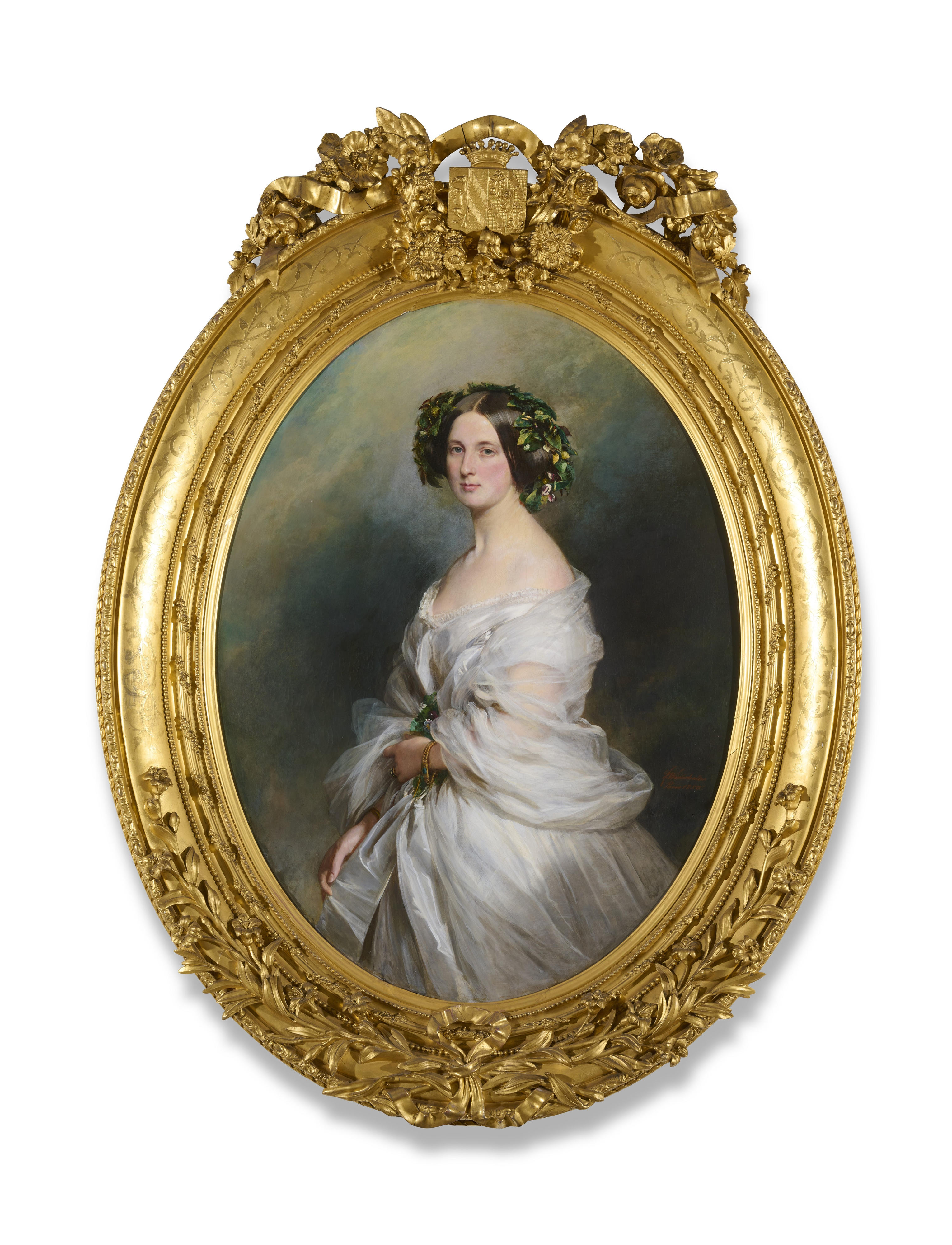
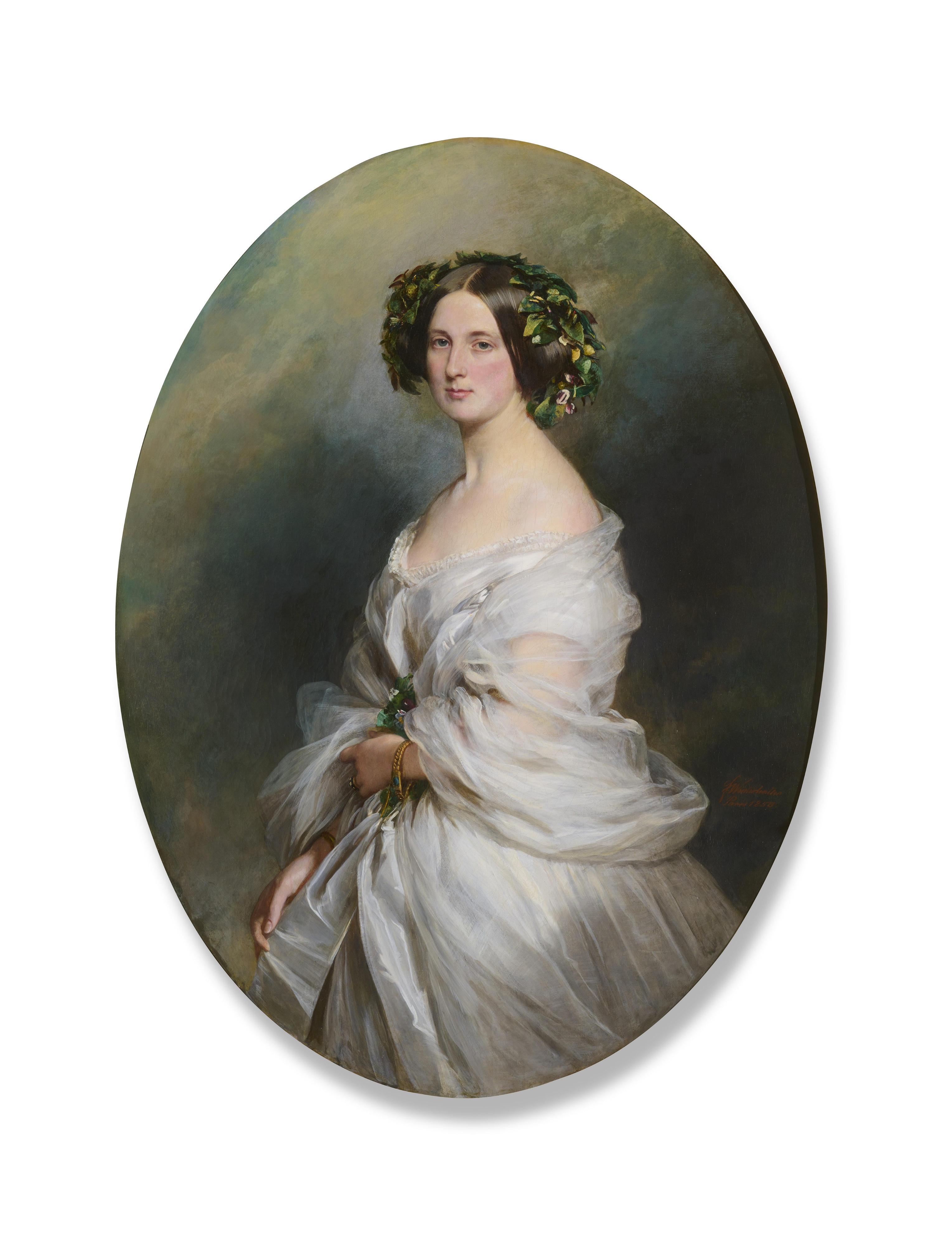
Portrait of Therese Freifrau von Bethmann, née Freiin Vrints von Treuenfeld
1850
Oil on canvas
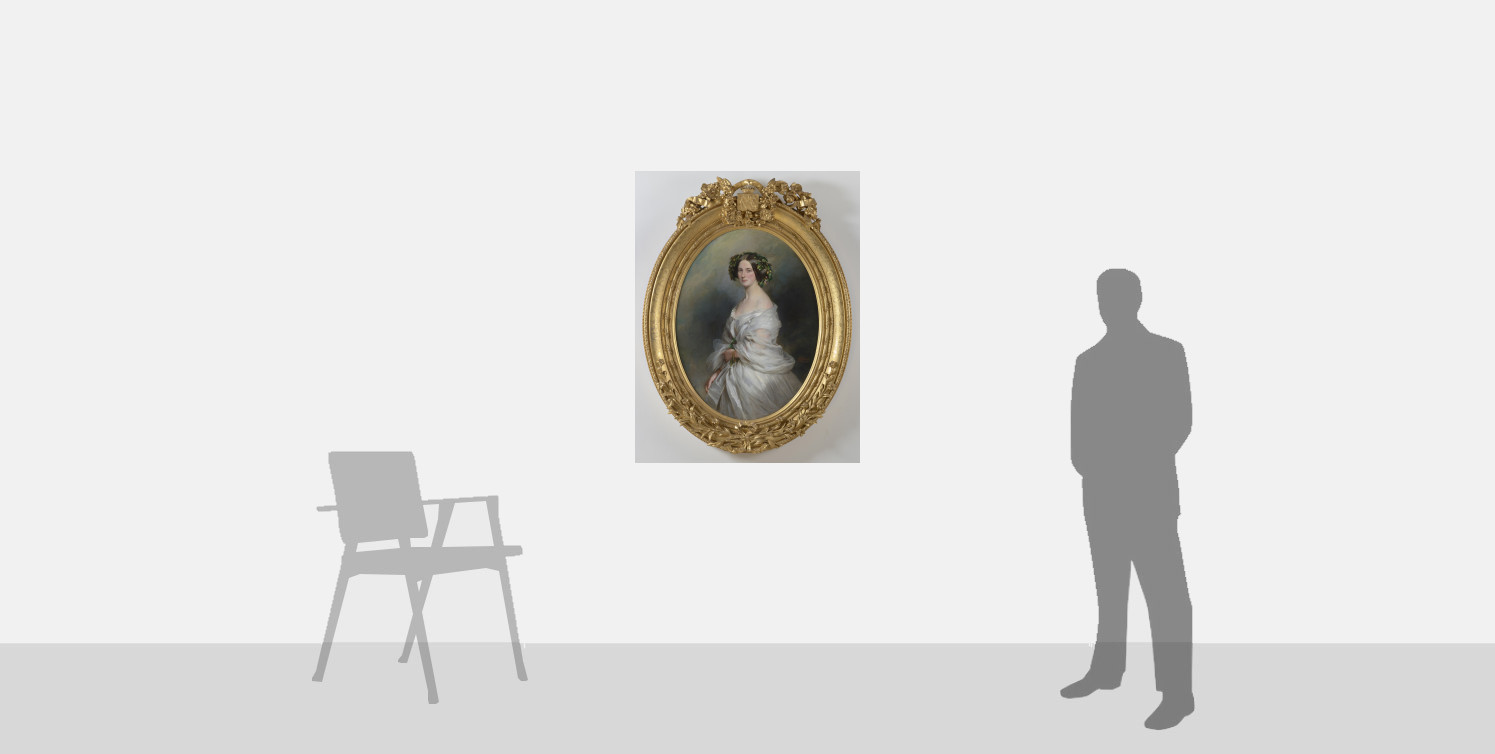
130 x 100 cm (51 1/8 x 39 3/8 in.)
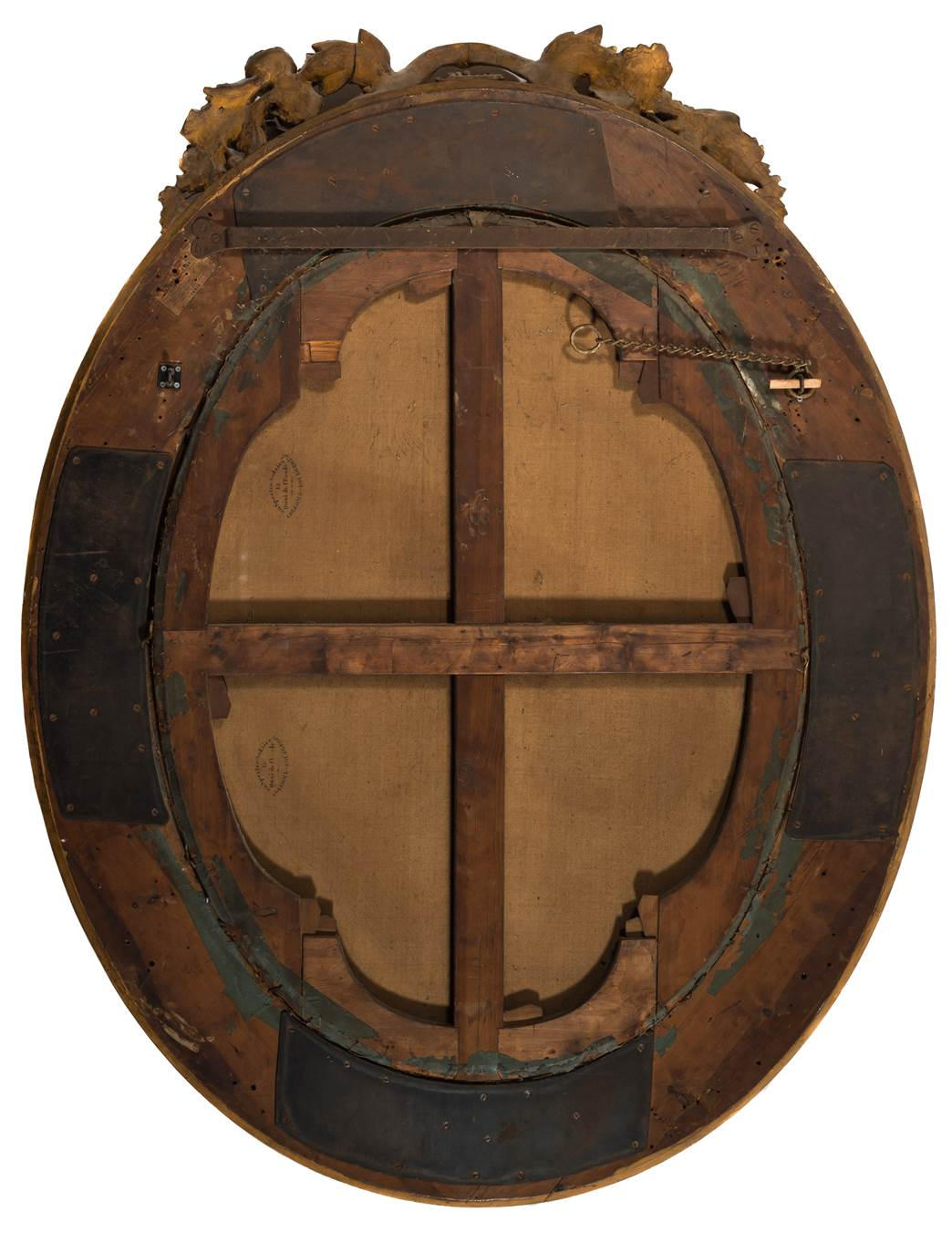
With frame: 183 x 137 x 16 cm (72 1/8 x 54 x 6 1/4 in.)
Provenance
Unknown prior to 1914, then thought to be in the collection of, Paul R Kuenrich, Holly Court, Sheffield, c. 1914–1932,
Sir Stuart and Lady Goodwin, c. 1930s, by whom gifted to
Mr and Mrs F Eske in 1960, and by descent in the family until 2017.
Literature
F. Wild, Nekrologe und Verzeichnisse der Gemälde von Franz & Hermann Winterhalter, Zurich, 1894, p. 49, as Mme Charles Bethmann.
E. Barilo von Reisberg, The Winterhalter Catalogue Raisonné, https://franzxaverwinterhalter.wordpress.com, no. 386.
E. Barilo von Reisberg, The Winterhalter Catalogue Raisonné, https://franzxaverwinterhalter.wordpress.com, no. 386.
Description
Franz Xaver Winterhalter was one of the most acclaimed society painters of the nineteenth century. In a period in which costume was to become an essential indicator of status, Winterhalter mastered to perfection the rendering of fine textiles, gleaming silks, airy tulle and iridescent pearls. He also had a feeling for ‘the right’ pose and composition as a whole. It is highly probable that he himself made suggestions for materials, colours and accessories, for he knew what would flatter the ladies who sat for his portraits and what sort of outfit suited their purpose. Moreover, Winterhalter invariably added a pinch of idealism, succeeding in elevating the sitter to a heightened level of beauty. The artist delivered portraits for the wives of some of the wealthiest bankers and industrialists of the period, as well as for European royalty. Among others, he portrayed Queen Victoria, Empress Eugenie and Elisabeth of Bavaria, Empress of Austria, also known as Princess Sissi Winterhalter's monumental yet sensual poses, his masterful use of colour, the effective rendering of skin and textiles can be traced back to the great portraitists Jean-Auguste-Dominique Ingres (1780–1867) and Thomas Lawrence (1769–1830), and later reappear in the work of John Singer Sargent (1856–1925) and Philip-Alexius de Laszlo (1869–1937).
In the present painting, the sitter, Therese Freifrau von Bethmann, is portrayed in countenance, appearing romantic and wistful against a soft, celestial backdrop. Unlike Winterhalter’s portraits of royalty, designed to emphasise status and grandeur with the use of lavish colours and the inclusion of attributes and settings that further enhanced the feeling of authority and power, this canvas is wistful and sweet in mood, intimate despite its handsome scale, yet decidedly sophisticated. The three-quarter length, the billowing white dress, the marmoreal pose, pale skin and sharp delineated profile hint at the visual lexicon of classical antiquity. Around the sitter’s head is a likewise classically inspired garland of flowers, matching the bouquet she holds at her waist.
The present work is particularly rare and important, for it is one of only five portraits known to have been painted by the artist in Paris in 1850. Following the French Revolution of 1848, and the abdication and exile of Louis-Philippe d’Orleans, Winterhalter, whose name had become associated with the fallen regime, left the city. Throughout the following year, he moved from place to place, working in Belgium, Switzerland and Prussia. On several occasions, he also visited England, where he was commissioned to paint portraits of Queen Victoria and her entourage. He returned to Paris only at the end of 1849, but finding no employment as a court artist, he relied mainly on commissions from the so-called 'financial aristocracy.’
The present portrait is one of the earliest known portraits by Winterhalter to represent a member of a German banking dynasty. The coats of arm at the top of the frame identify the sitter as Therese Freifrau von Bethmann, née Freiin Vrints von Treuenfeld. Therese (b. 1823) was the daughter of Carl Vrints von Treuenfeld, who had been Imperial Postmaster in Bremen, and later Upper Postmaster for the Thurn-und-Taxis in Frankfurt. In 1842 she married Carl Ludwig Caesar von Bethmann (1812–1871). The Von Bethmanns were a family of bankers who, among other projects, financed the construction of the Eiffel Tower and founded and controlled several railway companies operating throughout Prussia and Austria together with the Rothschilds.
A portrait of Mme Charles Bethmann was recorded in the 1896 list, supposedly compiled using the artist’s own account ledgers, by Wintherhalter’s nephew, Franz Wild. Given that the sitter was married to Carl Ludwig Caesar Freiherr von Bethmann, she would have been known in France as Mme la Baronne de Bethmann. However, as the portrait was painted during the Second Republic when titles of nobility were proscribed, she would have been referred to as Mme Charles Bethmann, and recorded as such in Winterhalter’s account book (Charles being the French version of Carl). Although the entry on Wild’s list is not dated, the entry for the Portrait of Mme Charles Bethmann is placed among portraits that are known to have been painted around 1850.
In the present painting, the sitter, Therese Freifrau von Bethmann, is portrayed in countenance, appearing romantic and wistful against a soft, celestial backdrop. Unlike Winterhalter’s portraits of royalty, designed to emphasise status and grandeur with the use of lavish colours and the inclusion of attributes and settings that further enhanced the feeling of authority and power, this canvas is wistful and sweet in mood, intimate despite its handsome scale, yet decidedly sophisticated. The three-quarter length, the billowing white dress, the marmoreal pose, pale skin and sharp delineated profile hint at the visual lexicon of classical antiquity. Around the sitter’s head is a likewise classically inspired garland of flowers, matching the bouquet she holds at her waist.
The present work is particularly rare and important, for it is one of only five portraits known to have been painted by the artist in Paris in 1850. Following the French Revolution of 1848, and the abdication and exile of Louis-Philippe d’Orleans, Winterhalter, whose name had become associated with the fallen regime, left the city. Throughout the following year, he moved from place to place, working in Belgium, Switzerland and Prussia. On several occasions, he also visited England, where he was commissioned to paint portraits of Queen Victoria and her entourage. He returned to Paris only at the end of 1849, but finding no employment as a court artist, he relied mainly on commissions from the so-called 'financial aristocracy.’
The present portrait is one of the earliest known portraits by Winterhalter to represent a member of a German banking dynasty. The coats of arm at the top of the frame identify the sitter as Therese Freifrau von Bethmann, née Freiin Vrints von Treuenfeld. Therese (b. 1823) was the daughter of Carl Vrints von Treuenfeld, who had been Imperial Postmaster in Bremen, and later Upper Postmaster for the Thurn-und-Taxis in Frankfurt. In 1842 she married Carl Ludwig Caesar von Bethmann (1812–1871). The Von Bethmanns were a family of bankers who, among other projects, financed the construction of the Eiffel Tower and founded and controlled several railway companies operating throughout Prussia and Austria together with the Rothschilds.
A portrait of Mme Charles Bethmann was recorded in the 1896 list, supposedly compiled using the artist’s own account ledgers, by Wintherhalter’s nephew, Franz Wild. Given that the sitter was married to Carl Ludwig Caesar Freiherr von Bethmann, she would have been known in France as Mme la Baronne de Bethmann. However, as the portrait was painted during the Second Republic when titles of nobility were proscribed, she would have been referred to as Mme Charles Bethmann, and recorded as such in Winterhalter’s account book (Charles being the French version of Carl). Although the entry on Wild’s list is not dated, the entry for the Portrait of Mme Charles Bethmann is placed among portraits that are known to have been painted around 1850.