
Barry X Ball
b. 1955, Pasadena
Purity, after Antonio Corradini (1668–1752), La Purità, 1720–25 Ca' Rezzonico, Venice
2008–24
Sculpture: translucent pink Iranian onyx, stainless steel
Pedestal: White Vietnamese marble, stainless steel, wood, acrylic lacquer, steel, nylon, plastic
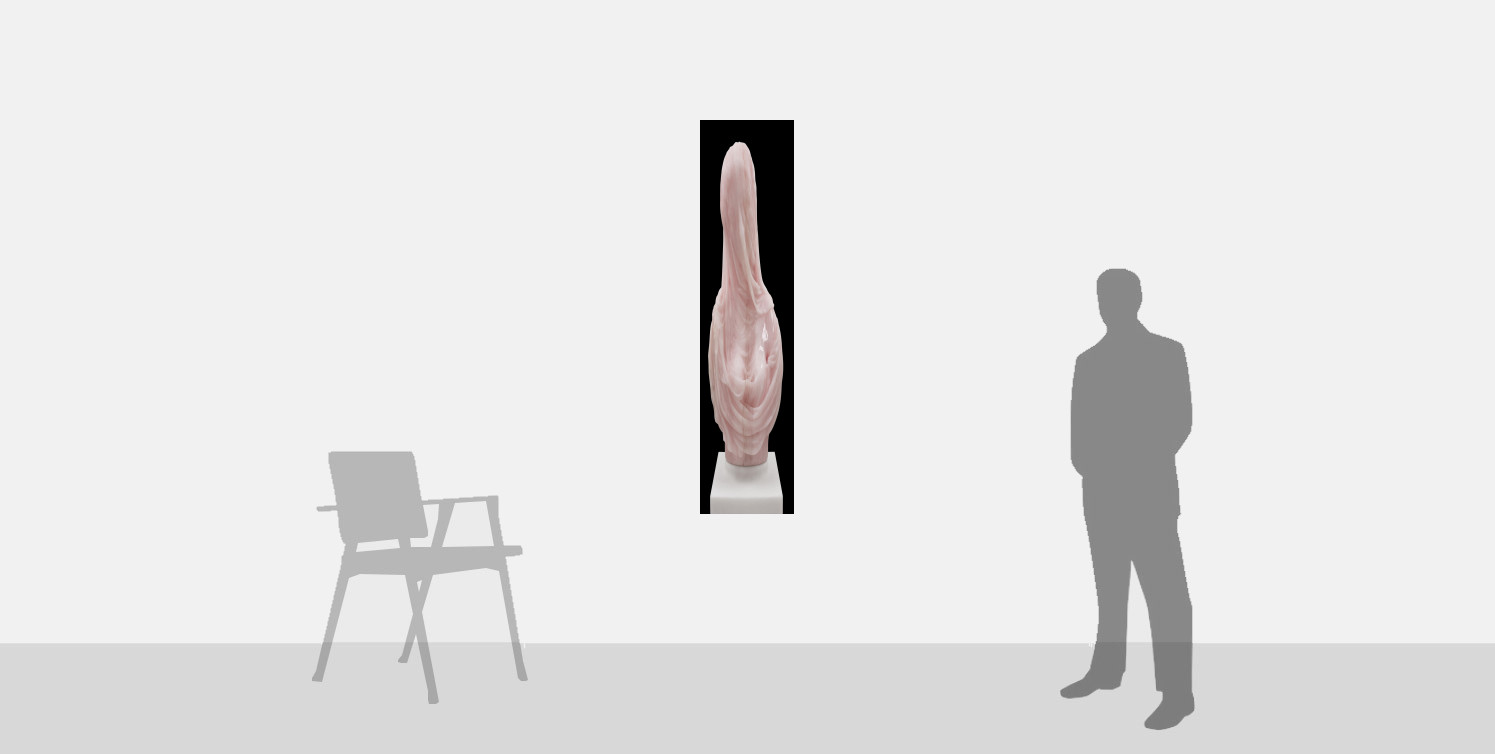
Overall: 175.3 x 41.9 x 30.5 cm (69 x 16 1/2 x 12 in.)
Sculpture: 61 x 41.9 x 28.6 cm (24 x 16 1/2 x 11 1/4 in.)
Pedestal: 114.3 x 35.6 x 30.5 cm (45 x 14 x 12 in.)
Provenance
Description
‘There is a long history of artists making working in that ancient tradition. Fueled by love, I'm reaching way back to a time centuries before the Modernist Revolution, searching for a way to make something equally revolutionary.’—Barry X Ball
Barry X Ball was born in Pasadena, California, in 1955. As a college student, his travels to Europe exposed him to the works of the Old Masters who inspire many of the works he creates today. Ball reinvents works of the Renaissance. Using modern technological methods, he unites the art historical with the present day, revitalising masterpieces of the past.
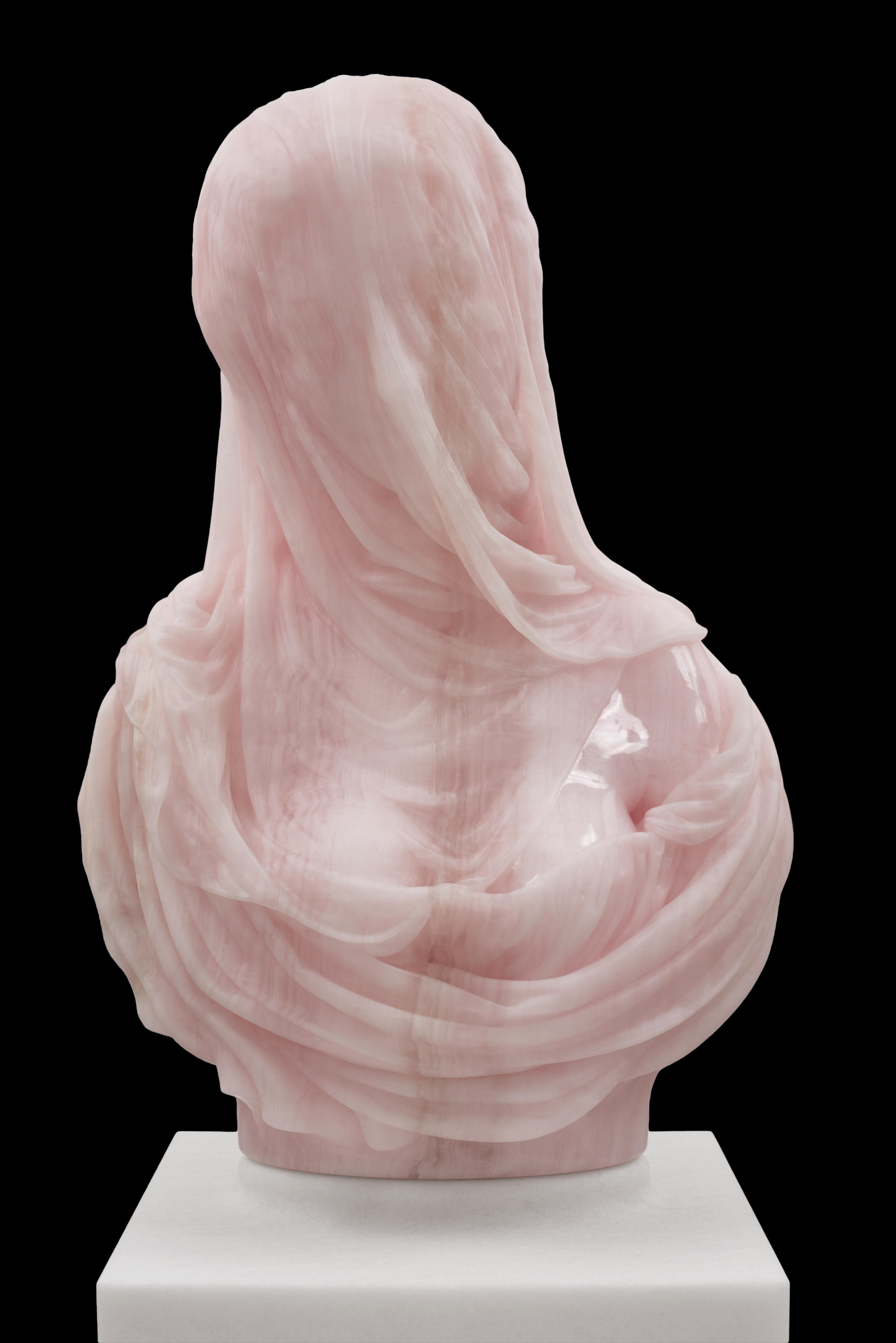
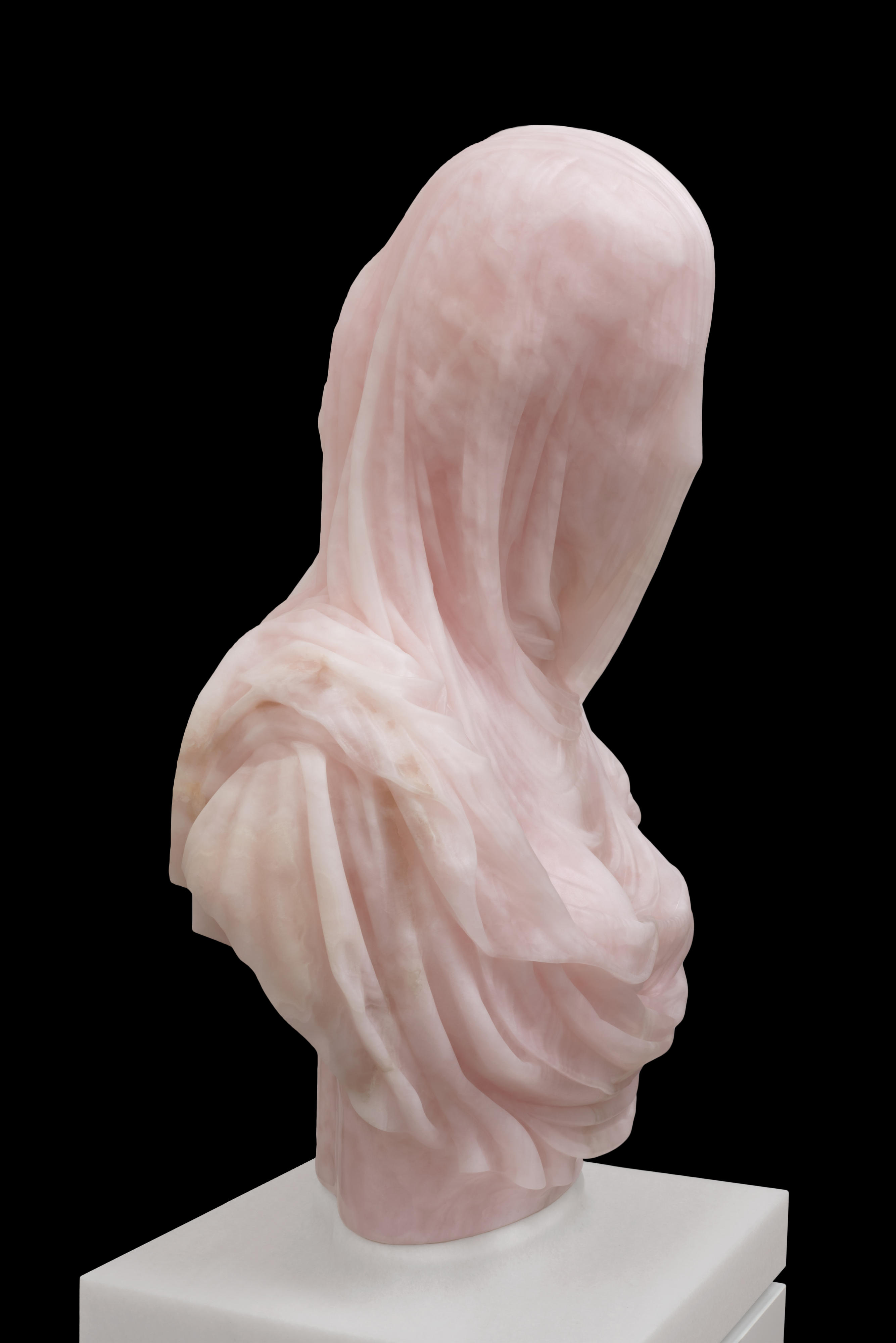
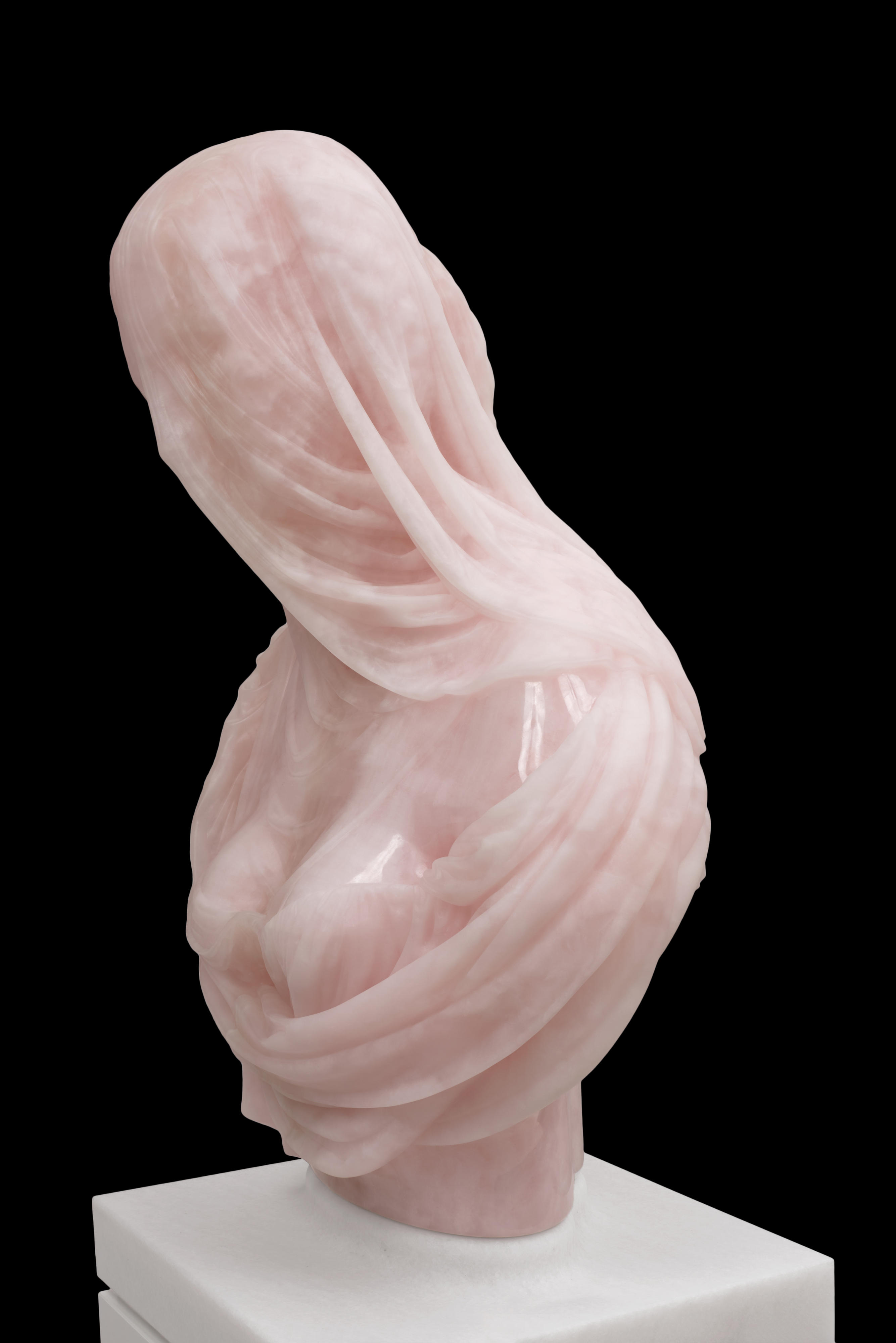
Barry X Ball's Purity (2008–24) is inspired by the marble sculpture by Rococo master Antonio Corradini (1668–1752), La Purità, 1720–25, now in the Ca' Rezzonico, Venice. The present work, a mirror image of its model, opens art historical tradition to the possibilities of modern innovation. Ball’s process often begins with a three-dimensional scan of the work, which is then altered and reimagined according to the artist's vision, using computer-aided modeling software. Milling machinery is then used to sculpt the stone. However, his process is not entirely reliant upon technology, as the sculptures often require detailed and meticulous work and refinement by hand.
Straying from the traditional medium of white marble, the sculpture is executed in semi-transparent pink onyx, invigorating the figure with a sense of sumptuous softness and imbuing the stone with a flesh-like appearance. The cloth appears delicate, almost seeming that the slightest breeze would cause the folds to move – at odds with its rigid medium. In contrast to the seemingly sheer stone of the drapery, small sections of the figure’s bare skin, exposed at the shoulder and upper chest appear lustrous, distinguishing flesh from cloth. This reimagined personification of Purity is ethereal, juxtaposed between resounding stillness and an elegant dynamism.
Ball places the past and the present in dialogue with one another, creating new works while calling upon the age-old tradition of sculpture. Referencing the Italian sculptural tradition of the eighteenth century, he elucidates the thread which weaves through time and ties us to hundreds of years of art history.