
Agostino Bonalumi
b. 1935, Vimercate, Italy
d. 2013, Desio, Italy
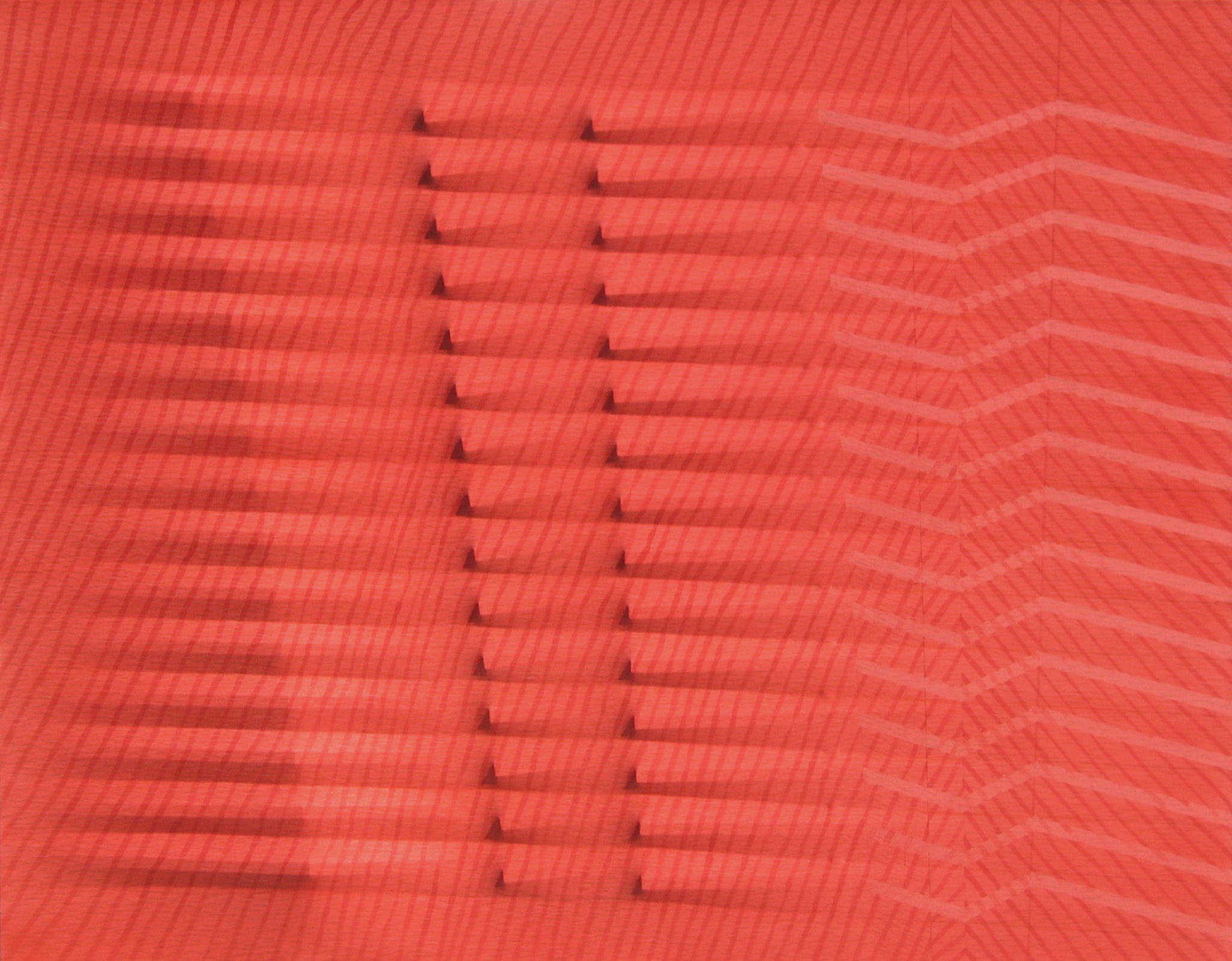
Rosso (Red)
1988
Vinylic tempera on stretched canvas
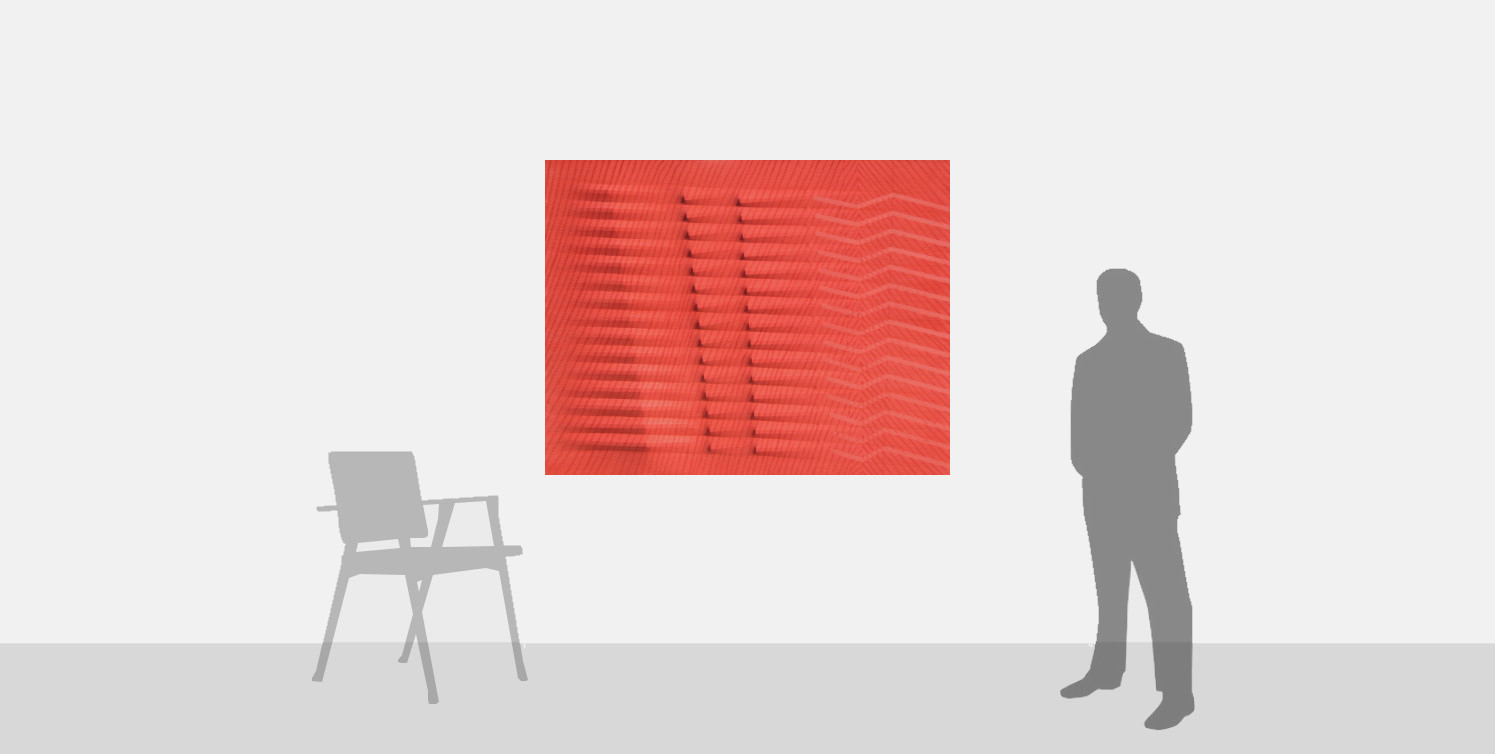
140 x 180 cm (55 1/8 x 70 7/8 in.)
Provenance
Certificate of authenticity from the Archivio Bonalumi, no. 88-008.
Private collection.
Literature
A. Fiz, M. Meneguzzo, Agostino Bonalumi opere dal 1957-1997, Galleria Fumagalli, Bergamo, Galerie Boycott, Bruxelles 1998, p.36;
L. M. Barbero, Bonalumi evoluzione continua tra pittura e ambiente, Galleria Niccoli, Parma 2000, p. 120;
Agostino Bonalumi. Se l’arte dice l’indicibile, Galleria L’Incontro, Chiari 2012, p. 26;
F. Bonalumi F. & M. Meneguzzo, Agostino Bonalumi. Catalogue Raisonné, Milan 2015, Vol. II, p. 592, fig. 1172.
Description
Although Bonalumi was not completely aligned to any particular artistic group or trend, the artist's work emerged from a need he shared with the most representative artists of his time. As Bonalumi said, “within the horizon of our interests were materials rather than matter, design rather than signs, action rather than gestures, sociality rather than existentialism.” Bonalumi’s artistic career stretched over a period of fifty years and was marked but constant experimentation, consistency with his expressive choice and a strict adherence to objective art. His canvases are pitture oggetti (painting-objects), the aim of which is to go beyond the limits of the picture plane and occupy the surrounding space: they are three-dimensional bodies that break the surface of the canvas, invading the third dimension.
In the 1970s, Agostino Bonalumi began his search for a matching object form for his works and increasingly set aside the pictorial elements in favour of a pronounced three-dimensionality. The structured paintings that thus emerged are at once images and sculptures, reaching beyond the boundaries of the panel and conquering the space around them. The wooden elements attached on the reverse of the canvas annul its pictorial two-dimensionality, modify its surface and create new, rhythmic light effects by means of “extroflexions“. In the present work Rosso, these effects are accentuated by means of vertical elongated bands in a darker red hue. Bonalumi intends to elevate the work of art to an integral part of its environment and thus doing so facilitate the artwork to influence and shape the meaning of its surroundings.
[…] Bonalumi is, in reality, both the same and different. Indeed, we could even say that he is different because he is the same. The freshness of the paintings of these years, their palpitating lightness and fleeting elusiveness, are the result of his loyalty to a method that is mental more than practical, based as it is on an awareness of the impossibility to reduce what is real to monological patterns.
(Luciano Caramel, 1985)
In the 1970s, Agostino Bonalumi began his search for a matching object form for his works and increasingly set aside the pictorial elements in favour of a pronounced three-dimensionality. The structured paintings that thus emerged are at once images and sculptures, reaching beyond the boundaries of the panel and conquering the space around them. The wooden elements attached on the reverse of the canvas annul its pictorial two-dimensionality, modify its surface and create new, rhythmic light effects by means of “extroflexions“. In the present work Rosso, these effects are accentuated by means of vertical elongated bands in a darker red hue. Bonalumi intends to elevate the work of art to an integral part of its environment and thus doing so facilitate the artwork to influence and shape the meaning of its surroundings.
[…] Bonalumi is, in reality, both the same and different. Indeed, we could even say that he is different because he is the same. The freshness of the paintings of these years, their palpitating lightness and fleeting elusiveness, are the result of his loyalty to a method that is mental more than practical, based as it is on an awareness of the impossibility to reduce what is real to monological patterns.
(Luciano Caramel, 1985)