
Luca Giordano
b. 1634, Naples, Italy
d. 1705, Naples, Italy
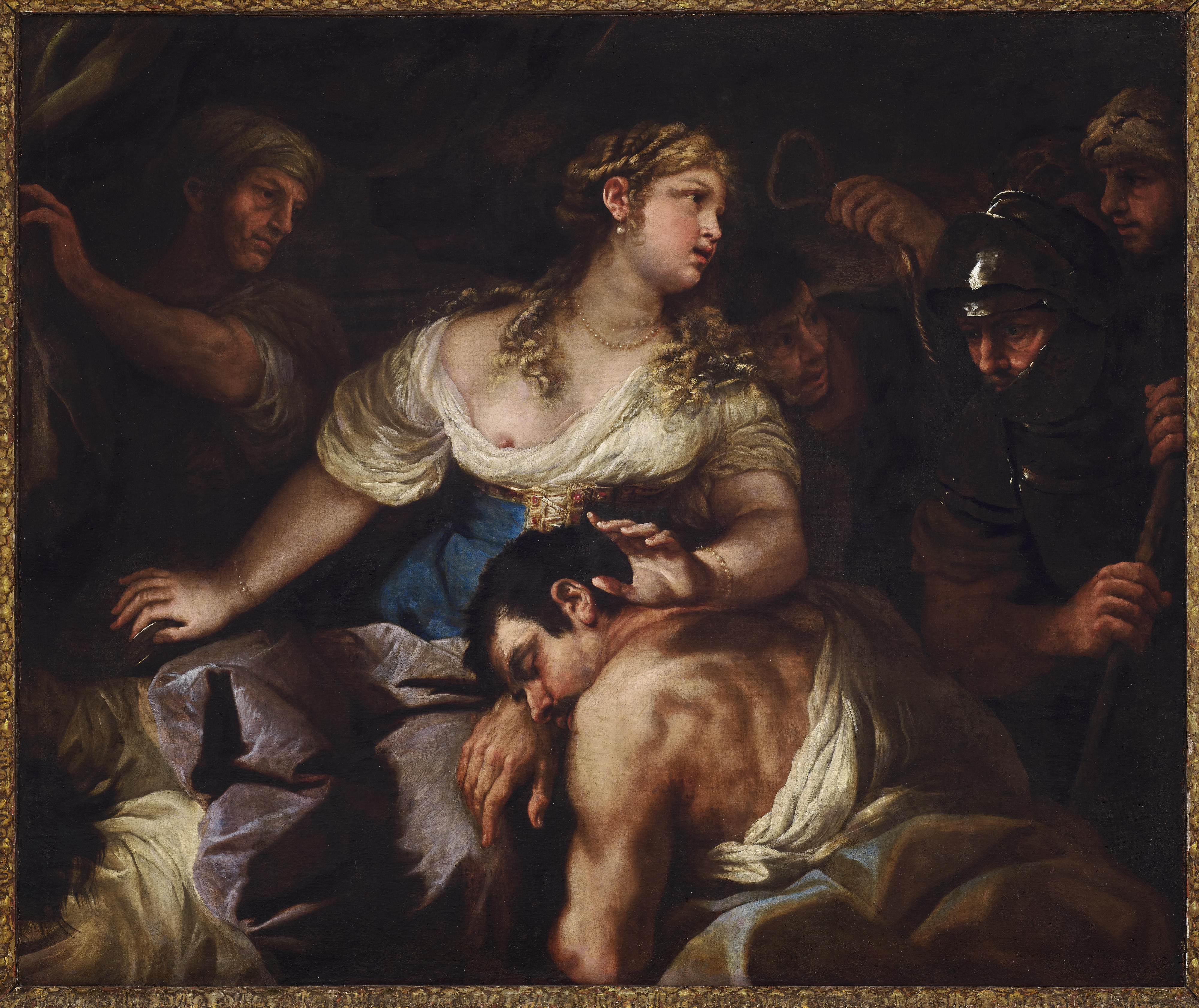
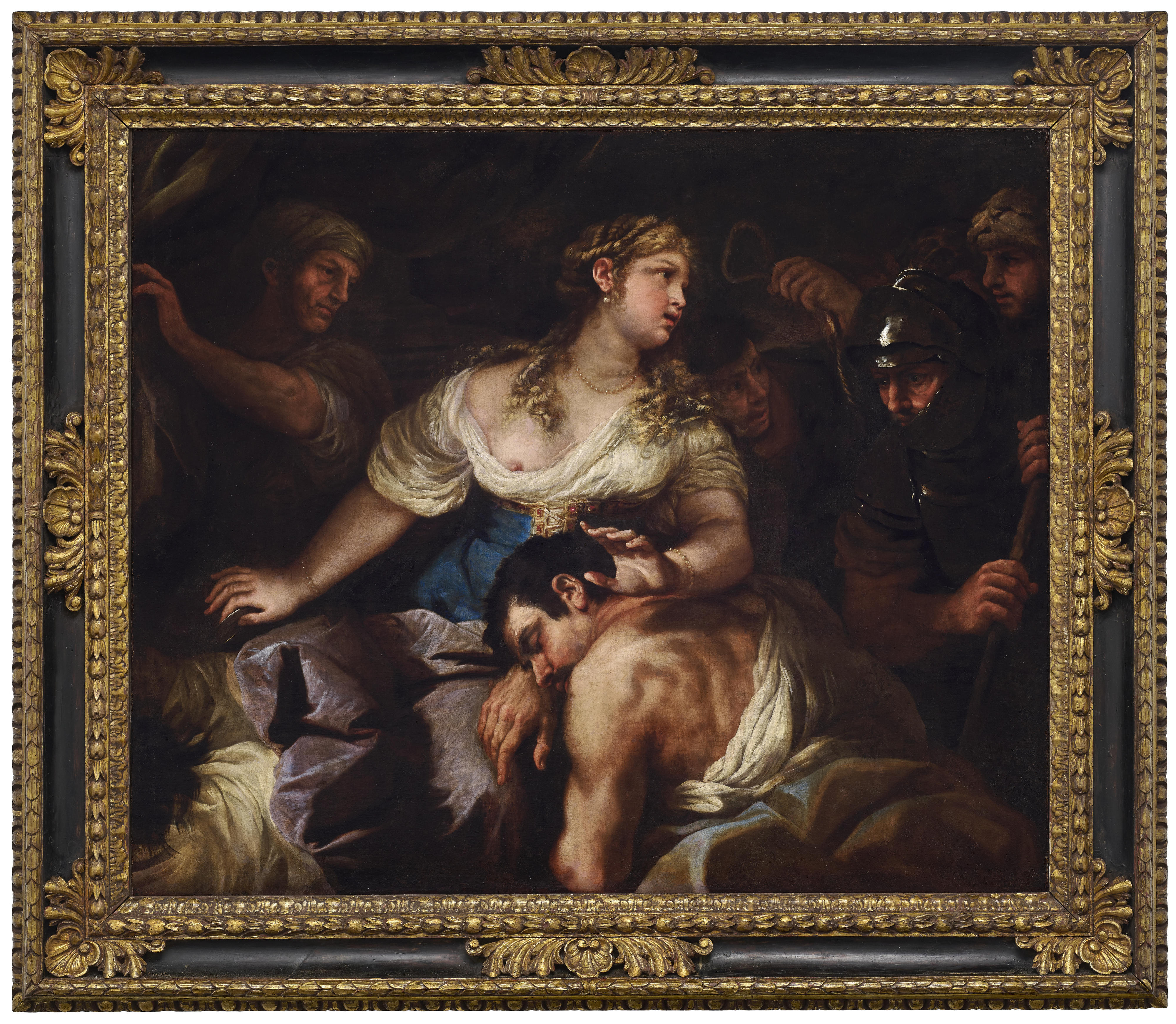
Samson and Delilah
1650s
Oil on canvas
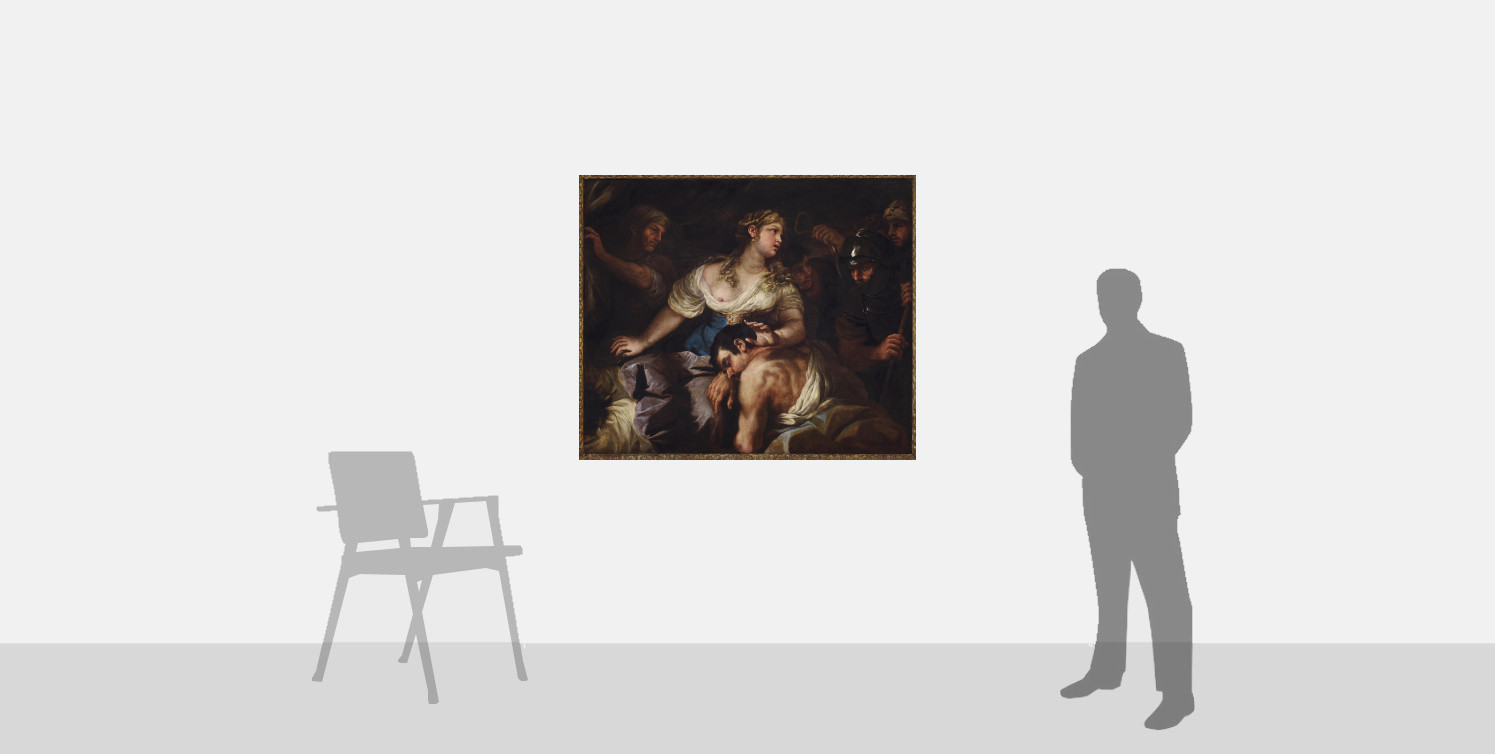
127 x 149.8 cm (50 x 59 in.)
Provenance
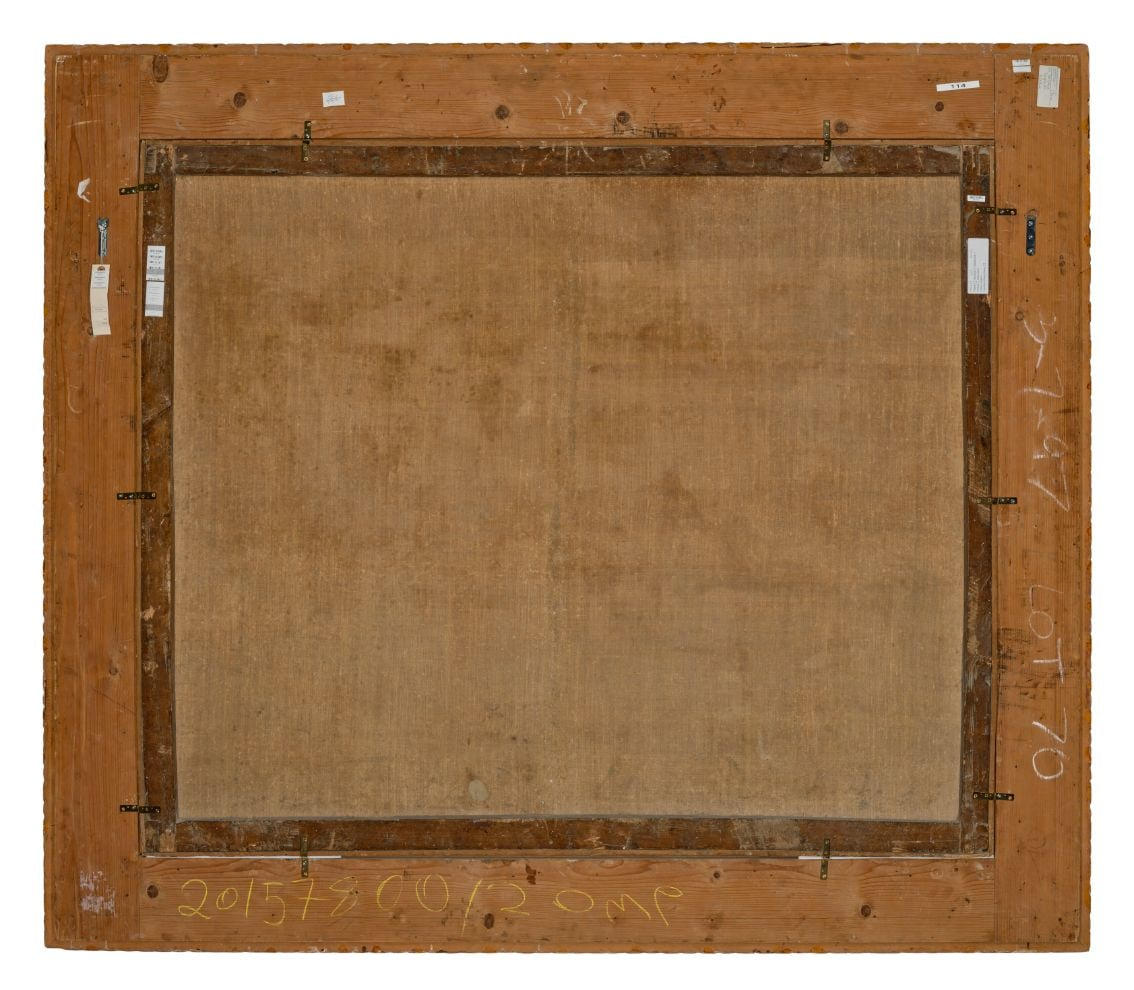
Sale 'Property of a Nobleman', Sotheby's, London, 3 July 1997, lot 70,
Private collection.
Literature
O. Ferrari and G. Scavizzi, Luca Giordano, 1966, I, p. 45; II, pp. 17 and 364.
A. Pigler, Barockthemen, Budapest, 1974, I, p. 124, where the 'lost' Samson and Delilah is wrongly identified with the picture in the Harrach Collection.
O. Ferrari and G. Scavizzi, Luca Giordano: L'Opera Completa, 1992, I, pp. 38 and 399.
O. Ferrari, 'Dipinti', in Luca Giordano. Nuove ricerche e inediti, Milan, 2003, p. 27, no. A02, dated to circa 1650–1653.
G. Scavizzi, Luca Giordano: la vita e le opere, Naples, 2017, p. 46, p. 50, fig. 14.
Description
The dynamic composition and atmospheric handling of paint in Luca Giordano’s Samson and Delilah reflect a moment in the artist’s career when he turned to the models of painters of the Venetian Renaissance, including Titian, Tintoretto and Jacopo Bassano. Having spent time visiting Rome, Venice and Parma in the 1650s, by the end of the decade his ceaseless experimentation in mixing the styles of various artists he had encountered, led him to create an exuberantly Baroque visual language, bringing new light and colour to Neapolitan painting, as well as demonstrating a preference for the ‘grand manner’ of Roman artists such as Pietro da Cortona. The energetic brushwork and dramatic tonal range of the present painting clearly reflect the influence of Titian, especially later paintings such as his Christ crowned with thorns in the Alte Pinakothek, Munich (fig. 1). The luminosity of the scene is evocative of other paintings made in the mid-to-late 1650s, including Tribute Money (Palazzo Barberini, Rome) or the monumental Crucifixion of Saint Peter (Gallerie dell’Accademia, Venice, fig. 2). Furthermore, in his 2017 monograph, Giuseppe Scavizzi notes the important influence of Rubens, both on the narrative composition of the present painting, and also on the treatment of the figures.[1] He notes that Giordano was likely familiar with Rubens’ depiction of the same subject, today in the National Gallery, London, through an engraving by Jacob Matham (fig. 3). The voluptuous Delilah and muscular sleeping Samson in Giordano’s painting certainly seem to echo the spirit of the Flemish painter in the earlier work.
This compelling work by Giordano initially belonged to the wealth Flemish merchant Gaspar Roomer (d. 1674), an important patron and collector based primarily in Naples, who build a magnificent collection of Roman, Neapolitan and Flemish artists. We know this thanks to the writings of Bernardo de’ Dominici, who recorded in his Vite dei Pittori that Roomer acquired ‘una tela di sette palmi’ from Giordano, depicting Samson and Delilah. However, the painting was not to Roomer’s taste, on account of Giordano’s clear adoption of elements of Venetian painting. Indeed, at this time the artist painted several works after Venetian masters such as Titian and Tintoretto, even selling these as originals to patrons including Roomer. In an act of appeasement to the Flemish merchant, Giordano agreed to paint further pictures for him, which led to a fruitful artist-patron relationship.
By the time of his death in 1674, Roomer had amassed the largest collection in Naples, and his relationships with and support of artists from the city contributed significantly to the development of Neapolitan painting. In addition to works by Giordano, his collection included pieces by Anthony van Dyck, Simon Vouet, Valentin de Boulogne, Jusepe de Ribera, Carlo Saraceni, Giovanni Battista Caraciolo, Massimo Stanzione and Andrea Falcone, and Flemish artists Leonard Bramer, Paul Bril, and Cornelis van Poelenburch.
Fig. 1 – Titian, Christ crowned with thorns, c. 1570, oil on canvas, 280 x 182 cm. Alte Pinakothek Munich, no. 2272.
Fig. 2 – Luca Giordano, Crucifixion of Saint Peter, c. 1659–60, oil on canvas, 211.5 x 273.3 cm. Gallerie dell’Accademia, Venice, no. 751.
Fig. 3 – Peter Paul Rubens, Samson and Delilah, c. 1609–10, oil on wood, 185 × 205 cm. National Gallery, London, NG6461.
[1] G. Scavizzi, Luca Giordano: la vita e le opere, Naples, 2017, p. 46.