
Damien Hirst
b. 1965, Bristol
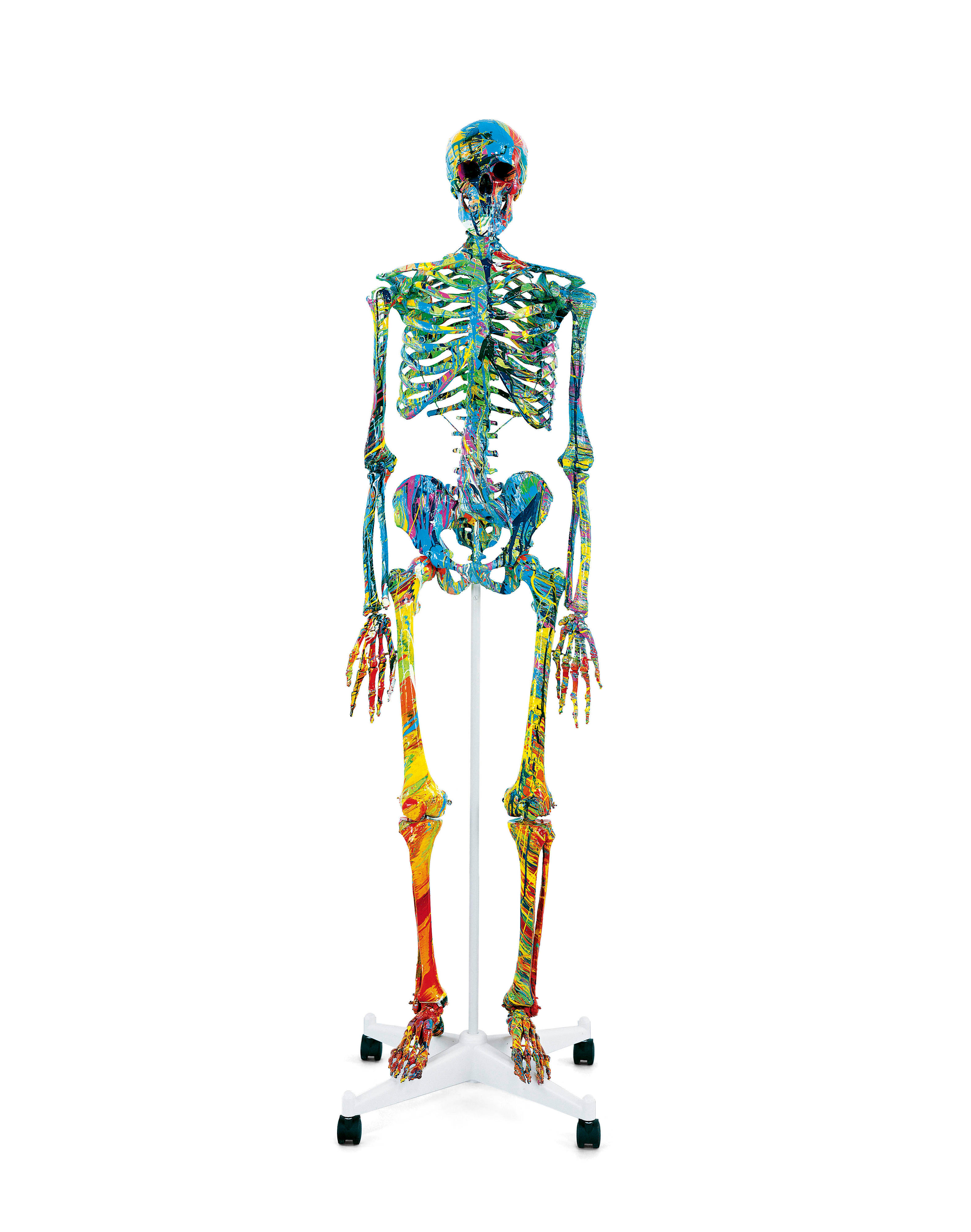
St. Vitus’ Dance
2008
Household gloss on plastic skeleton
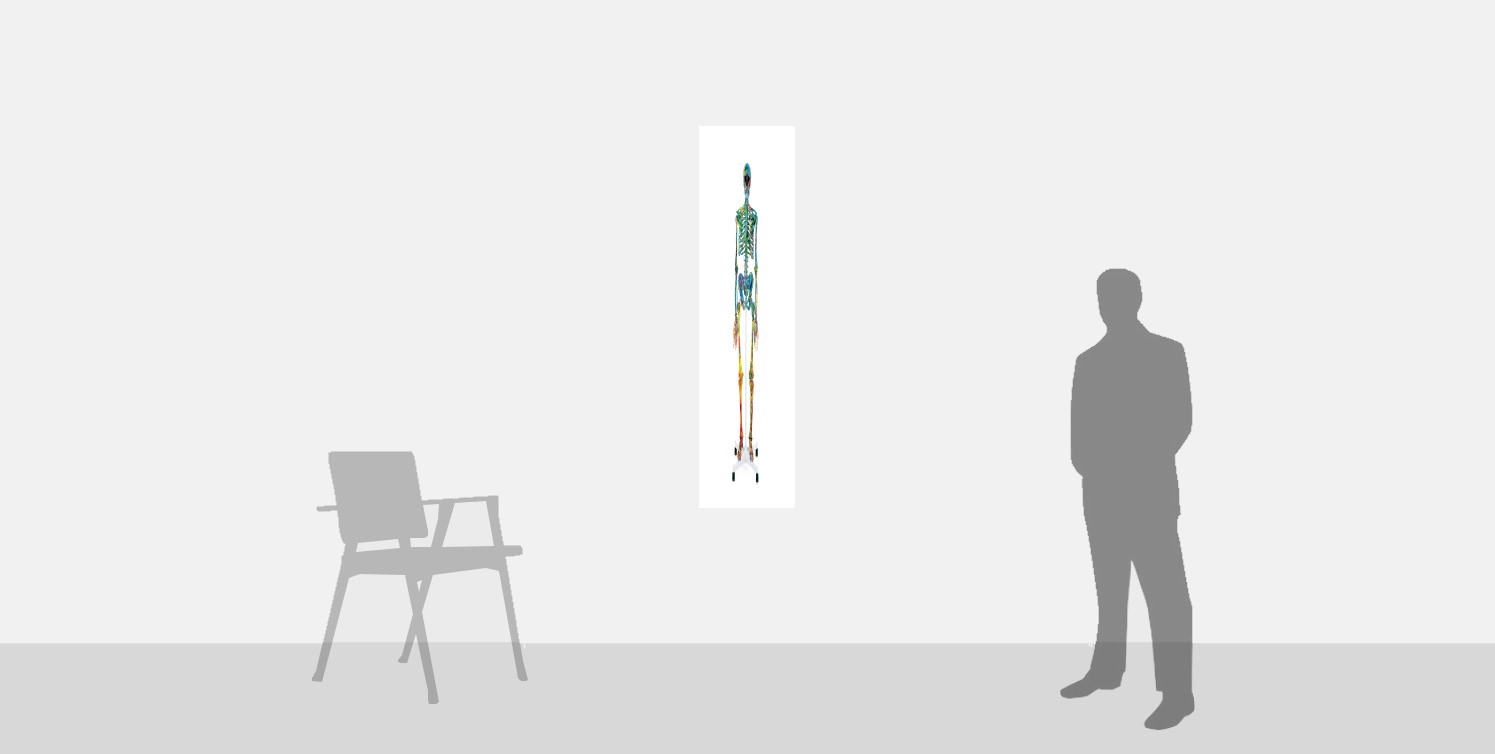
170 x 42.5 x 43.5 cm (66 7/8 x 16 3/4 x 17 1/8 in.)
Provenance
Description
The acclaimed and provocative British artist Damien Hirst was born in Bristol in 1965, but grew up in Leeds. He was raised in the Catholic faith, attending a primary school run by nuns—an upbringing which would go on to influence his work. In 1984, after having struggled with academics, Hirst moved to London and began working in construction. In 1986, upon his second application, he was accepted into Goldsmiths College of Art at the University of London, where he would go on to obtain a Bachelors of Fine Arts.
While still a student, Hirst staged an exhibition alongside his peers in 1988. Entitled Freeze, the exhibition included works from a number of artists that would later form the Young British Artists (YBA) group, including Mat Collishaw, Sarah Lucas, and Michael Landy. His works at Freeze included repurposed materials—something that he would continue to do in future works.
Many of Hirst’s works explore uncertain aspects of the human experience, focusing on themes of mortality and religion. His use of animal carcasses suspended in formaldehyde, dead insects, casts of skulls, and other morbid materials, has provoked much controversy.
While the human skull is a signature motif in Hirst’s oeuvre, he has also incorporated the form of entire skeletons into his subversive artistic practice. This work, made in 2008, just a year after his infamous diamond-encrusted skull For the Love of God, comprises a plastic skeleton, like those used to teach anatomy to students of medicine and of biology, painted in household glosses in a multitude of colours. It featured in the major sale of Hirst's work at Sotheby's London, curated by the artist himself, Beautiful Inside My Head Forever, in September 2008.The title St. Vitus’ Dance may refer both to the medieval tradition of dancing on the festival of Saint Vitus, who was associated with healing, and who is sometimes considered the patron saint of dancers, and also to the medical condition Sydenham's chorea, which is sometimes called Saint Vitus Dance due to the uncontrollable, sudden jerking movements that characterise the disorder. Playing on the various connotations of the titular term, Hirst imbues the artwork with his quintessentially subversive and ambiguous touch, creating a piece that embodies contradiction. Its skeletal form signifies death, while the vibrant colours imply a sense of life; the title alludes both to religious veneration and the hope of healing, and to an acute medical condition. As in so much of Hirst’s oeuvre, this eye-catching artwork is loaded with meaning below its colourful exterior, causing us to question our relationship to traditional symbols, and meditate on the nature of belief, healing, and mortality.