
Stephen Appleby-Barr
b. 1981, Toronto, Canada
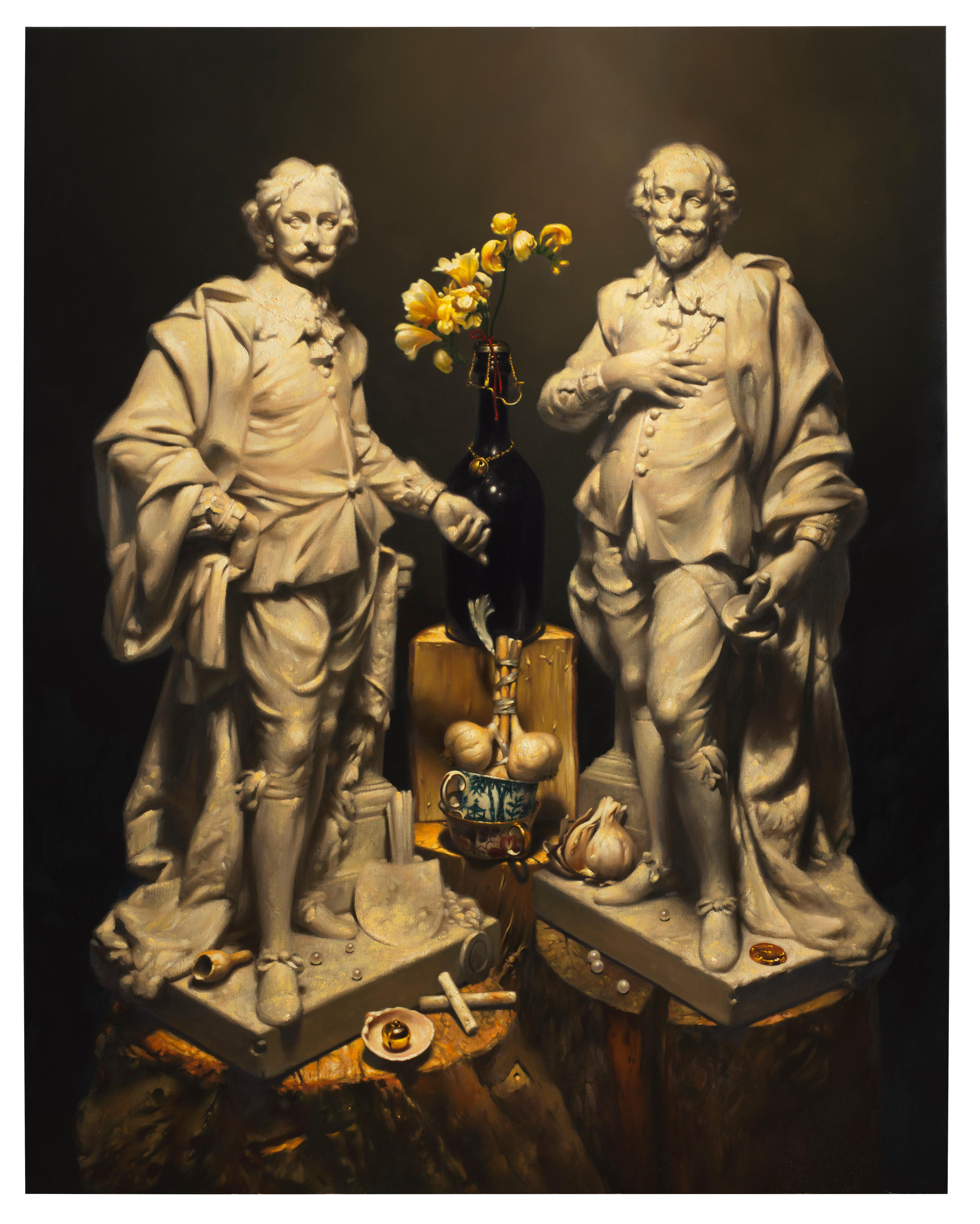
A Difficult Subject
2020
Oil on linen
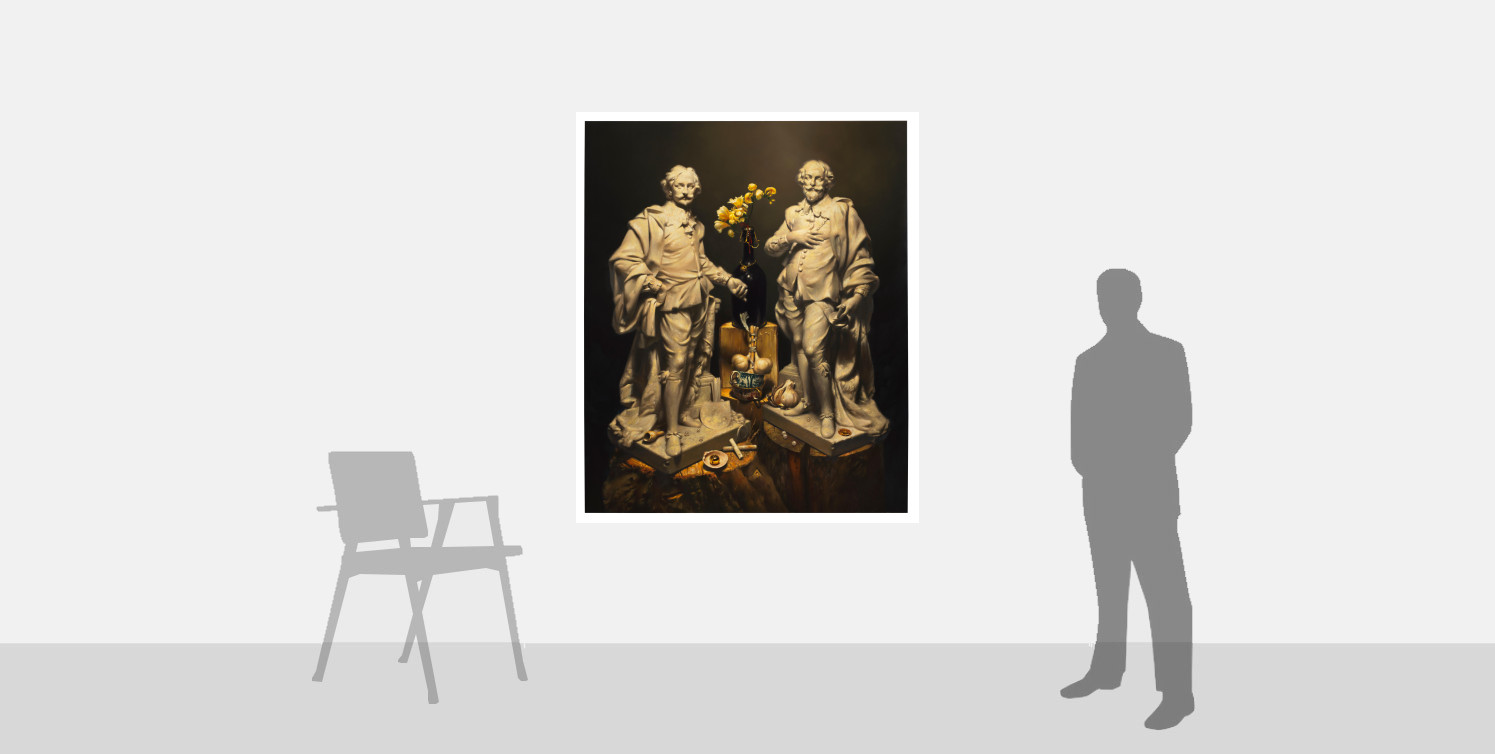
182.9 x 152.4 cm (72 x 60 in.)
Description
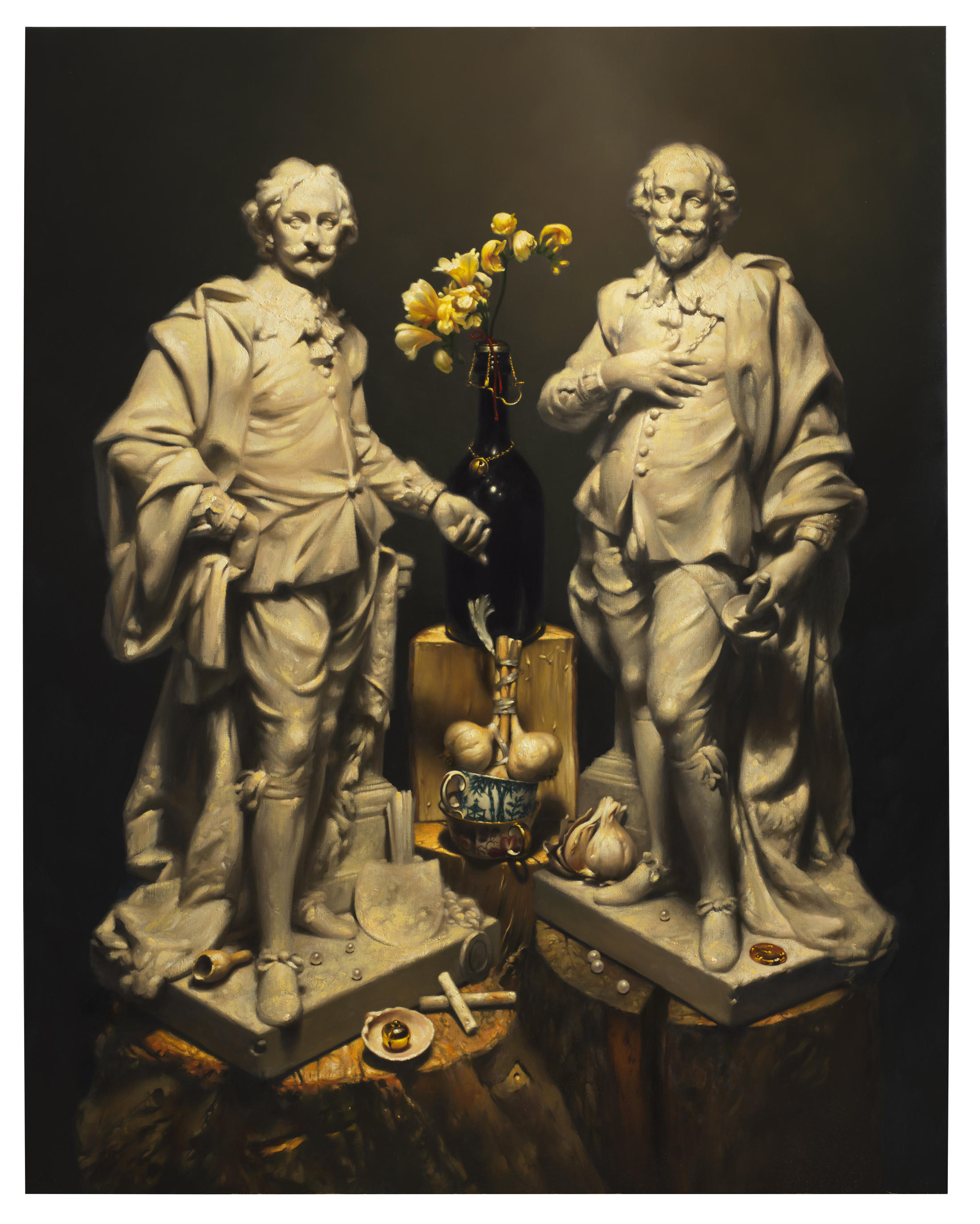
This striking painting poses statues of Anthony van Dyck and Peter Paul Rubens as if engaged in conversation. Appleby-Barr came across the two figures, by the eighteenth-century Flemish sculptor John Michael Rysbrack, in a private collection and was immediately drawn to the way they complement one another, the positioning of their limbs and the cant of their bodies forming a harmonious composition.
The two master painters have been subsumed into Appleby-Barr’s allusive painterly universe, mounted atop roughly textured wooden blocks, and surrounded by his signature assemblage of scattered objects. Their prominent and deliberate positioning recalls the attributes of martyred saints, or the symbolic plants and animals found at the feet of religious figures in old master paintings. Appleby-Barr’s objects resist fixed meaning, sending viewers on a postmodern chase for deferred significance. They hint at symbolism as well as echoing the colour and texture of the two sculptures.
Many of these mysterious items are drawn from the artist’s life. Snapped sections of clay pipe found while mudlarking along the banks of the Thames form a cross, shells collected while swimming near the white cliffs of dover hold bells bought in Berlin, Royal Crown Derby porcelain cups which used to belong to the artist’s mother are stacked together, their gold highlights echoing the shine of a chocolate coin wrapper.
Appleby-Barr is fascinated by texture and materials, and is drawn to bulbs of garlic, with their papery skins and shining inner colours, in part for their resemblance to the plaster and other materials he uses to construct his preparatory models and maquettes. Many of the objects he chooses to include in his paintings call to the senses. Garlic is particularly sensually evocative; the papery rustle of its skin, the familiar feel of it as one splits the bulb to reveal the shiny cloves inside, and of course its powerful smell. The bell, captured in stillness, nonetheless summons the notion of sound and movement.
The ‘difficult subject’ of the title is derived from a conversation the artist had with a friend who, on seeing the painting, remarked that it seemed to be about castration. The bulbs of garlic below the bottle, and the spray of flowers bursting from it, all add up to a powerful phallic symbol. Whether the painting should be read as symbolising the emasculation of visual culture or quite the opposite remains unclear. With Appleby-Barr’s characteristic ambiguity, the painting eludes any one meaning, leaving the viewer in the dark.
The artwork described above is subject to changes in availability and price without prior notice.
Where applicable ARR will be added.