

Martino Piazza da Lodi
b. c. 1475/80, Lodi, Lombardy
d. 1523, Lodi, Lombardy
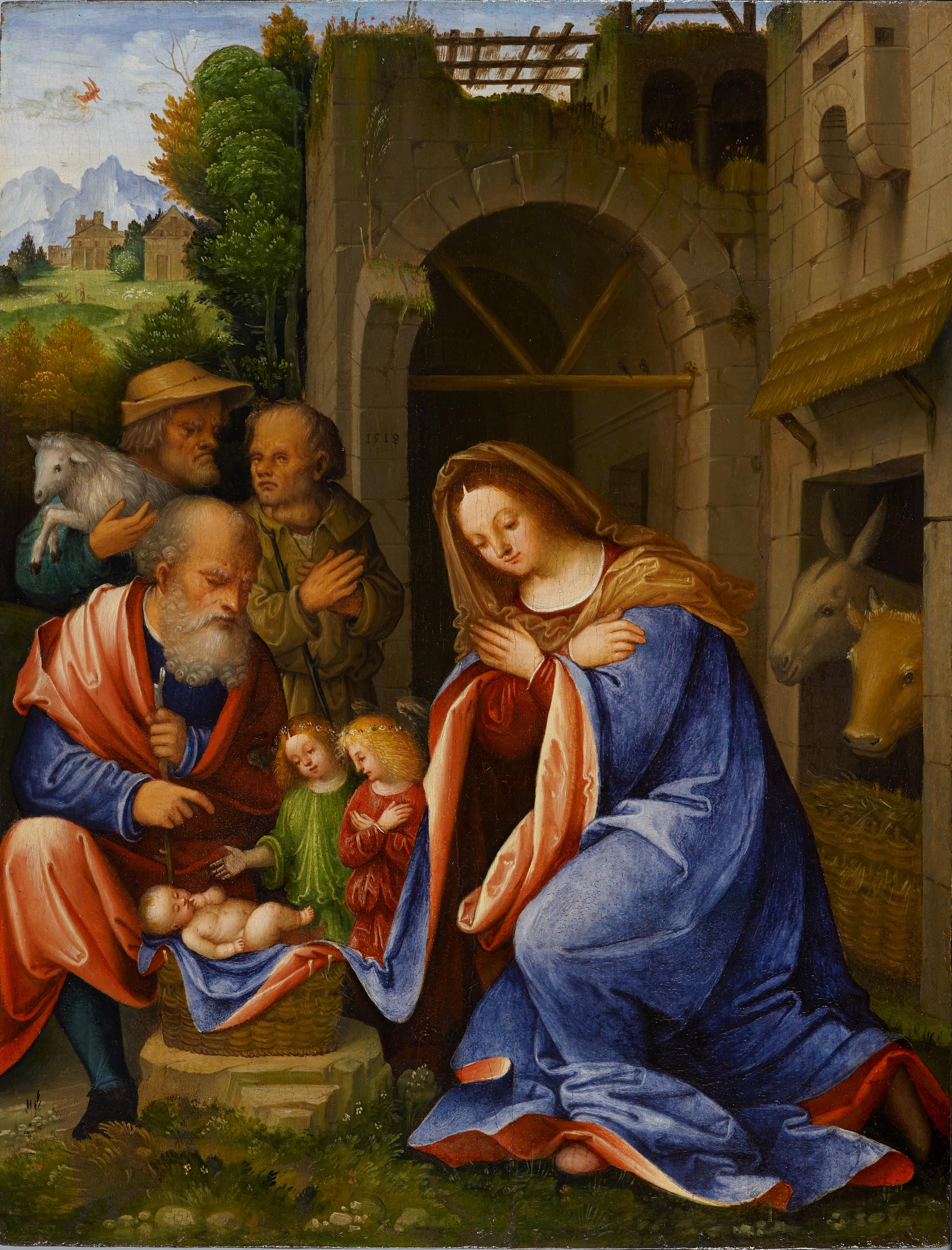
The Adoration of the Shepherds
1518
Oil on panel
49 x 37 cm (19 1/4 x 14 5/8 in.)
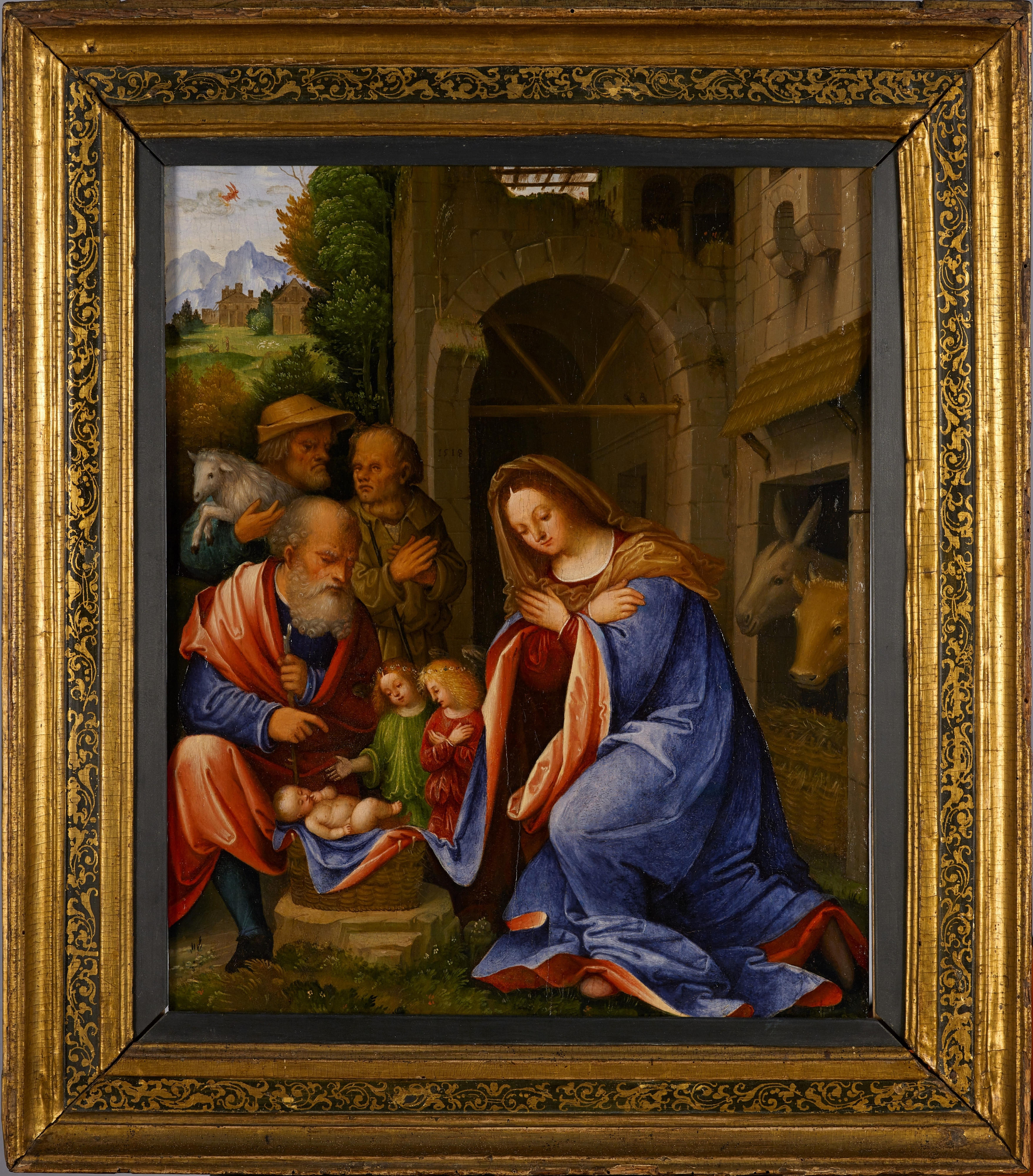
With frame: 63 x 55 x 5 cm (24 3/4 x 21 5/8 x 2 in.)
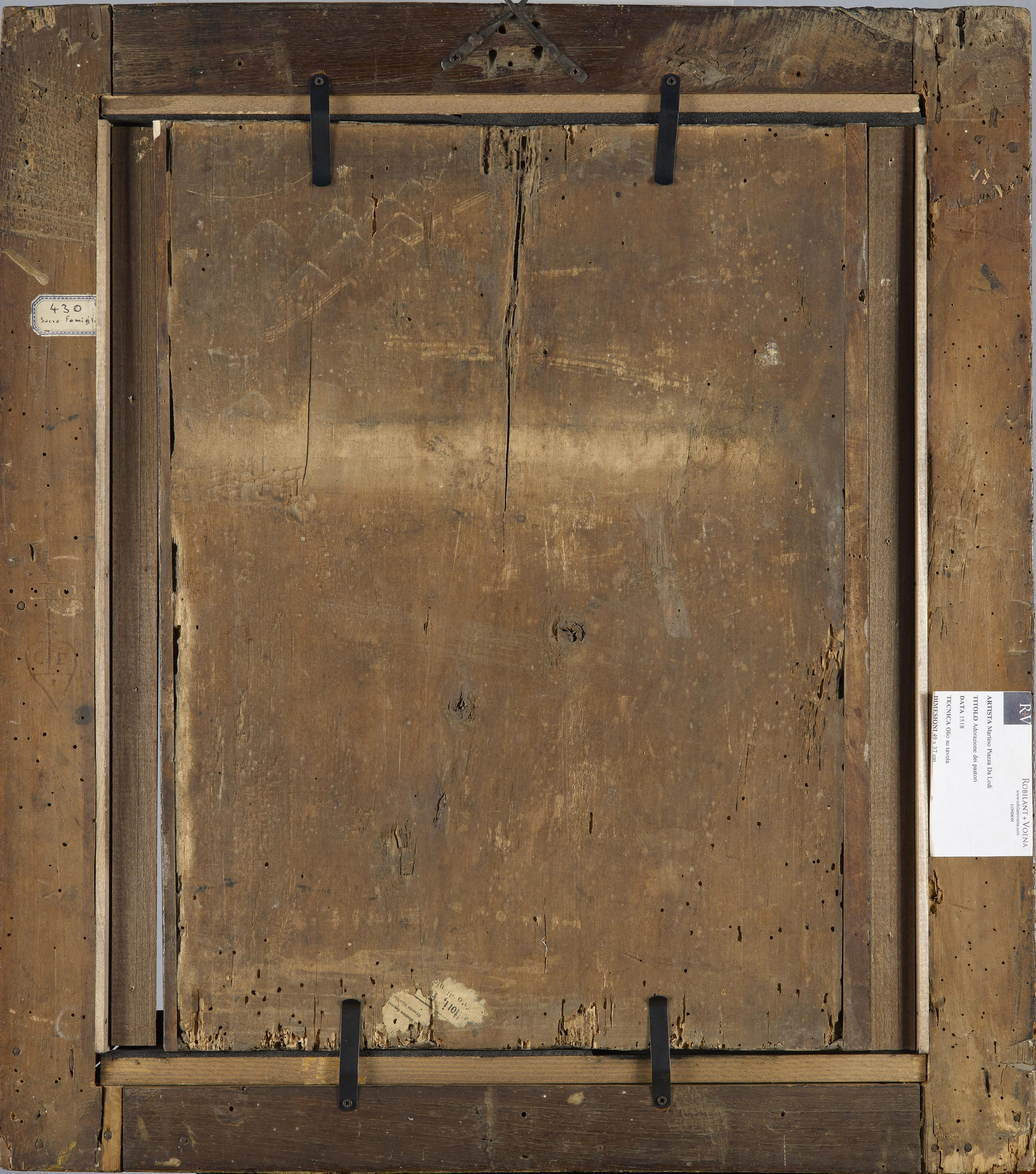
Provenance
Luigi Bonomi collection, Milan,
with Marco Voena, Milan,
Private collection, Monaco.
Literature
B. Berenson, Italian pictures of the
Renaissance. Central Italian and North Italian Schools, I, London, 1968, p. 336.
F. Moro, ed., M. Gregori, ‘Martino Piazza’, in Pittura tra Adda e Serio. Lodi, Treviglio,
Caravaggio, Crema, Milan, 1987, pp. 105 –107.
F. Moro, ‘Due fratelli, due diversi percorsi: Martino e Alberto Piazza’, in Studi di storia dell'arte, 1997, pp. 80, 130.
Description
The present Adoration of the Shepherds was first attributed to Martino Piazza in 1987. The date of 1518, inscribed on a stone in the ruined arch at the centre of the scene, offered the critical clue which allowed Moro to reconstruct the youthful activity of the painter, disaggregating it from that of his brother Alberto. To this corpus Moro added the votive fresco depicting the Madonna with Child and a donor to the right of the presbytery in the church of Santa Maria della Fontana in Lodi, stylistically consistent with the present panel, and thus establishing that the artist was active in his hometown at the end of the second decade of the sixteenth century; indeed, no other work by Martino in Lodi is known.
A replica of the present painting, with some variations, dated 1520, preserved in the Sessa Fumagalli collection in Milan, was discussed by Bernard Berenson (Italian Pictures of the Renaissance: Central Italian and Northern Italian School, London, 1968, p. 336, fig. 1468) as the work of Martino (with the participation of Alberto). Moro assigns this painting to a close collaborator of Martino (perhaps one of his three sons or his pupil Cesare Magni), who he posits is also the author of the fresco depicting the Rest on the Flight into Egypt in the choir of the church of Santa Chiara Nuova in Lodi.
Critics have attributed the clarity of the light and the meticulous detail of Martino's works to Northern influences. In the case of the present work, Moro notes its close relationship with Dürer's cycle of prints depicting the the Life of Mary in 1511, and points to some of the architectural details, such as the scenographic ruined arch at the centre of the scene. Such references to a transalpine artistic exchange become more pronounced in the works executed by Martino in the following decade, such as the Adoration of the Shepherds at the Pinacoteca Ambrosiana in Milan (signed with the monogram "MPP"), in which the landscape in the background is influenced by the magically atmospheric visions of artists such as Grünewald and Altdorfer, while the nature of the panel under examination is still mindful of the painter's Milanese training in the Leonardesque context.