
Michele Marieschi
b. 1710, Venice
d. 1744, Venice
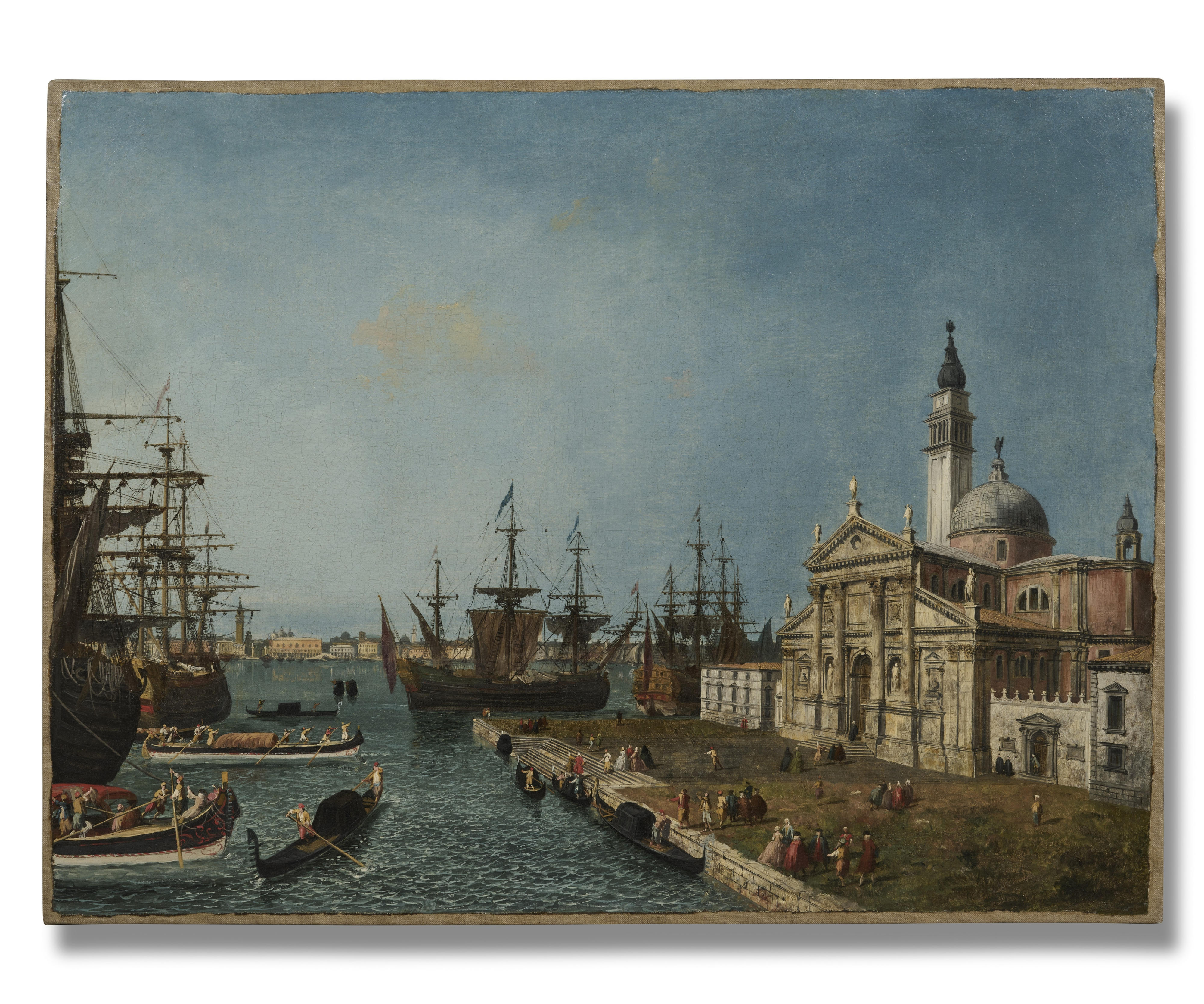
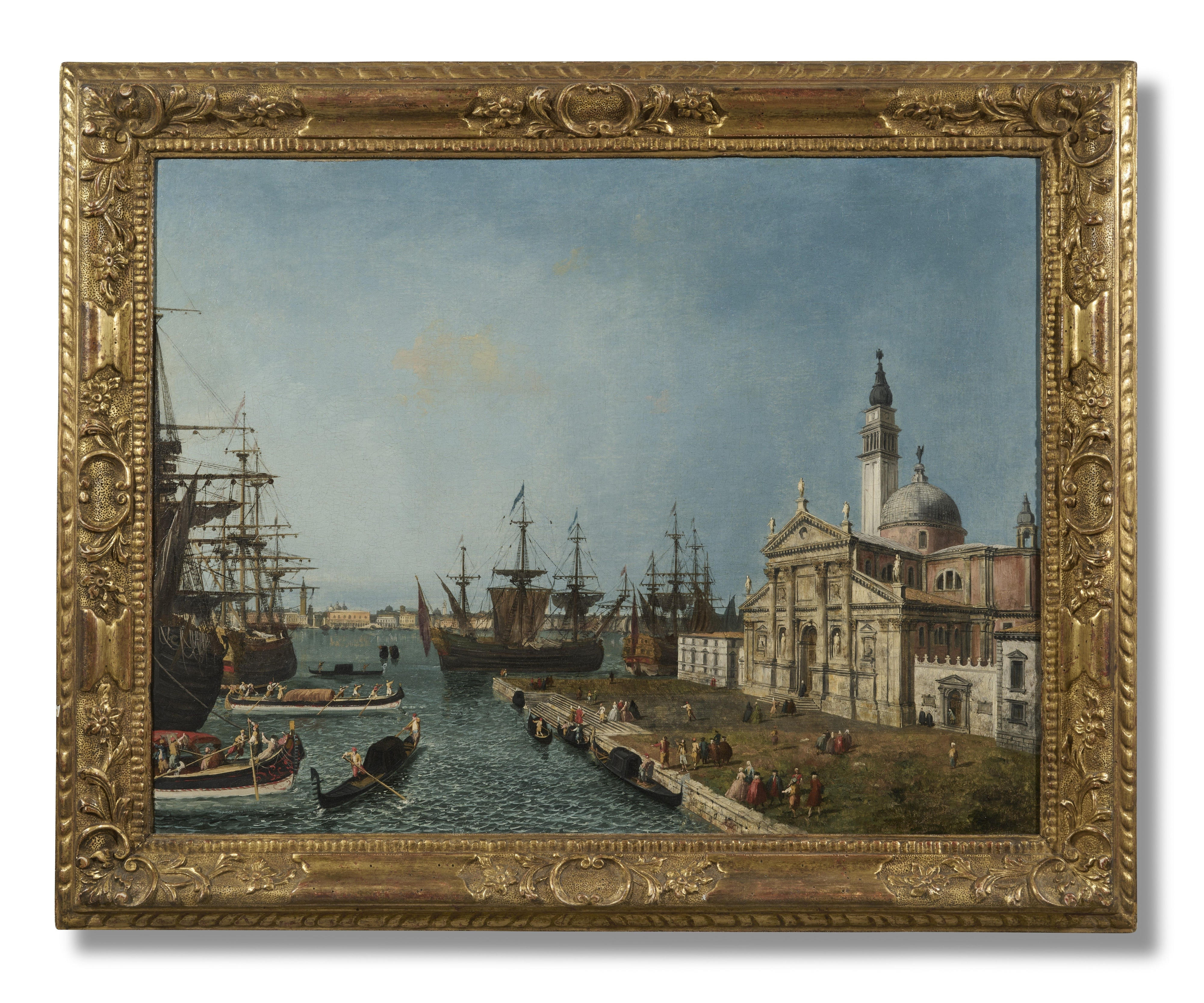
The Bacino di San Marco from the Island of San Giorgio Maggiore
late 1730s
Oil on canvas
53.5 x 70.5 cm (21 1/8 x 27 3/4 in.)
With frame: 66.5 x 83 cm ( 26 1/4 x 32 3/4 in.)
Provenance
Christie’s, London, 24 November 1967, lot 23;
Richard Green, London, 1970;
Galleria Caretto, Turin, 1971;
Bruno Meissner, Zurich;
Private collection, France;
Galerie Sanct Lucas, Vienna;
Robilant + Voena, London;
Private collection, Switzerland.
Literature
E. Martini, La pittura del Settecento veneto, Trieste, 1981, p. 537.
R. Toledano, Michele Marieschi. L’opera completa, Milan, 1988, p. 96, cat. n. V.22.1.
M. Manzelli, Michele Marieschi e il suo alter ego Francesco Albotto, Venice, 1991, n. A15.2.
R. Toledano, Michele Marieschi. Catalogo ragionato. Seconda edizione riveduta e corretta, Milan, 1995, pp. 94-95, cat.
n. V.28.d, pp. 98-99.F. Montecuccoli degli Erri and F. Pedrocco, Michele Marieschi. La vita, l’ambiente, l’opera, Milan, 1999, p. 383.
F. Pedrocco, in G. Pavanello and A. Craievich (eds.), Canaletto. Venezia e i suoi splendori, exh. cat., Venice, 2008, pp. 274-265.
R. Toledano, in D. Dotti (ed.), Lo splendore di Venezia. Canaletto, Bellotto, Guardi e i vedutisti dell’Ottocento, exh. cat., Milan, 2016, pp. 116-117.
Description
The building that dominates the right foreground of this painting is the church of the Benedictine monks, dedicated to San Giorgio Maggiore, located on the island of the same name. The construction of the church, with its grand façade following a design by Andrea Palladio, begun in 1565 and was completed a century later by Simone Sorella, and is considered to be among the architect's most important architectural works in Venice.
In this painting, Marieschi accentuates the perspective deploying various artifices, altering the orientation of the wharf and the façade of the building, and increasing the distance of the church from the Molo of San Marco in the background, thus giving greater prominence to the detailing of the façade, represented with a rich impasto and depth of texture. The Molo of San Marco, with the façade of the Doge's Palace, is depicted in the slight haze of the background with soft, diluted tones, while the foreground is cluttered with anchored sailing ships and the busy activity of smaller boats.
Three other versions of the subject are known (cf. R. Toledano, Michele Marieschi, Milan, 1995, pp. 94-95), which differ from the present painting in the number and type of boats and figures, and in one case, number V. 28.a in Toledano's catalogue, now in a private collection in London, from a point of view shifted slightly to the right and lower.
As both Martini and Toledano emphasise, of all the versions, this is certainly the most mature and of the highest quality, enriched by the presence of numerous boats, a particularly brilliant colour palette, and the use of an extremely rich impasto.
Due to these attributes, both scholars place this work in the full maturity of the artist, in the late 1730s, positioning it close to the works that Marieschi painted for one of the great collectors of the era, Marshal Matthias Von Schulenburg.
Of all the various known versions, this is also the painting that most closely resembles the print included in the notebook of engravings Magnificentiores Selectionesque Urbis Venetiarum Prospectus published in Venice in 1741 (cf. R. Toledano, 1995, p. 96), both in terms of the viewpoint and the details of the boats.