
Frans Vervloet
b. 1795, Mechelen
d. 1872, Venice
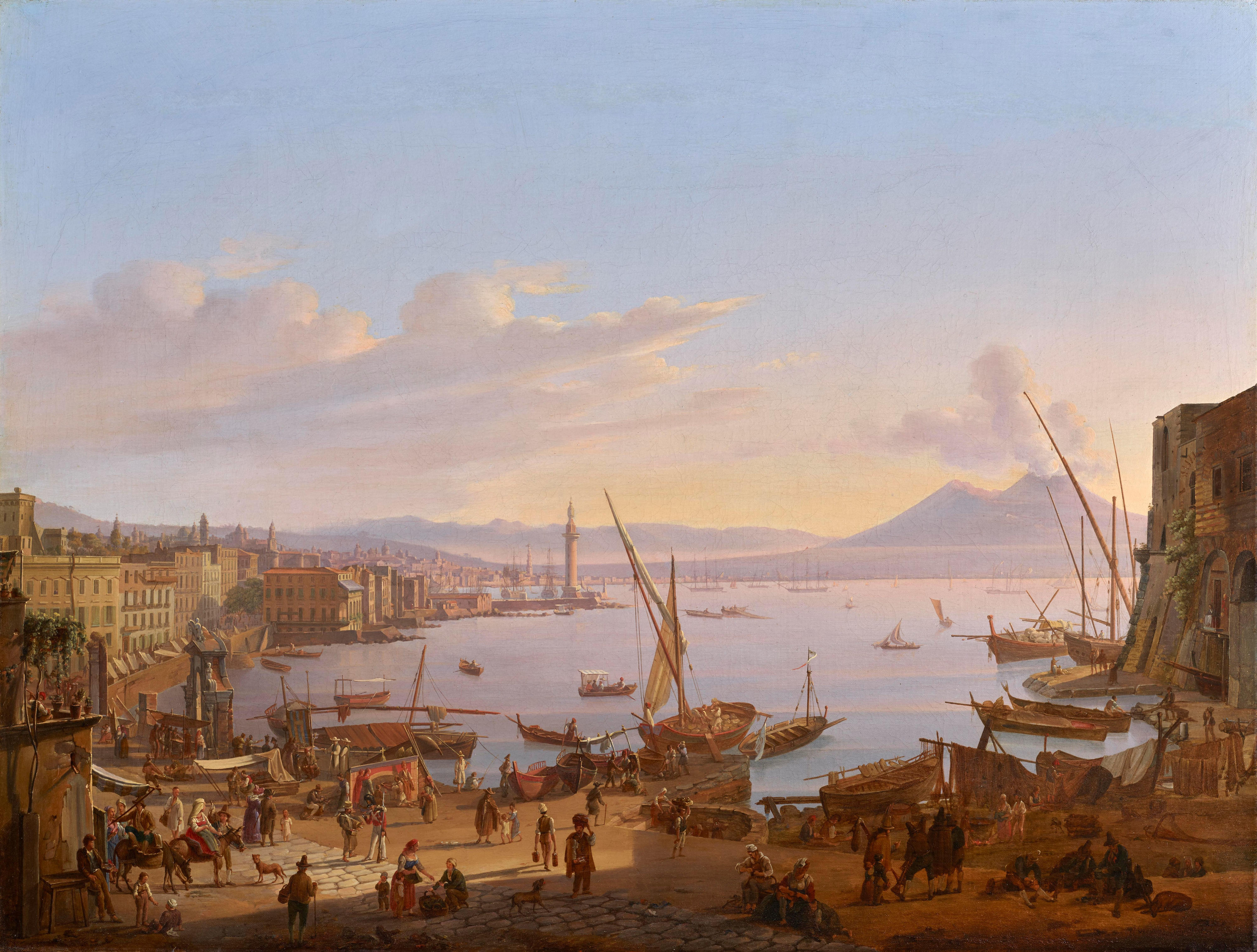
The Bay of Naples with the Lighthouse, and Vesuvius Beyond
1830
Oil on canvas
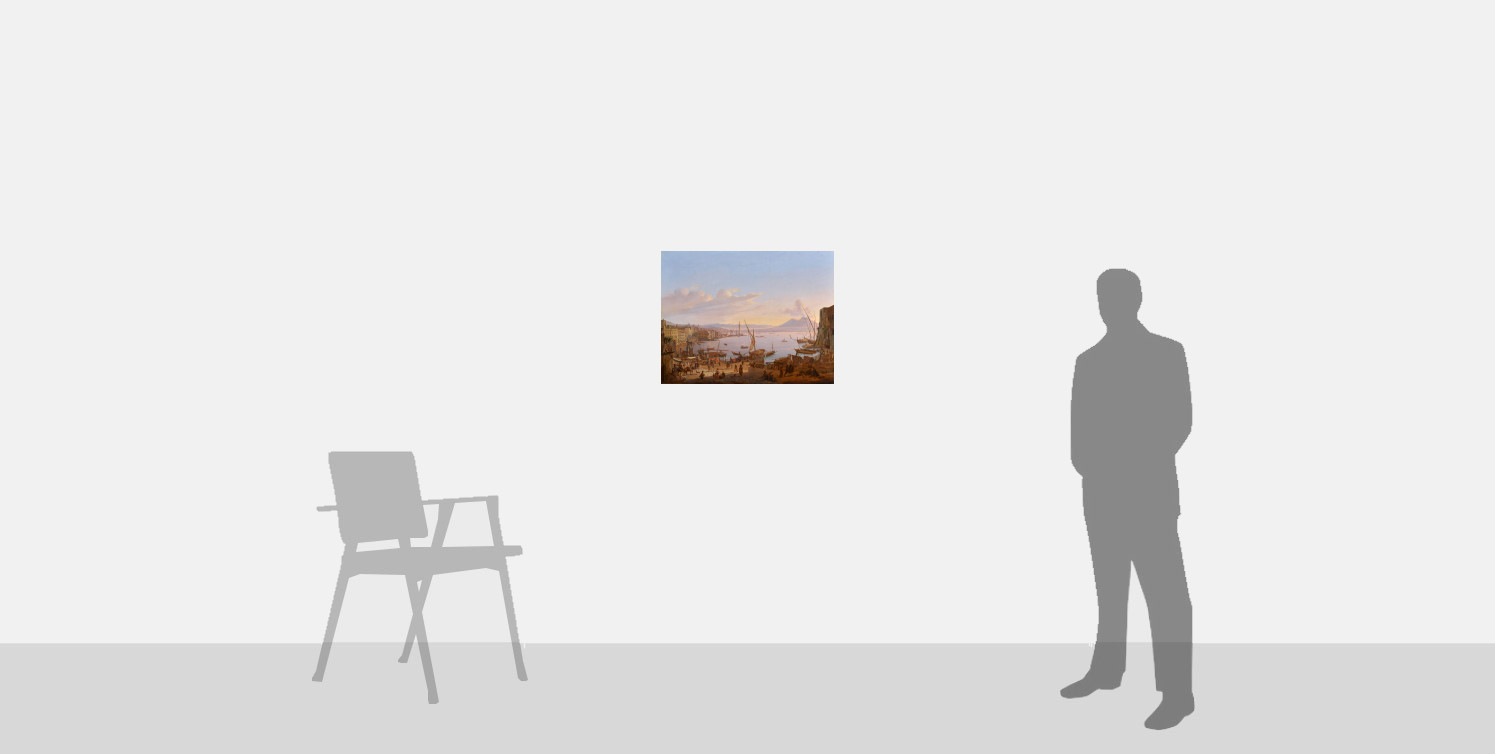
59 x 77 cm (23 1/4 x 30 1/4 in.)
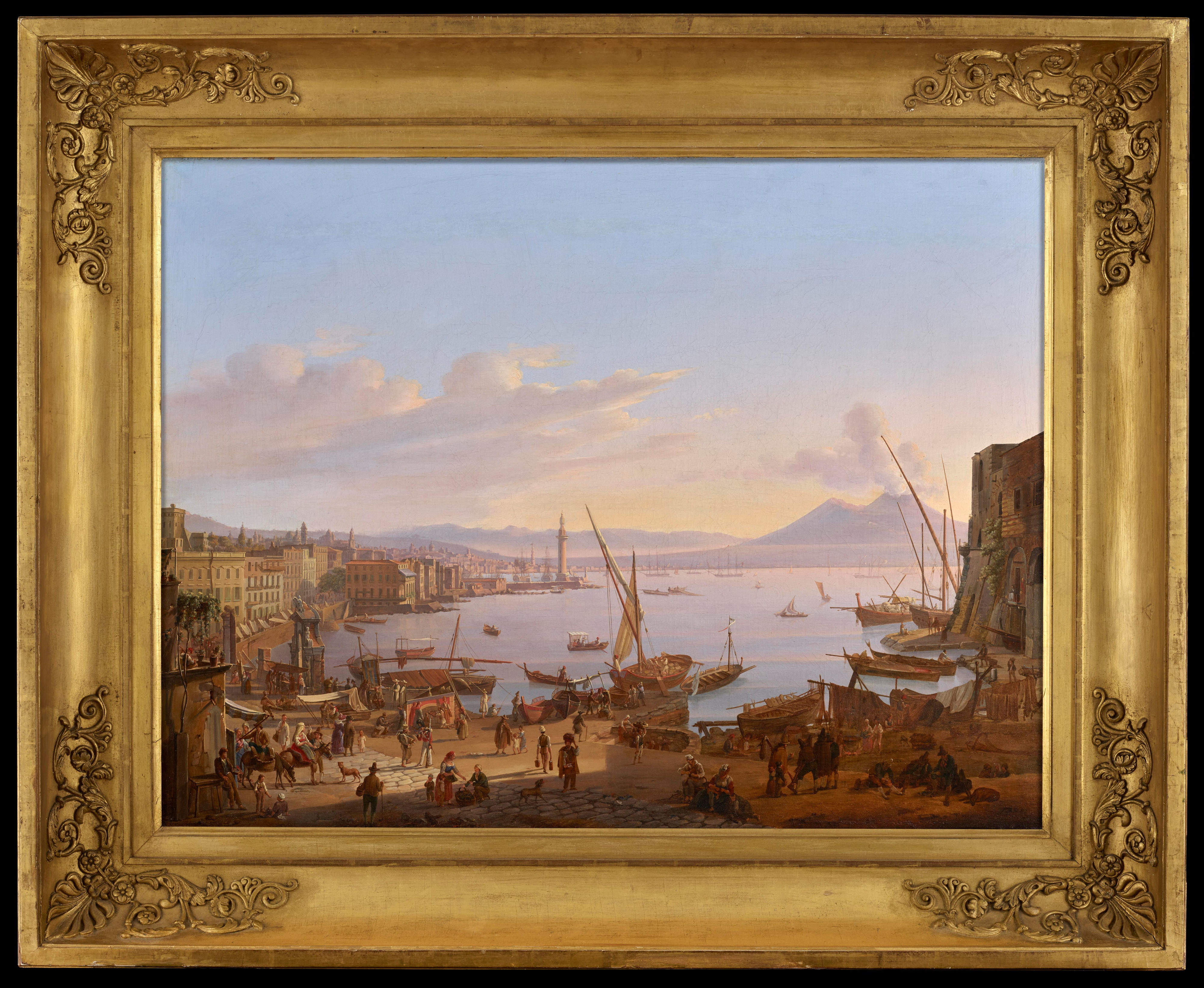
With frame: 79.5 x 97.5 cm ( 31 1/4 x 38 1/4 in.)
Provenance
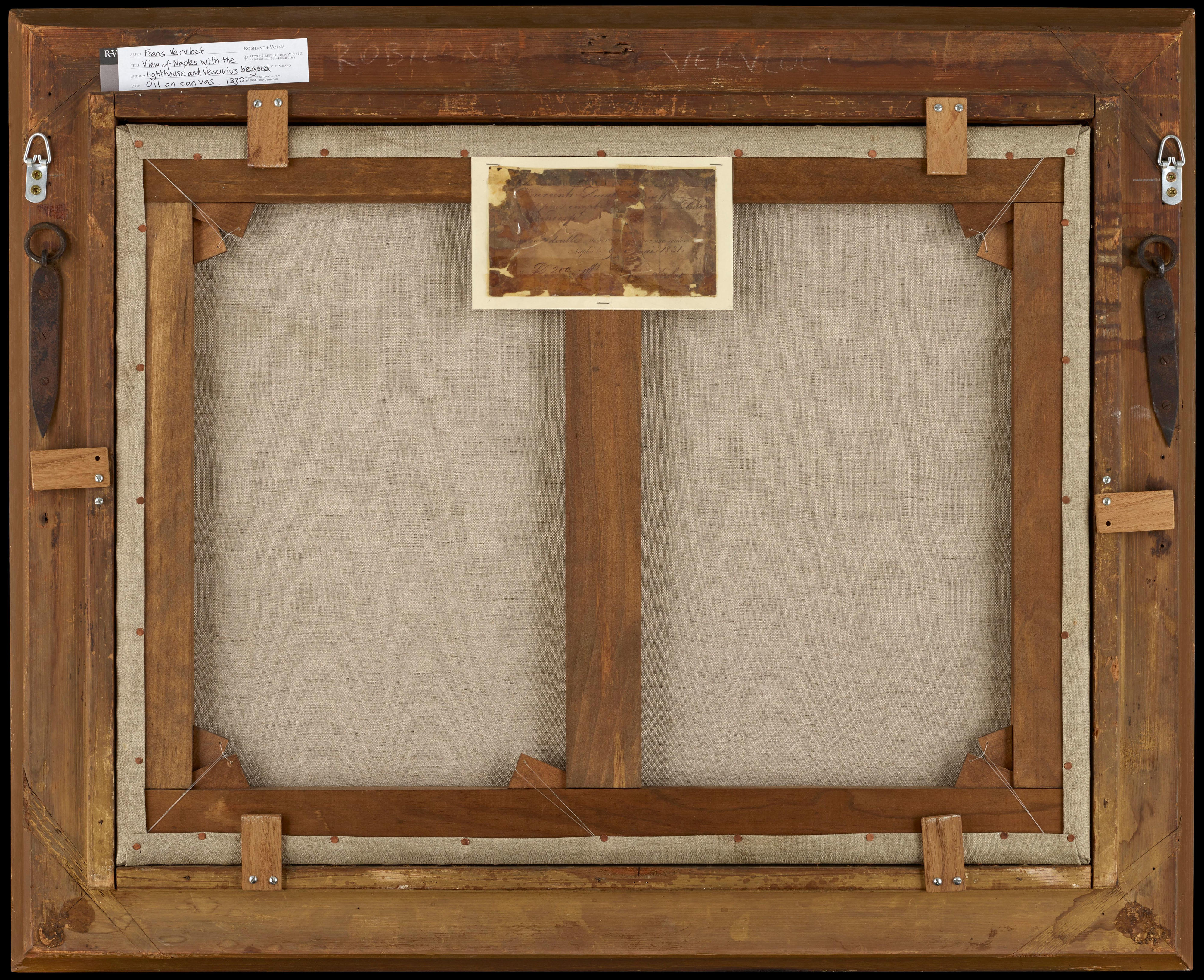
Baron F. van Hogendorp, purchased from the artist on 9 May 1831, and thence by descent;
Private collection, Netherlands;
Sotheby’s, London, 12 December 2018, lot 66;
Private collection.
Description
Born in the Belgian town of Mechelen, Frans Vervloet moved to Brussels in 1821 following initial instruction with his brother and at the local academy. A year later, the Maatschappij ter Bevordering van de Schone Kunsten awarded him a scholarship to study in Rome for two years. Vervloet excelled early on in the genre of architectural painting, executing fine church interiors, and thus the churches and ruins of Rome became his primary subject matter. His views of Rome and the campagna were coveted by discerning connoisseurs, one notable example being the Interior View of Saint Peter‘s (now Rijksmuseum, Amsterdam) purchased in 1824 by William I, King of the Netherlands.
Vervloet
settled in Naples in 1824, where he would remain for three decades. There he
befriended Anton Sminck Pitloo, a founder of the so-called Scuola di Posillipo,
of which Vervloet soon became a principal protagonist. Characterised by a clear palette, sketchy brushwork and lucid organisation, his views of Naples
and the surrounding countryside were, like those of Rome before them, sought after
by rulers and elite collectors across Europe. In 1854 Vervloet moved to Venice,
where he resided until his death. An avid traveler, he had visited the lagoon
city already in 1834–35, while other journeys in search of new scenery took him
as far as Istanbul in 1844.
The present view, dated 1830, is exemplary of Vervloet’s Neapolitan period,
during which the artist was profoundly influenced by Pitloo and his
paintings of this period, like the present one, are distinguished by their beautifully smooth
rendering of light and shadow. The soft shades of lilac and pink evoke the glow
of evening light, the gentle waves in the bay catching the setting sun. The
view shows the seafront borough of Santa Lucia on the left side, with the port lighthouse visible in the mid-distance. On the right, the façade of La Panatica di Terra - so-called because it was the site of a historic military bakery that produced biscuits for the Royal Navy of the Kingdom of the Two Sicilies during the Bourbon period - is partially visible. Presiding over the scene in the background, Vesuvius billows with smoke, a constant presence in the Neapolitan psyche.