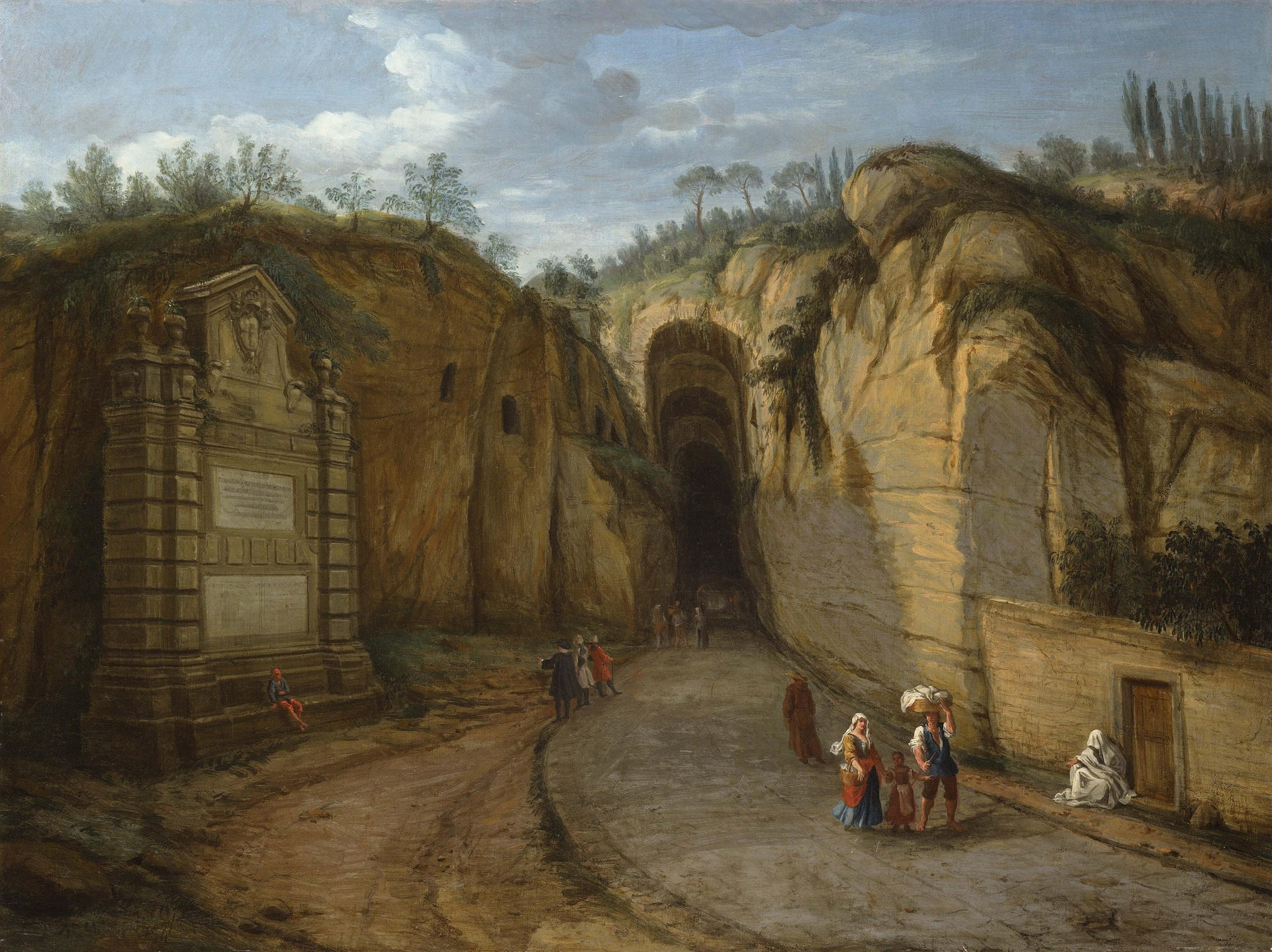
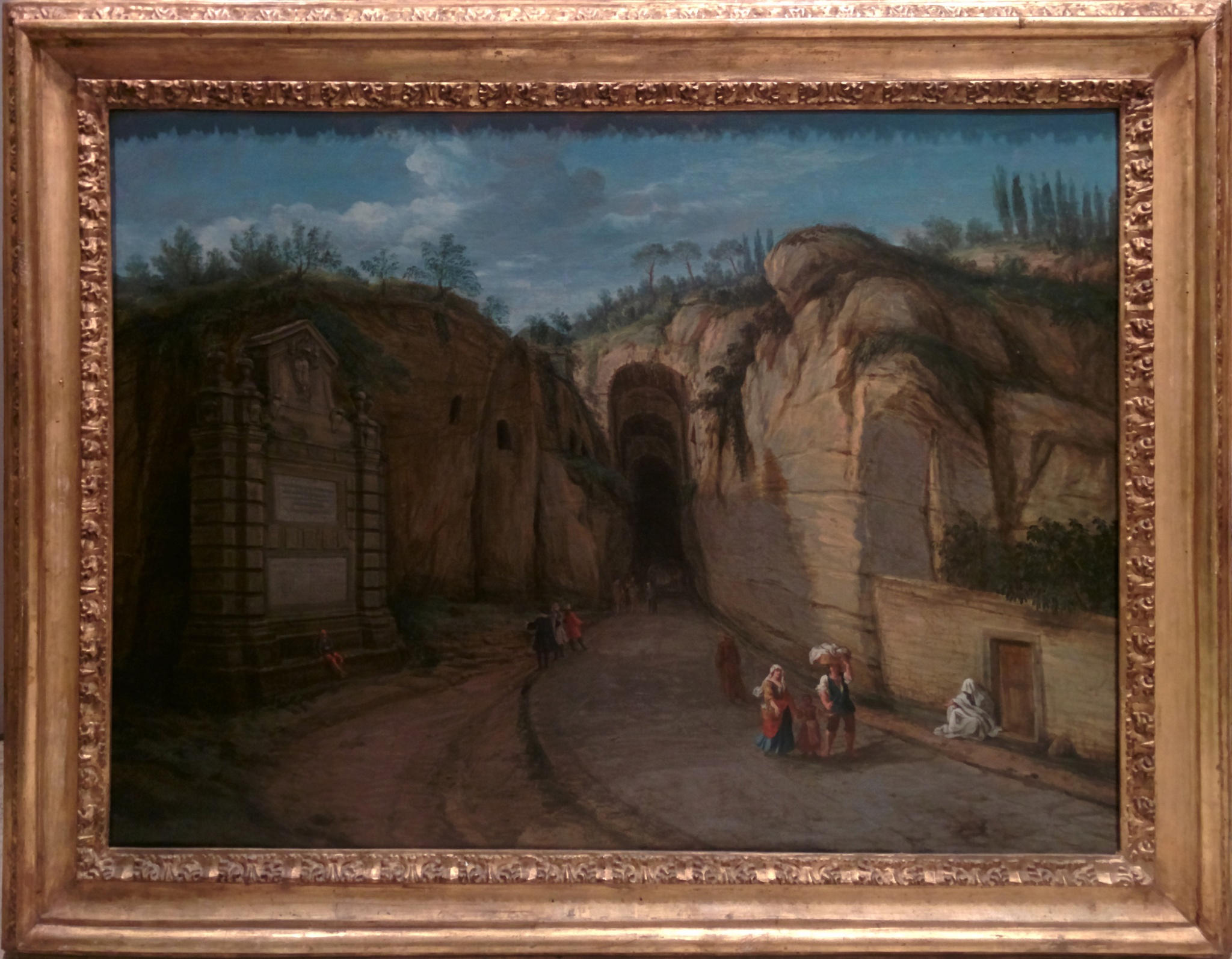

Gaspar van Wittel, called Vanvitelli
b. 1652/53, Amersfoort, near Utrecht
d. 1736, Rome
The Grotta di Posillipo, Naples
1701–1736
Oil on canvas
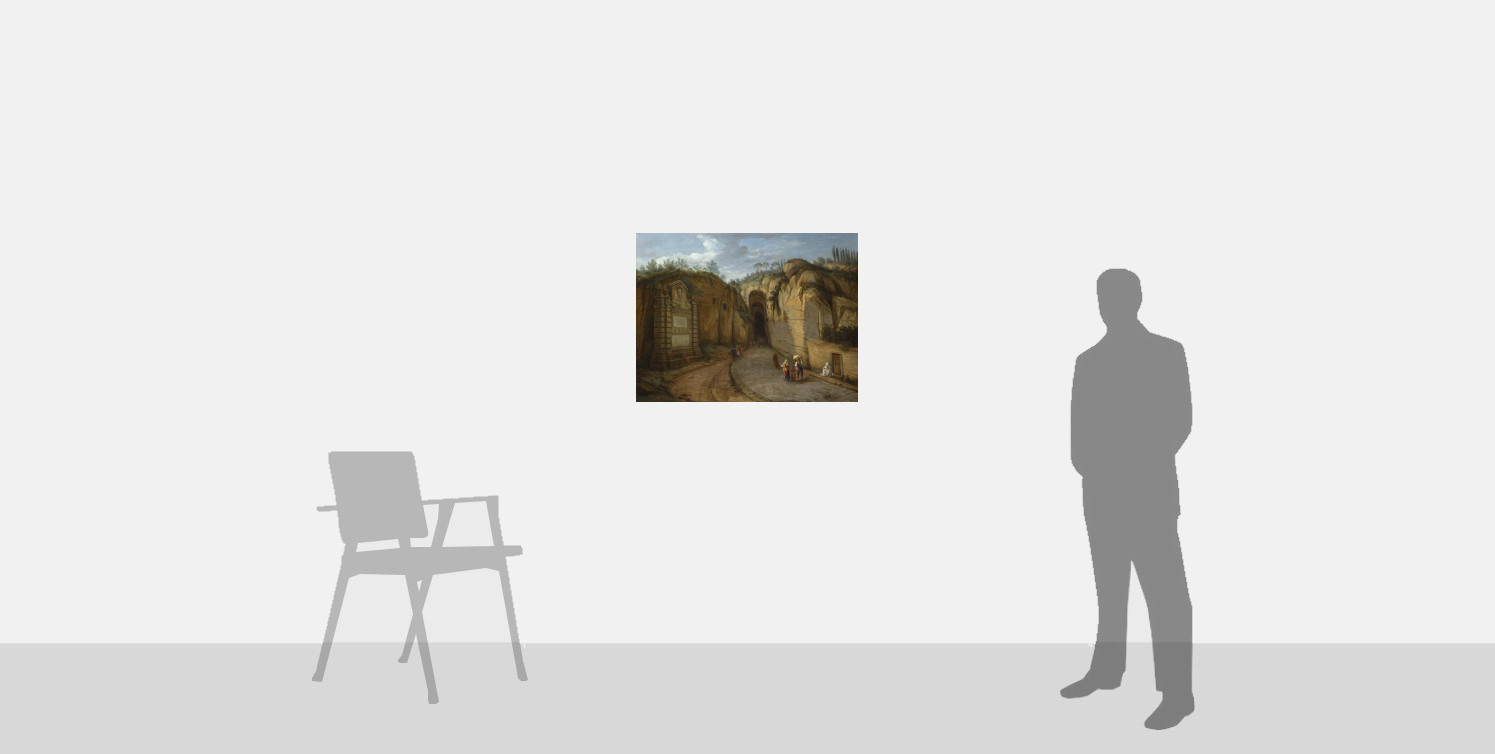
75 x 99 cm (29 1/2 x 39 in.)
Provenance
Rome, Albani collection,
Rome, Cesare Lampronti (2002).
Literature
L. Laureati, Un cardinale e un pittore, Annibale Albani e Gaspar van Wittel: una “villeggiatura” urbinate e una raccolta di vedute, in G. Cucco (ed.), Papa Albani e le arti a Urbino e a Roma (1700-1721), exhibition catalogue, Venice 2001, p. 229 (cited but not illustrated);
L. Laureati-L. Trezzani, Gaspare Vanvitelli. Catalogo delle opere, in Gaspare Vanvitelli. L’origine del vedutismo, exhibition catalogue, Rome 2002, pp. 216-217, no. 73 (cat. entry by L. Laureati).
Claudio Strinati Fabio BenziLudovica Trezzani Laura Laureati, Viviani Editori Srl, page 216-7 ill. in colour.
Description
Three views of this site were displayed in an exhibition held in 2001 of seventeenth and eighteenth century views, most of them painted by foreign artists during their journeys to Italy. Painted respectively by William Pars, Francis Towne and Thomas Jones in 1781-82, they testified to the visual appeal of the site (cf. E. Calbi, “Dipingere lo stesso luogo. La Grotta di Posillipo a Napoli”, in Un paese incantato. Italia dipinta da Thomas Jones a Corot, exhibition catalogue, ed. A. Ottani Cavina, Paris-Mantova 2001, pp. 58-63). But the artist who had first fixed the image of the site, still full of fascination despite the squalor of its surroundings, was Gaspar van Wittel. The artist, who had arrived in Naples in 1699 at the invitation of Luis de la Cerda, Duke of Medinaceli (1660-1711) and Viceroy of Naples, painted many topographical scenes for him: thirty-five of them are cited in the inventory of 1711, among others a large oil painting of the Grotto of Posillipo, signed and dated 1701, sold at Sotheby’s in London in 1997. With the addition of this and the present painting we now know of no less than thirteen different autograph versions and a wash drawing of the View of the Grotto of Posillipo, dated between 1701 and 1715. On the other hand, the preparatory drawing has not been found. Each of the known redactions differs not only in groups of figures but also in size and format, which is mainly horizontal, as in the present case, and more rarely vertical. Naturally the choice of the format, and its size, determined the extension of the view. In the View exhibited here the whole of the right zone is visible, with the portion of wall that conceals a garden with fruit trees. At the foot of the door leading into the orchard is seated the recurrent emblematic figure of a man in a white mantle which is a kind of trademark of Van Wittel. A happy family group passes in front of him, having just walked through the tunnel and therefore coming from Pozzuoli and heading towards Mergellina.
The View displayed here originally formed part, as did the View of the Waterfalls at Tivoli (private collection), of the famous Albani collection. Some years ago, studying Gaspar van Wittel’s relations with Cardinal Annibale Albani (Urbino 1682 - 1751 Rome), nipote of Pope Clement XI, I was brought into contact with this veduta and its pendant in the same collection. Lione Pascoli, in the two editions of his biography of Van Wittel, written just a few years after the artist’s death, speaks of the relations between the painter and Annibale Albani. We are thus told that lo volle poi il Card. Camerlengo condurre ad Urbino, ed egli vi condusse Luigi suo figlio che poteva avere allora 18 anni, e vi stette una villeggiatura [Then the Cardinal Camerlengo invited him to come to Urbino, and also invited Luigi, his son, who might have been 18 years old at the time, and they spent the summer holidays there]. The Cardinal Camerlengo was, of course, Annibale Albani. If we take Pascoli’s account literally, we must deduce that the residence of the two artists, father and son, in the city in the Marche took place in c.1718. In that year Luigi Vanvitelli, later to become famous as an architect but then known only as Gaspar’s son, would have been 18 (he was born in 1700). Father and son remained in Urbino for the time of a villeggiatura, hence for several months, during which period Gaspar evidently painted several views. In 1775 Michelangelo Dolci recorded no less than 24 of them in the family palace in Urbino. Among them he expressly cited two of Urbino, four of Naples and six of Rome; no description is given of the other twelve vedute. In the successive nineteenth-century inventories of the collection (1817, 1818, 1852) the same number of paintings is accounted for, though now divided between the Palazzo Albani in Urbino and the family’s two Roman residences, the Palazzo delle Quattro Fontane and the Villa Albani on the Via Salaria. This View of the Grotto of Posillipo should be identified with the Foro di montagna del Vanvitelli recorded in the Palazzo Albani at Urbino both in the inventory of 1818 and in that of 1852.
The catalogue of the Albani collection, compiled by Luigi Nardini in the early nineteenth century, lists twenty works of Van Wittel, all in the family palace in Urbino. We know fourteen of these, including the two views cited here. Only the View of the Piazza San Pietro is in a public museum, the Kunsthistorisches Museum in Vienna. The remaining eleven are all in private collections: namely, the two Views of Urbino of 1723, one of the Castel Sant’Angelo, three Ideal Views, and the five vedute that remain in the former Villa Albani (now Torlonia) on the Via Salaria. These latter, never photographed, represent The Palazzo Albani alle Quattro Fontane, The Palazzo Albani at Soriano nel Cimino, The Old Waterfall of the Aniene at Tivoli and two different Views of Venice, traditionally attributed to Guardi. Of the fourteen former Albani vedute known to us, only one of the two of Urbino is dated (1723). It seems probable that most of the Van Wittel works in the collection date to the second and third decade of the century.
The artwork described above is subject to changes in availability and price without prior notice.
Where applicable ARR will be added.