
Francois de Nomé, called Monsù Desiderio
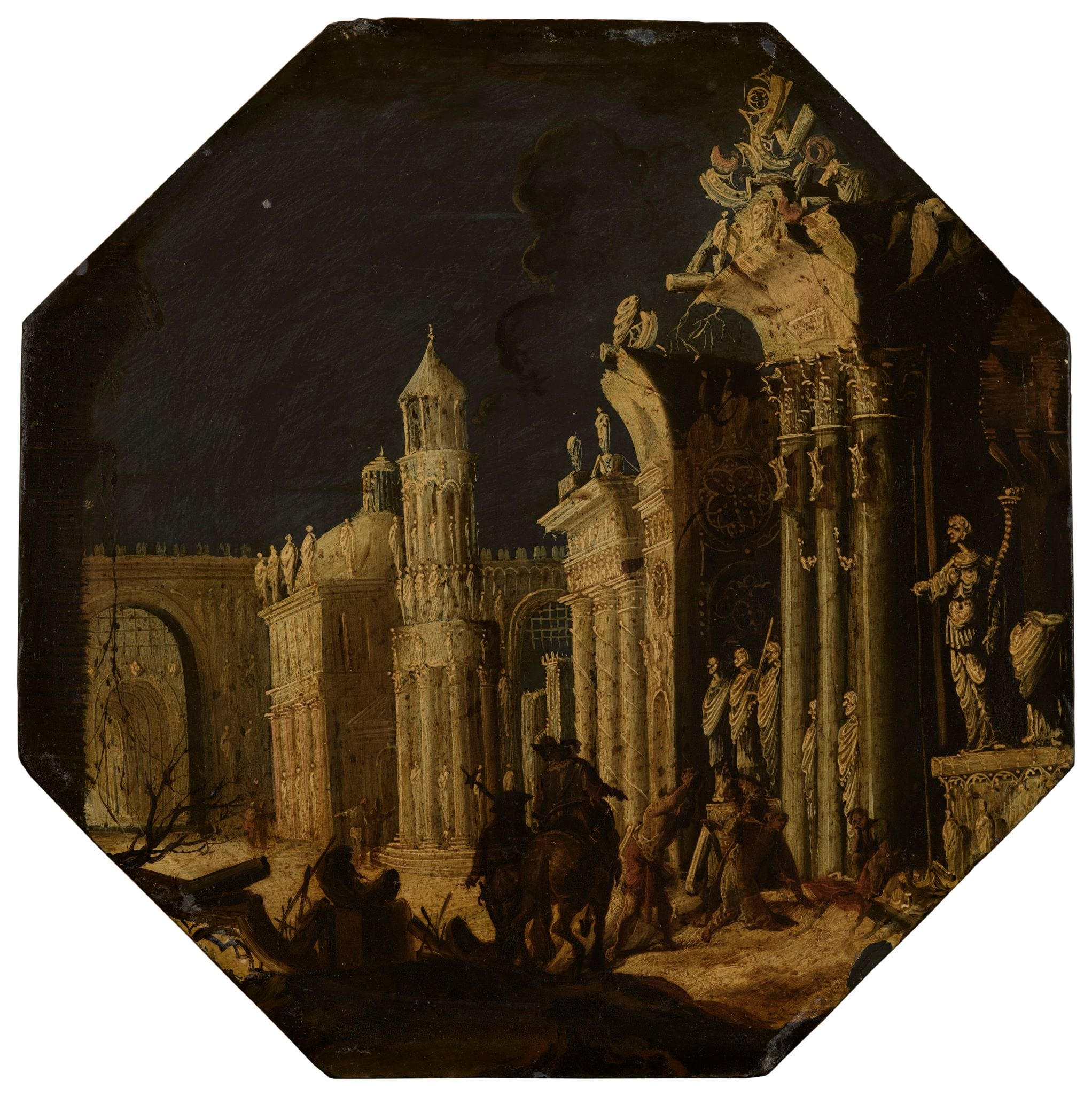
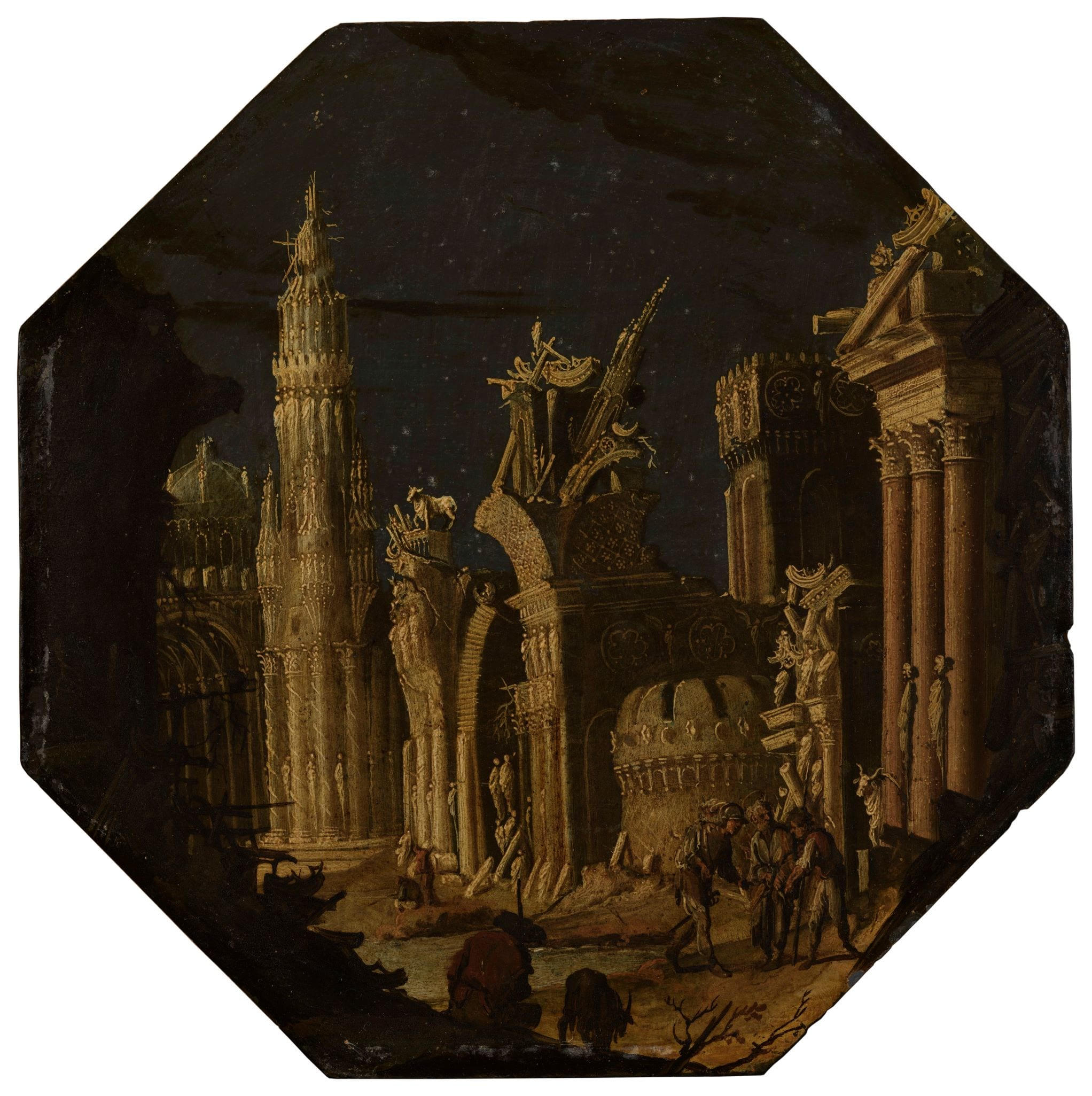
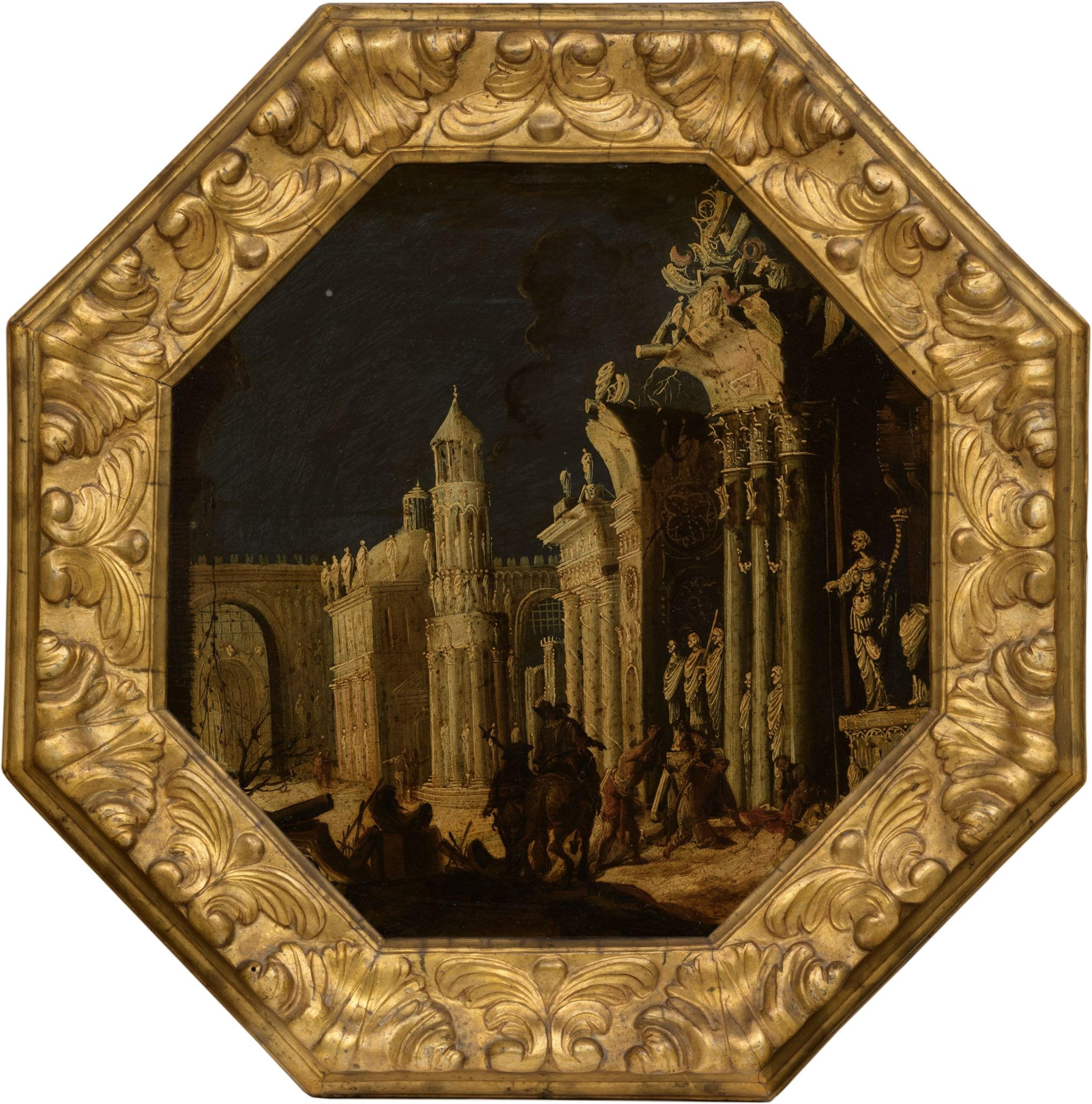
The Martyrdom of Saint Peter surrounded by Fantastical Architecture; The Martyrdom of Saint Stephen surrounded by Fantastical Architecture
c. 1617
Oil on slate
Each: 31 x 31 cm (12 1/4 x 12 1/4 in.)
With frame, each: 44 x 44.5 cm (17 3/8 x 17 1/2 in.)
Provenance
Principi di Galati, Palermo.
Description
In 1610, following an eight-year sojourn in Rome during which he came into contact with northern European painters such as Balthasar Lauwers and Adam Elsheimer, François de Nomé, a native of Lorraine, arrived in Naples. He remained there for the rest of his life. The Neapolitan art scene of the 1610s was dominated by the legacy of Caravaggio, who had spent the last year of his life in the capital of the viceroyalty. In this context De Nomé assumed an entirely singular position, producing fantastical compositions, forerunners to the capricci that became so popular in the subsequent century. Crowded with fanciful buildings, sometimes Gothic in style, other times more Baroque in tenor, the structures De Nomé envisaged find no parallels in Neapolitan art of the period. Instead, they are suggestive of the dark, poetical, visionary art of Salvator Rosa, who may well have looked with interest at De Nomé's work.
The present two works on slate, which have never been published, offer a veritable repertoire of De Nomé's most typical motifs, namely fantastic buildings, some already in ruins, shown in a manner reminiscent of a vanitas. These edifices are articulated using touches of colour which stand in contrast to the dark slate backgrounds; the staffage is hinted at using brief, flickering brushstrokes charged with pathos.
Close to these panels in style are the Collapse of Job's House (formerly in the collection of the Duchess Sanfelice di Bagnoli, Naples) and the Martyrdom of a Saint (Israel Museum, Jerusalem); both paintings depict architectural backdrops quite similar to those here. Those two paintings are placed by Maria Rosaria Nappi around 1617, a date that can therefore be proposed for the present works (M. R. Nappi, François De Nomé and Didier Barra, Milan and Rome, 1991, pp. 56–57, 61).
Fig. 1. François de Nomé, Il Collapse of Job's House
Fig. 2. François de Nomé, Martyrdom of a Saint, Israel Museum