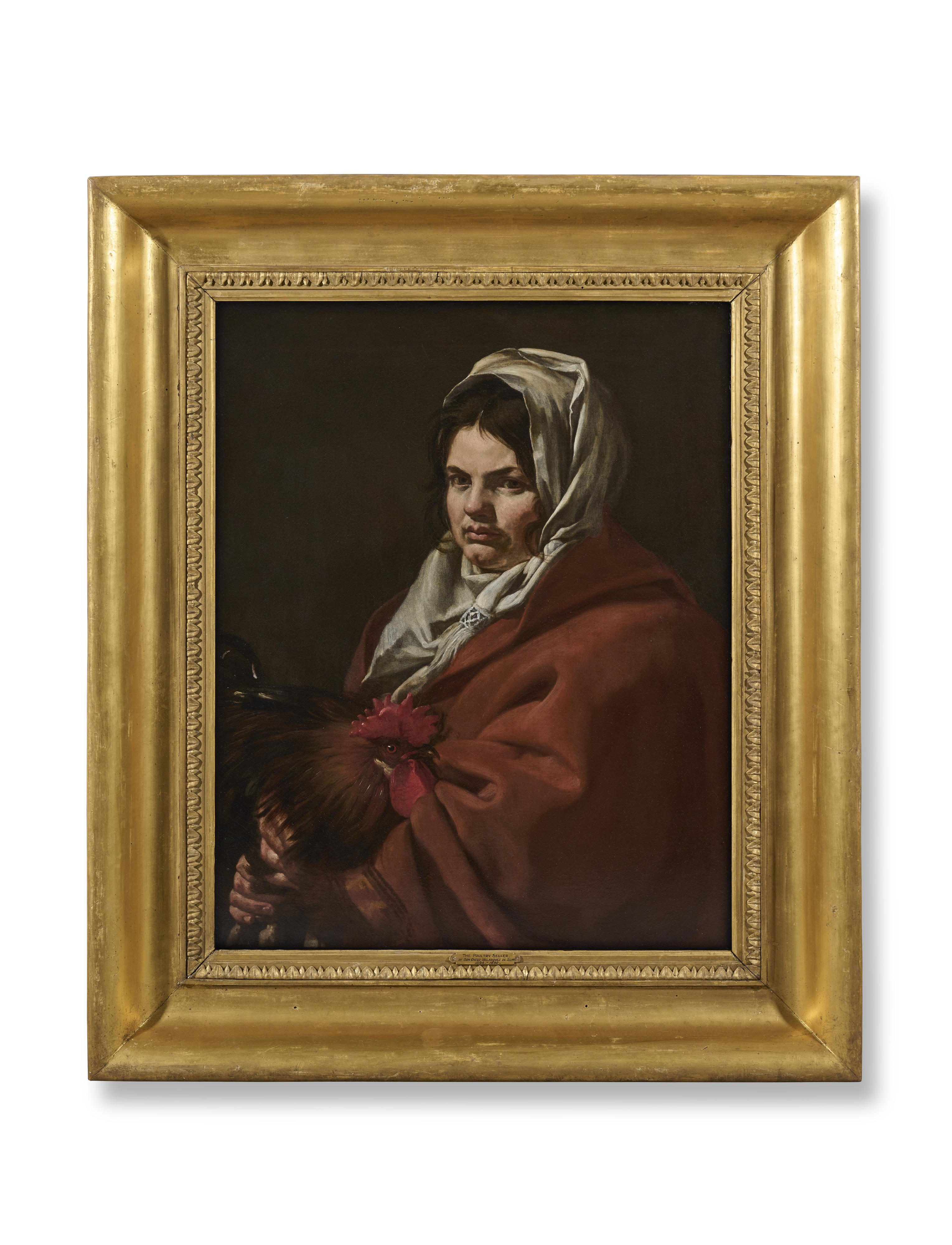
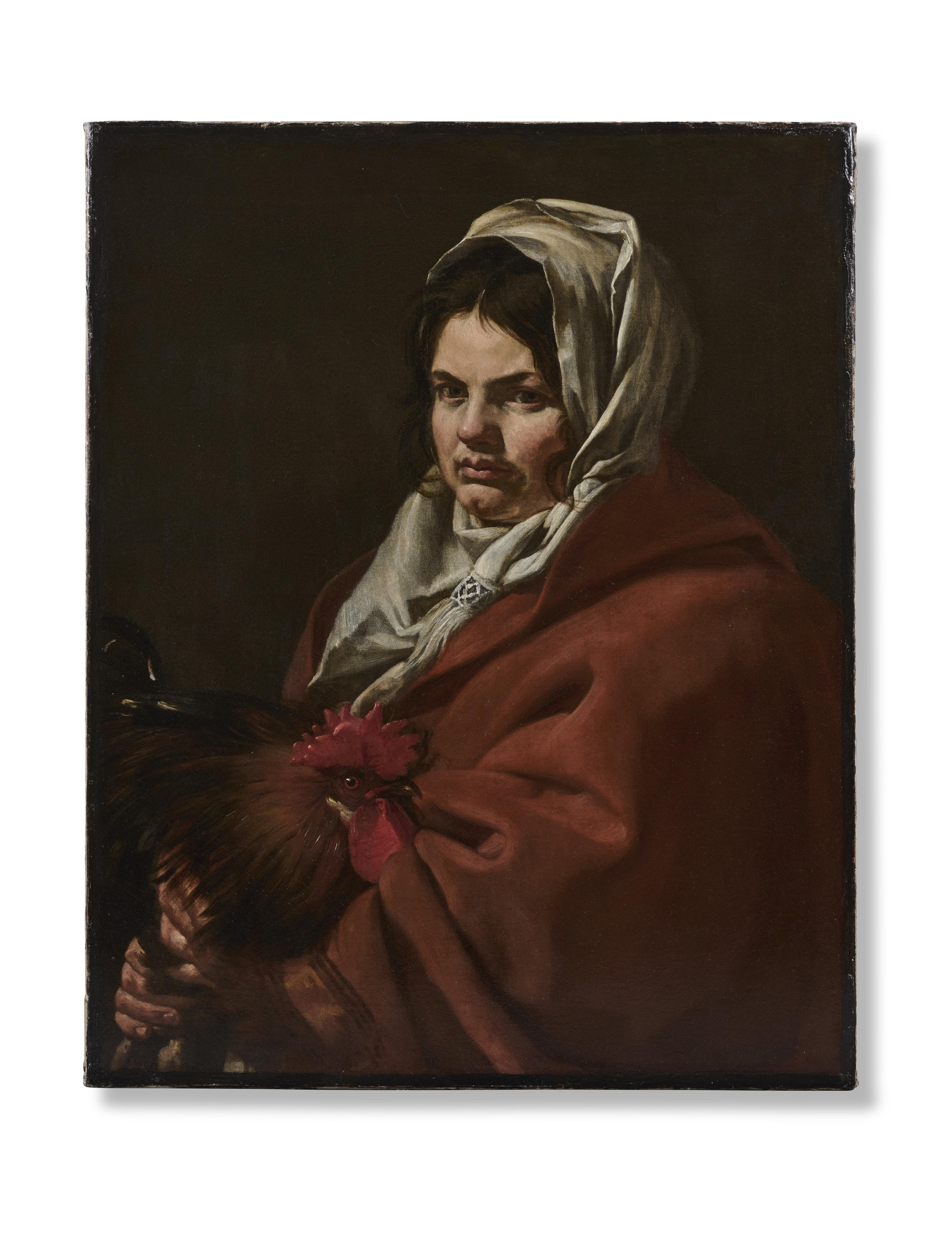

The Poultry Seller
late 17th century
Oil on canvas
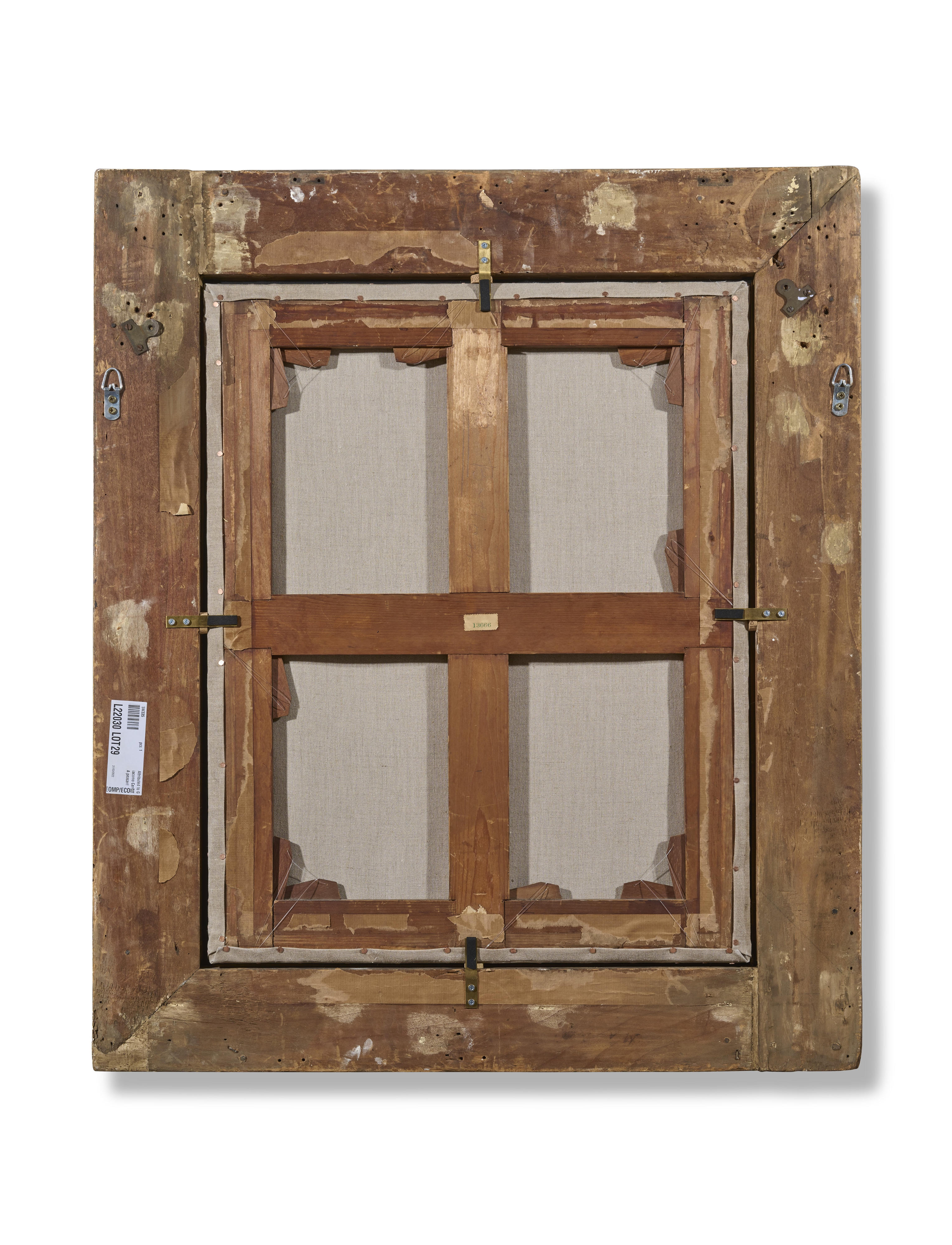
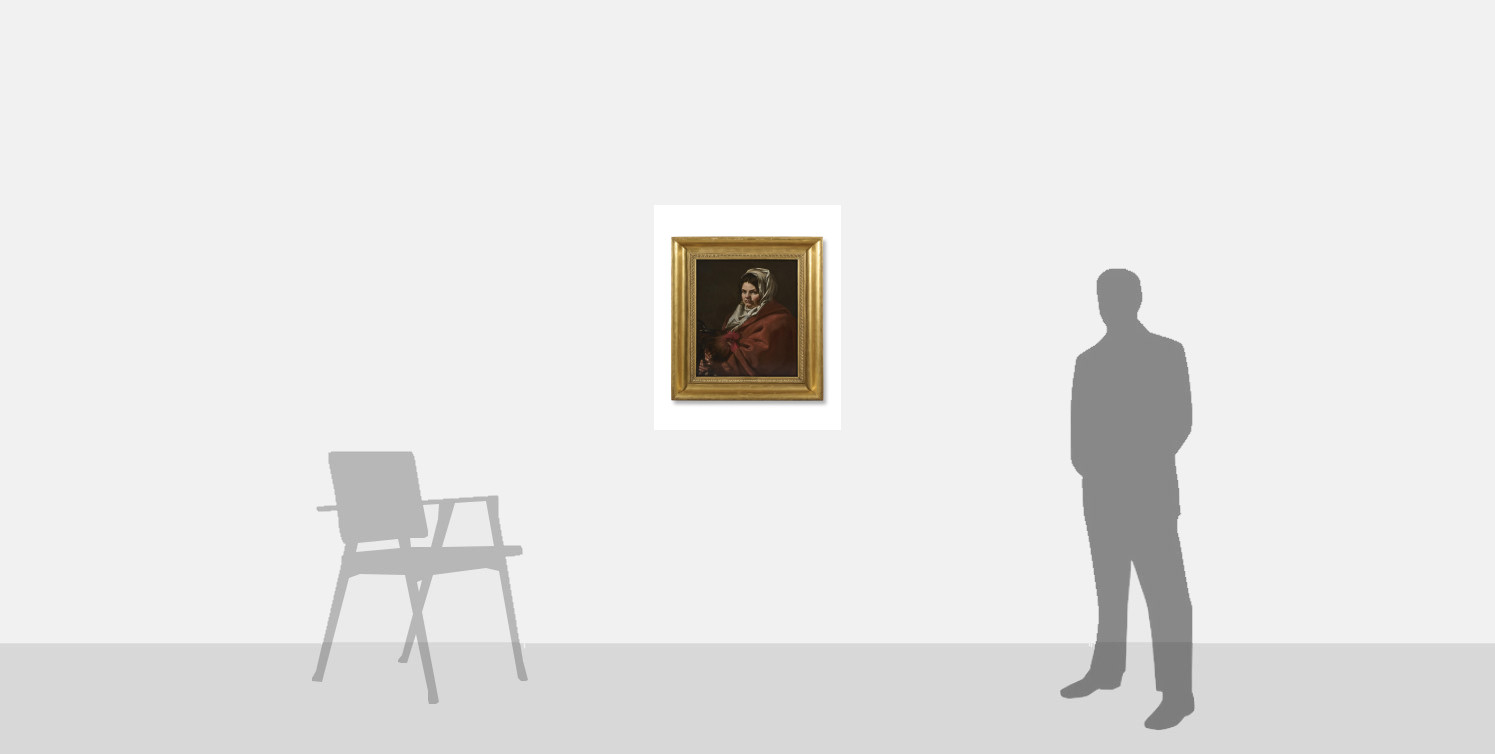
100 x 83 x 9 cm (39 3/8 x 32 5/8 x 3 1/2 in.)
Provenance
In the family collection of the Marquess of Downshire for three generations.
Description
The seventeenth century saw the growing popularity of secular subjects in painting across Europe, and a subsection of this was subjects depicting life among the lower classes. While this trend was most prevalent in northern countries, especially among Flemish and Dutch painters, such subjects also gained popularity in Italy and Spain, often executed in the Caravaggesque tradition, exhibiting the realism and tenebrism that was introduced by the great master at the turn of the previous century.
This striking depiction of a poultry seller clutching a cockerel is a fine example of southern European genre painting from this period. The dramatic fall of light, illuminating the woman’s face and the folds of her shawl, set against a dark background, recalls the stark chiaroscuro of Ribera or Velázquez. Indeed, the clothes of the peasant woman bear resemblance to paintings by the latter, who approached subjects from the poorer classes throughout his life. Notable comparable examples include the remarkable An Old Woman Cooking Eggs (1618, National Galleries of Scotland, fig. 1), one of the first examples of a genre painting by a Spanish artist and made when Velázquez was just 18 or 19 years old, and the remarkable study of a Young Woman that was previously on loan to the Metropolitan Museum, New York, dating from c. 1650 (fig. 2). The similarities in attire across these paintings imply that our picture originated in a similar milieu to that of the great Spanish painter. The present picture, although by an unknown hand, belongs to this early moment in the growing popularity of such depictions of life among the lower sections of society, anticipating the wider proliferation of the genre that came in the eighteenth century with artists such as Giacomo Ceruti in Italy and Francisco Goya in Spain.
The significance of the cockerel is ambiguous, but has several possible connotations. In Christian iconography, the cockerel is associated with Saint Peter’s denial of Christ, however in this instance the secular subject suggests this interpretation is unlikely. The cockerel (or more commonly, a hen) may symbolise fertility motherhood; the woman is perhaps expecting or hoping for a child. That the bird is quite clearly a cockerel – an animal often associated with masculine assertiveness and protectiveness – may instead reflect the independence and strength of the poultry seller, underscoring her connectedness with her trade and with the earth. The detail and firm expression of her face almost seems like a character study, offering not merely a likeness but a psychological examination of the sitter. The cockerel may, therefore, serve to emphasise the position of this woman, building a picture of her life and character.
The subject of the poultry seller was uncommon but not unknown at the time – a picture by the Pensionante del Saraceni, dating from c. 1615–20 (now in the Museo del Prado), portrays a male bird seller, poised in conversation with a man who distracts him with coins while in fact stealing a chicken behind his back, evidently owing much to the visual devices of Caravaggio.
By comparison, a painting by the Baroque artist Massimo Stanzione, executed in c. 1635 and now preserved in the Fine Arts Museum of San Francisco, offers a contrasting treatment of the subject (fig. 3), showing a brightly-lit young woman in full Neapolitan costume, holding a chicken in her left arm. This picture is a full exposition of the artist’s virtuosic handling of textures and colours, both in the intricate fabrics of the dress and the feathers of the bird. It also pays homage to the rich textile and tailoring industries of Naples, where Stanzione was one of the great artists of his day, alongside Ribera. Our painting rather focusses on the character of this peasant woman, inseparable from her trade and the drudgery of her existence.
Fig. 1 – Diego Velázquez, An Old Woman Cooking Eggs, 1618, National Galleries of Scotland, Edinburgh.
Fig. 2 – Diego Velázquez, Young Woman, c. 1650, formerly on loan to the Metropolitan Museum of Art, New York.
Fig. 3 – Massimo Stanzione, A Woman in Neapolitan Costume, c. 1635, Fine Arts Museum of San Francisco.