
Barry X Ball
b. 1955, Pasadena
Sick Child, after Medardo Rosso (1858-1928), Enfant malade (1893-95)
2013-2022
Sculpture: translucent pink Iranian onyx
Pedestal: white Vietnamese marble, stainless steel, wood, acrylic lacquer, steel, nylon, plastic
Overall: 163.1 x 26 x 26 cm (64 1/4 x 10 1/4 x 10 1/4 in.)
Sculpture: 27.6 x 24.5 x 15.7 cm (10 7/8 x 9 5/8 x 6 1/8 in.)
Pedestal: 135.4 x 26 x 26 cm (53 1/4 x 10 1/4 x 10 1/4 in.)
Provenance
Description
‘There is a long history of artists making works "after" those of their forebears. Although employing an advanced technological armamentarium, I am also working in that ancient tradition. Fueled by love, I'm reaching way back to a time centuries before the Modernist Revolution, searching for a way to make something equally revolutionary.’—Barry X Ball
Barry X Ball was born in Pasadena, California, in 1955. As a college student, his travels to Europe exposed him to the works of the Old Masters who inspire many of the works he creates today. Ball reinvents masterpieces from various periods of art history, including from the Renaissance and 19th century. Using modern technological methods, he unites the art historical with the present day, revitalising icons of the past.
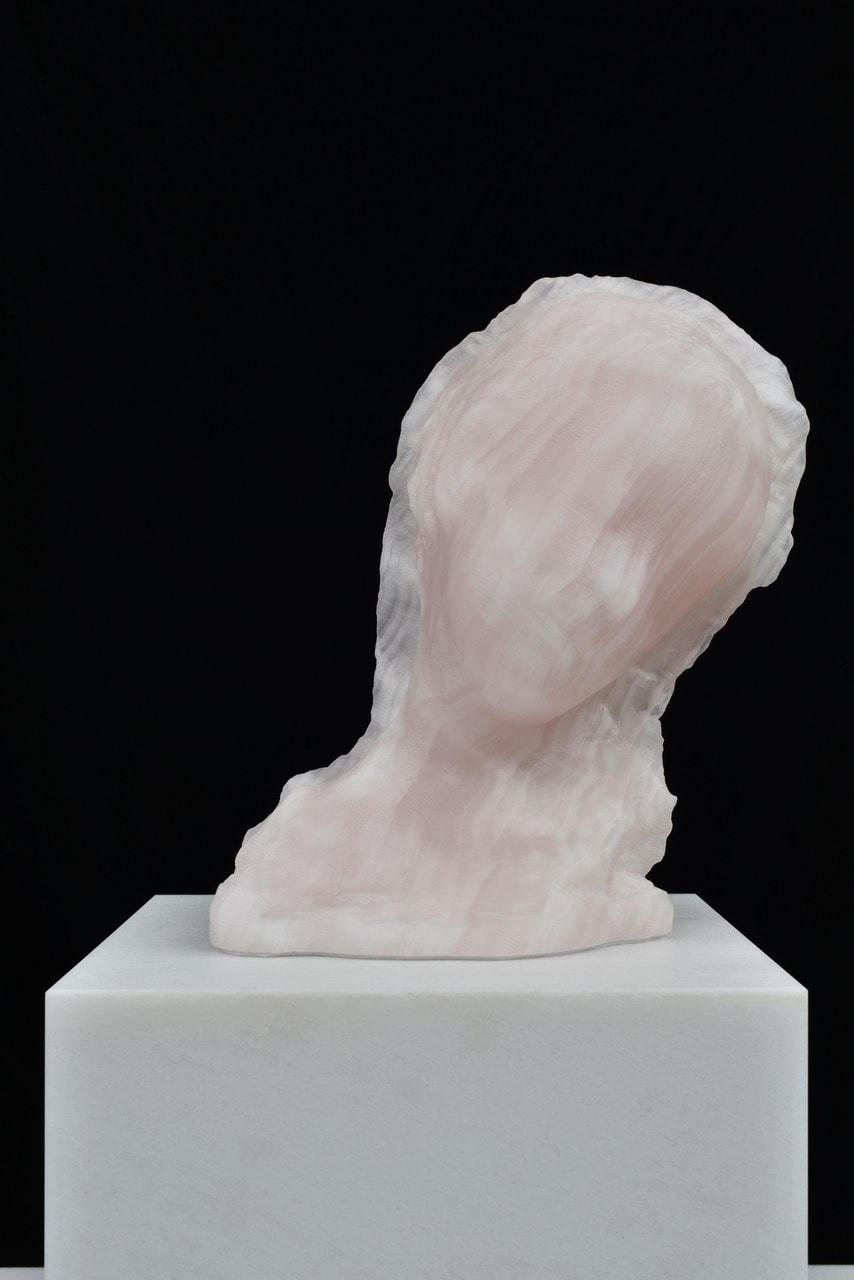
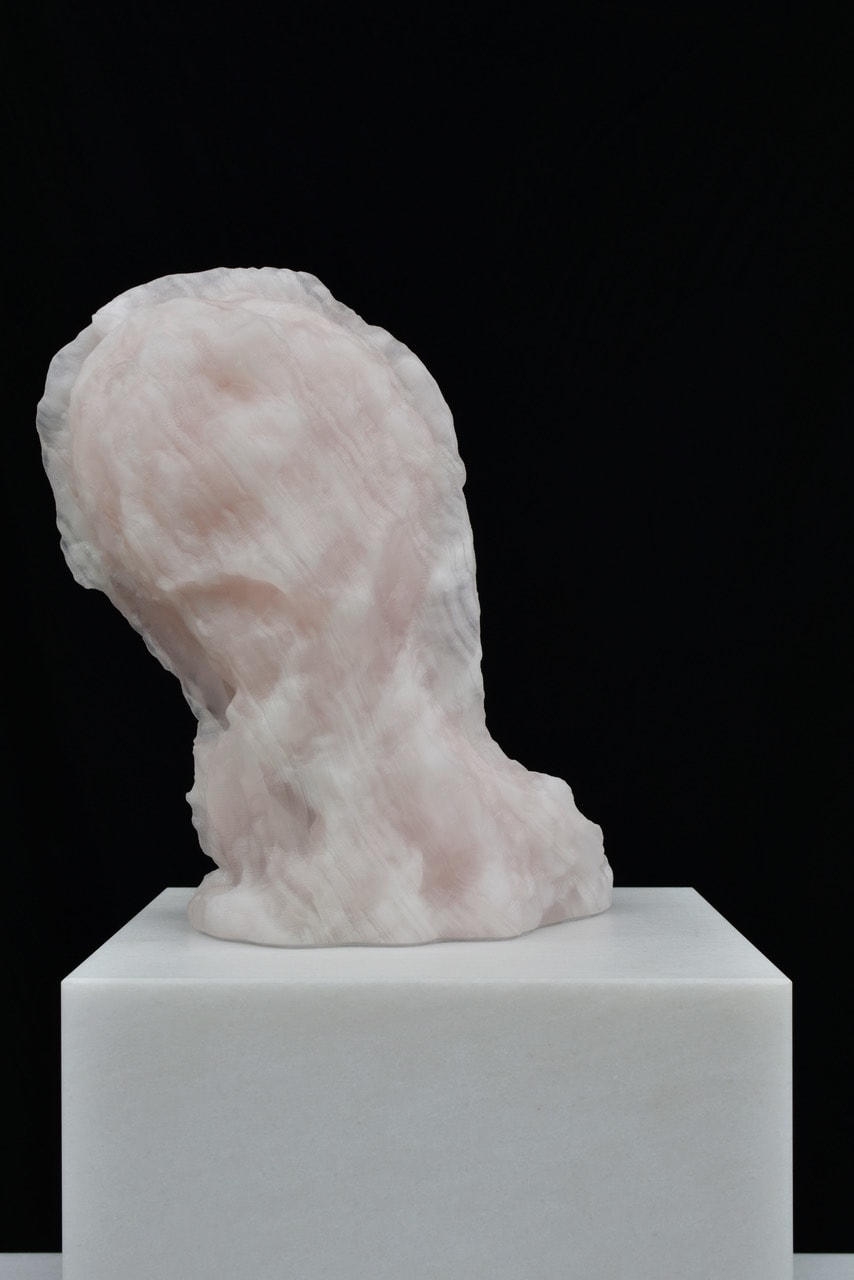
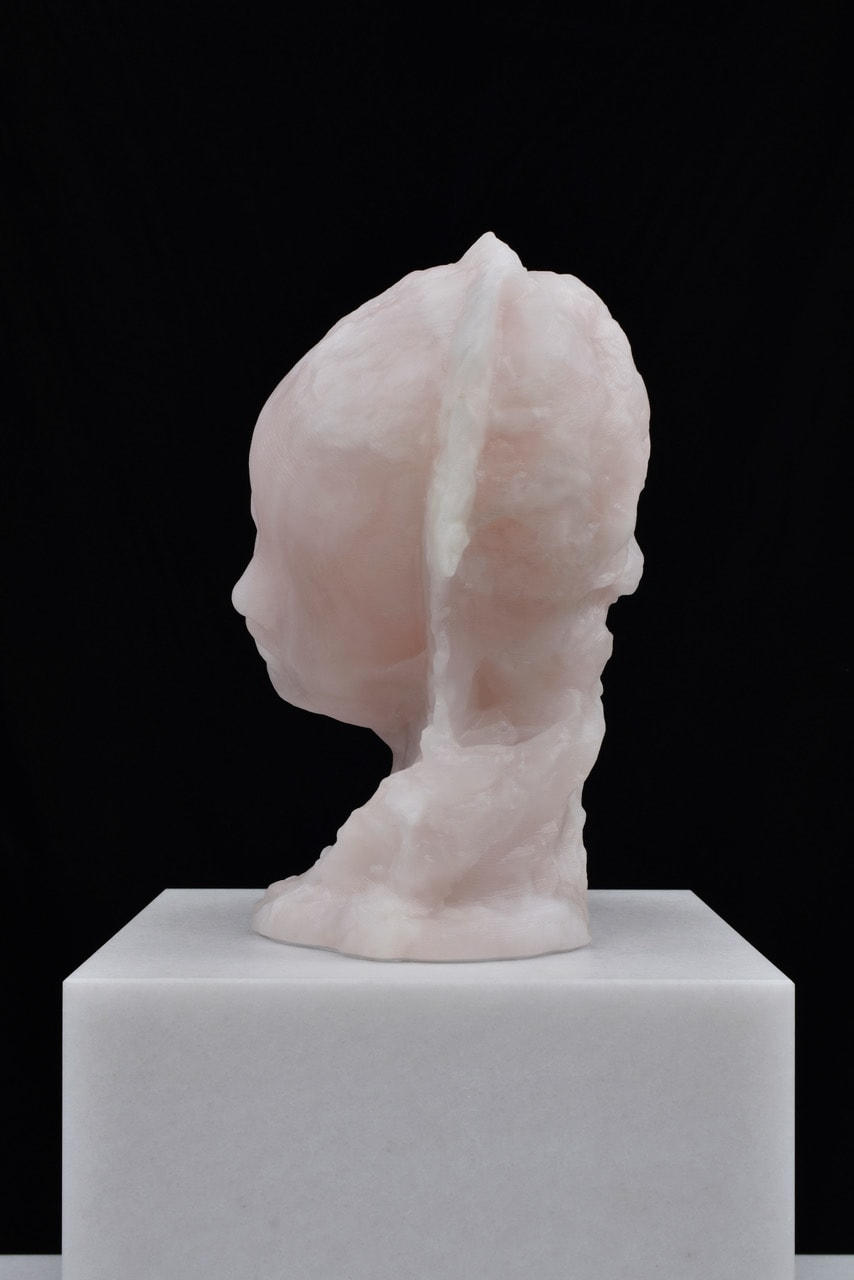
Sick Child, after Medardo Rosso (1858-1928), Enfant Malade, is inspired by Rosso's work in bronze, now in the collection of the Galleria d'Arte Moderna, Milan. The present work, a ghostly tribute to its predecessor, opens the art historical to the possibilities of modern innovation. Ball’s process often begins with a three-dimensional scan of the work, which is then used in conjunction with computer-aided modeling software to alter the scan under Ball's artistic direction. Milling machinery is then used to sculpt the stone. However, his process is not entirely reliant upon technology, as the sculptures often require detailed and meticulous work and refinement by hand.
Reinterpreting Rosso's original work for the modern age, the sculpture is made from semi-transparent stones that give the work a luminous appearance, creating a soft-edged figure that seems ephemeral, emphasising the vulnerability of the subject at odds with its rigid medium. The pale pink hues of the stone imbue the work with a fragility that alludes to the ebbing life of the child, the figure hovering between the real and spiritual worlds.
Ball places the past and the present in dialogue with one another, creating new works while calling upon the age-old tradition of sculpture. Drawing on the timeless theme of vulnerability and human suffering, with Sick Child Ball pays homage to Rosso, a pioneering figure in late-19th and 20th-century sculpture while also offering his unique interpretation of the subject.
For a full statement from the artist, please see attached document.