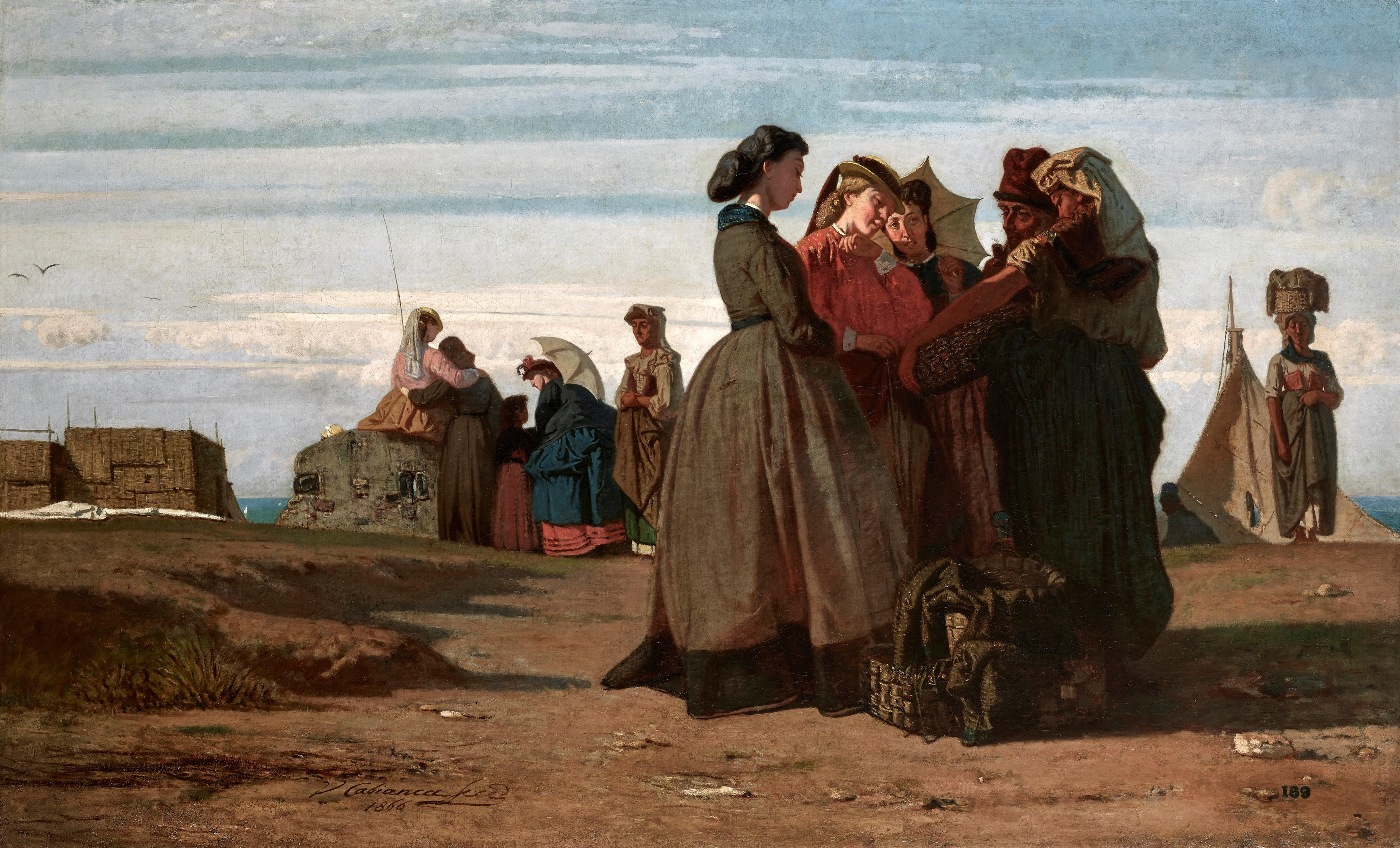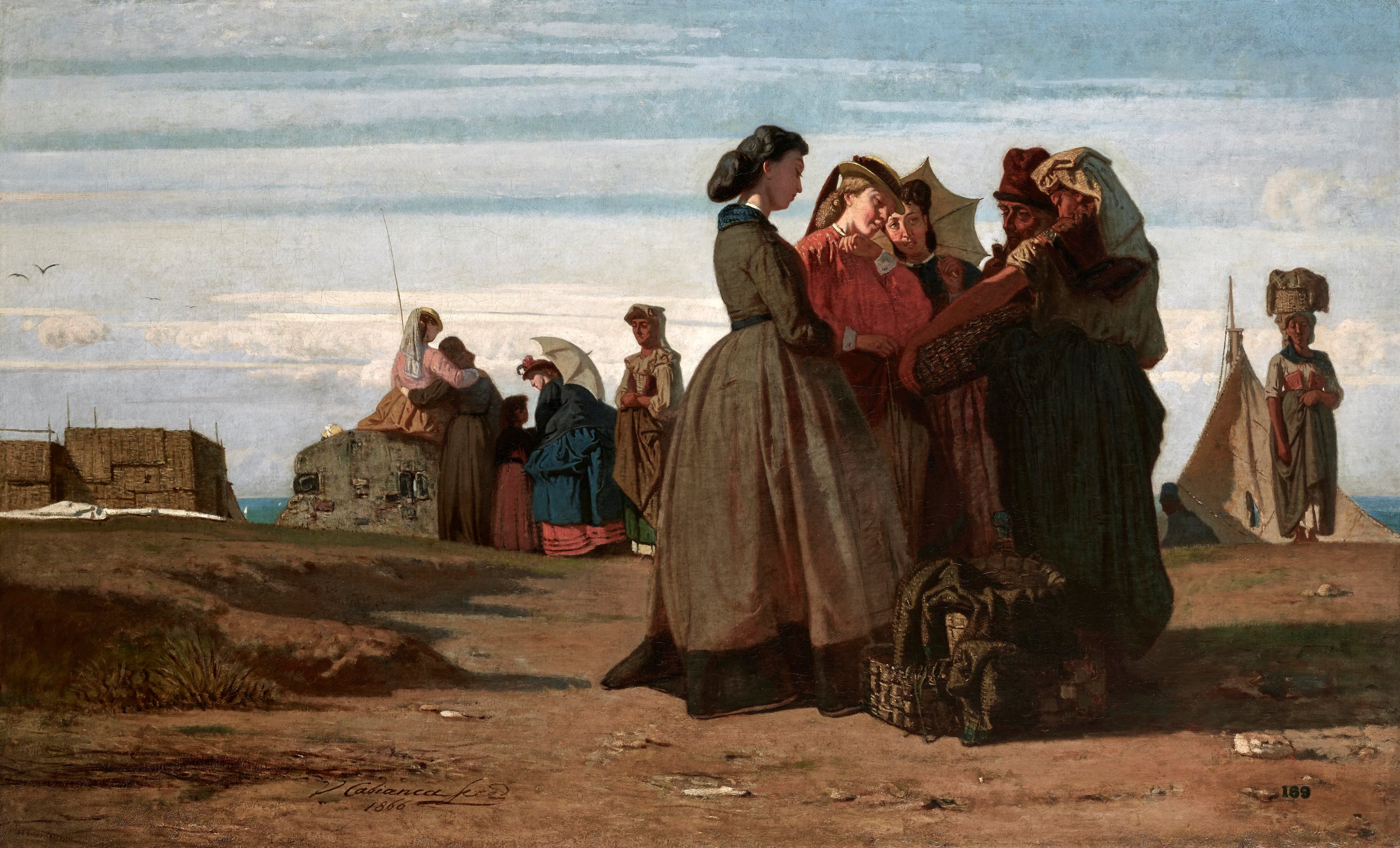
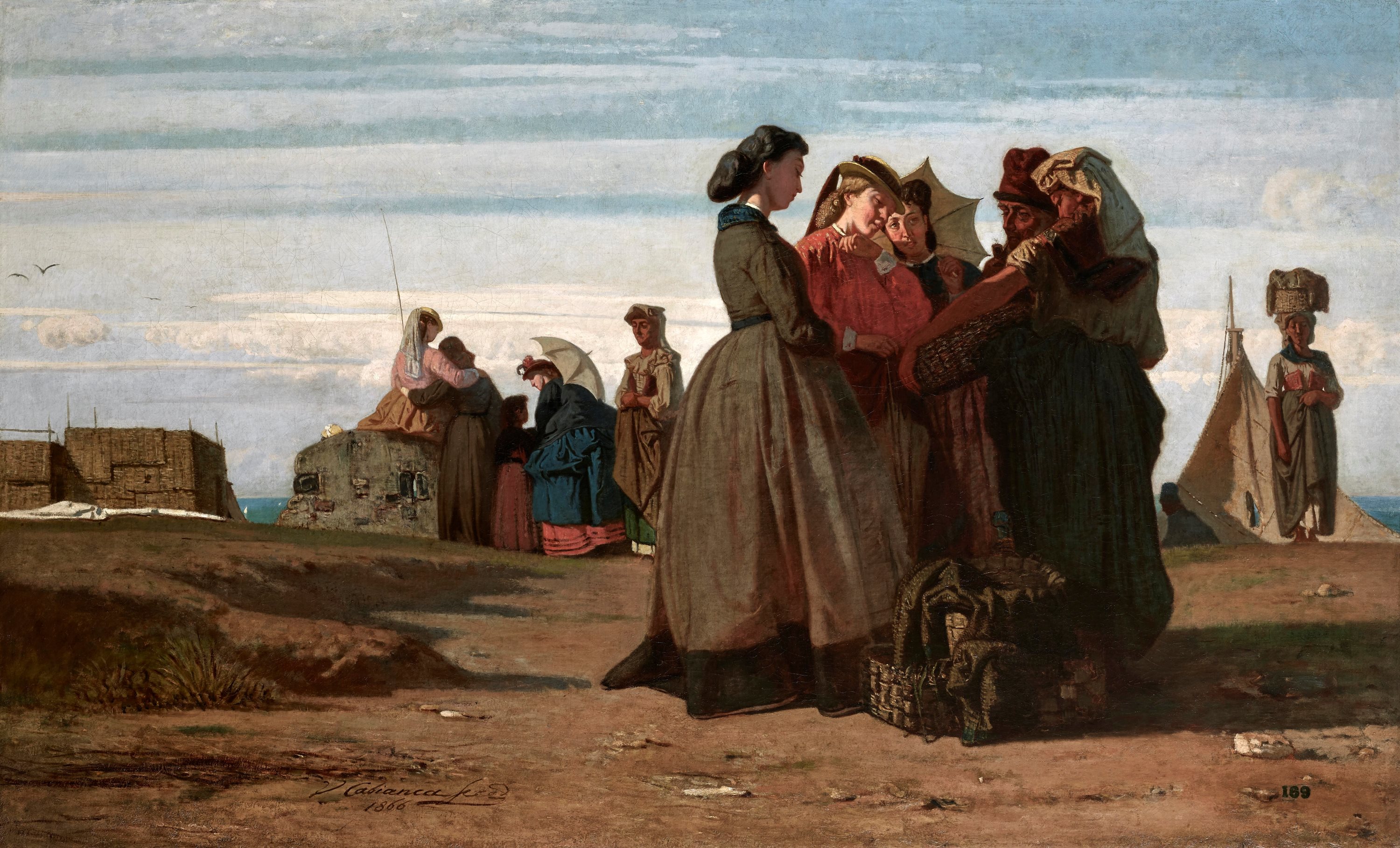
Born in Verona, Vincenzo Cabianca undertook his artistic training at the Verona Academy and then the Venice Academy, where he developed an admiration for Giuseppe Mazzini and became associated with the Young Italy movement. In the political turbulence of 1848, Cabianca was taken prisoner while participating in the defence of Bologna, following which he returned to Venice, where he lived until 1853, when he moved to Florence.
In Florence, he became part of a group of artists that included Adriano Cecioni, Telemaco Signorini, and Odoardo Borrani, and who became known as the Macchiaioli, a group of artists active throughout Tuscany in the second half of the nineteenth century who, before the French Impressionists, strayed from academic conventions to celebrate subjects taken from everyday life, often painting outdoors to capture the fleeting effects of light and colour. The name of the group comes from macchia (spot or stain), so these artists were literally ‘spot-‘ or ‘stain-makers’. In the 1850s, Cabianca’s style moved from genre subjects to a bolder realism, always paying utmost attention to the effects of light in his works. Cabianca travelled to Paris in 1861, and on returning to Italy settled in Parma, where he remained until 1868. At this point, he moved to Rome, which would be his main home for the rest of his life.