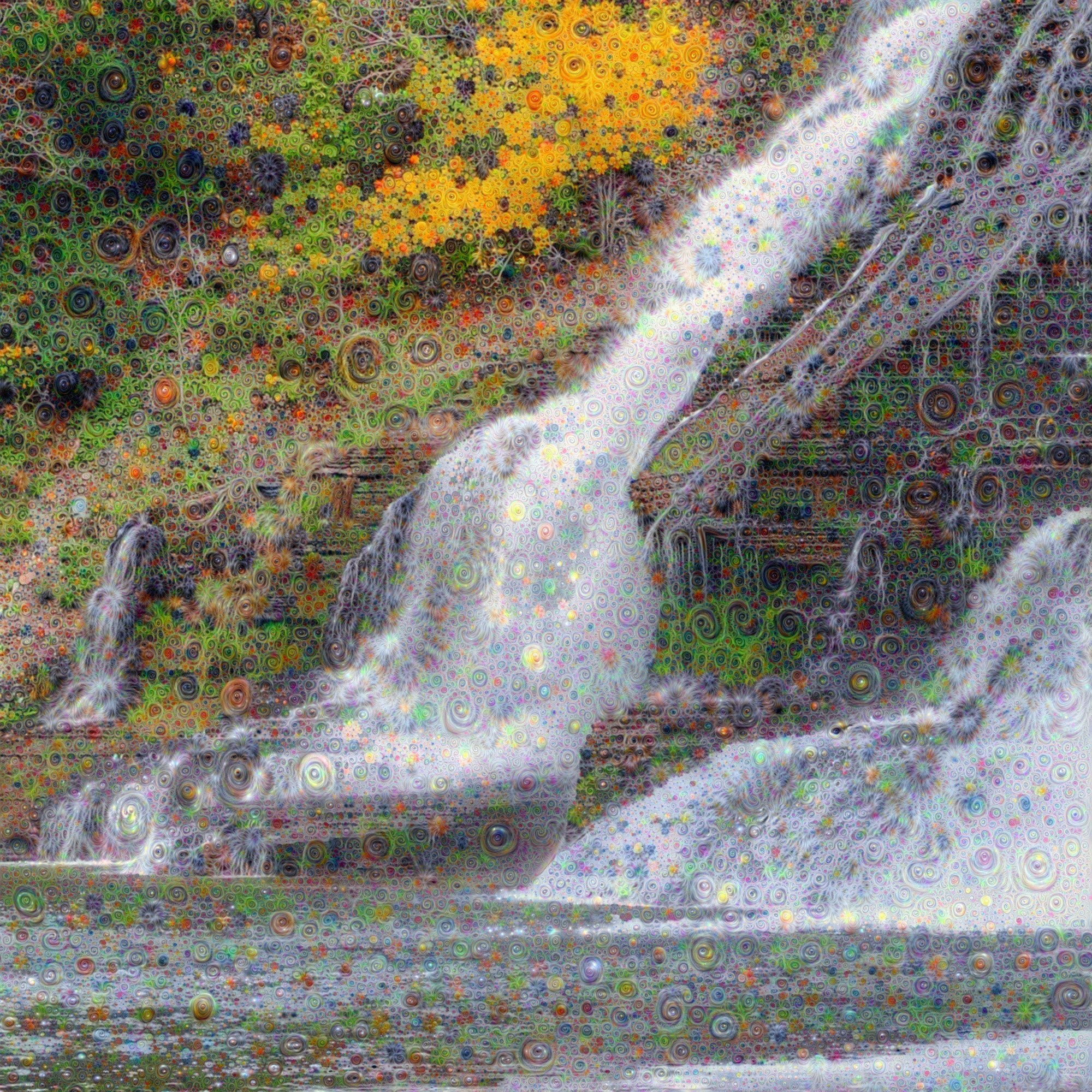
Robilant+Voena is pleased to announce that digital artist Daniel Ambrosi has been granted a six-week residency at Cornell University, starting on 26 June. The residency will take place at the Cornell University Program of Computer Graphics under the supervision of Dr. Donald P. Greenberg, Jacob Gould Schurman Professor of Computer Graphics, in collaboration with Dr. Alex Kwan, Associate Professor, Meinig School of Biomedical Engineering.
Building upon his inaugural solo exhibition with R+V in Autumn 2023 which presented his AI-augmented Dreamscapes based on the landscapes of Capability Brown, this residency provides the opportunity for Ambrosi to extend his research into the relationship between landscapes and memory. Using new source photography from Ithaca and the Finger Lakes region in New York state, the artist hopes to make around ten original artworks that go beyond representing how landscapes are experienced, to represent how landscapes are remembered.
As artist-in-residence, Ambrosi will have access to the cutting-edge AI and computer graphics software at the Program of Computer Graphics, and will also work alongside Dr. Alex Kwan of the Meinig School of Biomedical Engineering, using elements of the latter’s psychedelic neuroscience research to enrich and inform his practice.
A former student of architecture and computer graphics at Cornell University, Ambrosi has expressed how important his time at the university was for the genesis of his artistic journey. He says:
'My eight years at Cornell studying architecture and computer graphics back in the late ‘70s and early ‘80s were absolutely formative to my artistic vision, as was the scenic beauty of Ithaca and the entire Finger Lakes region. To once again be working under the auspices of my hero and mentor, Don Greenberg, after all these years is an incredible gift.’
Additional quotes
Dr. Donald P. Greenberg (Jacob Gould Schurman Professor of Computer Graphics, Cornell University): I am greatly looking forward to working with Daniel this summer, and am fascinated by his interest in creating art that relies on both computer graphics and neuroscience. By coincidence, I am also working on scientific models of the human visual system, which includes the neural networks within our brain, so that we can better understand the behavior of our visual cortex and our memory. Not many faculty have the opportunity to work with their best technical and innovative students 40 years after they graduate, and I am greatly looking forward to how [Daniel is] able to merge two separate but related disciplines.
Dr. Alex Kwan (Associate Professor, Meinig School of Biomedical Engineering, Cornell University): I have been impressed with Daniel’s interpretation of landscapes through the lens of computer graphics and artificial intelligence. I am excited to collaborate with him this summer, and see how he may incorporate elements of psychedelic neuroscience research into his work.
Marco Voena (Partner, Robilant+Voena): I hope this residency allows Daniel to undertake a challenge: to discover the metaphysical dimension of the human figure within the realm of infinite landscapes, inspired by the great German Romantic, Caspar David Friedrich.