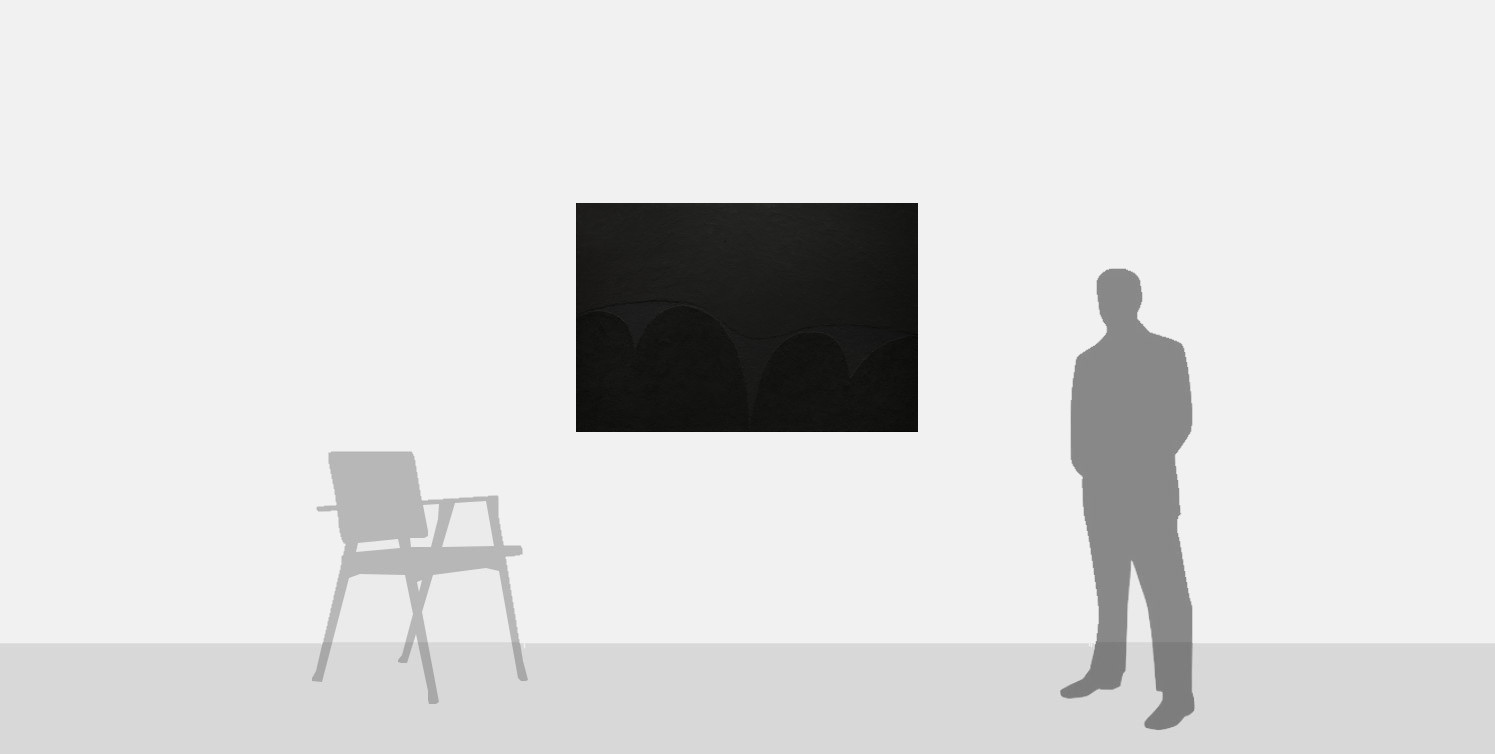

Alberto Burri
b. 1915, Città di Castello, Italy
d. 1995, Nice, France
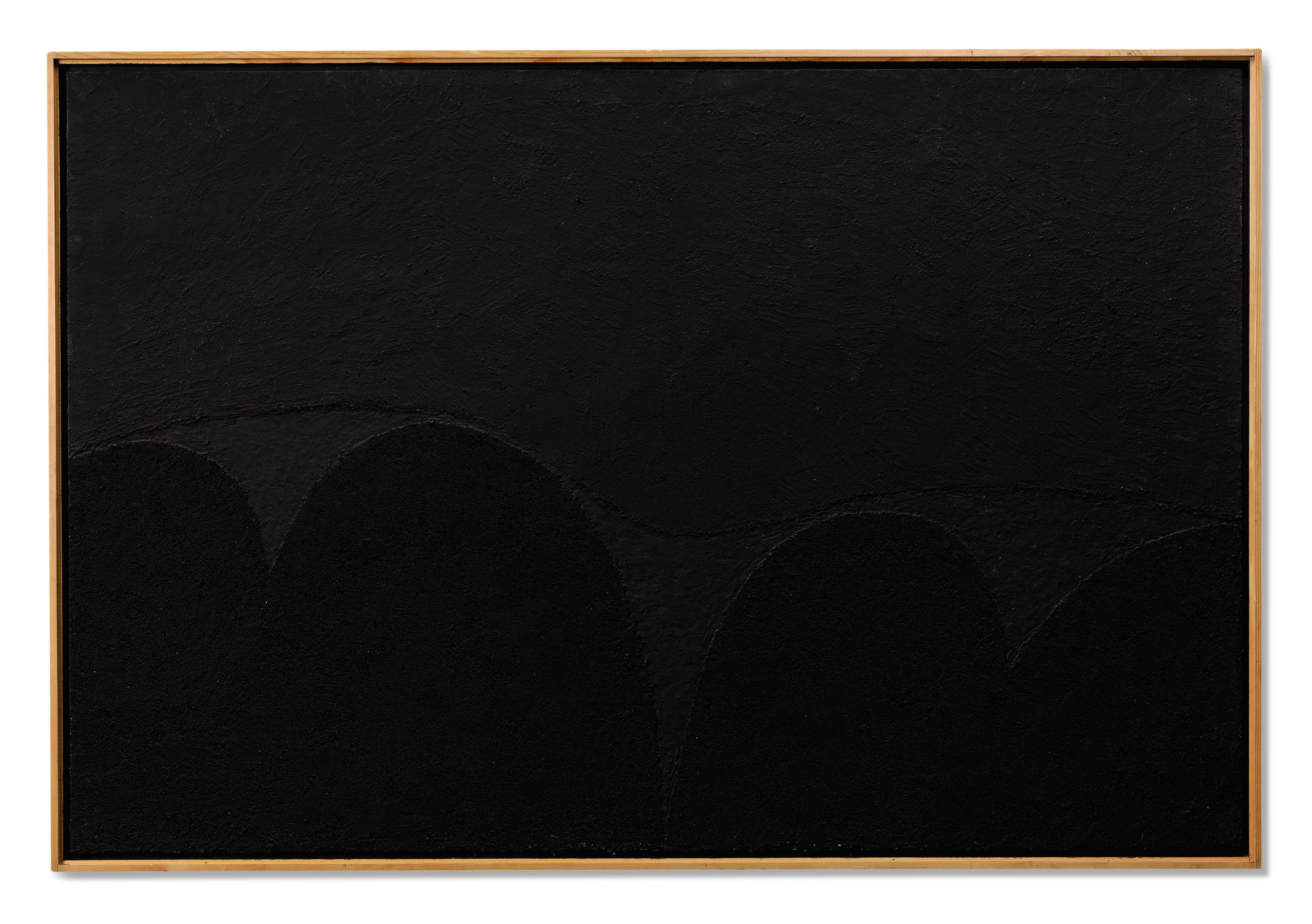
Black Mi No. 5
1989
Acrylic and pumice stone on celotex
102 x 152 cm (40 1/8 x 59 7/8 in.)
Literature
Description
Born in 1915 in Città di Castello near Perugia, Alberto Burri graduated from university in 1940 with a degree in medicine and served as a medical officer during World War II. In 1943 he was taken prisoner by the Allies in Tunisia and sent to Camp Hereford, a prisoner-of-war camp in Texas. During his internment Burri began to experiment with painting, using the limited media available to him. On his return to Italy in 1946 he abandoned his career as a physician and dedicated himself to becoming an artist, still eschewing traditional oil on canvas in favour of alternative materials. He held his first solo show in 1947 in Rome at the Galleria La Margherita, exhibiting figurative works which showed the influence of the ‘tonal painters’ of the Roman School during the 1930s. It was during his second solo exhibition, held at the same gallery in May 1948, that Burri first exhibited abstract works, revealing his affinity with the visual language of Jean Arp, Paul Klee and Joan Miró. At the end of 1948 he travelled to Paris, where he visited Miró’s studio and saw the most recent abstract work by Alberto Magnelli, a key point of reference for the generation of young Italian artists seeking inspiration for innovative new work.
The 1950s began with a period of intense experimentation for Burri, starting with his Muffe (Moulds) series, which combined pumice stone with traditional oil paint. He also created his first Gobbo (Hunchback) with its characteristic bulging shape, obtained using wooden branches placed against the back of the canvas, and the first of his iconic Sacco (Sack) works, made using rough jute fabric. In 1951 he founded the Origine group with Mario Ballocco, Giuseppe Capogrossi and Ettore Colla, and the following year he exhibited Neri e Muffe at the Galleria dell’Obelisco in Rome. A few years later two of his works were included in the Younger European Painters group exhibition at the Solomon R. Guggenheim Museum in New York, supported by the director James Johnson Sweeney who had been greatly impressed by the artist’s talent when they met in Rome in 1953. The late 1950s saw him develop his experiments with combustion, burning wood, plastic and canvas, as well as a new interest in the use of welding to create two-dimensional artworks.
In 1970s Burri began his Cretti (Cracks) series, which combined acrylic adhesives and other materials, such as clay, kaolin and zinc white, to cover canvas. This granular mixture swelled and cracked when heated. Burri was careful to control the cracking process, bringing it to a halt with a layer of vinyl glue when it reached the desired effect. The Cretti series was first exhibited in Bologna in 1973 at the Galleria San Luca. Two years later, in the anthology exhibition at the convent of Saint Francis of Assisi, Burri presented new experimental works made using Celotex, an industrial material used for insulation, made from a mixture of glue and sawdust.
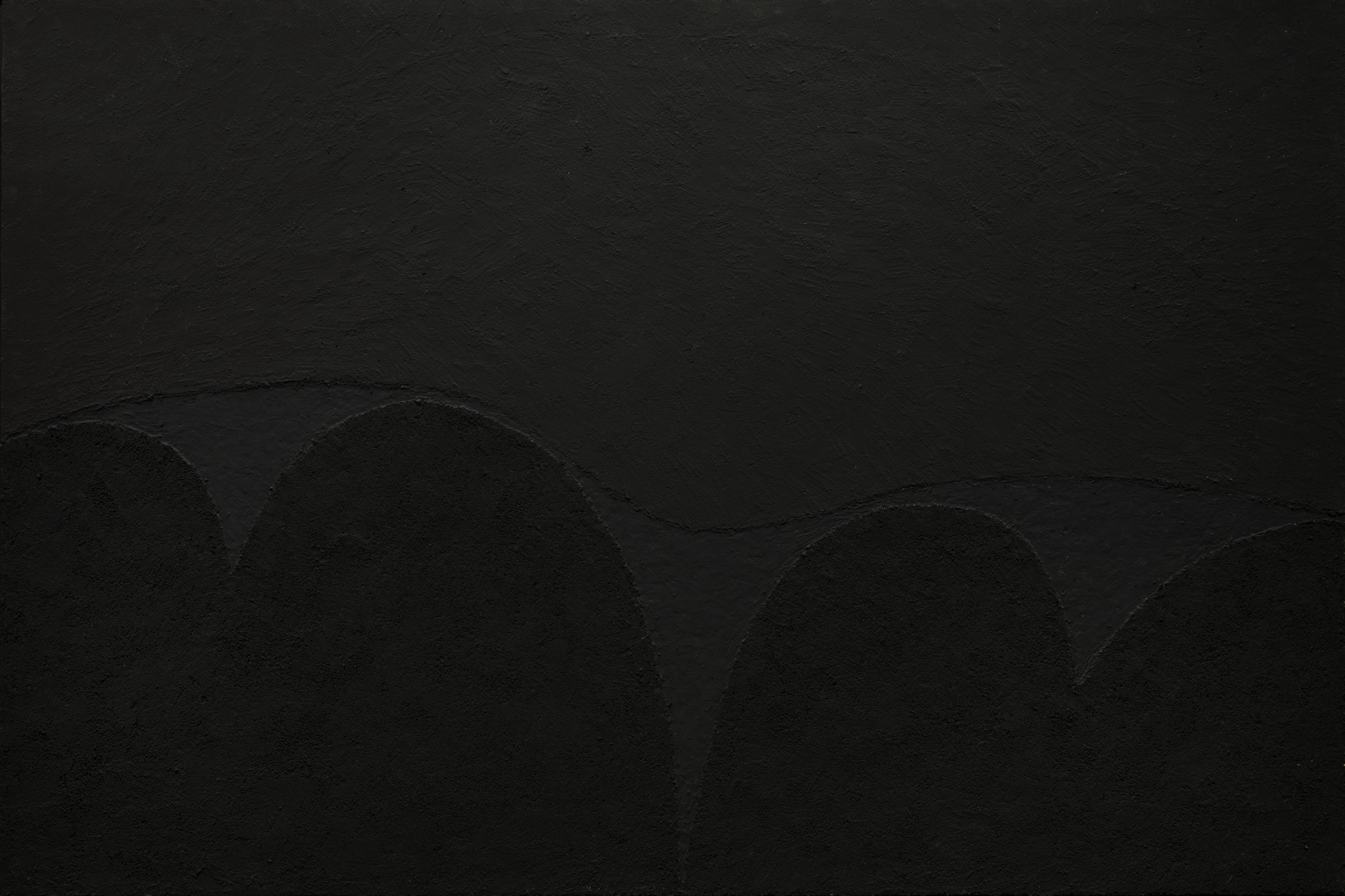
The present work demonstrates Burri’s skillful manipulation of this material, shaping, colouring and incising it with great precision. Removed from its functional context, the Celotex has become the setting for a complex interaction between texture, form and shadow. Engaging with the tactile possibilities of the Celotex and pumice, Burri has created a dark tableau of curving abstract shapes suggestive of a landscape, or perhaps the rounded shapes of the human body. These undulating shapes are barely perceptible unless the viewer moves in front of the picture, enabling the light to play over the contrasting textures.