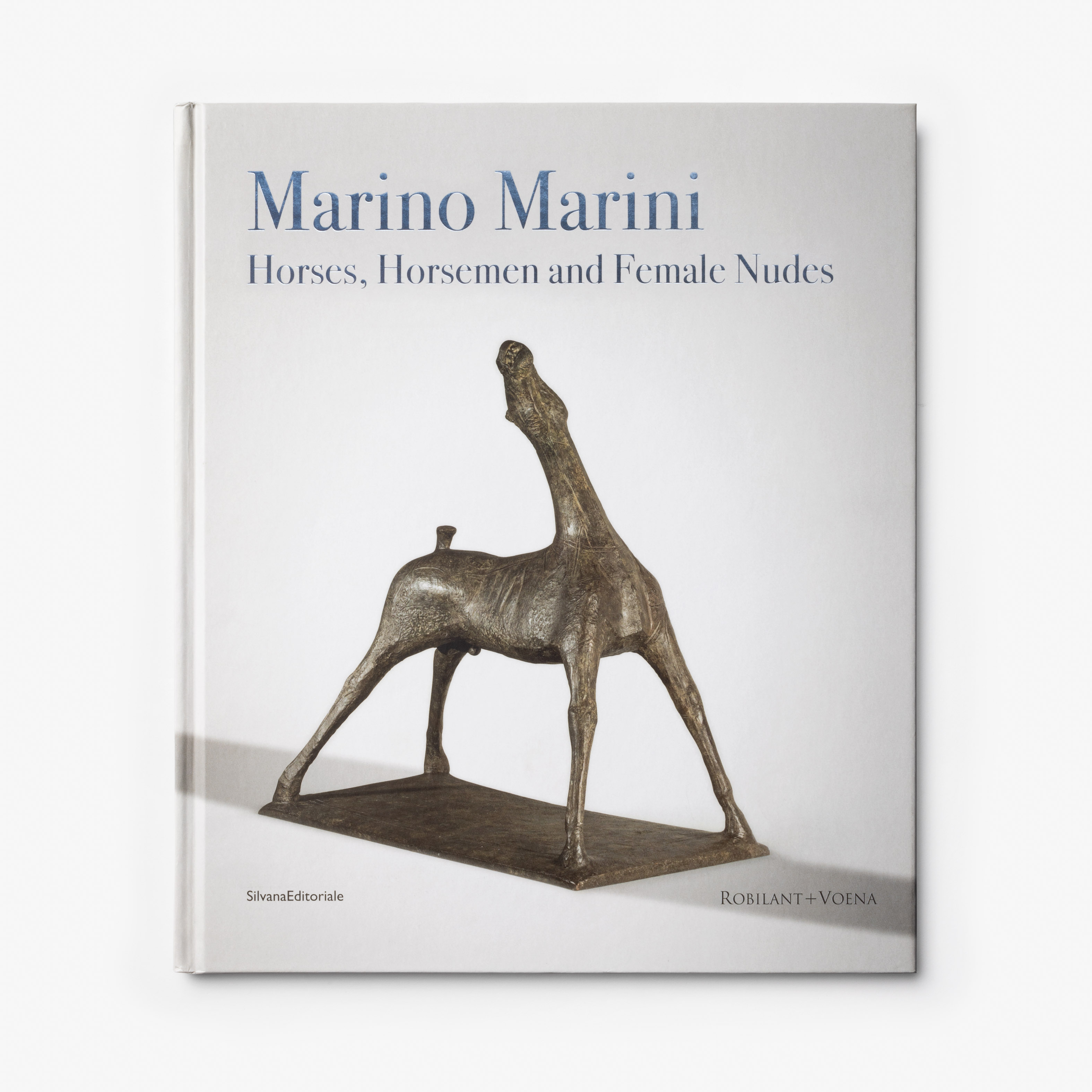

Marino Marini
b. 1901, Pistoia, Italy
d. 1980, Viareggio, Italy
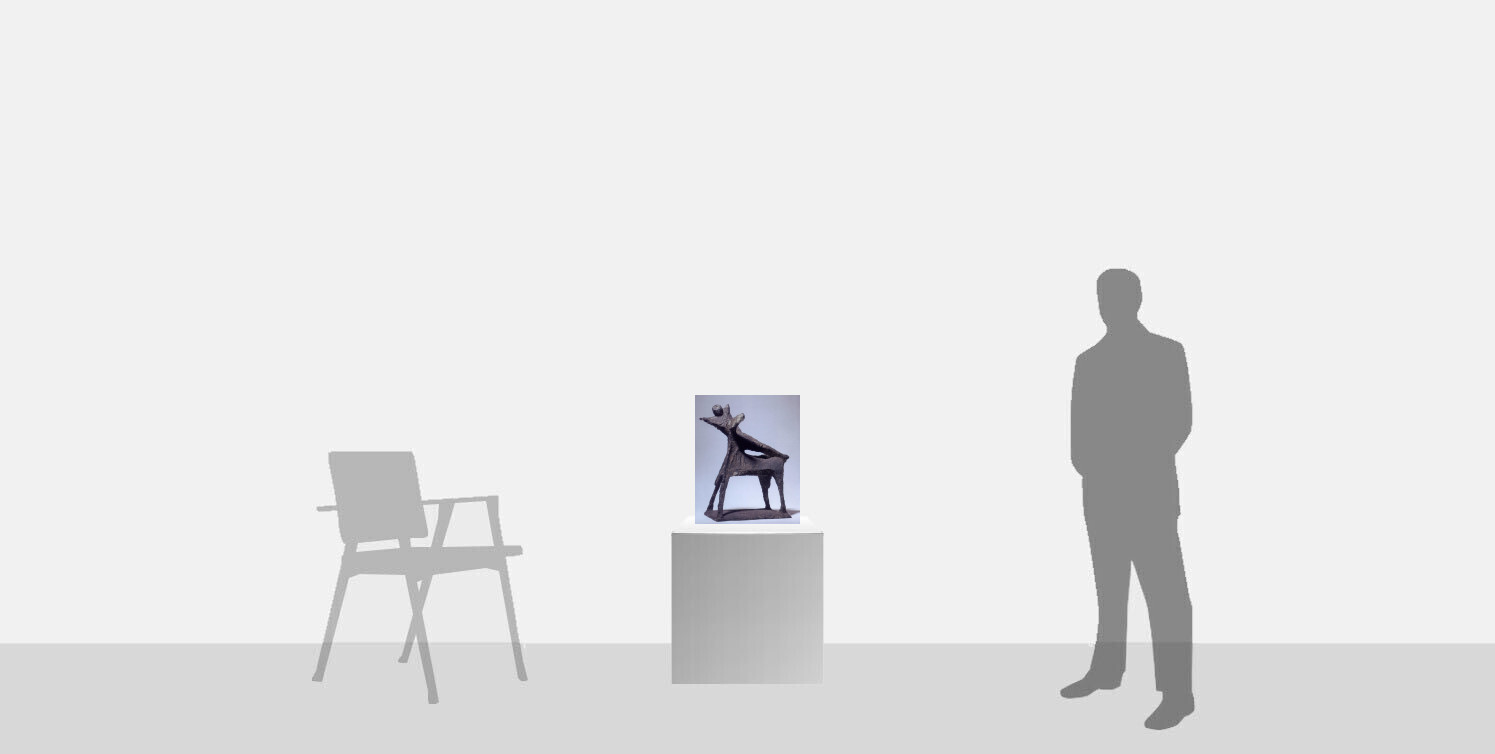
Cavallo e cavaliere, composizione
1955/56
Bronze
57.4 x 46.6 x 32.2 cm (22 5/8 x 18 3/8 x 12 5/8 in.)
Edition n. 2 of 6 + 3AP; 9 examples: Museum Marino Marini, San Pancrazio, Florence; Miyazaki Prefectural Art Museum, Miyazaki, Japan; Tel Aviv Museum; 6 in Private Collections.
Provenance
Literature
E. Trier, The sculpture of Marino Marini, London, 1961 (another cast illustrated p. 128).
Exh. Cat., Rome, Palazzo Venezia, Mostra di Marino Marino, March-June 1966, n°51 (another cast illustrated).
Hammacher, Marino Marini Sculptures, Painting, Drawings, New York, 1970 (another cast illustrated pl. 234).
H. Read, P. Weldberg, and G. di San Lazzaro, Marino Marini , Complete,, Works, New York, 1970 n°336 (another cast illustrated p. 373).
C. Pirovano, Marino Marini, Scultore, Milan, 1972, n°342 (another cast illustrated figs. 130-132).
Exh. Cat., Tokyo, National Museum of Modern Art, Marino Marini, April-June 1978, n°71 (another cast illustrated p.116).
Exh. Cat. Osaka, Contemporary Sculpture Center , Marino Marini, September 1982, n°4 (another cast illustrated).
C. Pirovano, Marino Marini, Catalogo del Museo di San Pancrazio di Firenze Milan,1988, n°160 (another cast illustrated p. 171).
G. Iovane, Marino Marini, Milan 1990, (another cast illustrated p.95).
Exh. Cat., Bologna, Forni Galleria D’arte Marino Marini, October 1990 (another cast illustrated p. 35).
M. Meneguzzo, Marino Marini, Cavalli e cavalieri, Milan, 1997 n°88, (another cast illustrated p. 227).
Marino Marini Foundation, Marino Marini, Catalogue Raissonè of the Sculptures, Milan, 1998 n°410b (another cast illustrated p. 248).
Description
Nine bronze editions of the present sculpture are in Museo Marino Marini (Florence, San Pancrazio), Miyazaki Prefectural Art Museum (Miyazaki, Japan), Tel Aviv Museum of Art and private collections. A plaster edition is in the Fondazione Marino Marini (Pistoia, Palazzo del Tau).
The artwork described above is subject to changes in availability and price without prior notice.
Where applicable ARR will be added.