
Marino Marini
b. 1901, Pistoia, Italy
d. 1980, Viareggio, Italy
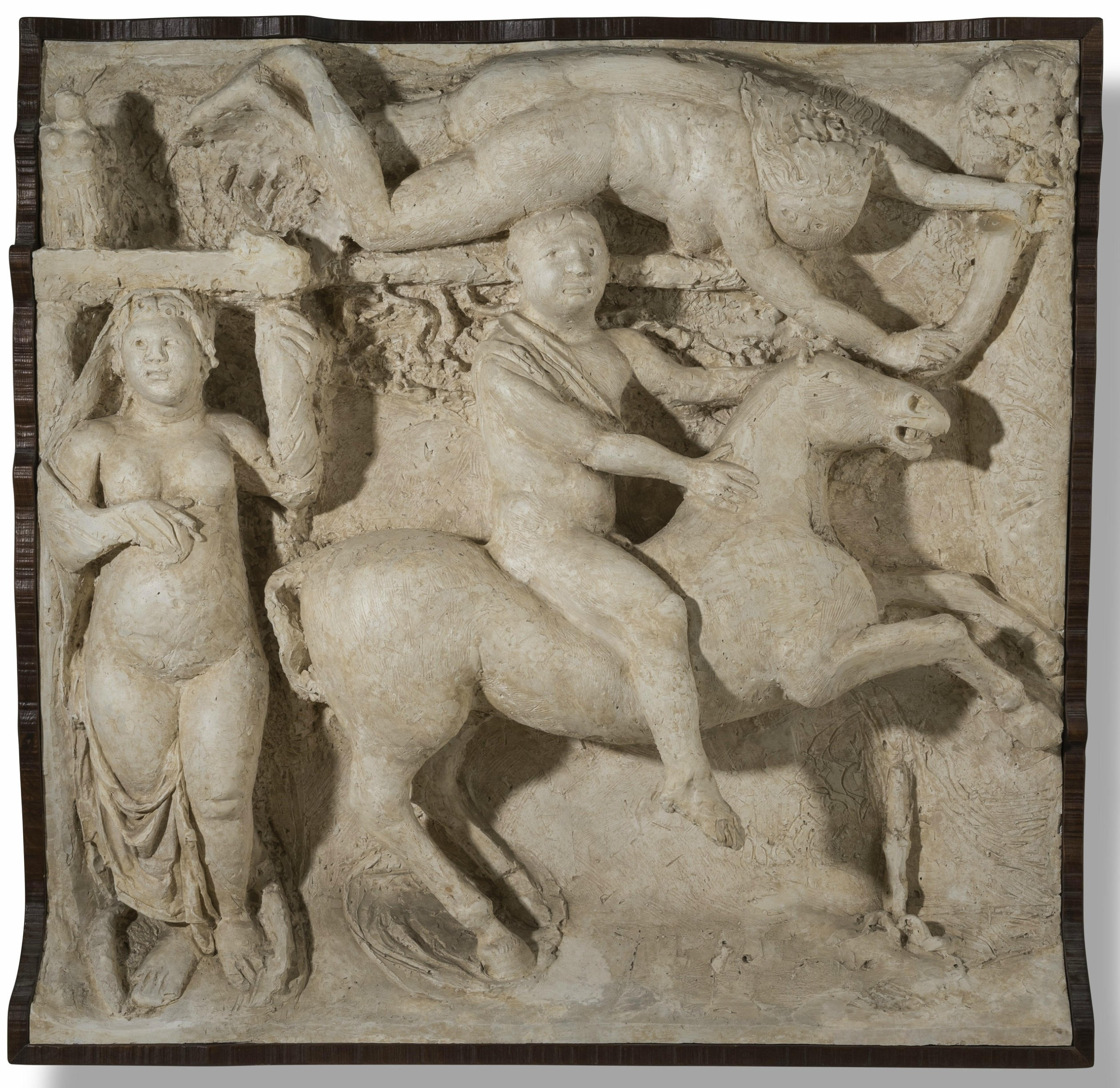
Quadriga (Rilievo per L'Arengario di Milano No. 2)
1938
Original Plaster relief
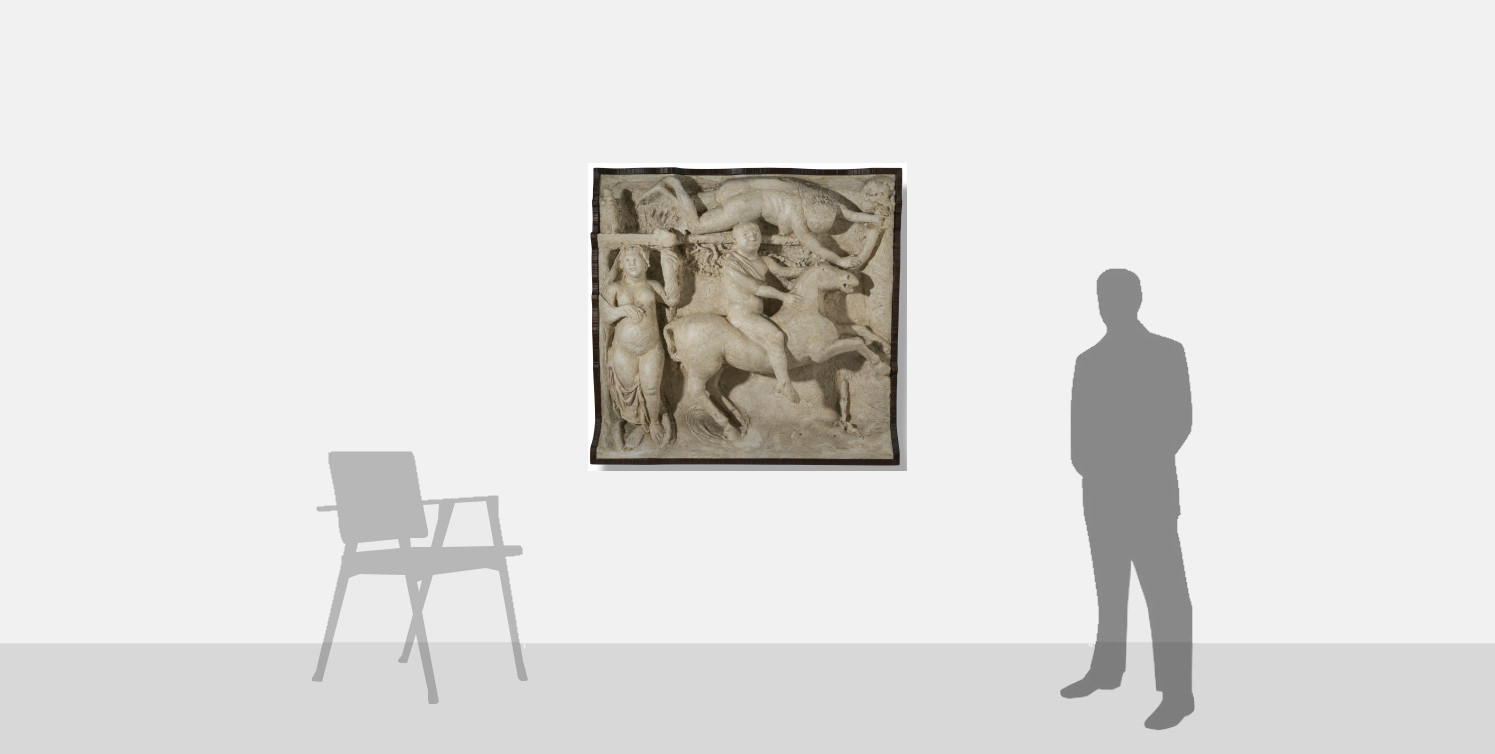
137 x 142 cm (54 x 55 7/8 in.)
Provenance
Collezione Battiato, Verona-Milan
Description
Lucia Gai, in her text entitled “I quattro bozzetti di Marino Marini per l'Arengo di Milano” published in the catalogue of the exhibition of the Fondazione Marino Marini, Pistoia, gives this relief the title of “Youth, the new symbol of the Italian race which heralds a glorious destiny” (La Giovinezza, nuovo simbolo della stirpe italica, cui arride un fausto destino)
Maria Teresa Tosi, directress of the Fondazione Marino Marini, Pistoia, on the subject of the Arengario plaster bozetti writes: -The four plaster reliefs destined for the decoration of the Arengario of Milan, “A building close by the cathedral, built for the workers unions which housed a large room for their meetings”, were executed by Marino Marini in 1938. This building was designed in the 1930s by the architects Piero Portaluppi, Giovanni Muzio, Pier Giulio Magistretti and Enrico Griffini in the context of a grander scheme of remodelling and beautifying the Piazza del Duomo. Also participating in the competition for the decoration were names such as Arturo Martini, Giacomo Manzu’ and Francesco Messina together with other renowned artists of the time. The “Theme” of the competition was a celebration of the feats of fascism in the city of Milan, which the authorities of the time who had overseen the construction of the Arengario had envisaged an allegorical cycle of decoration to demonstrate the might of fascism and its noble origins and roots in Italian history.
This competition was won by Arturo Martini who executed five bas-reliefs in marble which are still visible on the façade of the building.
In view of Marini’s artistic temperament, the production of these works must have been a titanic undertaking, considering his incapacity to tell stories or put characters in spatial and temporal contexts which were well defined and delineated spatially.
His figures by contrast always appear emerging from ill-defined spaces which lack any sort of definition or decorative device which would give the viewer a link to an objective reality.
The apparently confused and ambiguous allegory, which at first seems to be a bas-relief, is intrinsically characteristic of the artists who is uncapable of falling into anecdotal representation so therefore constrained to bring together the composition on various spatial and temporal levels simultaneously.
Each bas-relief after close inspection, deals with a wealth of very symbolic and significant themes which are united in a contemporary descriptive idiom.
The first impression that strikes one, is the way in which Marini has approached the obligatory subject matter of the competition, saving it from the rhetoric of the period and tying it in with the artistic language and iconography of Tuscany in general and Pistoia in particular. Moreover in these works he obstinately never abandons his primary themes of the equestrian figure, the female nude and the portrait.
Marino in each panel calls to mind the art history of his native land, reinvoking and re-elaborating the reliefs by Giovanni Pisano on the pulpit of the church of Sant’Andrea, those of the pulpit by Guido da Como in San Bartolomeo, the architraves of Gruamonte or the pulpit by Fra Guglielmo da Pisa executed for the Church of San Giovanni Fuorcivitas
The artwork described above is subject to changes in availability and price without prior notice.
Where applicable ARR will be added.
Maria Teresa Tosi, directress of the Fondazione Marino Marini, Pistoia, on the subject of the Arengario plaster bozetti writes: -The four plaster reliefs destined for the decoration of the Arengario of Milan, “A building close by the cathedral, built for the workers unions which housed a large room for their meetings”, were executed by Marino Marini in 1938. This building was designed in the 1930s by the architects Piero Portaluppi, Giovanni Muzio, Pier Giulio Magistretti and Enrico Griffini in the context of a grander scheme of remodelling and beautifying the Piazza del Duomo. Also participating in the competition for the decoration were names such as Arturo Martini, Giacomo Manzu’ and Francesco Messina together with other renowned artists of the time. The “Theme” of the competition was a celebration of the feats of fascism in the city of Milan, which the authorities of the time who had overseen the construction of the Arengario had envisaged an allegorical cycle of decoration to demonstrate the might of fascism and its noble origins and roots in Italian history.
This competition was won by Arturo Martini who executed five bas-reliefs in marble which are still visible on the façade of the building.
In view of Marini’s artistic temperament, the production of these works must have been a titanic undertaking, considering his incapacity to tell stories or put characters in spatial and temporal contexts which were well defined and delineated spatially.
His figures by contrast always appear emerging from ill-defined spaces which lack any sort of definition or decorative device which would give the viewer a link to an objective reality.
The apparently confused and ambiguous allegory, which at first seems to be a bas-relief, is intrinsically characteristic of the artists who is uncapable of falling into anecdotal representation so therefore constrained to bring together the composition on various spatial and temporal levels simultaneously.
Each bas-relief after close inspection, deals with a wealth of very symbolic and significant themes which are united in a contemporary descriptive idiom.
The first impression that strikes one, is the way in which Marini has approached the obligatory subject matter of the competition, saving it from the rhetoric of the period and tying it in with the artistic language and iconography of Tuscany in general and Pistoia in particular. Moreover in these works he obstinately never abandons his primary themes of the equestrian figure, the female nude and the portrait.
Marino in each panel calls to mind the art history of his native land, reinvoking and re-elaborating the reliefs by Giovanni Pisano on the pulpit of the church of Sant’Andrea, those of the pulpit by Guido da Como in San Bartolomeo, the architraves of Gruamonte or the pulpit by Fra Guglielmo da Pisa executed for the Church of San Giovanni Fuorcivitas
The artwork described above is subject to changes in availability and price without prior notice.
Where applicable ARR will be added.