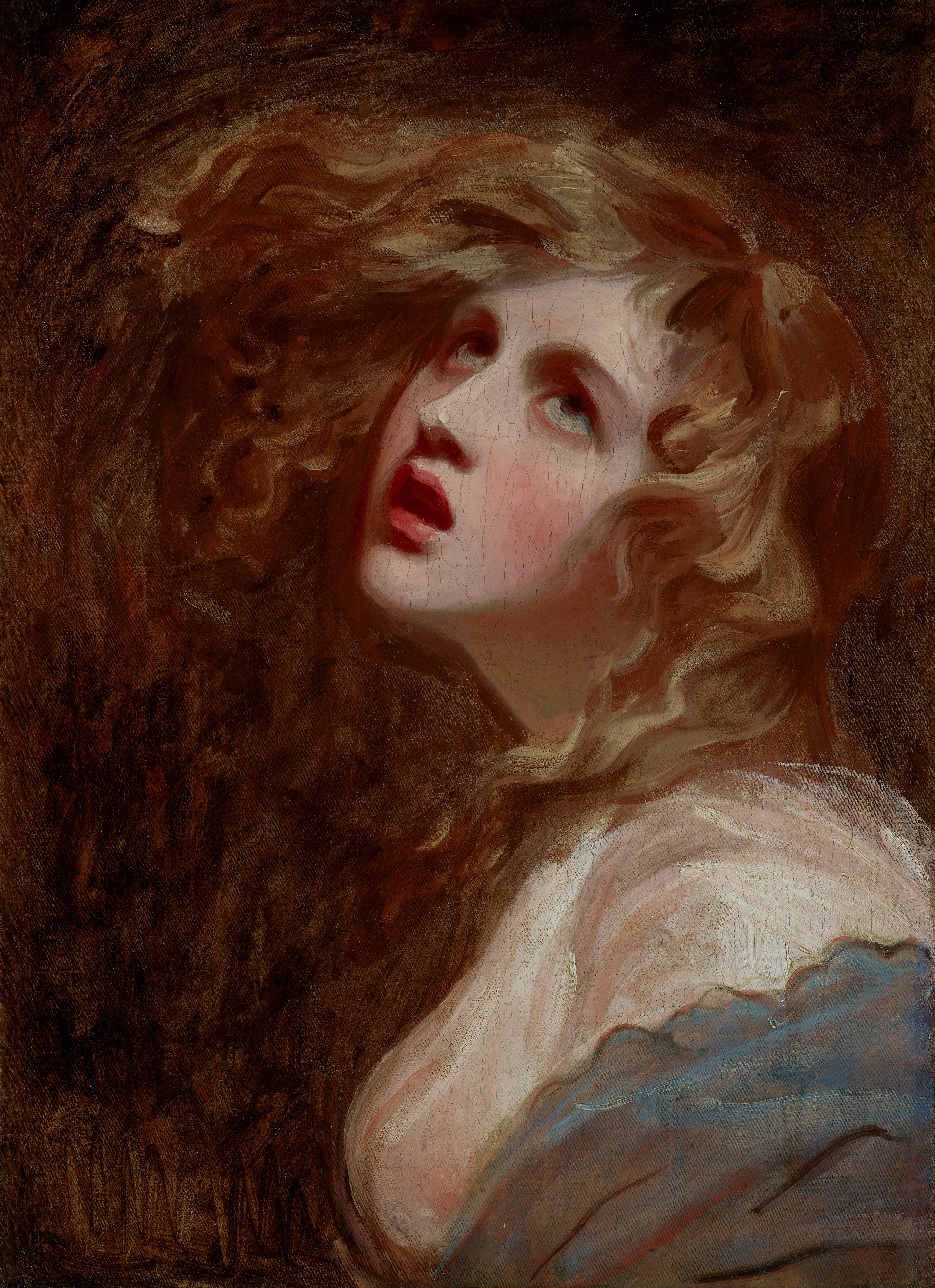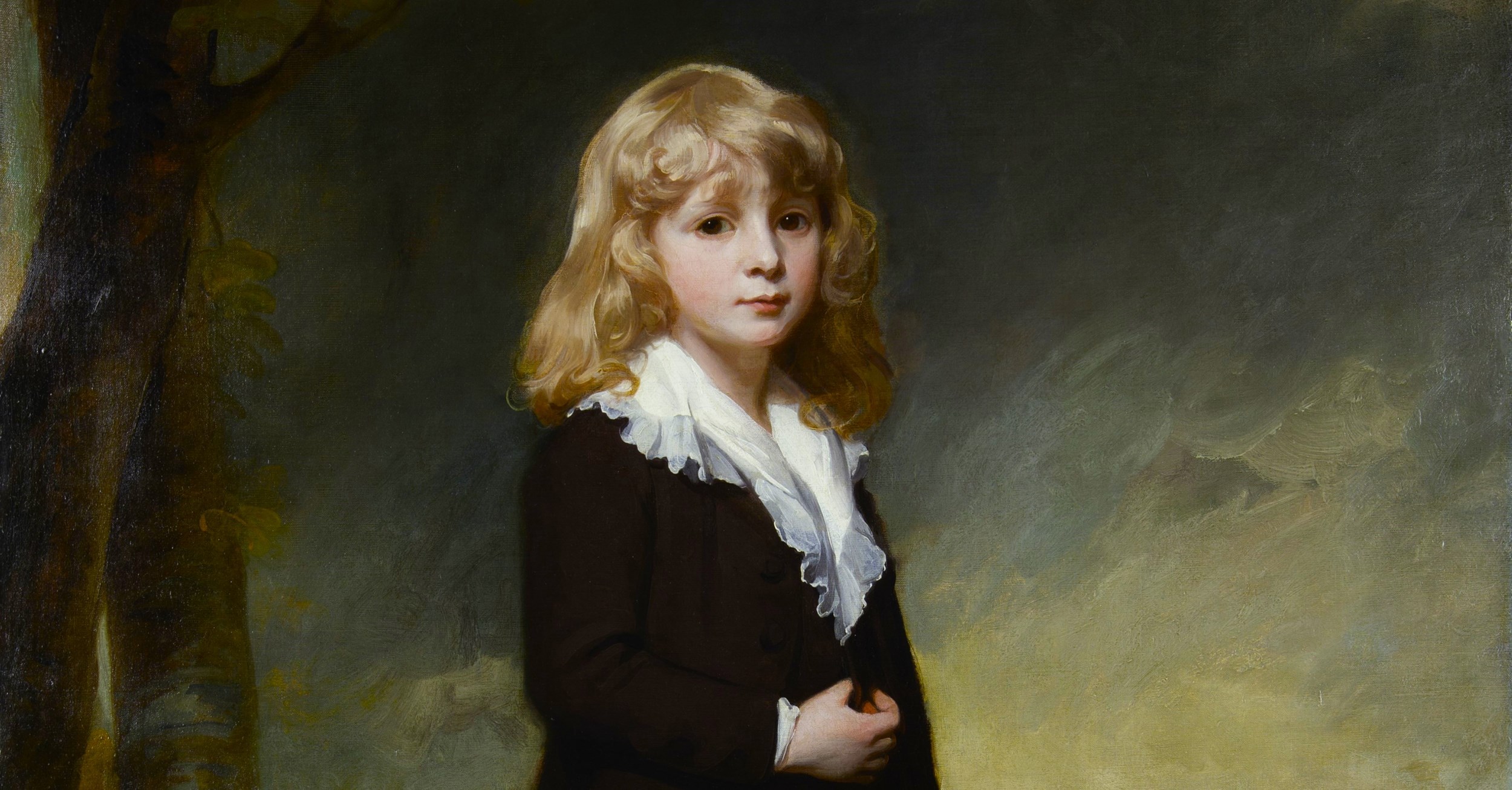
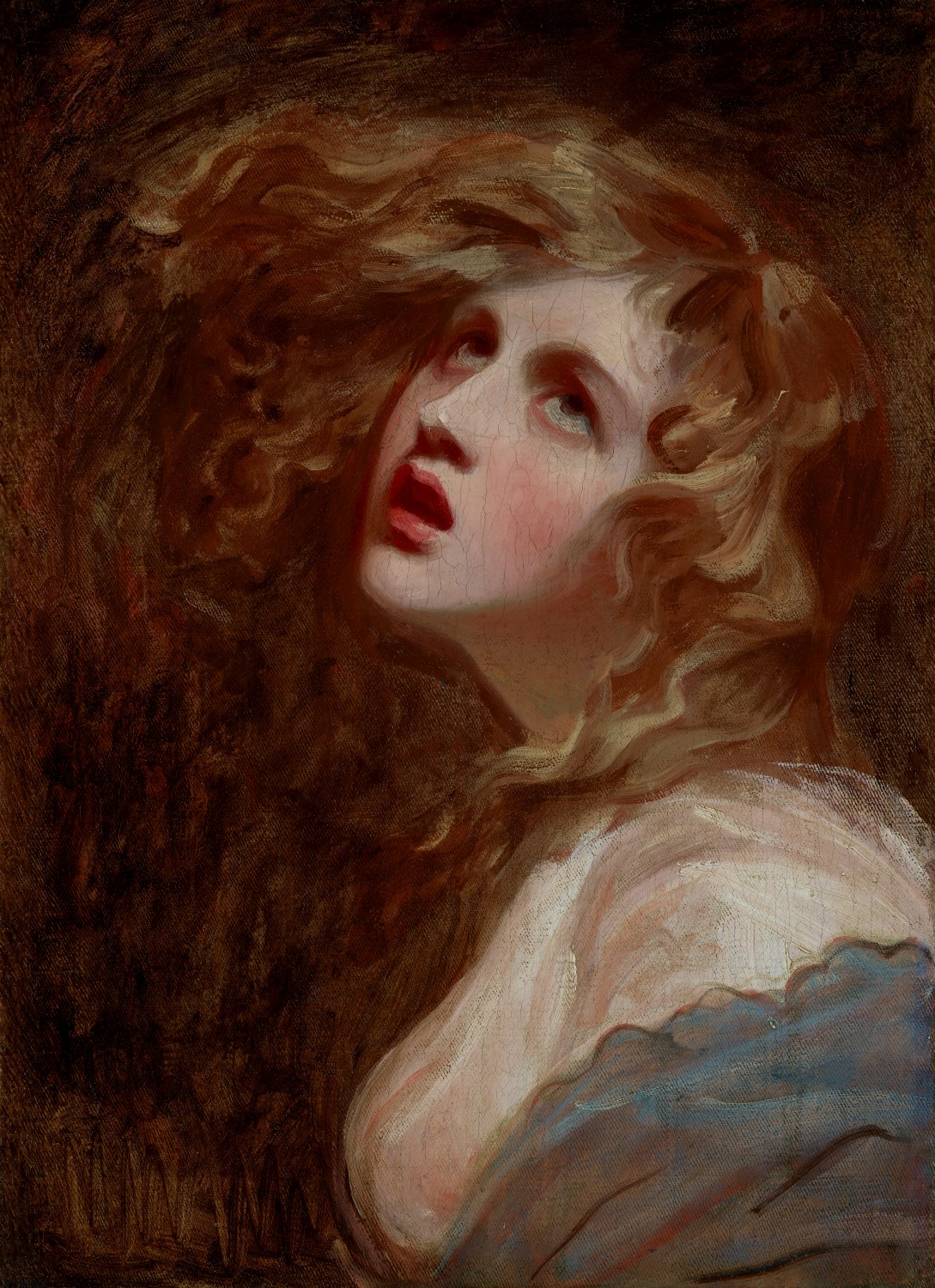
George Romney was amongst the most revered portraitists of his time, alongside contemporaries including Thomas Gainsborough and Joshua Reynolds. Born in Dalton-in-Furness, Lancashire, in 1734, he originally trained as a cabinet-maker, working with his father, before beginning a four-year apprenticeship with portrait painter Christopher Steele - leaving in 1757 to establish his own studio in Kendal.
Romney was renowned for rendering his subjects with a high degree of sensitivity and precision, capturing the attention of the local gentry in Cumbria. It was this reputation that provided the foundation for his move to London in 1762, where he continued to develop his practice, attracting new clientele and receiving a large number of commissions from high-society families. This financial success allowed him to undertake a two-year trip to Europe, along with fellow portraitist Ozias Humphry. Arriving in Rome, he spent eighteen months studying classical and Renaissance works, including frescoes by Raphael, producing sketches that he would bring back to London to enrich his painting practice.
In 1782, the artist met his muse, Emma Hamilton - he would go on to paint more than sixty portraits of her, many of which were in the guise of historical or mythological figures. Three examples of these portraits are housed within the collection of Tate Britain. This tendency towards theatricality was mirrored too in his support for John Boydell’s Shakespeare Gallery in the 1780s, a project which enlisted great artists of the day to capture the stories from the great writer’s work. Romney created the large scale work ‘The Tempest’ for the project (now destroyed).
In 1799, Romney returned to Kendal, where he died in 1802.
Introduced By Count Edmondo Di Robilant